How to Start a Lingerie Brand in 2026: Fit, Rules, Costs
 Jakub Neander
Oct 19, 202613 min read
Lingerie looks like fashion with better margins: small garments, loyal customers, a lot of room for a point of view. It is actually the hardest corner of apparel to get right, because a bra that does not fit is a return you often cannot resell, and fit is the whole product. This guide to starting a lingerie brand in 2026 covers fit and rules first, then manufacturing, the money and the launch, in the order that protects your margin.
The 7 Steps, in Order
- Pick a customer and a fit problem, not just a style.
- Design for fit, and decide your size range before anything else.
- Choose how it gets made: private label or custom manufacturing.
- Learn the labeling and product rules for every market you sell to.
- Price from your real cost, including returns you cannot resell.
- Build the brand and the imagery.
- Set up a store, then pick one channel to win.
Step 1: Pick a Customer and a Fit Problem
The big names already own the obvious positions. SKIMS built a shapewear and basics empire on a broad shade and size range. Savage X Fenty sells inclusive sizing and a membership model with bold marketing.
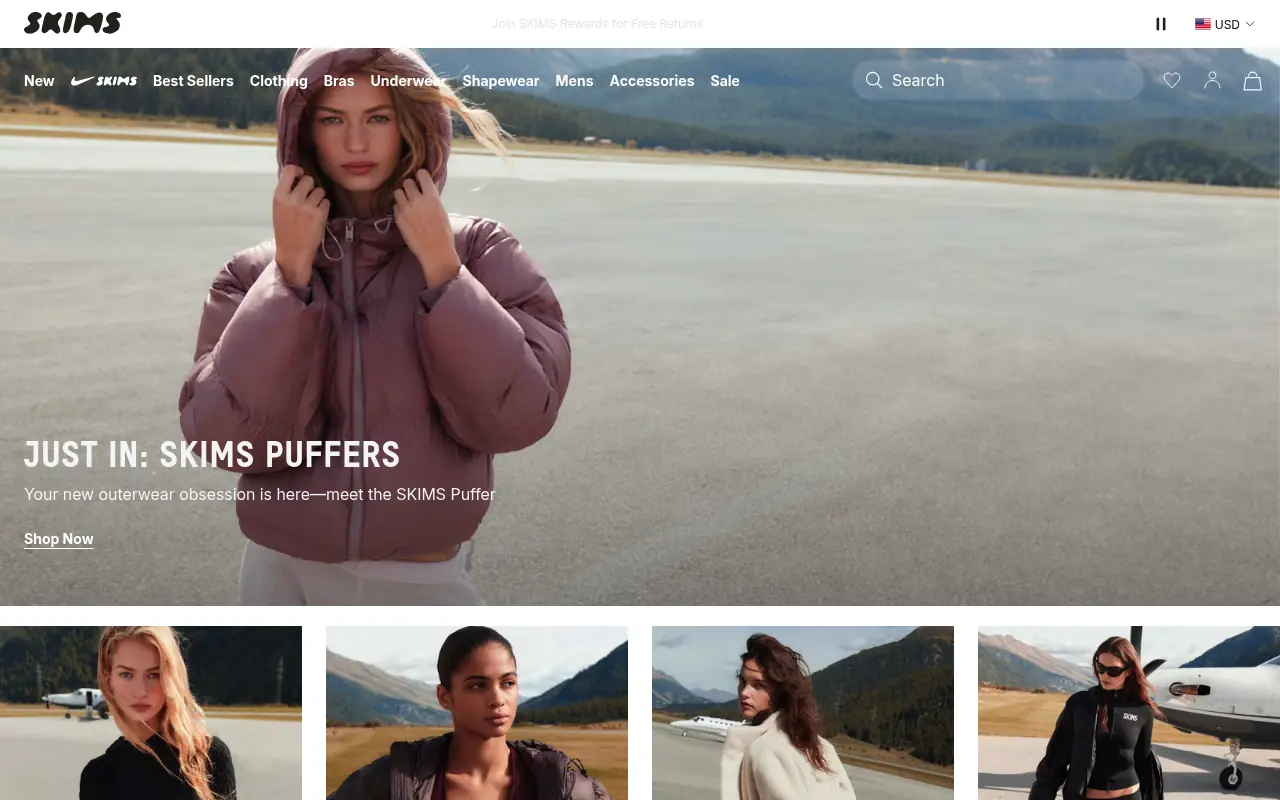
You do not out-spend them. You find a customer they serve badly:
- A fit problem: full-bust, small-band, post-surgery, nursing, petite, tall, plus sizes.
- A comfort angle: wire-free, seamless, sensitive-skin fabrics.
- A style: bridal, vintage-inspired, sustainable materials, cultural designs you are part of.
- A life stage: postpartum, menopause, teen first bras.
The strongest new brands start from a specific complaint ("every bra I try gapes at the top") and design the answer. Talk to 20 people with that problem before you draw anything.
Step 2: Design for Fit
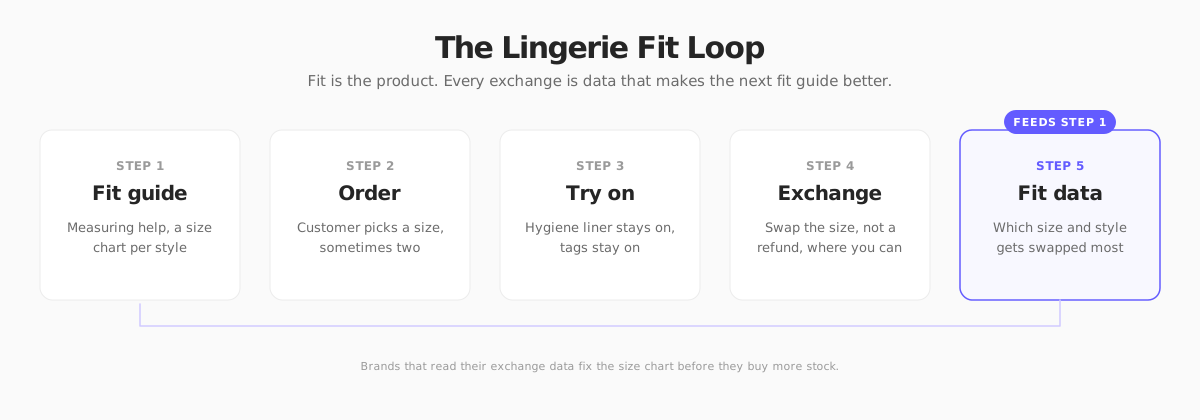
Fit is the product, and it is what decides your return rate. Sizing also differs by country: US, UK and EU bra sizes are not the same, so you need a clear chart for each market you sell in.
Practical rules:
- Decide your size range before you pay for patterns. Every extra size adds pattern grading, samples and stock. A narrow range done well beats a wide range done badly.
- Fit on real bodies. Hire fit models across your range. A pattern that works on a single standard form often fails elsewhere.
- Test the fabric. Check stretch recovery, seam comfort and how the garment holds after washing.
- Sample at least twice. Expect a first sample to fail somewhere. Budget time and money for revisions.
- Write the sizing guide as part of the product. Show how to measure, which size to order if between sizes, and how each style fits.
Our clothing brand guide covers patterns, tech packs and sampling in more depth, and the same ideas apply here with tighter tolerances.
Step 3: Choose How It Gets Made
You have three real options.
| Option | Upfront cost | Control | Best for |
|---|---|---|---|
| Private label | Low | Low | Testing a niche with existing designs and your branding |
| Custom manufacturing | High: samples and minimums | High | A real fit or fabric point of view |
| Small-batch local production | Medium | High | Premium, limited drops, short lead times |
Private label gets you to market fastest, but the product is not yours alone, and you inherit the manufacturer's fit. Custom manufacturing is where a fit-led brand is made, at the price of minimum order quantities, sampling rounds and long lead times, since a single style may need to be made in many sizes and colors.
Ask every manufacturer the same questions: what is the minimum per style and per size, who owns the patterns, what are the fabric and trim sources, what is the lead time for samples and production, and what are your quality control and testing procedures. Get quotes from at least three, and ask to see finished garments from other brands.
A tip for the first run: fewer styles, more sizes. A single great bra in a full range teaches you more than ten styles with three sizes each.
Step 4: Learn the Labeling and Product Rules
Name your markets before you print a single label.
In the United States
- Fiber content and origin. The FTC's Textile Rules (16 CFR Part 303) generally require fiber content, country of origin and the manufacturer or an RN identifier on the label.
- Care labels. The Care Labeling Rule requires washing and drying instructions.
- Children's products. If you sell to children and teens, separate safety rules apply, so check before you target that age range.
In the EU and UK
- Textile labeling. Regulation (EU) No 1007/2011 sets how you name fibers and label textile products, and the UK keeps its own version.
- Chemicals. REACH restricts certain substances in textiles. Ask your manufacturer for test reports, especially on dyes and finishes.
- Product safety. The EU's General Product Safety Regulation expects an identifiable EU contact and traceability for what you sell to EU consumers.
Returns on intimate apparel
Underwear and swimwear are special cases for returns. In the EU and UK, consumers generally have a 14-day right to cancel online purchases, but there is an exception for sealed hygiene goods that were unsealed after delivery. Many brands also set their own policies, such as final sale on unsealed underwear or a hygiene liner that must stay in place. Write the policy clearly, and confirm what your own country requires.
Always check the current rules where you sell. This guide summarizes US, EU and UK textile labeling and consumer rules for lingerie as of October 2026. Regulations change and vary by country and state, so confirm the details with your local regulator or a compliance specialist before you produce or sell. This is general information, not legal advice.
If you ship abroad, our guides to selling internationally and ecommerce sales tax cover duties and VAT.
Step 5: Price From Your Real Cost
Lingerie has two margin problems: a high cost per garment, because of small runs and many sizes, and returns that cannot always be resold.
Here is an illustrative example for a $65 bra sold direct to the customer:
- Landed cost (made, shipped to you, duties): about $18
- Outbound shipping and packaging: about $6
- Payment fees: about $2.20
- Marketing: about $20
- Returns and exchanges (spread across orders): about $6
- What is left: about $12.80, before overhead and your time
These numbers are an example, not a benchmark, and they vary by brand. The point stands: returns and fit decide the margin, so the highest-return move is a better fit guide, not a bigger ad budget.
Rules of thumb:
- Retail at roughly 3 to 4 times your landed cost, then test the whole stack.
- Wholesale at about half of retail. Boutiques expect to double what they pay.
- Sell sets. A bra with matching underwear raises order value and spreads shipping.
- Offer exchanges first. An exchange keeps the sale. Make "swap the size" easier than "return."
- Track returns by size and style. If one size is swapped constantly, the chart or the pattern is wrong.
- Consider a subscription for basics. Our guide to selling subscriptions online shows how.
Step 6: Build the Brand and the Imagery
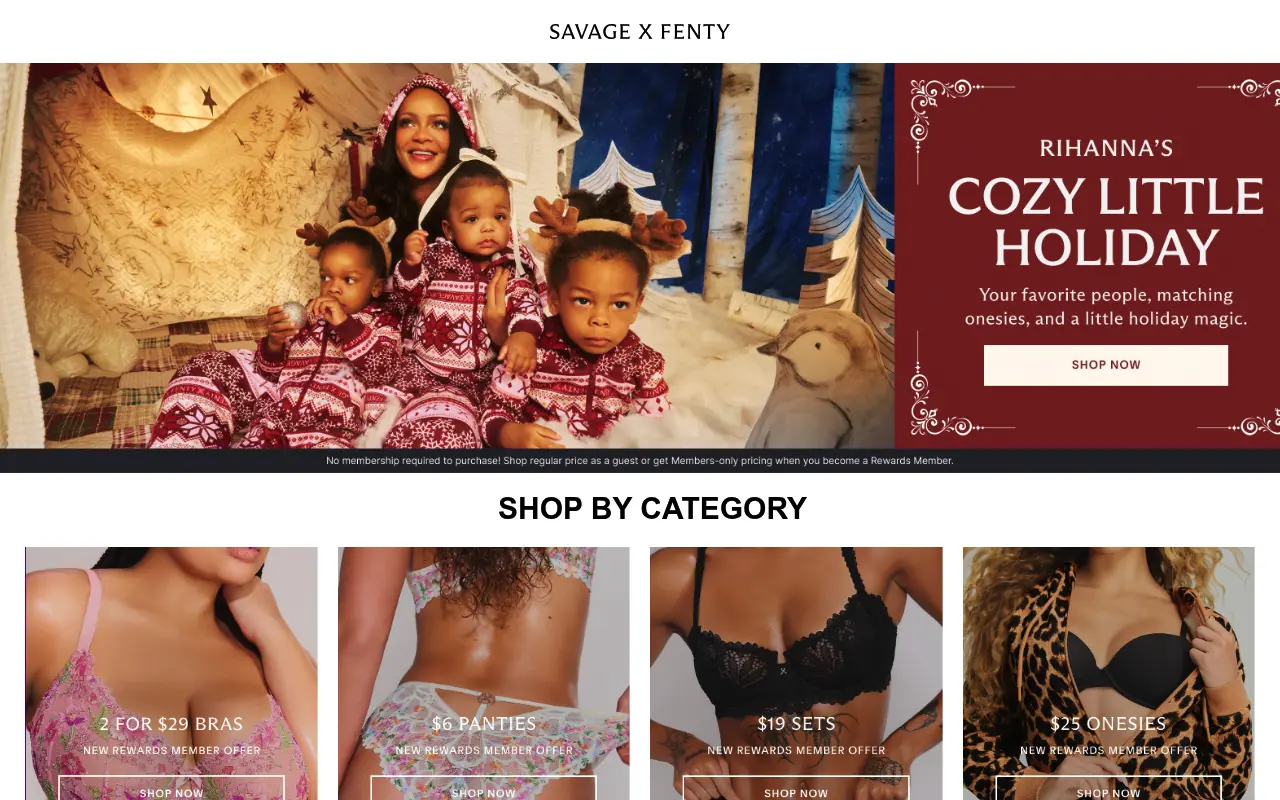
Lingerie imagery carries more weight than in most categories, and it carries rules too: ad platforms and payment providers apply content policies to intimate apparel, so read them before you plan your creative. Look at how Savage X Fenty leads with range and membership offers rather than a single look.
What to decide:
- A name that is easy to say, spell and search. Check the trademark databases for your country before you print labels.
- Models across your size range. Show every size on real bodies. It is both the honest choice and the one that sells fit.
- A visual system: one backdrop, one light, one tone. Product shots on a plain background help every platform's review process.
- Packaging. Discreet outer packaging and a considered unboxing matter for both gifts and privacy.
- A voice. Warm, direct and practical beats coy. Customers want to know how a bra will feel.
Our product photography guide covers the basics, and the same lighting rules apply.
Step 7: Set Up a Store, Then Pick One Channel
You need clean product pages with variants for band size, cup size and color, a fit guide on every page, an exchange flow, shipping rates that handle small parcels, and a checkout that is fast on mobile. Check each payment provider's and ad platform's policy for intimate apparel before you commit.
Options for a first lingerie brand:
- Your Next Store (us, to be upfront) lets you describe the shop to an AI assistant and get a storefront with products, variants, collections, discount codes and shipping rates. Plans start at $25/month on the yearly plan with 0% platform transaction fees, so only Stripe's standard processing fees apply.
- Shopify has the biggest app ecosystem, including fit-finder and returns apps, at a monthly cost that grows with the apps you add.
- Etsy can work for handmade and vintage-style pieces, but check its policies for your category first.
- Squarespace or Wix work for a small first drop.
Our guide to starting an online store covers the choices, and how to sell online with Stripe explains payments.
0% platform fees on every sale. A fast store for your lingerie brand, ready in minutes.
Pick one channel first
- Organic social. Fit explainers, try-on videos and honest size reviews do well, as long as you stay inside each platform's rules.
- Creators in your niche. Send pieces to creators who talk about the fit problem you solve. It is often the best return in the first year.
- Email and SMS. The most profitable channel once you have customers. Fit quizzes are a natural way to collect emails.
- Pop-ups and fitting events. A fitting session turns a skeptical shopper into a buyer, and it shows you the fit problems in person.
- Boutiques and wholesale. Once you can fill repeat orders, wholesale adds volume at lower margins. Our B2B ecommerce guide covers terms.
- Paid ads. Wait until you have a fit guide and an offer that already sells organically, and read the intimate apparel ad policies first.
What It Costs to Start a Lingerie Brand in 2026
These are planning ranges, not quotes. Costs vary by size range, manufacturer and country.
| Your approach | Upfront cost | Monthly spend | What you get |
|---|---|---|---|
| Private label test | $2,000 to $6,000 | $100 to $400 | A few styles, branding, photos, a small store |
| Serious small brand | $10,000 to $40,000 | $500 to $2,000 | Custom samples, a first run across sizes, fit models, photography |
| Real launch | $50,000+ | $3,000+ | Multiple styles, full size range, testing, ads, wholesale |
Where the money goes: patterns and samples, minimum production runs across sizes, fit models, photography, packaging, testing and the store. Production minimums tie up the most cash, because every size and color of every style is stock.
Two honest warnings:
- Fit takes iterations. Plan for several sample rounds, and do not order the full run until the fit is proven on real bodies.
- Returns can be a loss, not just a cost. Unsealed intimates often cannot be resold, so a strong fit guide pays for itself.
The lingerie brands that last are not the sexiest. They are the ones that fit, say so honestly, and treat every exchange as data.
FAQ
Do I need a license to sell lingerie?
Usually you need a general business registration and, in some places, a seller's permit for sales tax. Textile labeling rules then apply to the garments. Check with your local authority.
How much does it cost to start a lingerie brand?
Roughly $2,000 to $6,000 for a private label test, $10,000 to $40,000 for a serious small brand with custom samples and a first run, and more for a full launch. Sampling and minimum runs are the line items beginners underestimate.
Can I start a lingerie brand with private label?
Yes. Private label is the fastest and cheapest way to test a niche, but the fit and design are the manufacturer's, so differentiate through branding, fit guidance and service.
How do I handle returns on lingerie?
Many brands offer exchanges first, set final-sale rules for unsealed underwear, and require a hygiene liner to stay in place. In the EU and UK, a hygiene exception to the 14-day right to cancel can apply to unsealed items. Confirm what applies in your market.
How do I price lingerie?
Start at roughly 3 to 4 times your landed cost for direct sales, price wholesale at about half of retail, and check the full stack including shipping, fees and returns.
Where can I sell lingerie online?
Your own store is best for your brand and customer list. Marketplaces and ad platforms add reach, but each has its own policy for intimate apparel, so read it first.