How to Start a Clothing Brand in 2026: The Honest Playbook
 Jakub Neander
Apr 20, 202611 min read
Starting a clothing brand is mostly fun. It's also the one kind of business where more first-timers lose money sitting on unsold stock than almost any other. This guide is the one I'd hand to a friend before they spend a dollar: the seven things to do in the right order, in plain English, with honest numbers for what it actually costs in 2026.
The 7 Steps, in Order
- Pick a very specific kind of person to dress. Not "people." One type of person.
- Get people to say "yes, I'd buy this" before you make anything.
- Pick the way you'll actually make the clothes, based on how much money you have.
- Turn your idea into a spec sheet a factory can read.
- Set the price so the math works.
- Set up a simple website.
- Pick one place to get noticed. Not all the places. One.
Now the long version.
Step 1: Pick a Very Specific Kind of Person to Dress
The fastest way a new clothing brand fails is being "for everyone." Nobody shops at a brand that's for everyone. They shop at brands that feel like they were made for them.
So before you think about what to make, think about who you're making it for. A good answer is specific enough that it almost sounds too small. A bad answer is "women 25–45 who like fashion."
This "pick your person first" principle isn't clothing-specific. It applies to every kind of store. If you're still deciding whether clothing is even your category, our broader playbook for starting any online store walks through the customer and platform decisions before you commit.
Good answers look like this:
- People who bike to work in rainy cities and are sick of office clothes that get ruined in the rain.
- New parents who want clothes that still look put together with a baby on their hip.
- People who love cotton basics and obsess over how soft and durable the fabric is.
That last one is KOTN. They sell simple, well-made cotton basics. That's it. No logos, no trend collections, no fast fashion drops. Look at their homepage: you can tell within three seconds who it's for.
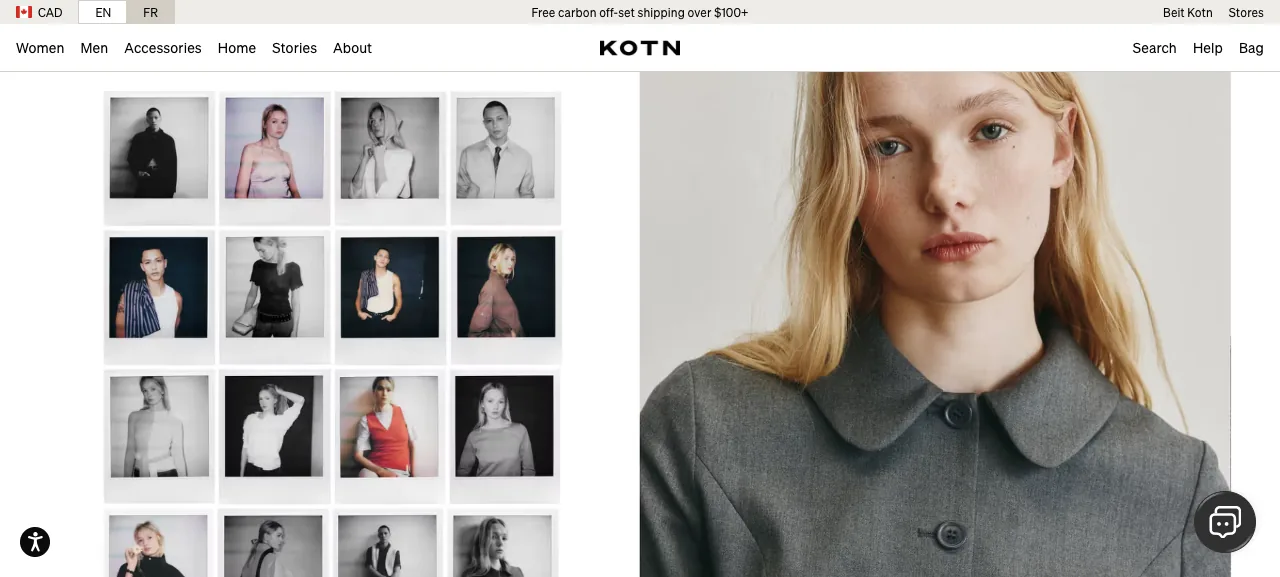
The "rule" here: if a big chain like Gap or H&M could easily make your product without changing anything about who they are, you haven't picked a sharp enough idea. Your advantage as a small brand is that you can care about one thing a lot more than a giant company can.
One tailwind in 2026: shoppers are tired of fast fashion. More of them are choosing "quiet luxury": simple, well-made clothes that don't scream. Trend forecasters have been tracking this for a few years now. It's great news for a small brand that's willing to make fewer, better things.
Step 2: Get People to Say "Yes, I'd Buy This" Before You Make Anything
This is the step most first-timers skip, and it's the one that kills them. Before you buy fabric, sign with a factory, or order samples, confirm that real people will actually pay for what you have in mind.
Three cheap ways to test:
- A simple one-page website with a "Join the waitlist" button. Show your product idea, a mood board, and ask for an email. Spend $100–$200 on Instagram ads to send people to it. If fewer than 1 in 50 people who land on the page sign up, your idea isn't clicking yet. Go back to Step 1.
- Take pre-orders. Same page, but instead of "Join the waitlist," it's "Pre-order now." People who hand over a credit card are the only real signal. Ten pre-orders are worth more than a thousand likes.
- Message 50 people directly. Pick 50 people in your target group (friends, their friends, people in relevant online communities). Tell them what you're making and ask if they'd buy it. If you can't get even five genuine "yes" replies, the idea needs more work.
This step costs you a weekend and maybe $200. Skipping it can cost you $10,000 in clothes that nobody wants.
Step 3: Pick the Way You'll Actually Make the Clothes
There are three ways to get clothes made in 2026. Which one you should choose depends mostly on how much money you can afford to put in before you've earned any back.
Option A: Print on Demand (cheapest, least risky)
You upload your design. A company prints it on a plain tee or hoodie only when someone buys. You don't touch the product. You don't hold any stock. You keep a smaller piece of each sale, but you also can't lose money on inventory you didn't sell.
Companies that do this: Printful, Printify, Tapstitch.
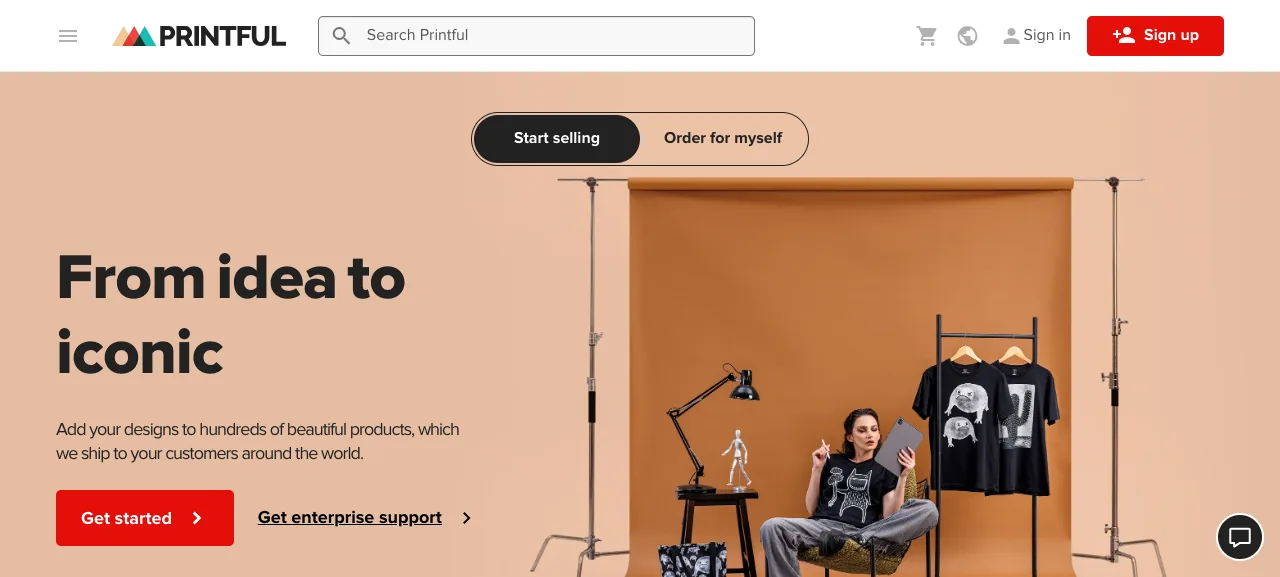
This is the right choice if:
- You have less than $1,000 to put in.
- Your product is about the design on the shirt (a graphic, a slogan, a niche message).
- You just want to test if anyone wants what you're making.
The trade-off: the per-shirt cost is still relatively high ($12–$18 for a basic Bella + Canvas tee with a print, depending on the provider and shipping) compared to a factory run, so you can't sell it cheaply. And it's hard to stand out with products that anyone else can copy in an hour.
Option B: Made to Order (middle ground)
You work with a small local sewing studio. They cut and sew each piece after someone orders it. Lead time is 2–4 weeks. No inventory risk, but it's slower and you need patient customers. Websites like Maker's Row help you find sewing studios in the US that are willing to take very small orders.
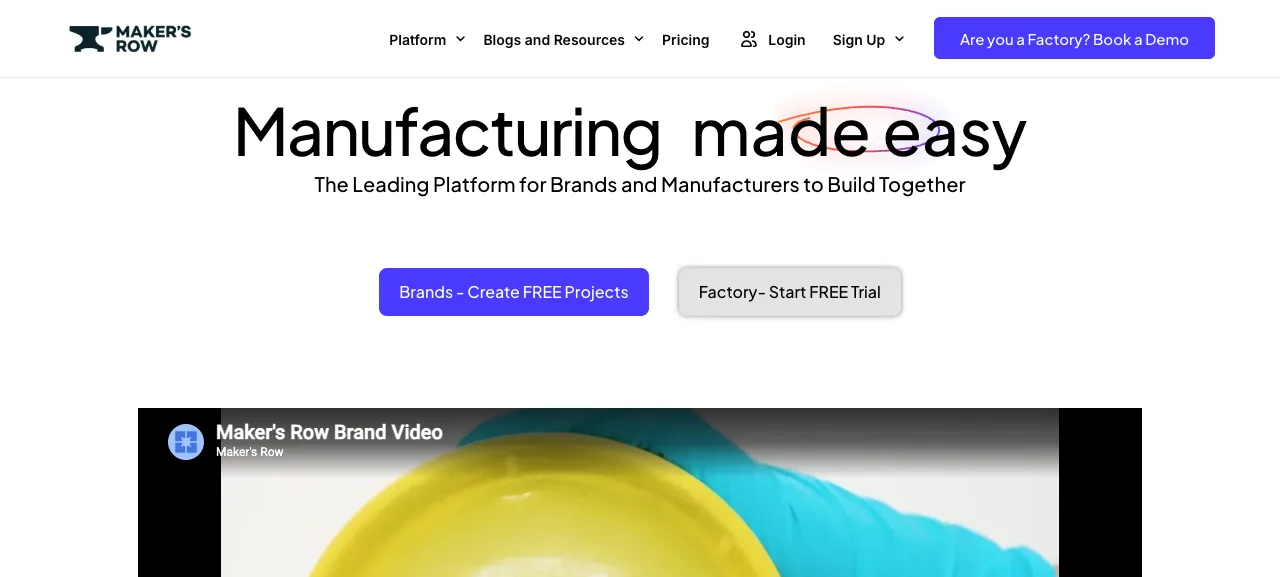
This is a great option if you want real, custom-made clothing but don't want to gamble thousands of dollars on stock that might not sell.
Option C: A Factory Run (more cash, better unit economics)
Once you have proof people want what you make, a factory order is where the numbers actually start working. You order a batch all at once (say 100 shirts), pay for it upfront, and ship it from your own garage or a warehouse.
The catch: factories have minimums. Here's roughly what to expect in 2026:
- Factories in the US: typically 25–100 pieces per design.
- Factories in Portugal or Turkey: 60–150 pieces per design.
- Factories in China, Bangladesh, or Vietnam: 200–500+ pieces per design, per color, per size range.
That last part trips up everyone. If you order "200 pieces" of a shirt from a factory overseas, and you want it in 3 colors and 4 sizes, you're really ordering 2,400 shirts. Overseas is only cheaper if you can sell that many.
For most first-timers, US or Portugal is the right answer, even though the per-shirt cost is a little higher. Smaller batches = much less risk.
Step 4: Turn Your Idea Into a Spec Sheet
When you're ready to work with a real factory or sewing studio, they'll ask for something called a tech pack. Don't let the name scare you. It's just a document that explains exactly how to make your piece. Think of it like a recipe for your clothes.
A tech pack has:
- Drawings of the piece from front, back, and sometimes the side, with every seam labeled.
- A list of every material: the exact fabric, the buttons, the zipper, the thread, the care label, the hang tag. Usually with the supplier and color code.
- Measurements, including how each size (S, M, L, XL) differs.
- Exact colors, using a standard color code (called Pantone) so there's no confusion.
- Labels and packaging instructions.
You can make one yourself using a tool like Techpacker, or hire a freelancer on Upwork to do it for you for $200–$800.
Why this matters: without a tech pack, the factory is guessing. They'll send you samples that don't match your idea, and you'll waste months going back and forth. With one, they get it right much faster.
Realistic timeline: expect 2–4 rounds of sample garments before production starts. Each round takes 2–6 weeks. Plan for 2–4 months from "here's my tech pack" to "the factory is making my clothes." This is the single most underestimated part of starting a clothing brand.
Step 5: Set the Price So the Math Works
The classic beginner mistake: "similar shirts cost $45, so I'll charge $40." That logic doesn't work, because the brand charging $45 probably pays $5–$8 per shirt (they order a lot) while you're paying $15–$22 (you order a little).
Here's the honest rule: your retail price should be at least four times what it costs you to make and ship one shirt. Not 2×, not 3×. At least 4×.
Why? Because "what it costs you to make" isn't just the shirt. It's also:
- The credit card fee when someone buys.
- The shipping to the customer.
- The packaging.
- Returns. The average return rate for apparel is around 26% per a 2025 industry report. A disciplined new brand with good sizing guides can beat that, but plan for 15–20% of orders coming back.
- The cost of getting someone to find your shirt in the first place (ads, or your time making content).
Quick example for a heavy-cotton tee in 2026. Say it costs you $9 to make and ship one shirt. You sell it for $40 (about 4.4×, the minimum that actually works). Here's where the money goes:
| Where the money goes | $ |
|---|---|
| The shirt itself (fabric, sewing, shipping to your warehouse) | $9.00 |
| Credit card fee (Stripe, 2.9% + $0.30) | $1.46 |
| Shipping to customer | $5.00 |
| Packaging | $0.80 |
| Refund reserve (~15% of orders) | $6.00 |
| Marketing (~25% of revenue) | $10.00 |
| What you actually keep | ~$7.70 |
So a $40 shirt earns you about $7.50 in profit. You'd need to sell about 400 shirts to cover a $3,000 first production order, and another few hundred to pay for the photos, samples, and tools it took to get there. That's the target you should be planning toward in your first year, not a flat dollar amount.
Notice what happens if you drop the price to $32 (a 3.5× markup): your profit per shirt collapses to roughly $3, and you'd need to sell 1,000 shirts to break even on the same production order. That's the reason the "at least 4×" rule matters. If the math doesn't land, don't launch. Raise the price, cut the size of your order, or simplify the product. The worst outcome is launching at the wrong price and finding out six months later.
Step 6: Set Up a Simple Website
Now you have a product, pricing, and (hopefully) a waitlist. Time to set up a website where people can actually buy.
You don't need to get fancy here. You just need three things: a few product photos, a clear "Buy" button, and a trustworthy checkout.
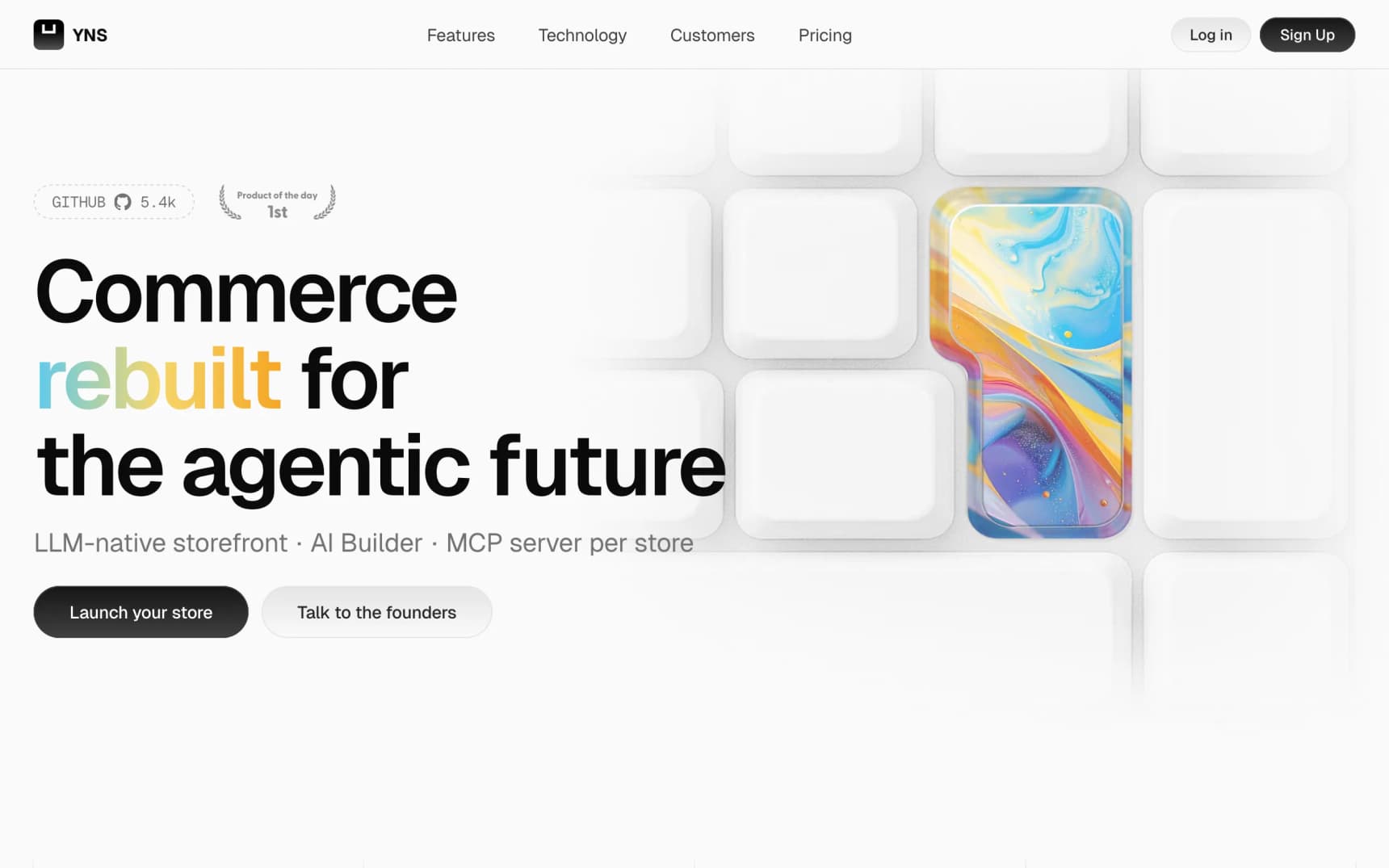
The main options in 2026, honestly ranked for beginners:
- Your Next Store (us, to be upfront) is the simplest way to get a modern-looking website up without becoming a tech person. Starts at $25/month on the yearly plan, with no extra fees per sale. An AI helper builds your store with you, and reviews, email, and search are already built in, so you don't have to bolt on a bunch of paid plug-ins later.
- Shopify is the most popular choice. It costs $39/month and just works. Almost every service you'll ever want to add (email, reviews, size charts) has a plug-in. The downside: those plug-ins add up to another $200–$500/month by the time you're shipping, and they take a small extra fee on every sale if you use a payment method other than theirs.
- Squarespace or Wix are the cheapest to start with, very visual, and fine for a small first drop. If your brand gets bigger, you'll probably outgrow them within a year.
- Instagram plus a simple payment link. If you only have a few products and sell to an audience that already follows you, you can take orders in DMs and use a simple Stripe payment link as the checkout. It's messy but it costs $0. Graduate to a real website once you can't keep up.
Honest recommendation for 90% of first-timers: if you want a real website that looks modern and keeps your costs predictable, try YNS. If your audience already lives on Instagram, start there with a payment link and move to a real website once you outgrow it. Shopify is the safe middle ground if neither of those fits. You can always switch platforms later.
0% extra fees on every sale. A modern website for your brand, ready in minutes.
Step 7: Pick One Place to Get Noticed
New clothing brands almost always win on exactly one channel in their first year, then expand. The beginner trap is trying to do all of them at once and doing none of them well.
Your options, honestly:
- Instagram and TikTok (free, slow, effective). The default for fashion. Works if you're comfortable on camera and can post 3–5 times a week for 6–12 months before it really starts compounding. Most brands quit at month three. Don't be most brands.
- Paid ads (Instagram, TikTok). Good once you already have some content and an audience, expensive and rough for cold starts. A good ballpark: getting one customer through ads for clothing costs $40–$80. Don't try this until you have organic content to back it up.
- Sending free product to creators. Send 50 small creators (5,000–50,000 followers) in your niche a free piece. About 15–20% will post. Often the single best channel when your revenue is under $10k.
- Google / SEO. Slow (6–12 months to start working) but powerful if your niche has people searching for something specific. Plant seeds now, don't expect it to carry year one.
- Email. The single most profitable channel once you have customers. Collect emails from day one and send a simple welcome series.
- Pop-up shops and local stockists. The most underrated option for cash flow. One weekend at the right pop-up can earn you more than a month online, and gets you stories to post.
Pick one main channel and one backup. Run both for six months. Add a third only when the first two are actually making you money.
What It Actually Costs to Start a Clothing Brand in 2026
The real-world numbers, pulled from manufacturer cost breakdowns like AKCN's and Senhai's:
| Your approach | Upfront cost | Monthly spend | What you get |
|---|---|---|---|
| Print-on-demand side project | ~$500 | ~$50 | 3–5 designs printed as people order them |
| Small local capsule | ~$3,000 | ~$300 | One small-batch capsule, made locally, simple website |
| Serious first drop | ~$12,000 | ~$800 | 50–150 pieces across 3–5 styles, factory-made, real website and marketing |
| Full brand launch | $30,000+ | $2,500+ | Big production run, PR, paid ads, photo shoots |
Two honest warnings hidden in that table:
- Most "full brand launches" don't earn back $30,000 in their first year. Plan for 18 months of cash flow before things turn green.
- The $500 print-on-demand project is the only one where you can't lose your shirt. Every other row has real inventory risk.
If your plan depends on everything going right, your plan is wrong. Budget for a second production order that fixes everything the first one got wrong.
FAQ
How much does it cost to start a clothing brand in 2026?
Anywhere from $500 to $30,000+ depending on how you make your clothes. Print on demand is the cheapest at around $500. A small capsule made by a local sewing studio runs $3,000–$5,000. A real first drop with a factory order of 50–150 pieces per style is typically $10,000–$15,000. A full launch with PR, paid ads, and a big production run is $30,000 and up. Most of the cost is the clothes and the marketing, not the website.
Do I need to register a business before I start?
Yes, before you start taking payments. Registering an LLC or sole proprietorship costs $50–$500 depending on your state and protects your personal finances if something goes wrong. You don't need a 30-page business plan. A one-page sketch (who's your customer, what are you making, how will you find them, and what's your pricing) is plenty.
Print on demand or use a factory: which should I pick first?
Print on demand if you have less than $1,000 and want to test whether people will actually buy your designs. A factory once you have 50+ pre-orders for a specific product and you've done the pricing math. Almost everyone starts with print on demand and graduates to a factory once they've proven demand.
How long does it take to launch a clothing brand?
From idea to first sale: as little as 3 weeks on the fast path (print on demand, one design, Instagram + a payment link), up to 9 months on the serious path (tech pack, factory, samples, photo shoot, website, launch). Brands that try to rush the factory route usually launch with a product that isn't ready and burn their audience.
Do I really need a website, or can I just sell through Instagram?
For your first 20–50 orders, Instagram DMs plus a payment link genuinely work. Past that it breaks. You'll lose track of orders, refunds, and what's in stock. At that point a real website earns its cost back in a month, not counting the extra sales you'll get from a real checkout.
What's the minimum number of pieces a factory will make?
- US factories: usually 25–100 pieces per style.
- Factories in Portugal or Turkey: 60–150 pieces per style.
- Factories overseas (China, Bangladesh, Vietnam): 200–500+ pieces per style, per color, per size range.
Multiply that by your color count and size range (S/M/L/XL = 4 sizes) to get your real total. This is why a lot of first-time founders underestimate how much a factory order costs.
Is it worth selling on Amazon or Etsy for a clothing brand?
Etsy works for handmade, vintage, or customized items. Amazon works for basic clothes where you compete on price. Neither is a great place to build a real brand, because the customer never feels like they bought from you, they feel like they bought from Amazon or Etsy. Use them as a side channel, not your main one.