Ecommerce Sales Tax: A Plain-English Guide for Online Sellers
 Jakub Neander
Oct 7, 202611 min read
You can owe ecommerce sales tax in a place you have never visited. Since 2018 in the US, and much longer in the EU, selling to a customer can create a tax duty in their jurisdiction, even if your warehouse and your laptop are thousands of miles away. This guide explains who owes what, when you have to register, and how to automate most of it, in plain English.
What Ecommerce Sales Tax Actually Is
Ecommerce sales tax is a consumption tax charged on a sale to a customer and collected by the seller on behalf of the government. You are a tax collector, not the taxpayer: the customer pays, you collect, and you hand it over on a schedule.
Three different systems cover most online sellers:
| System | Where | Who it targets | Added at |
|---|---|---|---|
| Sales tax | US (state and local) | Retail sales to end customers | Checkout, on top of the price |
| VAT (value added tax) | EU, UK and many other countries | Every step of the supply chain, but consumers bear it | Usually included in the displayed price |
| GST | Canada, Australia, India and others | Similar to VAT | Varies by country |
The key difference: US sales tax is collected once, at the final sale. VAT is collected at every stage, but you can reclaim the VAT you paid on business purchases. For a small store the practical result is similar, you charge the customer tax and remit it, but registration rules and prices displayed differ.
Do You Have to Collect Sales Tax Online? Nexus Explained
You collect sales tax where you have nexus: a connection to a state strong enough that it can require you to collect. There are two kinds.
Physical nexus
You have physical nexus in a US state if you have an office, a warehouse, inventory, an employee or a contractor there. Using a fulfillment service that stores your stock in a state can create it too, which surprises many sellers who use Amazon FBA or a 3PL network.
Economic nexus
In South Dakota v. Wayfair (2018), the US Supreme Court ruled that states can require remote sellers to collect tax based on sales volume alone. Every state with a sales tax now has an economic nexus rule. Most use a threshold of $100,000 in sales into the state in a year, though some states, such as California and Texas, set it at $500,000, and a few older rules also counted a number of transactions. Thresholds change, so check each state's revenue department before you rely on a number.
A practical way to track it:
- Export your orders for the last 12 months with the shipping state.
- Total sales per state.
- Compare each total to that state's threshold.
- Mark any state at roughly 80% as "watch", so you register before you cross, not after.
Tax is due from the day you cross the threshold, not the day you notice. Waiting costs you the tax itself, plus penalties and interest.
States with no state sales tax: Alaska, Delaware, Montana, New Hampshire and Oregon do not charge a statewide sales tax. Alaska allows some local taxes, so confirm before you assume zero.
How Much Tax to Charge: Rates, Sourcing and Taxable Items
Knowing you owe tax is half the job. The other half is charging the right amount, and that depends on three things.
Rate
US sales tax is layered: state, county, city and sometimes special districts. Two addresses in the same city can have different totals. Charging a flat state rate is the most common cause of small errors that add up.
Sourcing: origin or destination
Most states use destination sourcing: the rate depends on where the buyer receives the order. A handful use origin sourcing, where in-state sellers charge based on their own location. Remote sellers are generally taxed by destination.
What is taxable
Rules differ by state and by product:
- Physical goods are taxable in most states, with exceptions like groceries or clothing in some.
- Digital products are taxable in some states and exempt in others.
- Shipping is taxable in some states and exempt in others, and sometimes depends on whether you list it separately.
- Resale and wholesale sales are usually exempt when the buyer gives you a valid resale certificate. Keep that certificate on file.
This is the point where spreadsheets stop working. If you sell more than a few products in more than a few states, use software.
Selling in Europe and the UK: VAT in Brief
If you sell to customers in Europe, the rules change in four ways.
- Prices include VAT. Consumers expect to see the final price. In the EU and UK you show a VAT-inclusive price and keep the VAT portion for the tax authority.
- Rates differ by country. In the EU, standard rates run from 17% (Luxembourg) to 27% (Hungary), and many countries have reduced rates for specific goods.
- EU One Stop Shop (OSS). Since July 2021, EU sellers with cross-border B2C sales above €10,000 a year charge the customer's country VAT rate and can report it all in one quarterly return through OSS, instead of registering in every country.
- Imports. For goods under €150 shipped into the EU from outside, the Import One Stop Shop (IOSS) lets you collect VAT at checkout so the customer is not surprised at the border.
In the UK, the VAT registration threshold for domestic businesses is £90,000 of taxable turnover. Overseas sellers do not get that threshold and must register from the first sale. For low-value consignments of £135 or less, VAT is charged at the point of sale.
Selling to businesses adds one more tool: a valid EU VAT number can allow a reverse charge, where the business customer accounts for the VAT instead of you.
Canada (GST/HST and provincial taxes) and Australia (GST, with a registration threshold of AUD 75,000 for overseas sellers) work along the same lines, so check the local rules if either is a big market.
Always check the current rules where you sell. This guide summarizes US, EU and UK ecommerce sales tax and VAT rules as of October 2026. Thresholds, rates and registration rules change and vary by state and country, so confirm the details with your state revenue department, your national tax authority or a qualified accountant before you register, charge or file. This is general information, not tax advice.
Do Marketplaces Collect Tax for You?
Often, yes. All US states with a sales tax have marketplace facilitator laws: if you sell on Amazon, Etsy or eBay, the marketplace calculates, collects and remits the tax on those orders. The EU and UK have similar rules for marketplaces in many cases.
That covers marketplace sales only. Orders placed on your own store are still your responsibility, and you may still need to register in a state to file returns even if the marketplace does the collecting. Selling in both places is common, and it is where mistakes happen: you count sales from both channels toward your economic nexus thresholds in some states.
The Registration and Filing Workflow
Once you have nexus, the process is the same in almost every state:
- Register for a sales tax permit in the state, usually free or a small fee, through the revenue department's website. You must have the permit before you collect.
- Turn on tax collection in your store for that state.
- Collect tax at checkout on taxable orders.
- File and remit on the schedule the state assigns you: monthly, quarterly or yearly, based on volume. File even if you collected nothing.
- Keep records of orders, exemption certificates and returns for several years. Check each state's retention period.
Refunds matter too. When you refund an order, the tax on it needs to be refunded and reported in the return period. A tool that handles invoices and refunds together saves you from reconciling by hand.
Tools That Automate Ecommerce Sales Tax
You can do all of this by hand for one or two states. Past that, automation pays for itself. The main categories:
Rate and calculation tools
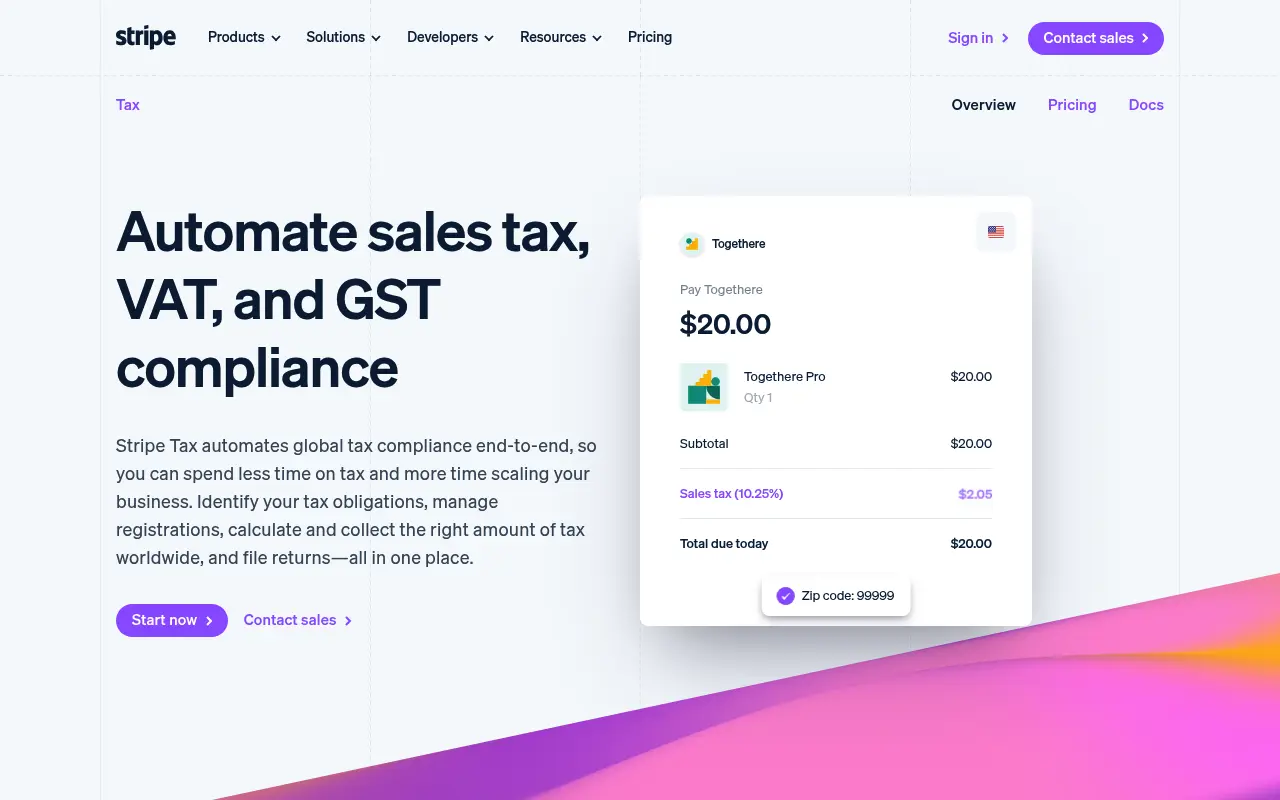
These look up the right rate for each address and apply it at checkout. Stripe Tax is the one many Stripe-based stores start with: it calculates tax across jurisdictions, tracks your thresholds and can help you with registration and filing.
Full compliance platforms
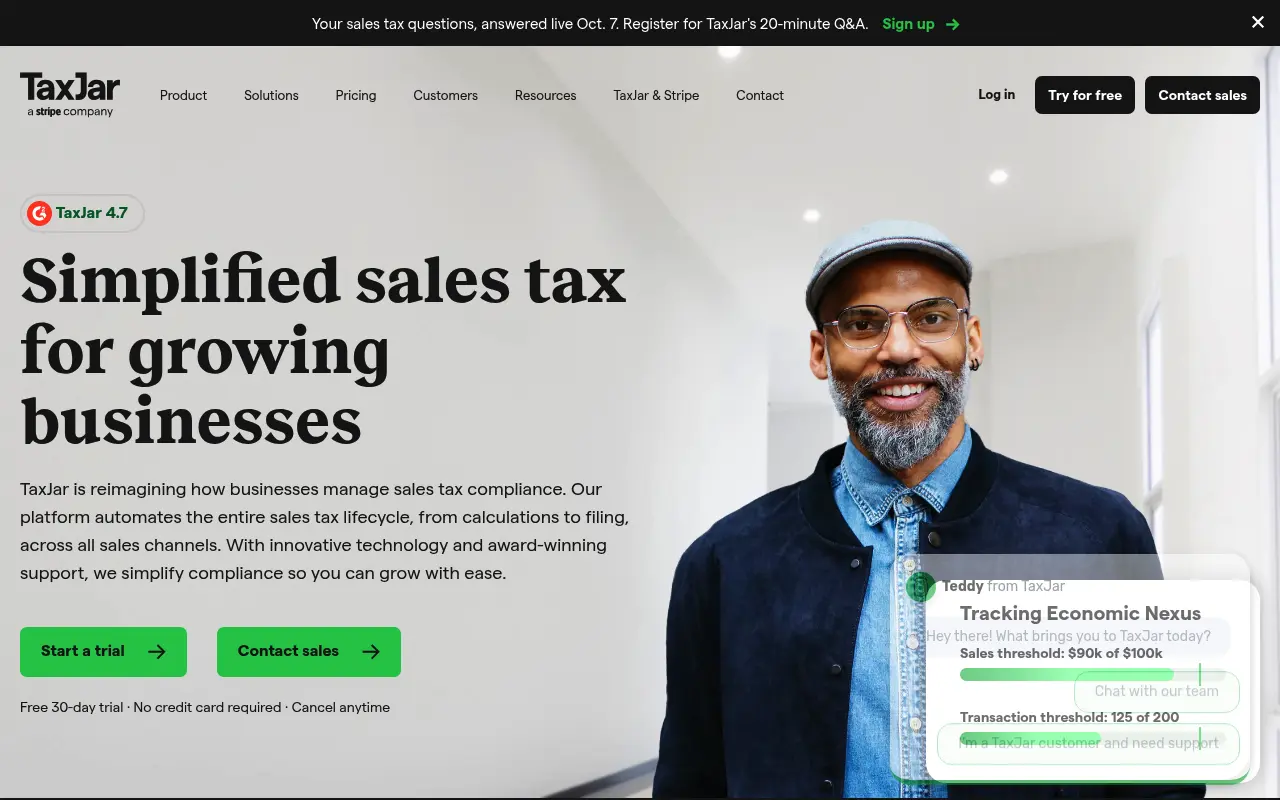
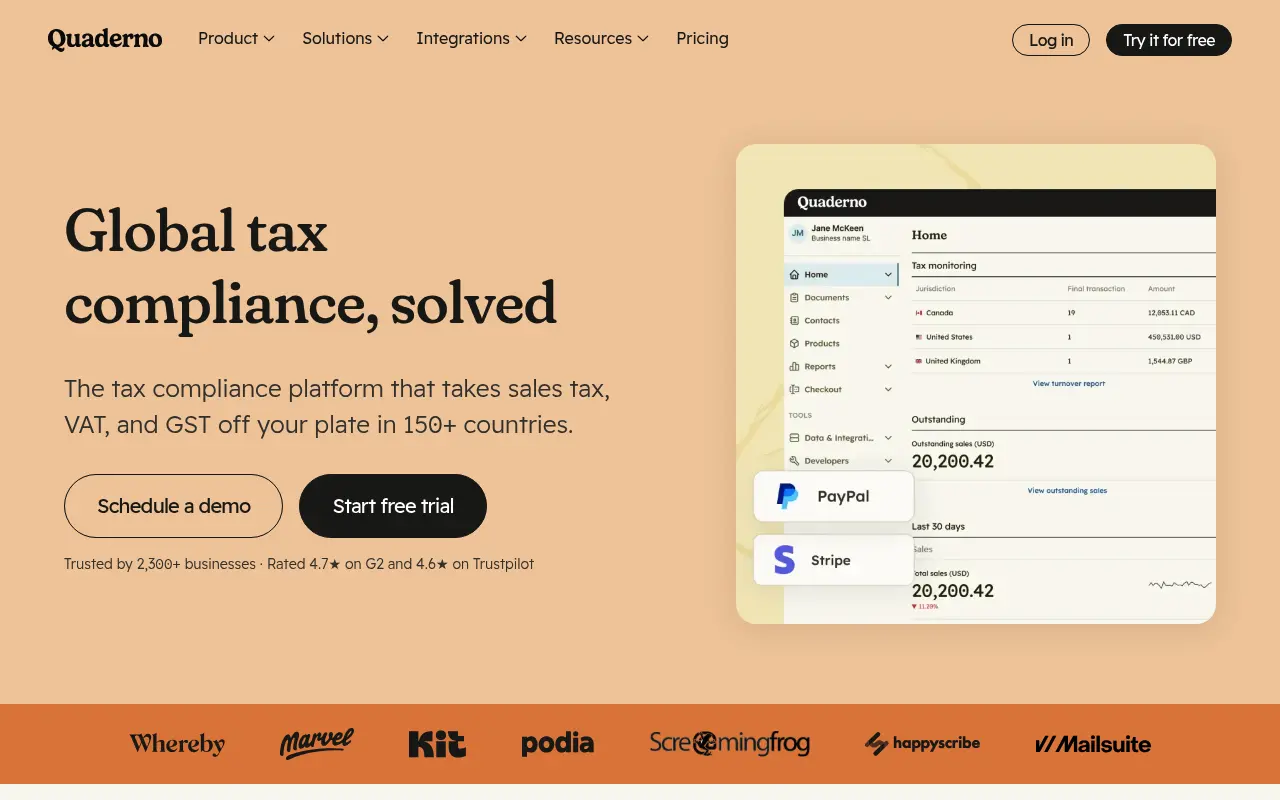
TaxJar and Avalara combine calculation, registration help, return filing and nexus tracking. They suit stores with many states or high volume. Quaderno focuses on global tax compliance and invoicing across 150+ countries, which is useful if VAT is a big part of your business.
What to compare
| Question | Why it matters |
|---|---|
| Does it only calculate, or also register and file? | Calculation alone leaves filing on you |
| Which countries does it cover? | US-only tools fall short if you sell to the EU |
| What does it cost per order or per return? | Fees can scale with volume |
| Does it plug into your store and payment provider? | Manual exports create errors |
Pricing changes often, so check each vendor's current page rather than a blog post.
How Your Next Store Handles Tax
Your Next Store gives you two options, and you pick per store. With automatic tax, the right rate is worked out from the customer's location using Stripe Tax. With manual tax rates, you define your own rates by region, which suits simple setups or places Stripe Tax does not cover. You also choose whether prices are tax-inclusive or tax-exclusive, which matters when you sell in both the US and Europe. Setup steps are in the taxes help article.
Invoices show the tax rate and amount on every line, and your business tax ID appears on them, which helps with VAT-style invoice requirements.

Be clear about the limit: YNS calculates and shows tax, it does not register you with a state or file your returns. For that you still need an accountant or a filing service. Stripe Tax is optional, so automatic calculation depends on you enabling and configuring it.
A Simple Sales Tax Checklist
- Total sales and order counts by state for the last 12 months
- Register in every state where you have physical or economic nexus
- Turn on automatic tax or add correct rates for each registered state
- Decide whether prices are tax-inclusive (EU/UK) or exclusive (US)
- Set a calendar reminder for each filing deadline
- Keep resale certificates and refund records
- Re-check thresholds every quarter
FAQ
Do I need to charge sales tax if I sell on Etsy or Amazon?
Not on marketplace orders: marketplace facilitator laws mean the platform collects and remits the tax. You still owe tax on sales from your own website, and you may still need a permit in some states.
What happens if I don't collect sales tax?
You can owe the uncollected tax out of your own pocket, plus penalties and interest, going back to the date you crossed a threshold. Many states offer voluntary disclosure programs that reduce penalties if you come forward before they find you.
Do I charge sales tax on shipping?
It depends on the state. Some tax shipping, some do not, and some tax it only when it is bundled with the goods. Check the rule for each state you collect in, or let your tax tool apply it.
Do dropshippers have to collect sales tax?
Generally yes, if you are the seller of record and have nexus. Your supplier may need your resale certificate to avoid charging you tax on the purchase.
Final Takeaway
Sales tax is a threshold problem. Track sales by state, register before you cross, automate the calculation, and let an accountant or filing tool handle returns. The stores that get hurt are not the ones that paid tax, they are the ones that never noticed they owed it.