Marketplace vs Your Own Website: Where Should You Sell?
 Jakub Neander
Nov 6, 20269 min read
A marketplace rents you an audience. Your own website builds you an asset. Amazon, Etsy and eBay hand you buyers on day one, but they keep a slice of every sale, set the rules and own the customer relationship. Your own site flips that trade: more work up front, far more control later. This guide compares the two on the things that decide the choice, and shows when selling on both is the smart move.
Marketplace vs Own Website: The Short Answer
If you have no audience and want your first sales this month, start on a marketplace. If you have a brand, repeat customers or healthy margins you want to protect, build your own website. Most growing sellers end up doing both: the marketplace for discovery, the website for profit and loyalty.
| Factor | Marketplace (Amazon, Etsy, eBay) | Your own website |
|---|---|---|
| Time to first sale | Days, thanks to built-in traffic | Weeks to months, you bring the traffic |
| Fees per sale | Referral or transaction fees, typically a high single to mid-teen percentage, plus ads | Payment processing, plus your platform fee (0% on YNS) |
| Brand control | Low: your listing sits next to competitors | Full: design, copy, URL, packaging inserts |
| Customer data | Limited: the marketplace owns the relationship | Yours: emails, order history, behavior |
| Pricing control | Constrained by competitors and marketplace rules | Yours, within the law |
| Account risk | A suspension can end your revenue overnight | You control the store and the domain |
| Best for | Validation, commodity products, discovery | Brands, repeat purchases, higher margins |
What a Marketplace Gives You
Built-in demand
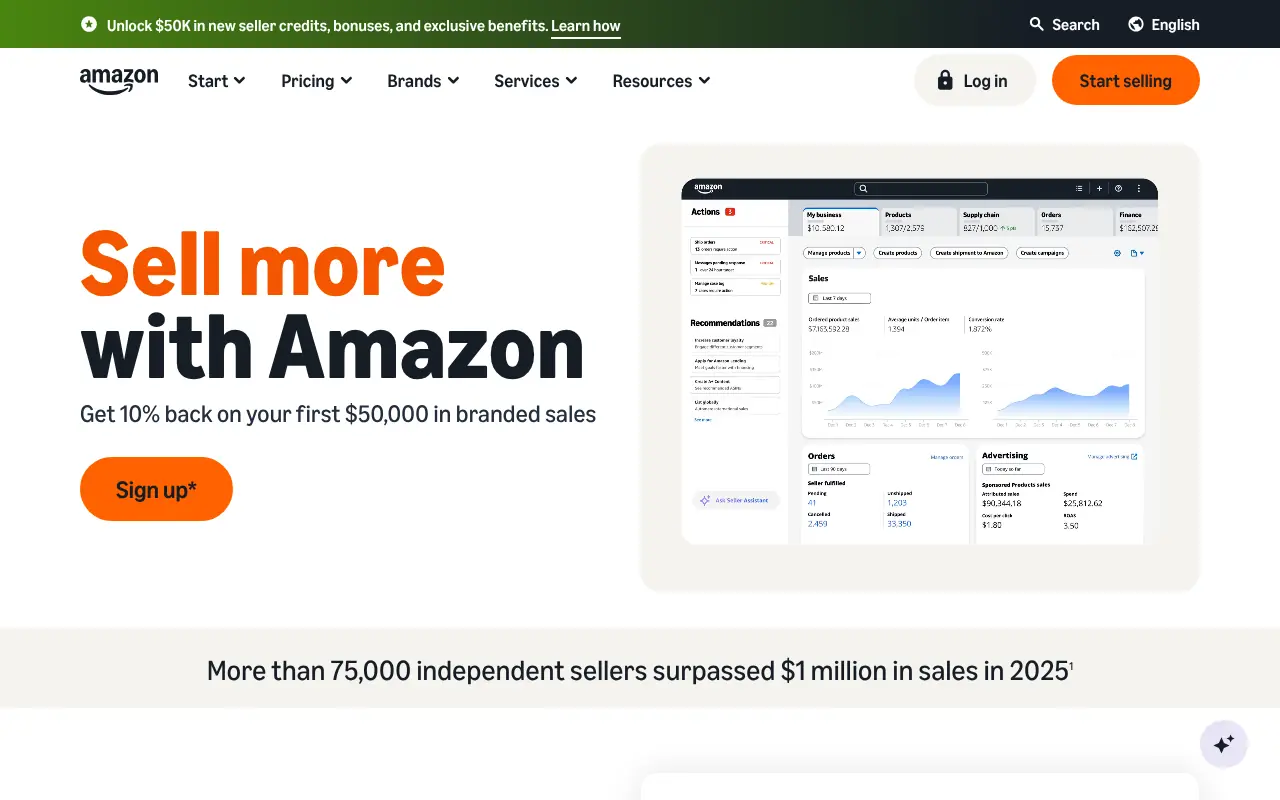
A marketplace's biggest asset is people already searching with a credit card out. Amazon advertises more than 75,000 independent sellers passing $1 million in sales in 2025, which shows what is possible when you plug into that traffic. You do not need an SEO strategy or an ad budget to get a first order, only a competitive listing.
Trust and logistics
Buyers trust the marketplace, not you. That removes the hardest part of selling as an unknown brand: convincing a stranger to enter their card number. Programs such as Fulfilled by Amazon also handle storage and shipping, though they add their own fees.
Low setup cost
Creating a listing is a form, not a project. For validating a product idea, that is hard to beat. You can learn what sells, at what price, before you invest in branding or a custom storefront.
What a Marketplace Costs You
Fees add up
Each marketplace charges differently, and the numbers change, so read the current fee pages before you model your margins:
- Amazon: a referral fee that depends on category, plus a monthly or per-item selling plan fee and optional fulfillment and advertising costs. See Amazon's pricing page.
- Etsy: a listing fee, a transaction fee on each sale, and payment processing. See Etsy's fee overview.
- eBay: final value fees that vary by category, plus a per-order fee. See eBay's selling fees.
A rough illustration, with made-up but realistic numbers, on a $50 order where you pay a 15% marketplace fee against a typical card processing rate of about 2.9% plus $0.30:
| Marketplace | Own website on YNS | |
|---|---|---|
| Order value | $50.00 | $50.00 |
| Marketplace or platform transaction fee | about $7.50 (15%) | $0 (0% on every plan) |
| Card processing | usually bundled or extra | about $1.75 (Stripe standard rate) |
| Fixed monthly cost | plan fee, if any | $30 (Starter) |
Your own site is not free: you pay for the platform, and you pay to attract visitors. But at volume the per-order gap compounds. The break-even question is simple: how many orders a month until the fixed cost of the site is lower than the fees you would have paid?
You compete on price
On a marketplace, your product sits beside five similar ones. The buy box, the ranking algorithm and the price filter decide who wins, and that usually rewards the lowest price. You cannot easily build a premium brand when the buyer sees you as "seller #3 of 12".
You do not own the customer
Marketplaces restrict how you contact buyers. You often cannot add them to an email list, so repeat purchases flow back through the marketplace, where they can go to a competitor. For consumables and subscriptions, where lifetime value is the whole game, this is the biggest hidden cost.
Platform risk
Accounts get suspended, listings get removed and policies change. Sellers regularly describe losing their main income channel for days or weeks while an appeal runs. That is not a reason to avoid marketplaces, only to avoid depending on one.
What Your Own Website Gives You
Control over the whole experience
Your site is your brand. You choose the design, the copy, the checkout flow, the packaging inserts and the post-purchase emails. That matters for anything where the experience is part of the product. If you want to see how fast a custom store can come together, read about building an ecommerce store design in 15 minutes.
Customer data and lifetime value
Every buyer becomes an email address, an order history and a segment. You can run email marketing, win back abandoned carts and sell a second product to someone who already trusts you. A repeat customer costs far less than a new one, and on a marketplace you rarely get to keep them.
Better margins at scale
Without referral fees, a larger share of every order stays with you. You still spend on traffic, but that spend builds assets you keep: a search presence, an email list, a brand people type into Google.
A business you can sell
A store with its own domain, customers and traffic is worth more to a buyer than a marketplace storefront that depends on someone else's algorithm.
What Your Own Website Costs You
Be honest about the downsides:
- No built-in traffic. You must earn visitors through SEO, ads, social, email and partnerships. This is the real cost, and it takes time.
- You handle more. Payments, taxes, shipping, returns, legal pages. See our ecommerce launch checklist.
- Trust takes work. Reviews, a clear return policy and professional design carry a lot of weight for a brand nobody has heard of.
- Slower start. Expect weeks of setup and months before organic traffic matters.
How to Decide: Five Questions
- Do you have an audience already? If yes (social following, email list, existing customers), your own site converts that into profit. If no, a marketplace gives you discovery.
- Is your product a commodity or a brand? A generic phone charger competes on price anywhere. A handmade or branded product benefits from a story only your site can tell.
- What is your margin? Thin margins cannot absorb a 15% fee plus advertising. Healthy margins can, at least while you validate.
- How often do customers come back? High repeat rate (food, beauty, supplements, subscriptions) favors owning the relationship.
- How much can you invest before your first sale? A tight budget points to a marketplace first.
The Hybrid Strategy: Sell on Both
Selling on both is not a compromise, it is the most common pattern among successful sellers. Treat each channel as a different job.
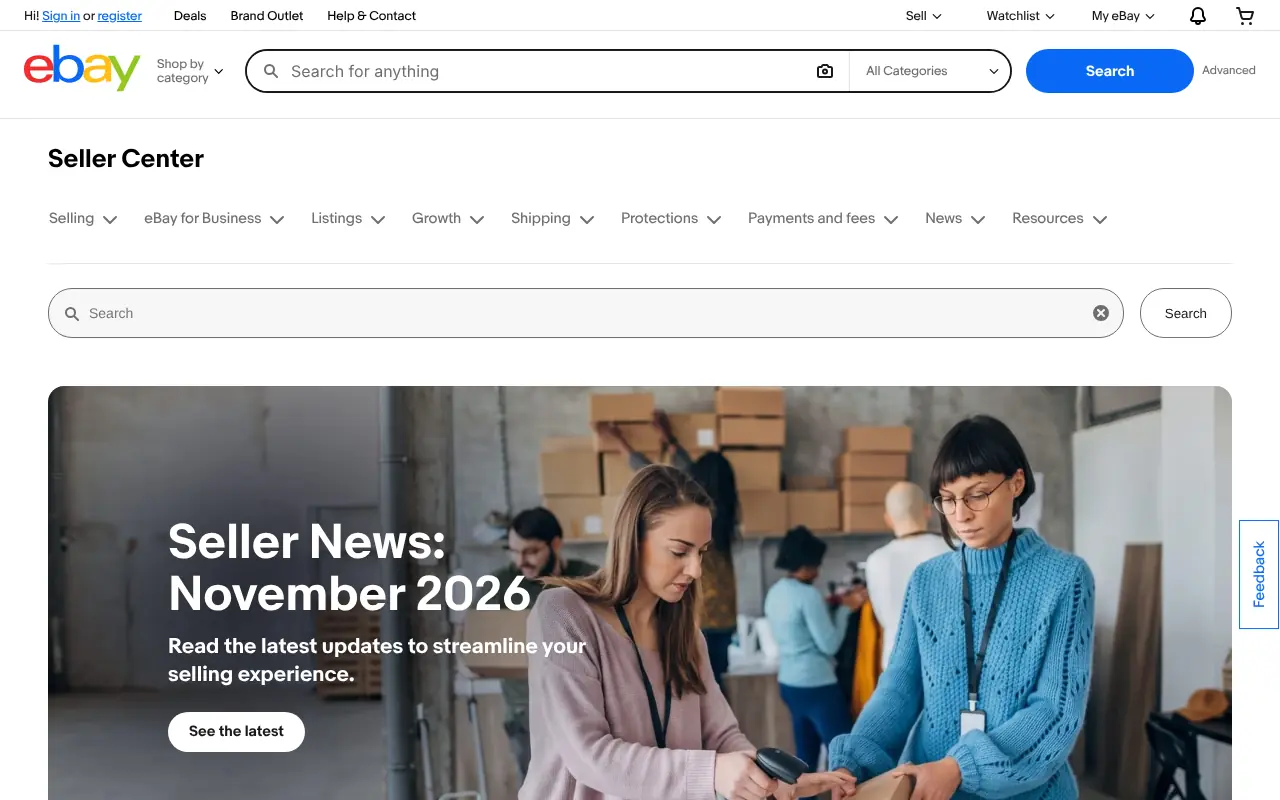
Marketplace = acquisition. Use it to reach people who do not know you yet. Price competitively, protect your account health and treat it as a paid ad channel with an unusually good conversion rate.
Your website = retention and margin. Move buyers there with a reason: a bundle only available on your site, a loyalty reward, a better warranty, faster support. Include a card in each parcel pointing to your site, within each marketplace's rules. Read the policy first: some marketplaces forbid steering buyers off-platform in the order itself.
A practical rollout:
- Month 1-2: Validate on a marketplace. Learn what sells and at what price.
- Month 2-3: Launch your own site with your best three to five products. Start collecting emails.
- Month 4-6: Invest in SEO, content and email. Offer site-only perks.
- Month 6+: Review the numbers per channel. Shift inventory and ad spend toward whichever has the better contribution margin after fees.
Inventory sync is the hidden challenge. If you sell the same stock in several places, overselling is the main operational risk. Keep one source of truth for inventory, or reserve a fixed quantity per channel to start.
Marketplace vs Own Website in the EU and UK
If you sell in Europe, a few rules apply regardless of channel, but they land differently:
- VAT. Since July 2021, marketplaces in the EU can be treated as the deemed supplier for certain sales, which changes who collects VAT. On your own site, you are responsible. See our guide to EU VAT OSS.
- Consumer rights. The 14-day withdrawal right and the price display rules apply on your own site. Read about the Omnibus Directive pricing rules, which govern how you can show discounts.
- Local marketplaces. In several countries a regional marketplace outranks Amazon. Check which one your customers actually use before choosing.
Always check the current rules where you sell. This section summarizes EU and UK points as of November 2026. VAT and consumer-law rules change and vary by country, so confirm the details with a local tax adviser or regulator before you sell. This is general information, not legal or tax advice.
Where Your Next Store Fits
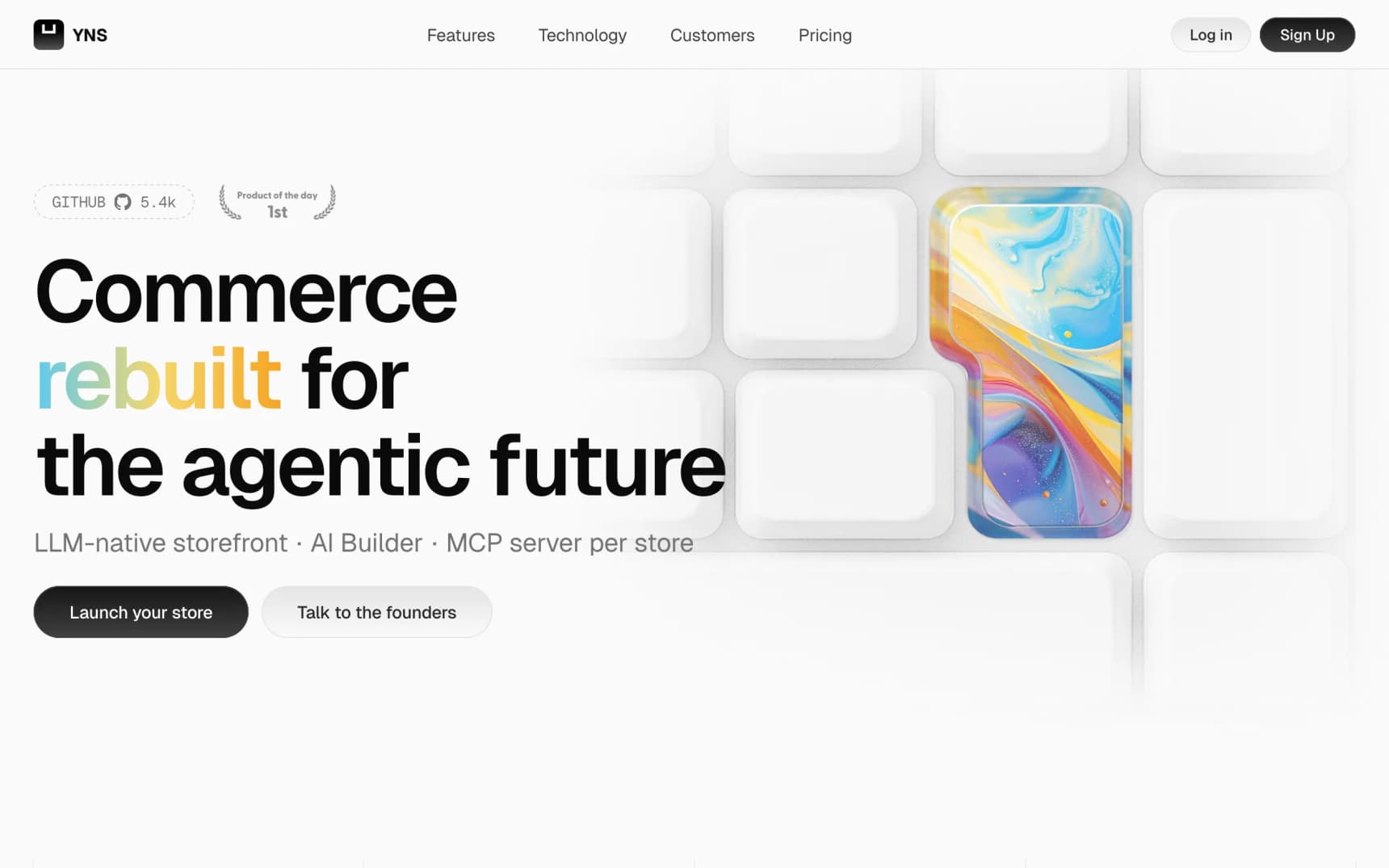
If you decide to build your own website, Your Next Store is designed for that step. It is a managed commerce backend with an AI-powered store builder, so you can describe the store you want and get a working storefront, then refine it. There is a flat plan price (Starter is $30 per month, or $25 per month billed yearly) and 0% platform transaction fees on every plan, so you only pay Stripe's standard processing fees.
For developers, the storefront is an open-source Next.js template (YNS on GitHub) you can customize fully. That makes it a good fit for the "marketplace for discovery, own site for margin" model, because you are not paying a percentage on the sales you worked hardest to earn.
To be fair about the tradeoffs: YNS does not give you a marketplace's built-in audience, and no website does. You still need to bring visitors. If you also want a ready-made channel for discovery, keep your marketplace listings, and send repeat customers to your store.
FAQ
Is it better to sell on Amazon or my own website?
It depends on your stage. Amazon is better for fast validation and for products that win on price and reviews. Your own website is better for brand building, margins and repeat customers. Many sellers use Amazon for acquisition and their own site for retention.
Can I sell on Etsy and my own website at the same time?
Yes, and many sellers do. Keep your branding consistent, list the same products carefully so inventory does not oversell, and follow each marketplace's rules about directing buyers to outside sites. Use the website for products or bundles you want to keep margin on.
How much cheaper is selling on your own website?
Usually the per-order cost is lower, because you avoid referral and transaction fees, but you take on platform costs and the cost of getting traffic. Run the numbers for your category: compare marketplace fees per order against your platform fee, processing and customer acquisition cost.
Do I need my own website if I sell on a marketplace?
Not on day one, but it is wise to have one before the marketplace becomes your whole business. A site gives you a customer list and a channel you control if the marketplace changes its rules or suspends your account.
The Bottom Line
Rent the audience while you need it. Build the asset while you can. The sellers who last are the ones who treat marketplaces as a way to find customers and their own website as the place those customers stay.
Related Blog Posts
Before you spend more on ads,
check your store.
Get a free 25-point checklist to find what could be holding back your sales, from product pages to checkout.