Ecommerce Email Marketing: The Flows That Drive Sales
 Jakub Neander
Oct 30, 202612 min read
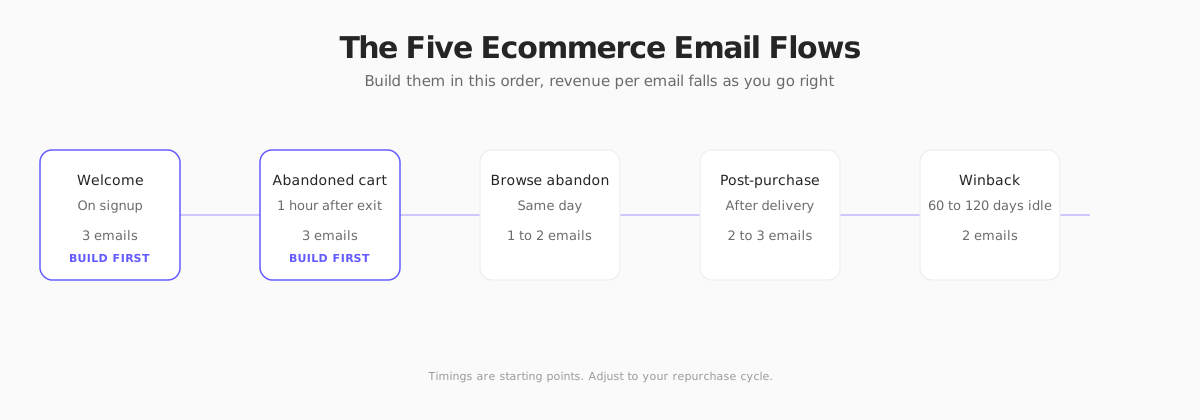
Ecommerce email marketing earns most of its money from five automated flows, not from newsletters. A welcome series, an abandoned cart sequence, browse abandonment, post-purchase and winback emails run on their own and reach shoppers at the moment they are most likely to buy. This guide shows what to build first, the timing for each flow, which tools to use, and the consent rules in the US, EU and UK.
Flows vs Campaigns: Where the Money Comes From
Email marketing for an online store splits into two kinds of messages:
- Flows (automations) fire when a shopper does something: signs up, adds to cart, buys, goes quiet. Set up once, they work every day.
- Campaigns are one-off sends to a list or segment: a launch, a sale, a newsletter.
Campaigns are useful, but they depend on you remembering to send them. Flows catch intent while it is warm. Klaviyo publishes benchmark data showing flows produce a disproportionate share of email revenue compared with the share of sends they make up. The exact figures vary by year and industry, so check the current report, but the pattern is consistent: a small number of flows carry most of the weight.
Before the Flows: Get the Foundations Right
1. Authenticate your sending domain
Since 2024, Google and Yahoo require bulk senders to authenticate with SPF and DKIM, publish a DMARC policy, offer one-click unsubscribe and keep spam complaints low (Google's guidance is to stay under 0.3%). Your email tool will walk you through the DNS records. Skip this and your flows land in spam, however good the copy is.
2. Collect emails with a reason
A bare "subscribe for updates" box converts poorly. Offer something specific: first-order discount, early access to drops, a size guide, a back-in-stock alert. Capture the email early in checkout too, because that email is what powers the abandoned cart flow.
3. Get consent right
- United States. CAN-SPAM does not require opt-in for marketing email, but you must include a physical address, an honest subject line and a working unsubscribe, honored within 10 business days. Texting is stricter and needs prior express written consent under the TCPA.
- European Union. GDPR and the ePrivacy rules generally require opt-in consent for marketing email. A limited "soft opt-in" exists in some member states for existing customers promoted similar products, so check yours. Check your national rules for the specifics.
- United Kingdom. PECR requires consent for marketing email, with a similar soft opt-in for existing customers who were offered an opt-out at the point of sale and in every message.
Always check the current rules where you sell. This section summarizes US, EU and UK email marketing consent rules as of October 2026. Regulations change and vary by country, so confirm the details with a local regulator or a privacy specialist before you send. This is general information, not legal advice.
The Five Flows, in Build Order
Flow 1: Welcome series (3 emails)
The welcome series reaches people who just raised their hand, so it gets the highest open rates you will see.
- Immediately: deliver the promise (the discount code or guide) and say what the brand stands for in two lines.
- Day 2: your best-selling products, with social proof.
- Day 4 to 5: a reason to buy now: the code expires, a bundle, a low-stock item.
Keep it short. Two or three emails beat seven.
Flow 2: Abandoned cart (3 emails)
A shopper who added to cart has told you exactly what they want. Baymard's average cart abandonment rate across studies is about 70%, so even a modest recovery rate is meaningful revenue. Send the first email about an hour after they leave, the second the next day, and an optional third at day three. We cover the copy, subject lines and incentive logic in the abandoned cart emails guide, and the checkout fixes that stop abandonment in the first place in how to reduce cart abandonment.
Flow 3: Browse abandonment (1 to 2 emails)
The shopper looked at a product page but never added to cart. Intent is lower, so the touch should be lighter: a "still thinking about it?" email the same day, with the product and two similar items. Skip discounts here unless you have to. This flow needs on-site tracking, and in the EU and UK that tracking itself needs cookie consent.
Flow 4: Post-purchase (2 to 3 emails)
The most underused flow. After the order:
- Order confirmation and shipping are transactional, so they are required anyway. Make them clean and on-brand.
- After delivery (about 7 to 14 days): ask for a review and show how to use the product.
- At the typical repurchase window: a replenishment reminder or a complementary product.
Existing customers cost far less to convert than new ones, so this flow pays back quickly.
Flow 5: Winback (2 emails)
Trigger it when a customer has not bought for roughly 60 to 120 days, depending on your repurchase cycle (a coffee brand has a shorter cycle than a furniture store). Email one is a "we miss you" with new arrivals. Email two adds an incentive. If they still do not open, stop sending. A clean list helps deliverability.
Segmentation That Is Worth the Effort
You do not need dozens of segments. Start with these:
| Segment | Why it matters | Example use |
|---|---|---|
| New subscribers (no purchase) | Haven't bought yet | Welcome flow, first-order incentive |
| First-time buyers | Highest risk of never returning | Post-purchase education, second-order nudge |
| Repeat buyers | Your best customers | Early access, no discounts |
| Lapsed (60 to 120+ days) | Likely to churn | Winback flow |
| Product-category buyers | Intent signal | Complementary product emails |
Pick a Tool
| Tool | Best for | Watch out for |
|---|---|---|
| Klaviyo | Stores that want deep ecommerce flows and segmentation | Pricing scales with contacts, so costs climb as your list grows |
| Omnisend | Small and mid-size stores that want email and SMS in one place | Fewer advanced reporting options than the largest tools |
| Mailchimp | Beginners who want a simple builder | Ecommerce automations are less deep than ecommerce-first tools |
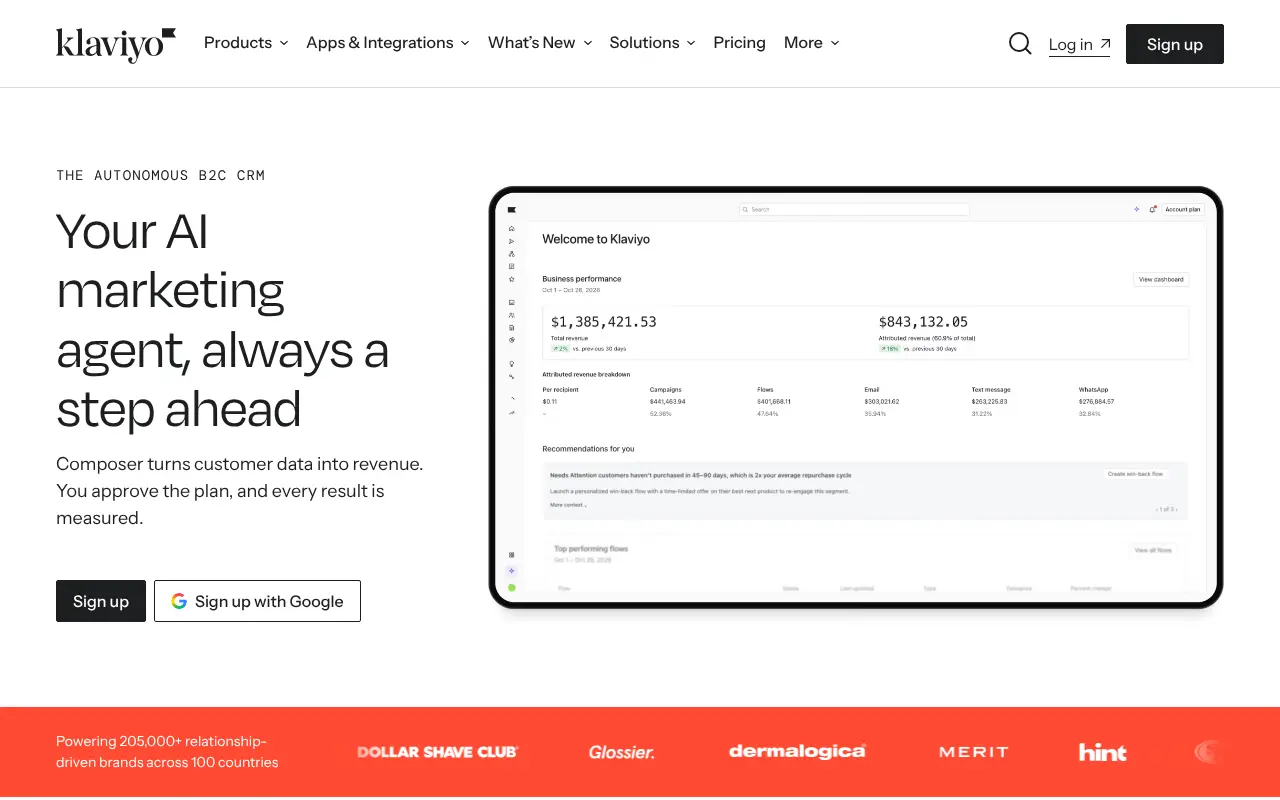
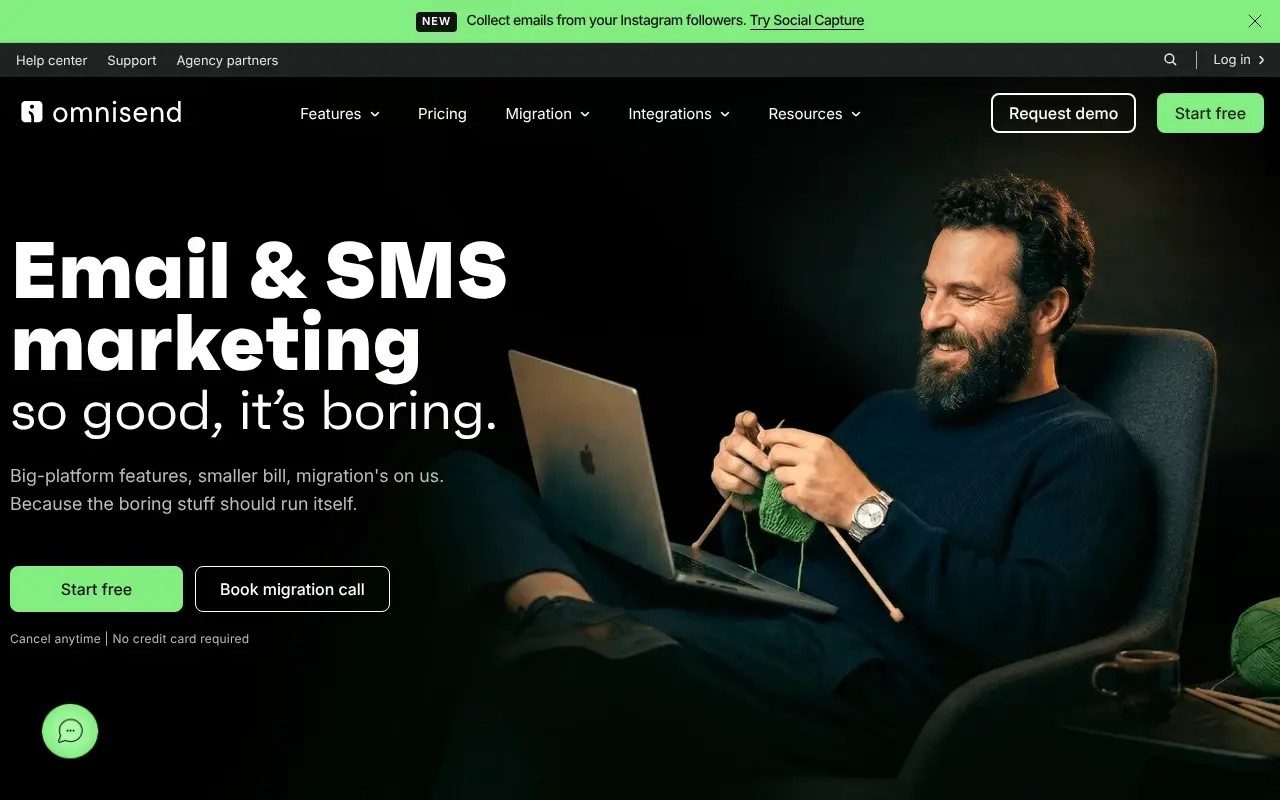
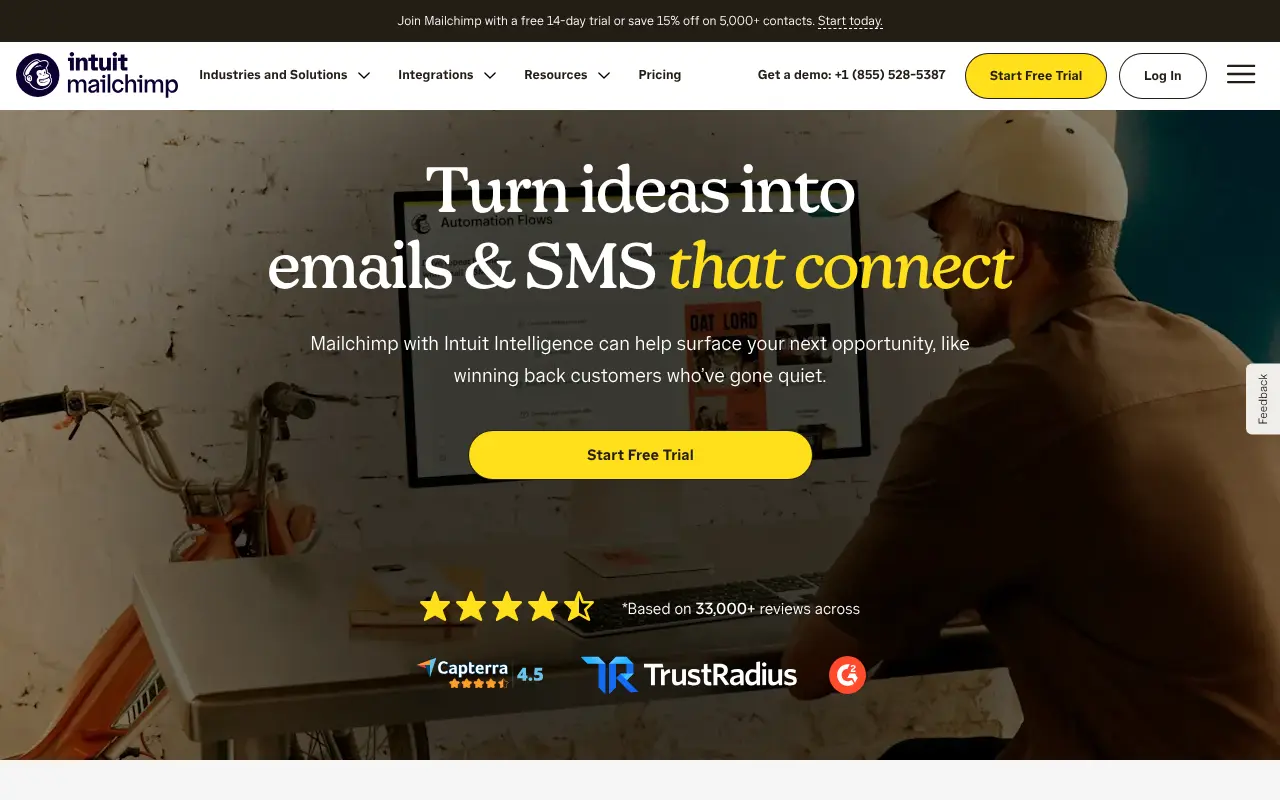
Plans and prices change often, so check each vendor's pricing page before deciding. Our best email marketing platform for ecommerce comparison goes deeper on features and costs.
Where Your Next Store Fits
Your Next Store handles the commerce side: products, carts, orders and customers, plus transactional email through Resend. It is not a marketing email platform, so for flows you pair it with a dedicated tool. The store exposes a REST API for products, orders and customers, which is what an email tool needs to sync purchases and customer data. Check the docs for what is available before you plan an integration, because the exact connectors depend on the tool you pick.
Plans start at $30/month with 0% platform transaction fees, so email tooling is the separate line item to budget for.
Measuring What Matters
Open rates are less reliable since Apple's Mail Privacy Protection inflates them, so lean on metrics tied to money:
- Revenue per recipient for each flow and campaign
- Click-through rate as the engagement signal
- Conversion rate and attributed revenue, compared against a holdout when you can
- Unsubscribe and spam complaint rates, to protect deliverability
- Share of revenue from email, which many stores aim to keep as a healthy slice of the total
Review each flow monthly and change one thing at a time: subject line, send delay, offer.
Common Mistakes
- Discounting every flow. You train shoppers to wait for a code. Reserve incentives for the cart and winback flows.
- Emailing the whole list the same message. Even basic segmentation by buyer status helps.
- Forgetting mobile. Most opens happen on phones, so keep layouts single-column with large buttons.
- Ignoring list hygiene. Remove unengaged contacts, since low engagement hurts inbox placement for everyone.
- Launching all five flows at once. Build in the order above, measure, then add the next.
FAQ
What is the most important email flow for ecommerce?
The abandoned cart flow, followed closely by the welcome series. Both reach shoppers with clear buying intent, so they usually return more per email than any campaign.
How often should an online store send marketing emails?
Flows send when triggered. For campaigns, one to three a week suits most stores. Watch unsubscribes and complaint rates, and cut back if they climb.
Do I need consent to email customers?
In the EU and UK, generally yes, with a narrow soft opt-in for existing customers. In the US, CAN-SPAM does not require opt-in for email, but SMS needs written consent. Local rules vary, so verify where you sell.
Which email tool is best for a small ecommerce store?
Klaviyo suits stores that want depth, Omnisend suits those who want email plus SMS simply, and Mailchimp suits beginners. Compare current pricing against your list size before committing.
The Short Version
Build the welcome and abandoned cart flows first, add browse, post-purchase and winback after, and measure revenue per recipient. Automated emails are the part of marketing that keeps selling while you sleep.
Related Blog Posts
Before you spend more on ads,
check your store.
Get a free 25-point checklist to find what could be holding back your sales, from product pages to checkout.