Best Email Marketing Platforms for Ecommerce in 2026
 Jakub Neander
Oct 29, 202611 min read
The best email marketing platform for ecommerce is the one that reads your store's order and browsing data and turns it into automated flows without a developer in the loop. For most online stores that means Klaviyo, GetResponse or Omnisend; Mailchimp and Brevo win on price and simplicity; and a developer-first tool like Resend wins when you only need order emails. Here is how they compare, what they cost as your list grows, and how to choose.
What an Ecommerce Email Platform Actually Needs to Do
A generic newsletter tool sends the same message to everyone. An ecommerce email platform does something harder: it listens to what shoppers do in your store and answers with the right message at the right time. Before comparing vendors, check the list against these five jobs:
- Event-driven automation: welcome series, browse abandonment, abandoned cart emails, post-purchase and win-back flows, triggered by real store events.
- Segmentation on purchase data: "bought twice in 90 days", "spent over $200", "viewed this collection but never ordered".
- Product-aware templates: pull product images, prices and recommendations straight from your catalog, not copy and paste.
- Deliverability: authenticated sending (SPF, DKIM, DMARC), sensible reputation management, and inbox placement that holds up when you scale.
- Attribution: revenue per campaign and per flow, so you can see which emails actually pay for themselves.
If a tool is strong on templates but weak on events, you end up exporting CSVs by hand. If it is strong on events but needs a developer for every change, your marketer waits on a sprint. The comparison below is mostly about that trade-off.
Best Email Marketing Platforms for Ecommerce Compared
| Platform | Best for | Free plan | Pricing model |
|---|---|---|---|
| Klaviyo | Data-heavy stores that want deep segmentation | Up to 250 profiles, 500 sends/month | Active profiles |
| GetResponse | Stores that want email, web push and landing pages in one tool | 500 contacts, 2,500 newsletters/month | Contacts, tiered |
| Omnisend | Small and mid-size stores that want email and SMS in one tool | 250 contacts, 500 emails/month | Contacts, with send caps |
| Mailchimp | Teams that already know it and want a familiar editor | Up to 250 contacts, 500 sends/month | Contacts, tiered |
| Brevo | Budget-conscious stores sending a lot of email | Yes (daily send cap) | Emails sent |
| Resend | Developers who want transactional and simple marketing email by API | Yes | Emails sent |
Prices were checked in October 2026 and change often, and every platform scales its price with list size. Treat the table as a starting point and confirm numbers on each vendor's pricing page.
Klaviyo: the default for data-driven ecommerce
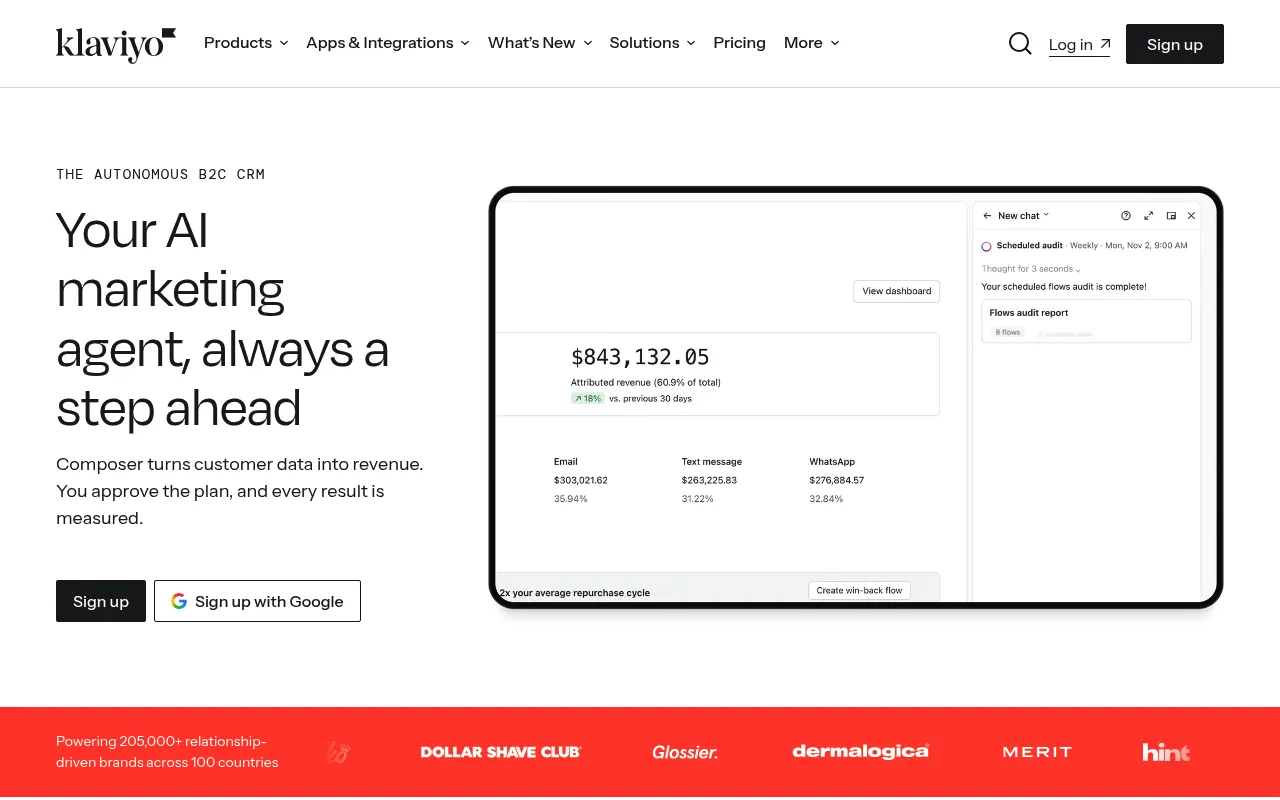
Klaviyo is built around the customer profile: every order, page view and click lands on one timeline, and you segment or trigger flows from any of it. That is why it is the tool most ecommerce guides reach for first, and why larger direct-to-consumer brands tend to stay on it for years.
The free plan covers up to 250 active profiles and 500 email sends a month, which is enough to build and test your core flows. Beyond that, Klaviyo prices on active profiles rather than emails sent, so the bill follows list size. Third-party breakdowns put the first paid tiers in the tens of dollars per month for the smallest lists, rising steeply as profiles grow, so model your expected list at 12 months rather than today. SMS is priced separately.
Choose Klaviyo if segmentation and flow depth are your growth levers. Skip it if you are a very small store that will use two flows and a monthly newsletter; you are paying for power you will not touch.
GetResponse: email, automation and web push in one place
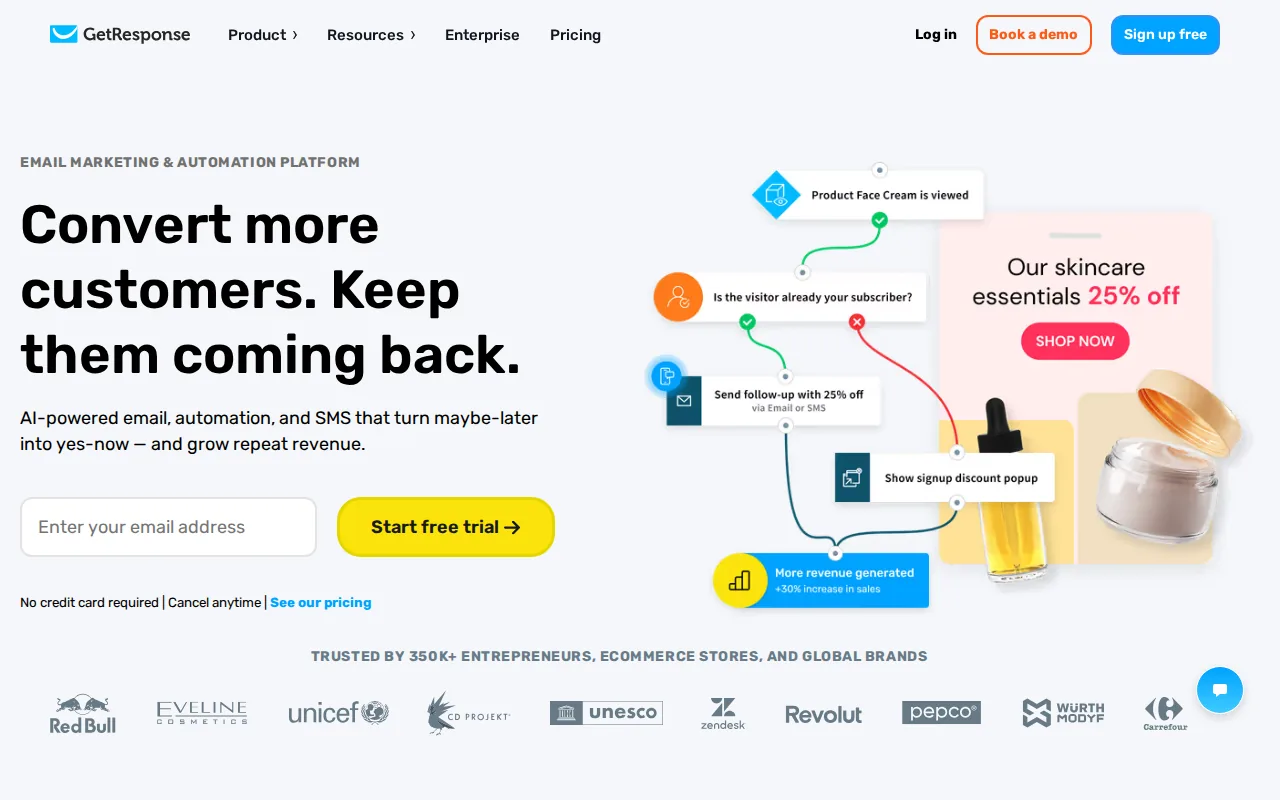
GetResponse has been around for more than two decades and has grown from a newsletter tool into a full marketing platform: email, web push notifications, popups, landing pages, webinars and a visual automation builder. For stores, the interesting part is its ecommerce layer. Connect your shop and it receives your products, customers, carts and orders, so workflows can start on real events: a cart left behind, a first purchase, a specific product bought, a product page viewed.
Its free plan covers up to 500 contacts and 2,500 newsletters a month. Paid plans are priced by contacts: Starter from about $19 a month for 1,000 contacts, and Marketer from about $59 a month, which is the tier most stores need because it unlocks abandoned cart workflows, product recommendations and unlimited automations. Annual billing takes roughly 18% off.
What sets it apart from Klaviyo and Omnisend is the breadth around the inbox. Web push and on-site popups can react to what an anonymous visitor is browsing, before you even have their email address, and landing pages and webinars live in the same account. Segmentation on purchase data is strong, though Klaviyo still goes further on custom data modeling.
Choose GetResponse if you want ecommerce automation plus web push, popups and landing pages without stitching several tools together. Skip it if SMS is central to your strategy; it is only included on the Enterprise plan.
Omnisend: email and SMS built for stores
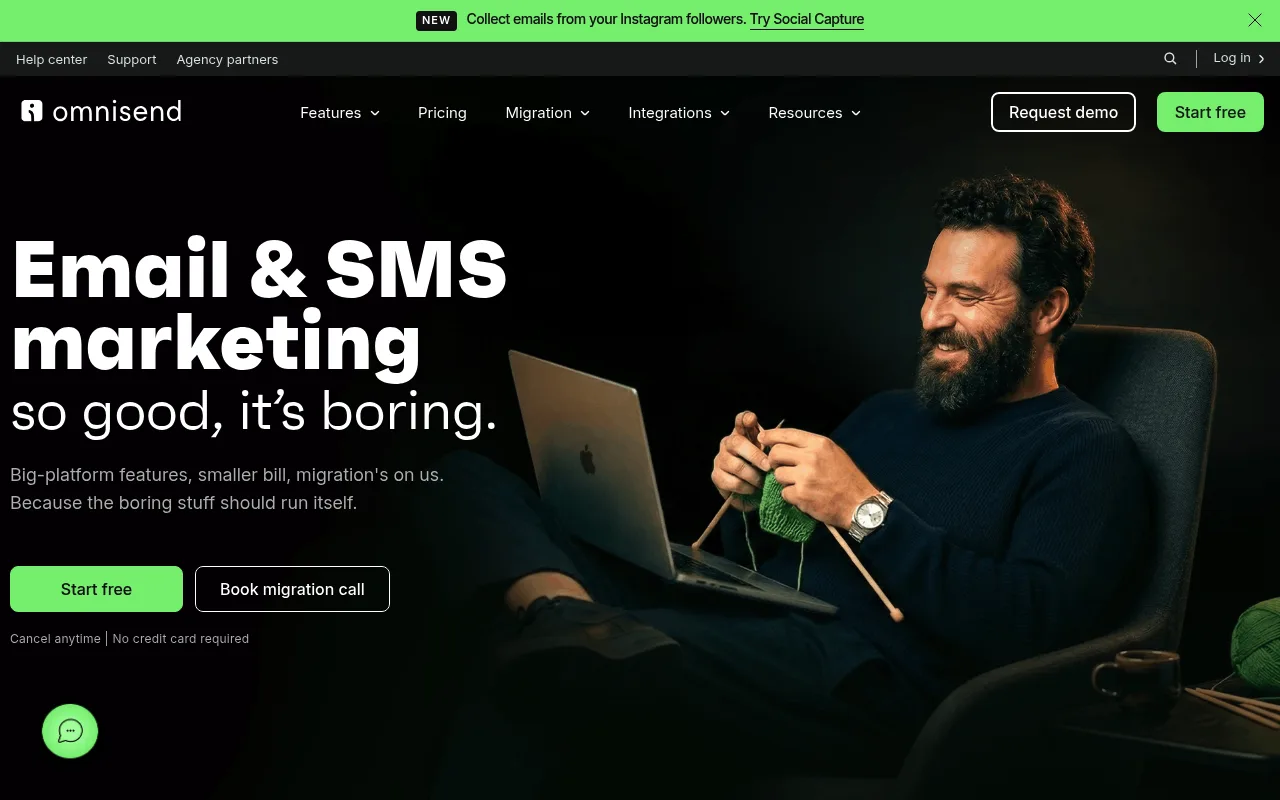
Omnisend is the closest competitor to Klaviyo, and it is aimed squarely at ecommerce. Its pricing page lists a free plan (up to 250 contacts and 500 emails a month), a Standard plan with 6,000 emails a month from roughly $11 at the smallest list tier, and a Pro plan with unlimited sends under fair use from roughly $41. Pro adds SMS credits. As with every tool here, the price rises with your contact count.
The appeal is a faster setup: pre-built flows for welcome, cart and browse abandonment, and a drag-and-drop builder that marketers can run alone. Segmentation is solid but shallower than Klaviyo's, which most small stores will never notice.
Choose Omnisend if you want email and SMS in one place at a lower entry price. Skip it if you need very custom data modeling.
Mailchimp: familiar, but not built for stores
Mailchimp is the tool many founders already know. Its listed plans start free (up to 250 contacts, 500 sends a month), then Essentials from about $13 a month and Standard from about $20 a month for the smallest lists, with introductory discounts that fall away after the first year. Premium starts around $350 a month for large lists.
It handles newsletters and basic automations well. Where it lags a dedicated ecommerce tool is in product-level events and revenue attribution, so you will do more manual work to get a polished cart-recovery flow. It is a reasonable pick if the store is small and email is a secondary channel.
Choose Mailchimp if you already use it and your needs are mostly campaigns. Skip it if automated revenue flows are the main goal.
Brevo: value for high volume
Brevo charges by emails sent rather than by contacts on its entry plans, which makes it attractive when you have a large list but send a modest number of campaigns. It combines email, SMS, WhatsApp and a light CRM, and it also offers transactional email, so one account can cover both marketing and order confirmations.
The trade-off is depth. Its ecommerce integrations and segmentation are good rather than best-in-class, and the free plan caps sends per day. Check the current limits on its pricing page before you plan a large launch.
Choose Brevo if price per send matters most. Skip it if you need Klaviyo-level behavioral targeting.
Resend: the developer route for transactional email
Resend is not a marketing automation suite. It is an email API for developers, with React-based templates and clean deliverability tooling. It is the right answer to a different question: how do I reliably send order confirmations, shipping updates and password resets from my own code?
Many teams run both: a marketing platform for campaigns and flows, and an API like Resend for transactional mail. Keeping them separate also protects your order emails if a promotional campaign dents your sender reputation.
Choose Resend if you are a developer and your needs are transactional. Skip it if your marketer needs a visual flow builder.
Transactional vs Marketing Email: Know the Difference
Shoppers expect order confirmations whether or not they subscribed to your newsletter. These are transactional messages: order receipts, shipping notifications, password resets. They are triggered by an action and are not promotional.
Marketing email is everything that promotes: newsletters, sale announcements, cart reminders and win-back offers. These need consent and an unsubscribe link in most jurisdictions.
Most stores need both, and the best setups send them through different streams or even different providers, so a promotional spike never delays a receipt. When you compare platforms, check whether transactional email is included, priced separately, or not offered at all.
How to Choose: Four Questions
- How big is your list in 12 months? Pricing scales with contacts or sends. Price the platform at the list size you expect, not today's.
- Who builds the flows? If a marketer will own it, favor a visual builder (Klaviyo, GetResponse, Omnisend, Mailchimp). If a developer will, an API-first tool is fine.
- How deep is the segmentation you need? "Everyone who bought" is easy anywhere. "Bought twice, last order over 60 days ago, viewed a specific collection" needs Klaviyo-class data.
- Does it integrate with your store? A native or well-maintained integration saves weeks. For headless or custom storefronts, check for an API and webhooks before you commit.
Email Marketing on a Headless or Next.js Store
Most of these platforms ship plug-and-play integrations for hosted platforms like Shopify. If you run a custom or headless storefront, the integration is something you wire yourself: send store events (order placed, cart updated, product viewed) to the platform's API, and keep consent state in sync.
That is a realistic afternoon of work for a developer, and it buys you full control over what data leaves your store. It is also why a clean commerce API matters: if orders, customers and carts are available over REST, connecting any email platform is a few webhook handlers away.
Where Your Next Store Fits
Your Next Store is the commerce backend and storefront, not a full email marketing platform. It does cover the first rung: an Abandoned Carts module that sends reminder emails to shoppers who left a cart, and a welcome-offer signup popup that captures addresses. For segmentation, multi-step lifecycle flows and SMS, you connect a dedicated platform.
GetResponse, Klaviyo and MailerLite connect as add-ons, with no code. Your catalog, customers and orders sync across, so automations can act on what people actually bought. With GetResponse, a cart appears there as soon as a shopper types their email at checkout and is matched to the order when they pay, so its abandoned cart workflow starts on its own and stops the moment they buy. Product and category views are reported too, which lets GetResponse's popups and web push react to what a visitor is browsing.
For any other platform, orders, customers and carts are available through the REST API and the Commerce Kit SDK, and the open-source Next.js storefront is yours to extend with whatever tracking calls your email tool needs. See the pricing and the open-source template.
Setting Up Your First Three Flows
Whichever platform you pick, build these before anything else, in this order:
- Welcome series (2 to 3 emails): introduce the brand, set expectations, offer a first-order incentive if margins allow.
- Abandoned cart (3 emails over about 48 hours): the highest-return flow in most stores. Our abandoned cart email plan has timing and copy. The broader problem is covered in how to reduce cart abandonment.
- Post-purchase (2 emails): order confirmation is transactional; follow up with usage tips and a review request.
Only then add browse abandonment, win-back and replenishment flows. Resist sending a weekly blast before the automations are working; flows earn revenue while you sleep.
Always check the current rules where you sell. Email consent and unsubscribe rules differ by region: the US CAN-SPAM Act, the EU's GDPR and ePrivacy rules, and the UK's PECR all apply in different ways. This post is general information as of October 2026, not legal advice. Confirm the details with the FTC's CAN-SPAM guide or a privacy specialist before you email customers.
FAQ
What is the best email marketing platform for a small ecommerce store?
For a small store, Omnisend, GetResponse or Klaviyo's free tier are the most common starting points because all three handle ecommerce flows. Under 250 contacts you can start on a free plan, and GetResponse's free plan goes up to 500. Its abandoned cart and other ecommerce workflows need the paid Marketer plan, so budget for that once the flows matter; revisit the choice when you outgrow the limits.
Is Klaviyo worth the price compared to Mailchimp?
If automated, behavior-based flows drive your revenue, yes: Klaviyo's event data and attribution justify the cost for most growing stores. If you mostly send occasional newsletters, Mailchimp or Brevo will do the job for less.
Which email platforms connect to Your Next Store without code?
GetResponse, Klaviyo and MailerLite are available as add-ons. Each syncs your products, customers and orders, so their automations can use real purchase data. Other platforms connect through the REST API.
Do I need separate tools for transactional and marketing email?
Not strictly, but it is a good practice. Separating the two keeps order receipts deliverable even if a promotion hurts your marketing sender reputation. Some platforms such as Brevo offer both under one account.
The Bottom Line
Pick the platform that matches who will build the flows and how deep your segmentation needs to go, then price it at the list size you expect in a year. Start with three flows, measure revenue per email, and upgrade only when the tool, not the strategy, becomes the bottleneck.