AI Shopping Assistants: Do They Increase Sales?
 Jakub Neander
Oct 5, 202610 min read
An AI shopping assistant can increase sales, but the evidence is strongest for the biggest retailers and weakest for small stores. Amazon says its Rufus assistant drove nearly $12 billion in incremental annualized sales in 2025. Your store is not Amazon. This guide covers what the data does and does not show, the three jobs an assistant can do, where it backfires, and how to test one without betting the business.
What Is an AI Shopping Assistant?
An AI shopping assistant is a chat or voice interface that answers shoppers' questions, recommends products, and sometimes completes actions like adding to cart. It differs from the keyword search box in one way: the shopper describes a need in plain language ("a waterproof jacket for a rainy commute under $150") and the assistant maps it onto your catalog.
Two things are often confused with it, so separate them early:
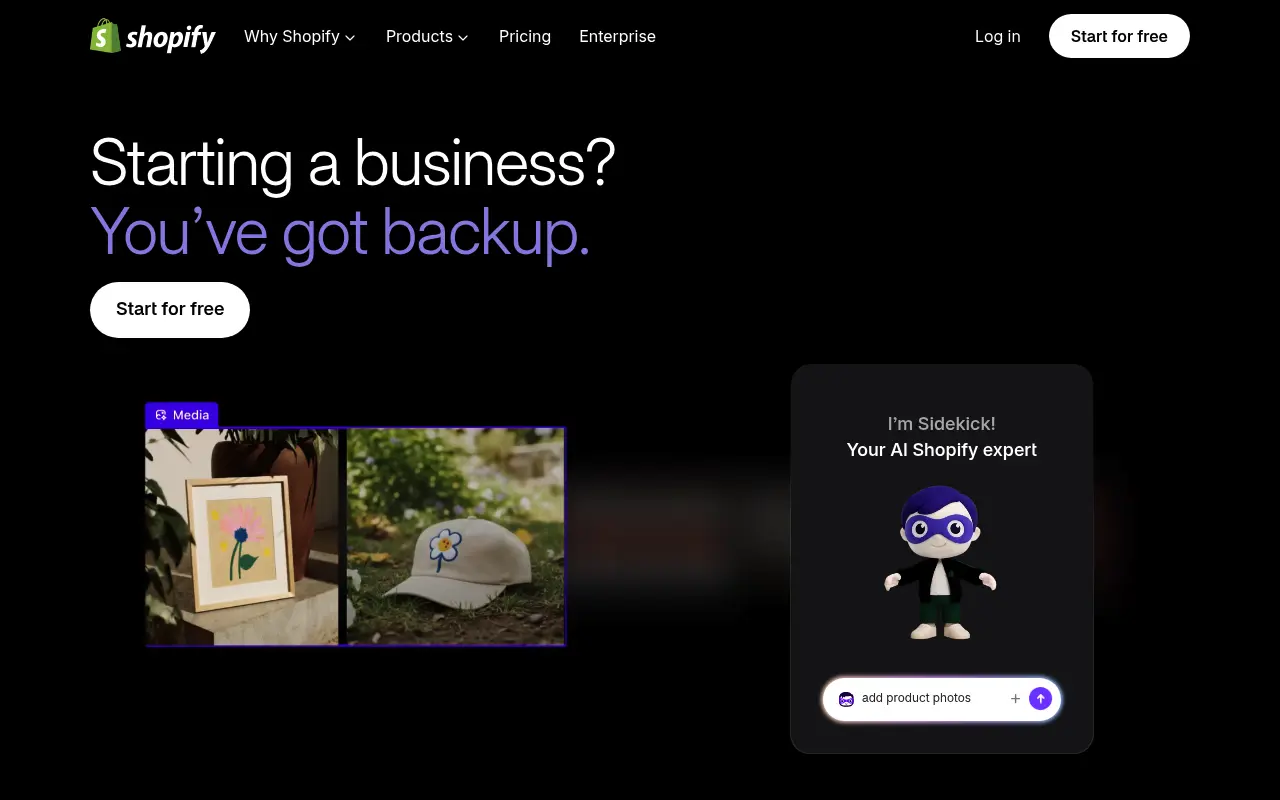
- Merchant-side assistants help you run the store. Shopify's Sidekick, for example, answers questions about your sales and automates admin tasks. That is productivity, not a shopper feature.
- Shopper-facing assistants talk to your customers on your storefront. That is what this post is about.
Do They Actually Increase Sales? What the Data Says
The honest answer is "sometimes, and mostly for the vendors who publish numbers."
The best evidence is from Amazon. The company reports that shoppers who use Rufus are about 60% more likely to complete a purchase than those who do not, and attributes nearly $12 billion in incremental annualized sales to it. Two caveats matter. These are Amazon's own figures, and shoppers who choose to chat with an assistant are probably already more motivated buyers, which inflates the comparison. Correlation is not lift.
The evidence for small stores is thinner. Most numbers you will see come from assistant vendors' case studies, where the customer picked the best result to publish. Treat them as upper bounds, not forecasts.
What you can reasonably expect, in order of confidence:
- Fewer repetitive support tickets. Questions about shipping, returns and order status have clear answers in your policies. Assistants handle these well.
- Better discovery on large or complex catalogs. When shoppers do not know the right keyword, conversational search can surface items they would not find.
- A conversion lift you have to prove yourself. It may be real, small or zero for your audience. Only a controlled test tells you.
The Three Jobs an Assistant Can Do
1. Answer questions
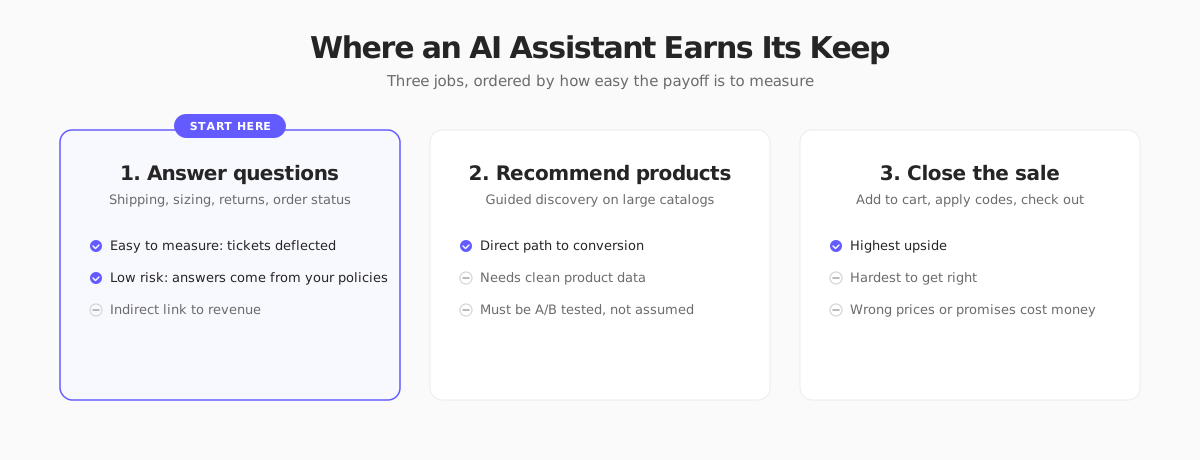
Shipping times, sizing, materials, return windows, "where is my order." This is the safest job because the answers come from your own policies and order data, and the payoff (tickets deflected) is easy to count.
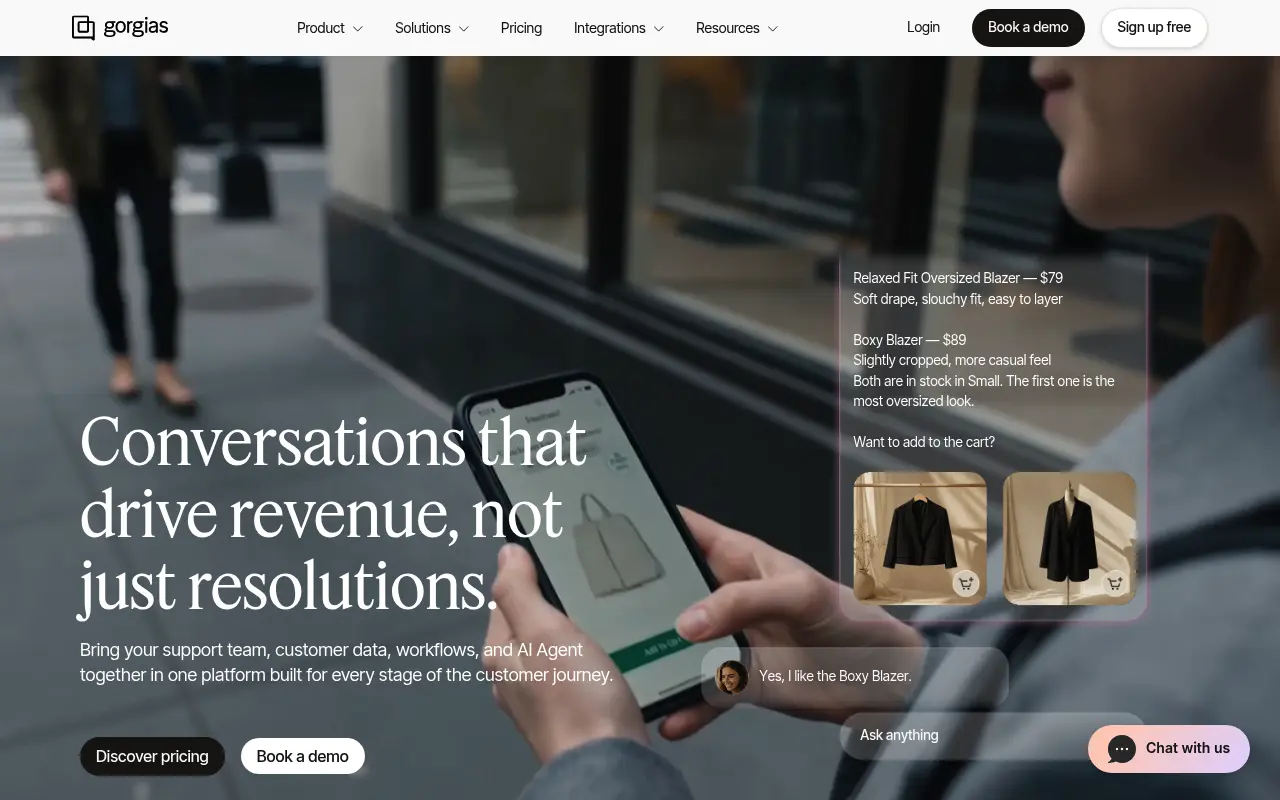
Vendors like Gorgias and Intercom's Fin pitch support-plus-sales assistants for exactly this. Check current pricing on their sites, since many charge per resolved conversation and costs scale with traffic.
2. Recommend products
This is where conversion could move. A shopper says what they want, and the assistant narrows 2,000 products to three. It works when your product data is clean: titles, attributes, materials, sizes, compatibility. If your catalog is thin or inconsistent, the assistant guesses, and bad recommendations are worse than no recommendations.
3. Close the sale
Adding to cart, applying a code, even checking out inside the chat. The upside is the biggest and the risk is too: a wrong price, a promised discount you do not honor, or an invented policy is now a customer-facing commitment. Start with jobs 1 and 2, and only move here once you trust the logs.
Where AI Shopping Assistants Backfire
Assistants fail in predictable ways. Know them before you install one.
- Hallucinated facts. The assistant states a return window, material or stock level that is not true. Ground it in your product data and policies, and make it say "I'm not sure, here is how to reach us" instead of guessing.
- Pricing and promise errors. In 2024 a Canadian tribunal held Air Canada responsible for wrong information its chatbot gave a customer, in Moffatt v. Air Canada. Assume your assistant's statements can bind you.
- Slower pages. Many assistants load a heavy script. If it hurts your Core Web Vitals, it can cost more than it earns. Load it lazily and measure.
- Privacy gaps. Chat transcripts contain personal data. Know where they are stored, who processes them, and how long they are kept.
- A dead end for people who want a human. Always offer an escape hatch to real support.
Test before you trust. Spend an hour trying to break the assistant: ask about products you do not sell, ask for a discount, ask for policies you have not written. Whatever it says in that hour, it will say to real customers.
How to Test an AI Shopping Assistant Without Guessing
Do not judge it by how impressive the demo looks. Judge it with a split test.
- Pick one outcome. Conversion rate of sessions that see the assistant, revenue per visitor, or tickets per order. One metric, chosen in advance.
- Split traffic. Show the assistant to half of visitors and not the other half. Comparing chatters to non-chatters is the flaw behind many glowing case studies, so compare the whole group that was offered it against the whole group that was not.
- Run it long enough. Two to four weeks, and across at least one full business cycle for your store.
- Read the transcripts. Numbers tell you whether it works. Conversations tell you why, and show you wrong answers before customers complain.
- Count the cost. Subscription, per-resolution fees, and the time you spend maintaining answers, against the revenue and support hours saved.
If it does not move your metric, turn it off. That is a successful test.
Compliance: US, EU and UK
Shopping assistants process personal data and make automated statements to consumers, so a few rules apply.
- European Union. The EU AI Act requires that people be told when they are interacting with an AI system, and GDPR governs the personal data in chat logs.
- United Kingdom. UK GDPR and the Data Protection Act cover the transcripts. Consumer law applies to what the assistant promises.
- United States. There is no single federal AI chatbot law, but the FTC's rules on deceptive practices apply to what an assistant claims, and some states, such as California, require disclosure that a bot is a bot in certain contexts.
Always check the current rules where you sell. This guide summarizes US, EU and UK rules on AI disclosure and data protection as of October 2026. Regulations change and vary by country and state, so confirm the details with your local regulator or a privacy specialist before you launch. This is general information, not legal advice.
Do You Need a Separate Assistant at All?
Not necessarily. Shoppers increasingly start in general-purpose AI tools, not on your site, which is why making your catalog readable to AI agents can matter more than adding a widget. Clean structured data, accurate product pages, and an API that agents can read help every assistant, including the ones you do not control.
If you do add one, the order of operations matters: fix your product data first, start with support questions, add recommendations second, and treat checkout actions as the last step.
Where Your Next Store Fits
Your Next Store includes an AI assistant in the admin, with a customizable knowledge base per store, to help you run the shop. That is a merchant-side tool, not a shopper-facing chat widget on your storefront. We lean on the second half of the advice above: storefronts built with JSON-LD structured data and a clean REST API are easier for any assistant, or any AI agent, to understand. If you want a shopper-facing chatbot on top, the storefront is a regular Next.js app, so you can add a third-party widget the same way you would on any other site, and our roundup of AI tools for ecommerce is a good place to compare options.
FAQ
Do AI shopping assistants increase conversion rates?
Sometimes. Amazon reports shoppers who use Rufus are about 60% more likely to buy, but that figure compares self-selected users with everyone else. For your store, run a split test with and without the assistant and measure revenue per visitor.
What is the best AI shopping assistant for a small store?
There is no universal winner. If support volume is your pain, start with a support-focused assistant such as Gorgias or Fin. If discovery on a large catalog is the issue, look for tools built around product search and recommendations. Check current pricing, because many are billed per resolution.
Are AI shopping assistants safe to use with customer data?
They can be, if you choose a vendor with clear data processing terms, limit what the assistant can see, and disclose its use. Review where chat transcripts are stored and for how long, especially if you sell in the EU or UK.
Will an AI shopping assistant replace my support team?
It can handle repetitive questions, which frees people for harder cases. It should not be the only path to a human.