AI Tools for Ecommerce: The 2026 Buyer's Guide
 Jakub Neander
Sep 7, 202613 min read
89% of retailers are now using or actively testing AI, and the share running AI in full production jumped from 42% to 58% in a single year. The number of AI tools for ecommerce has grown even faster than adoption itself. Search for one and you'll find hundreds of products, most solving the same handful of problems with different branding. This guide skips the hype and organizes what's actually worth paying for, by the job it does, with real pricing and honest trade-offs.
The Six Jobs AI Tools Actually Do Well in Ecommerce
Most "AI tools for ecommerce" articles are undifferentiated lists of 30 logos. That's not useful when you're trying to decide what to actually buy. In practice, AI-powered ecommerce tools cluster into six categories, each solving a different problem in the buying journey:
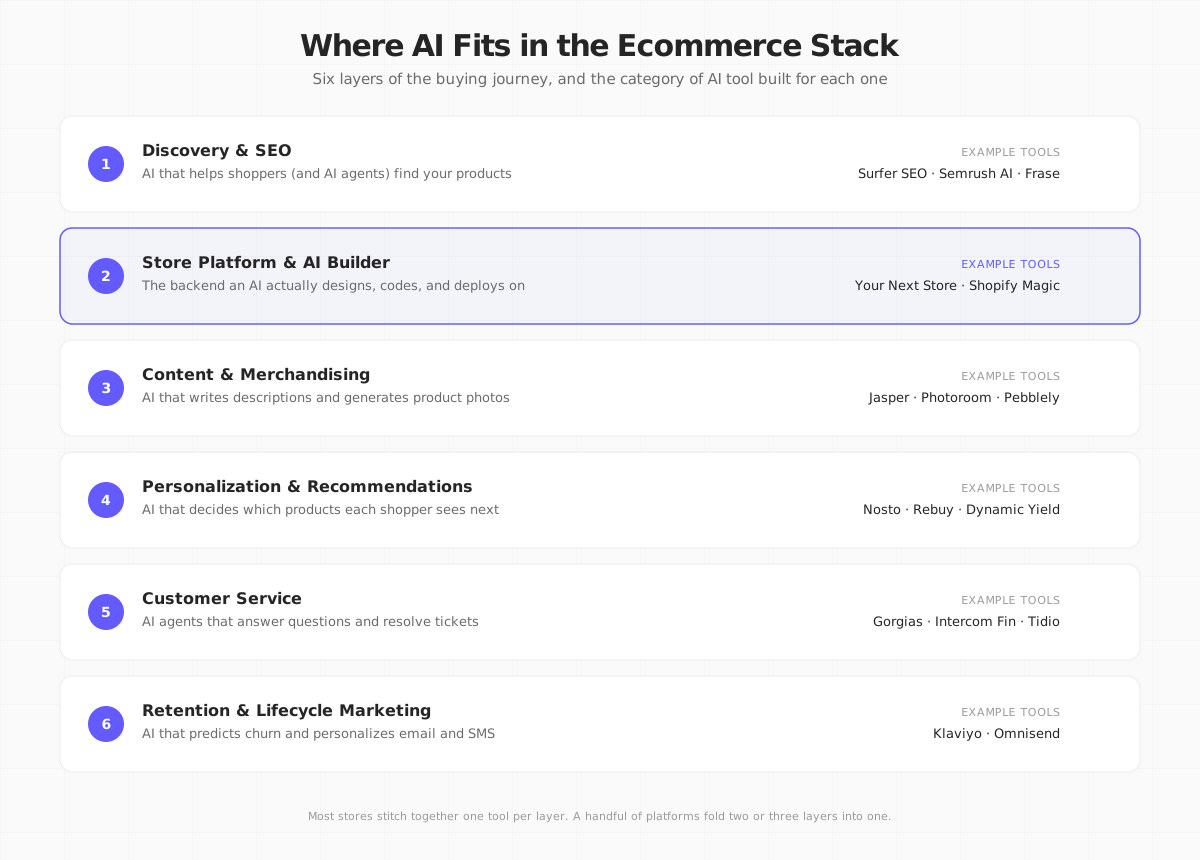
The rest of this guide walks through each layer, the tools merchants actually use in it, and what they cost. If you only read one section, make it the one that matches whatever is costing you the most time right now, not the one with the flashiest demo.
1. AI Product Description & Copywriting Tools
Every catalog eventually needs descriptions for hundreds of SKUs, and nobody wants to write them by hand. This is the most mature category on this list: models are good at prose, and every major platform has shipped a version of this.
- Shopify Magic generates descriptions, emails, and images directly inside the Shopify admin from a product title and a few bullet points. It's included with a Shopify subscription, so there's no separate bill.
- Jasper is a general AI writing platform with a real edge in brand-voice training: feed it 50+ of your existing descriptions and it holds the voice better than most generalist tools.
- Copy.ai has the deepest template library, useful if you also need ad copy and email beyond product pages.
- Describely and Hypotenuse AI are built specifically for catalog content, with multi-channel formatting (Amazon vs. Shopify vs. Google Shopping) and, in Hypotenuse's case, image-to-attribute extraction.
The tools matter less than the prompt. We wrote a full breakdown of the prompt template, the five failure modes that make AI copy sound generic, and which tool fits which catalog size in our AI product descriptions guide.
2. AI Product Photography & Background Removal
A studio photoshoot for a 200-SKU catalog easily runs into thousands of dollars. AI photo tools compress that to minutes for the basics, though the ceiling on quality still depends on your source photo.
- Photoroom is the strongest pure background-removal tool, with AI-generated backgrounds and batch processing on paid tiers. Its Pro plan runs $12.99/month billed monthly (about $7.50/month billed yearly), with a free tier that's watermarked and non-commercial.
- Pebblely specializes in dropping a plain product shot into a styled lifestyle background from 40+ preset themes, starting at roughly $9/month for a limited number of images per month.
- Pixelcut covers similar ground with batch background removal and starts near $10/month.
- Flair AI targets art-directed lifestyle and campaign imagery rather than plain listing shots, aimed more at brand marketing than raw catalog throughput.
The practical split: cutout-and-clean tools (Photoroom, Pixelcut) are for listing photos at volume. Scene-generation tools (Pebblely, Flair) are for campaign and lifestyle shots where the setting matters as much as the product.
Run a source photo through more than one of these before committing to a subscription. Quality varies a surprising amount by product category: reflective or transparent products (glassware, jewelry) trip up background removal far more often than matte, opaque ones.
3. AI Customer Service Chatbots
Support tickets scale with order volume, but headcount doesn't have to, at least for the repetitive third of tickets ("where's my order," "what's your return policy"). This is also the category with the messiest pricing, so read the fine print before you commit. If you are unsure whether a shopper-facing assistant pays off at all, we looked at what the evidence says about AI shopping assistants and sales.
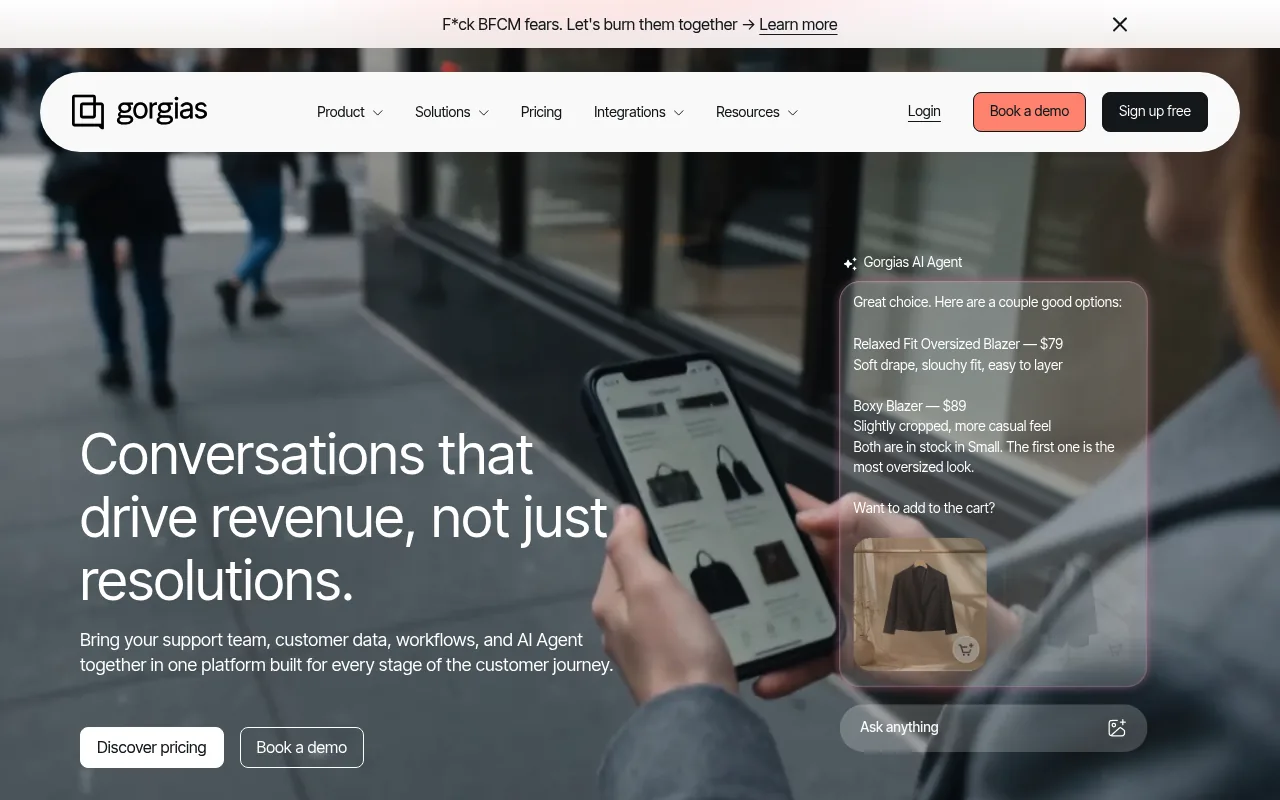
- Gorgias is the most Shopify-native option, with plans starting around $10/month and its AI Agent billed per resolved conversation on top. Its automation is deepest on Shopify specifically; BigCommerce, Magento, and WooCommerce stores get a thinner feature set.
- Intercom Fin is priced per resolution, which scales cleanly for small volumes but can get expensive fast: a few thousand monthly resolutions can run into four figures in AI fees alone. Worth it if resolution quality is excellent, worth checking the math either way.
- Tidio, with its Lyro AI agent, has the most approachable entry point: a free tier with a lifetime conversation cap, then paid plans from around $29/month with Lyro billed separately from about $39/month.
- Zendesk AI folds AI agents into its established ticketing suite, a natural fit if you're already running Zendesk for support.
The trap in this category is stacking per-resolution fees on top of per-seat helpdesk fees without doing the math on your actual ticket volume first. Model your busiest month, not your average one, before you pick a plan.
4. AI Personalization & Recommendation Engines
"Customers who bought this also bought" is decades old. What's changed is the sophistication behind it: modern engines blend behavioral signals, inventory, and margin in real time rather than running a static co-purchase table.
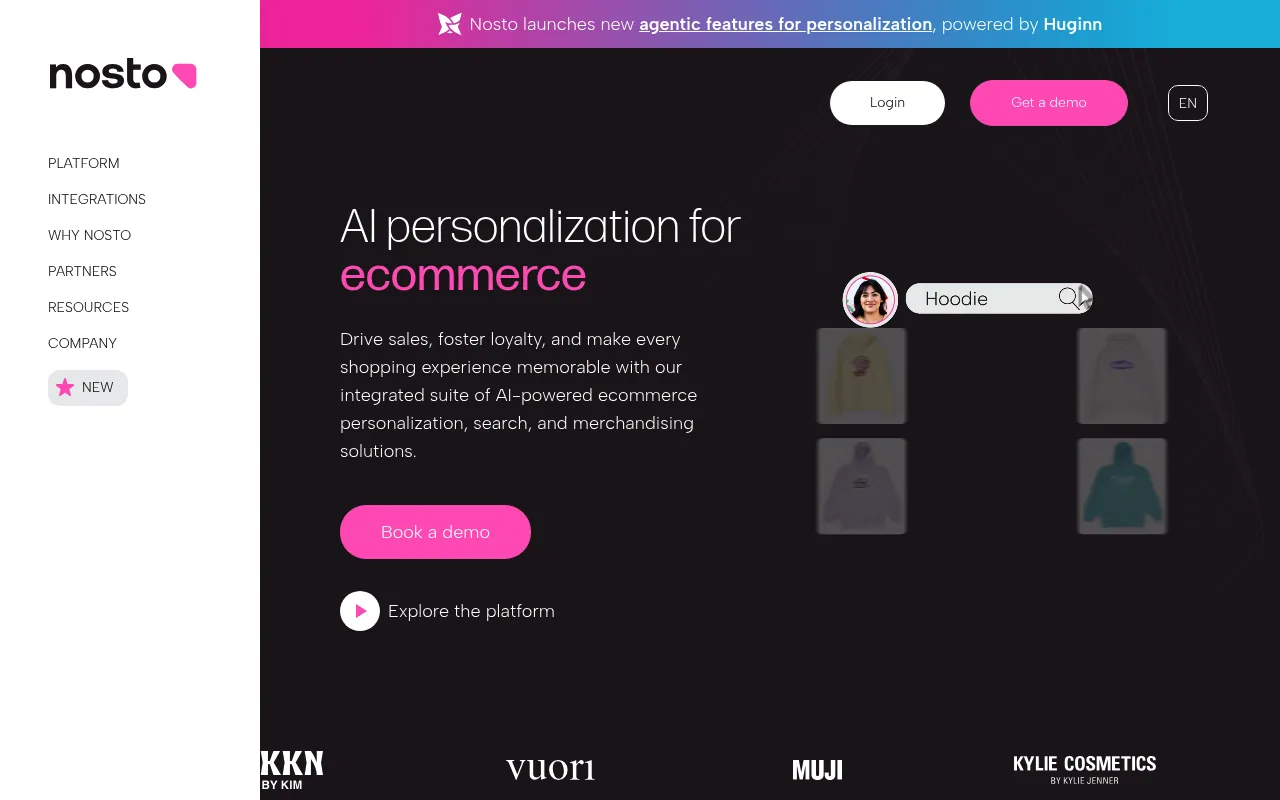
- Nosto positions itself as a full commerce experience platform: recommendations, on-site search, and merchandising in one system, with pricing that typically blends a platform fee and performance-based components rather than a flat sticker price.
- Rebuy focuses tightly on Shopify, with recommendation widgets, post-purchase upsells, and a subscription-style entry point that's meaningfully cheaper than the enterprise platforms below.
- Dynamic Yield (now part of Mastercard) and Bloomreach sit at the enterprise end, bundling personalization with broader experimentation and search infrastructure. Expect a sales-led conversation rather than a self-serve checkout, and a price that reflects the added scope.
Rule of thumb from vendors and integrators we've talked to: focused tools like Rebuy or Nosto tend to run in the low hundreds of dollars per month for a mid-sized store, while full-stack platforms like Bloomreach or Dynamic Yield start in the thousands but replace several other tools at once. We go deeper on the legal and architectural side of this (what counts as personalization, what GDPR and US state privacy law require) in our product personalization deep dive.
5. AI SEO & Content Tools
Separate from the technical SEO work of crawlability and structured data (covered in our ecommerce SEO guide), this category is about content: what to write, and whether it's actually competitive against what's already ranking.
- Surfer SEO is the most commonly recommended pick for ecommerce content teams, scoring drafts against top-ranking pages for the target keyword. Its entry-level Discovery plan runs $49/month billed annually, with content-optimization-focused tiers from $99/month.
- Clearscope plays a similar role at a higher price point, starting at $129/month for its Essentials plan, pitched at agencies and enterprise content teams that need the highest accuracy and don't need a bundled AI writer or rank tracker.
- Semrush includes AI content tools as one feature inside a much broader SEO suite (keyword research, backlink analysis, rank tracking), so it's a better fit if you need the whole toolkit rather than content optimization alone.
- Frase focuses on content briefs and outlines, useful earlier in the writing process than the score-your-draft tools above.
None of these write category-page or product-page copy that converts on their own. They tell you what topics and entities to cover to be competitive; you (or a copywriter) still have to make it good.
6. AI Store Builders
The newest category, and the one with the widest range of what "AI builds your store" actually means in practice. Some tools pick a template and fill it in. Others generate a real, working store, complete with products, checkout, and an admin panel. We wrote a full breakdown of the differences, complete with pricing and honest trade-offs, in our best AI store builders guide: the short version is that Your Next Store, Shopify Magic, and prompt-to-app tools like Lovable and Bolt.new sit in meaningfully different places on that spectrum, and the gap matters more once you're past the first demo.
Quick Comparison
| Category | Job it does | Example tools | Typical starting price |
|---|---|---|---|
| Descriptions & copy | Writes product and marketing copy | Jasper, Copy.ai, Describely | $0 (built-in) – $49/mo |
| Photography | Removes backgrounds, generates scenes | Photoroom, Pebblely, Pixelcut | $7–$20/mo |
| Customer service | Resolves support tickets | Gorgias, Tidio, Intercom Fin | $0–$60/mo + per-resolution fees |
| Personalization | Recommends products per shopper | Rebuy, Nosto, Bloomreach | $99/mo – enterprise (thousands/mo) |
| SEO & content | Scores content against top rankings | Surfer SEO, Clearscope, Semrush | $49–$129/mo |
| Store building | Designs and deploys the storefront | Your Next Store, Shopify Magic | $30/mo (YNS Starter) |
Prices change and vary by plan tier and usage; check each vendor's current pricing page before you commit. Most offer a trial or a low-commitment entry tier, so testing on one real product category before rolling out catalog-wide costs little beyond time.
Bias disclosure: We build Your Next Store, an ecommerce platform with an AI-powered store builder and AI assistant. We're one of the entries in category 6. We'll flag where that colors the analysis.
Your Next Store: AI Built Into the Backend, Not Bolted On
Most of the tools above are point solutions you connect to whatever platform you're already running. Your Next Store takes a different approach for the two layers we actually build: the store platform and the admin experience around it.
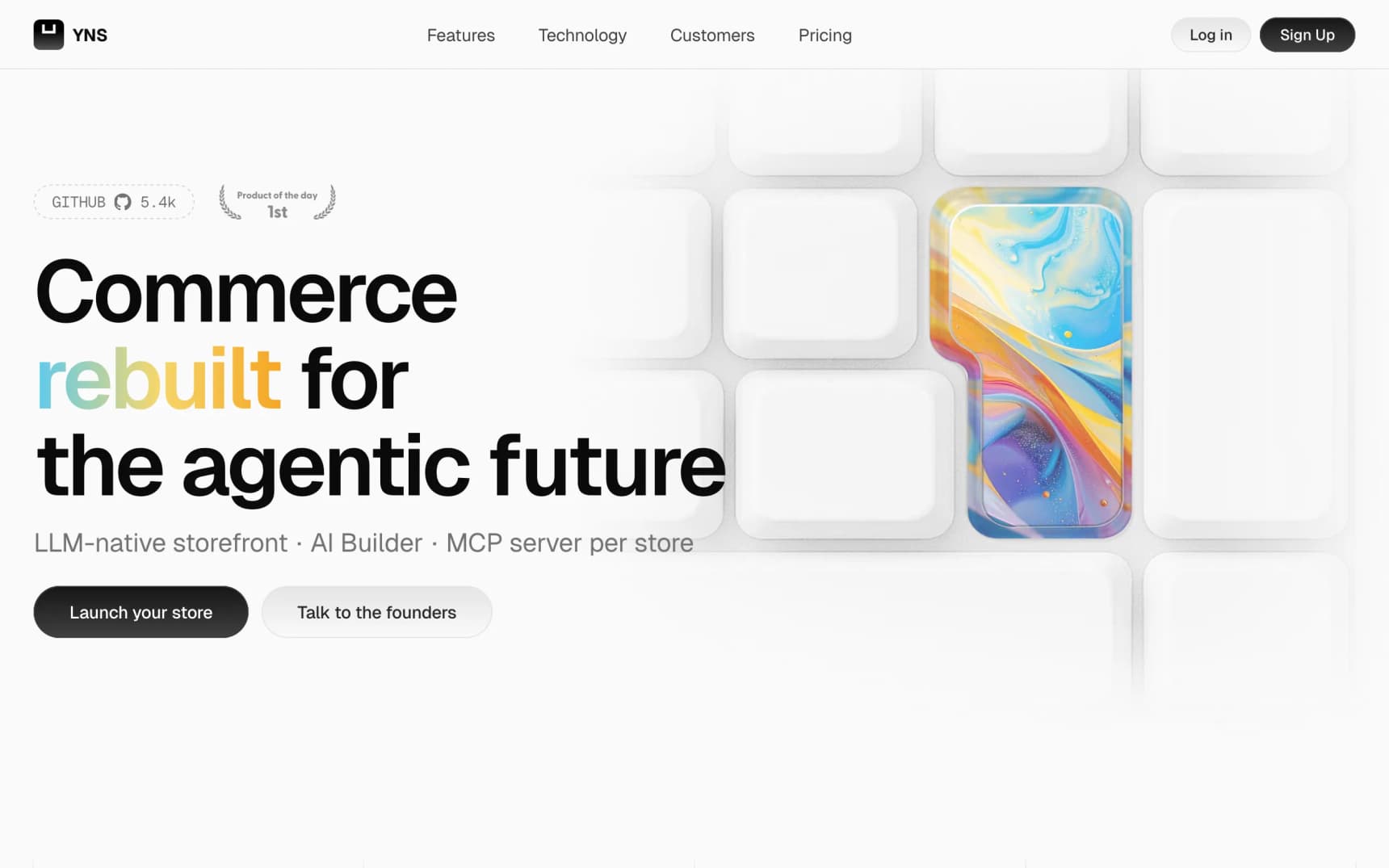
The AI store builder lives at /design in the admin. You describe changes in plain English, an AI agent works in the store's actual Next.js codebase (not a template picker), and you watch the result in a live preview before it deploys. It's the same pattern covered in category 6 above, and we go deeper on how it compares to the rest of that category in our AI store builders guide.
The AI assistant is a separate, ongoing feature: a chat assistant built into the admin with a per-store, customizable knowledge base. Rather than re-explaining your brand voice or return policy every time you ask the AI for something, you write it once into the store's knowledge settings and every subsequent AI interaction, from the store builder to admin Q&A, has access to it.
What YNS is honest about not being: it's not a dedicated personalization engine like Nosto or Rebuy, not a background-removal tool like Photoroom, and not an SEO content scorer like Surfer. It's a commerce backend and admin with AI built into the layers we own. For the categories above where we don't have a purpose-built tool, the right move is still to bring in a specialist, most of which connect to any storefront via API or a simple integration.
On pricing, plainly: YNS runs on three paid plans, Starter at $30/month, Growth at $90/month, and Pro at $360/month (all cheaper on annual billing), with 0% platform transaction fees on every plan; only Stripe's standard processing fees apply. There is no free plan. The open-source storefront template is free to self-host, but it's the frontend only, without the admin, AI builder, or AI assistant, and it requires the managed backend to function.
The storefront template is open source. Star it, fork it, or read the code before you trust it with your store.
How to Pick Without Wasting a Quarter
Buying every tool on this list at once is the most common mistake we see. A more disciplined approach:
- Audit where your time actually goes first. If you're spending three hours a day answering the same five support questions, start in category 3, not category 4. If your catalog copy is the bottleneck, start in category 1.
- Add one category at a time. Overlapping tools (a chatbot and a helpdesk AI both trying to own the same ticket, or two personalization engines fighting over the same product-page real estate) create more support burden than they save.
- Check what your existing platform already includes. Shopify Magic, YNS's AI assistant, and similar built-ins are often "good enough" for the basics, and adding a standalone tool only makes sense once you've hit their ceiling.
- Measure against a baseline before you renew. A month of "before" numbers (support ticket volume, average order value, description-to-conversion rate) is the only way to know whether a tool earned its subscription.
FAQ
Do I need all of these AI tools to run an ecommerce store?
No. Most small stores only need two or three: a store platform with AI content help built in, and maybe a customer service chatbot once ticket volume justifies it. Personalization engines and dedicated SEO content tools tend to pay off once you have enough traffic and catalog depth for the data to matter; below a few hundred orders a month, a human doing the same job manually is often just as effective.
What's the difference between an AI store builder and other AI ecommerce tools?
An AI store builder (category 6) creates or modifies the store itself: pages, layout, sometimes the underlying code. Everything else on this list is a tool that plugs into a store that already exists to handle one job, writing copy, removing backgrounds, answering tickets, or recommending products. You typically pick one store platform and then add point tools on top of it, not the other way around.
Are AI ecommerce tools worth it for a small or new store?
For the built-in ones (Shopify Magic, YNS's AI assistant), yes, there's no separate cost, so there's little reason not to use them. For paid, standalone tools, it depends on volume: a $9/month photo tool pays for itself almost immediately if you're onboarding new SKUs weekly, while a $2,000/month enterprise personalization platform doesn't make sense until your traffic and catalog are large enough for the incremental lift to exceed the bill.
The Bottom Line
None of the six categories above are optional forever, but none of them are urgent on day one either. The stores that get burned by "AI tools for ecommerce" aren't the ones that move too slowly. They're the ones that buy all six at once, based on demos, before they've confirmed which single bottleneck is actually costing them money. Fix the bottleneck. Then go shopping for the next one.