How to Start a Handbag Brand in 2026: The Honest Playbook
 Jakub Neander
Oct 15, 202612 min read
A handbag is one of the best products a new fashion founder can pick: no sizing, so far fewer returns than clothing, a high price per unit, and a customer who buys on taste, not on fit. It is also one of the easiest ways to burn through a savings account, because a bag is a small piece of engineering (leather, lining, zips, hardware, stitching) and your first sample will almost never be the one you sell. This is the honest playbook for how to start a handbag brand in 2026: seven steps, in the right order, with real cost ranges, the production paths worth considering, and the US and EU rules that apply to leather goods.
Total beginner? This is written for you. Every piece of jargon (tech pack, MOQ, FOB) gets explained the first time it shows up. Cost figures come from industry guides and vendor pages, so treat them as ranges to sanity-check, then get real quotes.
How to Start a Handbag Brand: The 7 Steps, in Order
- Pick one customer and one bag. Not "bags for women." One use, one price band.
- Test demand before you commission anything.
- Choose how the bag gets made: stock styles, custom design with a factory, or your own atelier.
- Sample until it is right, then cover the compliance basics.
- Price it so the math works.
- Set up a simple website where people can buy.
- Pick one place to get noticed.
Now the long version.
Step 1: Pick One Customer and One Bag
Handbags are a crowded category, and the way new brands get noticed is by being specific. "A stylish everyday bag" competes with every department store. "A structured laptop tote for people who commute by bike" competes with almost nobody.
Good starting points:
- A job the bag does. Commuting, camera carry, gym-to-office, nappy-bag-that-does-not-look-like-one.
- A material point of view. Vegetable-tanned leather, deadstock canvas, recycled nylon, apple-based leather alternatives.
- A price band you can defend. Under $100, $100 to $250, or $250+ each imply different materials, different margins and different customers.
Start with one hero style in two colors, not a collection. Every extra style is another pattern, another sample round and another minimum order. If you are still deciding whether fashion accessories are the right category at all, our guide to starting a clothing brand covers the wider decision.
Step 2: Test Demand Before You Commission Anything
You do not need 200 bags to find out if anyone wants one. Cheap ways to find out:
- Render or sketch the bag and run a waitlist. A single page with 3 to 4 clean mockups, a price, and an email field. Send $100 to $200 of targeted social traffic at it. If almost nobody joins, the idea or the audience is wrong, and you have spent a weekend, not a production run.
- Pre-sell a first batch. Once you have a good sample photographed, take deposits or pre-orders with a clear ship date. Pre-orders are the only form of validation that involves actual money.
- Ask 15 to 20 people in your target group to react to a physical sample. Ask what they would change, not whether they like it.
Step 3: Choose How the Bag Gets Made
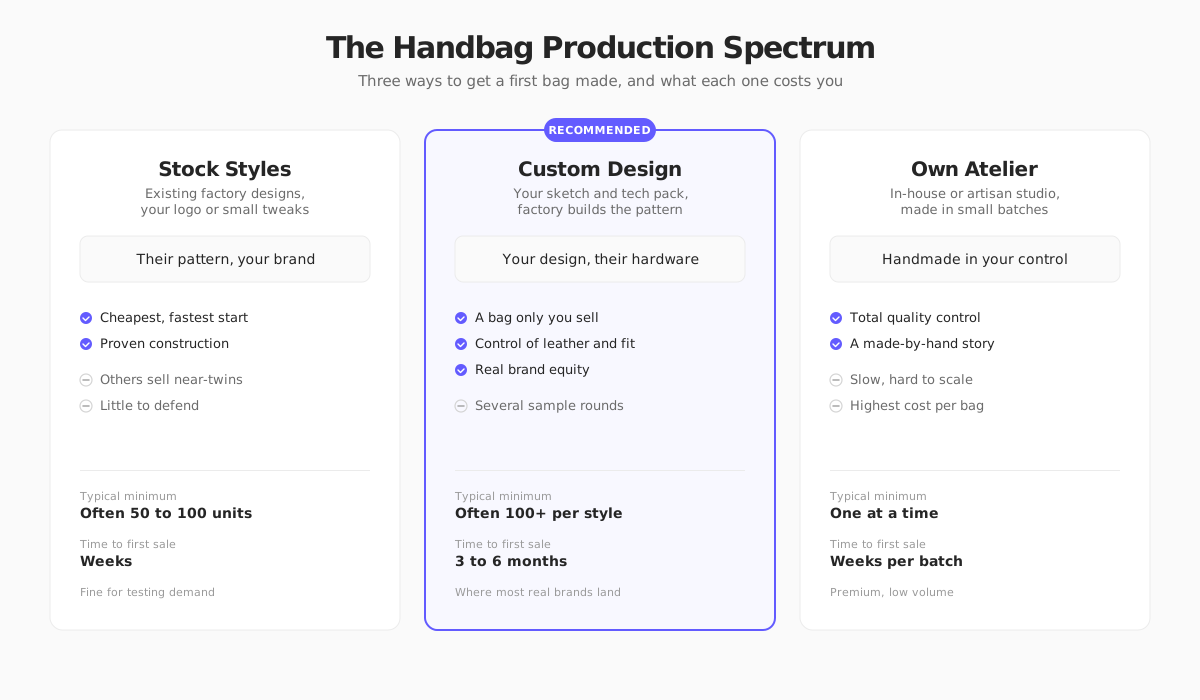
This decision sets your cost, your timeline and how defensible the product is. Here are the three real paths.
Stock styles (white label)
You pick an existing design from a manufacturer's catalog and add your logo or small changes. It is the cheapest and fastest start, and minimums are often around 50 to 100 units for smaller runs, though you should verify with each supplier. The trade-off is that someone else can buy the same bag, so there is little to defend. Use this path to test demand, not to build a long-term brand.
Custom design with a factory
You bring a sketch and a tech pack (a document with dimensions, materials, stitching, hardware and construction details), and the factory develops the pattern and samples. This is where most real handbag brands end up, because the bag becomes yours. A manufacturer-side guide on launching a private-label bag collection recommends not overbuilding your first order, which is good advice at this stage: one style, small quantities, and a sample you have actually carried for a week.
Your own atelier
You make the bags yourself, or with an artisan studio, in small batches. It gives you total quality control and a genuine "made by hand" story, but it does not scale: your time is the bottleneck, and your cost per bag is the highest of the three.
| Path | Upfront cost (rough) | Time to first sale | Control |
|---|---|---|---|
| Stock styles | $1,500–$6,000 | Weeks | Low |
| Custom design with a factory | $5,000–$30,000 | 3–6 months | High |
| Own atelier | $1,000–$10,000 (tools, materials) | Weeks per batch | Total |
Those are planning ranges, not quotes. Published estimates for a full handbag line vary widely, partly because a bag in synthetic canvas and a bag in full-grain leather are different businesses.
Most first-time founders should start with custom design at a small scale: one style, one factory, a few dozen to a few hundred units. Reselling a stock style is fine to test the market, but the brand you will want in year two is the one with a bag nobody else sells.
Step 4: Sample Until It Is Right, Then Cover Compliance
Samples
Expect several rounds. Sample-making and pattern costs are often quoted around $300 or more per style at a US sample maker, and more for complex designs. Overseas factories can be cheaper per sample but add shipping time. Every round costs weeks, so budget a few months from first sketch to a bag you would put your name on.
Before you approve a sample for production:
- Load it and carry it. Fill it with a laptop and a water bottle for a week. Straps, zips and corners fail at the stress points.
- Check hardware. Zips, clasps and rings are where cheap bags fail first.
- Approve a pre-production sample in writing. Ask what happens if bulk production differs from the approved sample, and get the answer before you pay.
Compliance, by region
Rules differ a lot between regions, so here are the ones that matter most for a new handbag brand.
In the US:
- Leather and imitation leather claims. The FTC has Guides for Select Leather and Imitation Leather Products (16 CFR Part 24) covering how handbags, luggage and belts can be described. Do not call something "leather" or "genuine leather" unless it meets the guide's definitions, and be careful with terms like "vegan leather" when the product is plastic-coated fabric.
- California Proposition 65. If you sell to California, certain chemicals in materials (lead in hardware, phthalates in vinyl or PVC) can trigger warning requirements or lawsuits. See the state's Proposition 65 overview. Ask your factory for test reports on coated and synthetic materials.
- Made in USA claims. If you want to say it, the FTC expects "all or virtually all" of the product to be made in the US. "Designed in the US" is a different, honest claim.
In the EU and UK:
- REACH chemical limits. Leather articles that touch the skin cannot contain chromium VI at 3 mg/kg or more of the leather's dry weight, and the same limit applies per leather part in a mixed article. A handbag strap or handle counts as skin contact in practice, so ask your tannery or factory for chromium VI test results.
- Product safety and a responsible contact. The EU requires products placed on the market to be safe and to be traceable to a business with a presence in the EU. If you ship from outside the EU, check how that applies to you before you launch there.
- Endangered species. Exotic skins (crocodile, python and others) fall under CITES trade rules in the US, EU and UK. For a first brand, skip exotics entirely.
Always check the current rules where you sell. This section summarizes US, EU and UK leather-goods rules as of October 2026. Regulations change and vary by country, so confirm the details with your local regulator or a compliance specialist before you produce or sell. This is general information, not legal advice.
Step 5: Price It So the Math Works
The classic mistake is pricing off the factory quote: "it costs $38 to make, so $90 is more than double." Then shipping, duties, payment fees, returns and marketing arrive.
Here is an illustrative breakdown for a mid-priced leather-look tote sold at $180 on your own site. The factory quote sits inside the $20 to $100 per bag range some guides cite, but your real numbers depend on material and quantity.
| Cost component | $ per bag |
|---|---|
| Factory cost (FOB, meaning the price at the factory's port before freight) | $38.00 |
| Freight, duties and import fees | $6.00 |
| Card fee (Stripe, about 2.9% + $0.30) | $5.52 |
| Shipping to customer | $9.00 |
| Returns and damage reserve (about 8%) | $14.40 |
| Marketing (about 25% of revenue) | $45.00 |
| What you keep at $180 | about $62 |
That is roughly a 34% net margin, which is healthy. Now watch what happens at $110: marketing and fees shrink, but the factory cost, freight and shipping do not, and you keep about $17 per bag. To make $10,000 you would need to sell around 580 bags instead of about 160. If the math does not work at your planned price, do not place the order at that price. Raise the price, simplify the design, or move to a cheaper construction before you commit to a run.
Step 6: Set Up a Simple Website
By now you have a tested bag, a price and ideally a waitlist. A handbag site does not need to be elaborate: good photos (front, back, inside, on-body, scale against a hand), clear dimensions and materials, honest shipping and returns, and a checkout that does not scare people off.
The main options in 2026:
- Your Next Store (us, to be upfront) starts at $30/month, or $25/month billed yearly, with 0% platform transaction fees on every plan (Stripe's standard processing fees still apply). An AI-powered builder sets the store up with you, with variants and inventory per variant built in, which is handy for a bag sold in several colors.
- Shopify is the familiar default with a huge app ecosystem, at the cost of monthly fees plus transaction fees if you do not use Shopify Payments.
- Etsy has built-in search traffic and suits handmade, small-batch bags, but you pay listing and transaction fees and the customer thinks of themselves as an Etsy shopper first.
- Squarespace or Wix work for a first small drop when your brand leans on photography. Many brands outgrow the commerce features within a year or two.
- Instagram plus a payment link. Fine for a pre-sale of one style. See our guide to selling online with Stripe.
Honest recommendation: put your effort into the product photography and the pre-order page first, then pick the platform. Our guide to starting an online store compares them in more detail.
0% platform transaction fees on every plan. A modern storefront for your handbag brand, ready in minutes.
Step 7: Pick One Place to Get Noticed
New handbag brands that try everything at once usually do it all badly. Pick one and run it seriously:
- Short-form video. Handbags film well: what fits inside, how the strap adjusts, a bag at three different outfits. "What is in my bag" content is practically its own genre.
- Pop-ups and markets. Customers want to touch the leather and test the zip. A table at a design market lets them, and teaches you what questions people ask.
- Micro-creators and gifting. Send a bag to a handful of people your customer already trusts, rather than a celebrity.
- Email from day one. Collect every address from the waitlist and the pop-ups. It becomes your cheapest, highest-margin channel.
- Wholesale, later. Boutiques typically buy at roughly half the retail price, so re-run your Step 5 math at that price before you say yes.
- Paid ads, last. Get organic content and a loyal first group working first, then use ads to amplify what already works.
Gotchas Nobody Mentions
- The sample is not the bulk. Production can drift from the approved sample. Get inspection rights, or a pre-shipment sample, written into the order.
- Returns are lower than apparel, not zero. No sizing, but color-in-photo versus color-in-person is a classic return reason. Shoot in daylight.
- Hardware lead times. Custom zip pulls and clasps can add weeks. Stock hardware with your logo engraved is the cheaper route for a first run.
- Customs and duties surprise customers. If you sell internationally, decide whether your price includes duties. Our guide to selling internationally covers the options.
What It Actually Costs to Start a Handbag Brand in 2026
| Your approach | Upfront (rough) | What you get |
|---|---|---|
| Stock styles, small run | $1,500–$6,000 | 50–100 units, your logo, fast test of demand |
| Custom design, one style | $5,000–$30,000 | Your own pattern, 100+ units, a real first collection |
| Own atelier | $1,000–$10,000 | Tools and materials, handmade batches, slow to scale |
The upfront number is rarely what sinks a handbag brand. The two killers are ordering a big run before validating demand, and pricing off the factory quote instead of the full cost stack. Founders who validate with a waitlist, sample patiently, price at the full cost, and describe their materials honestly are the ones still selling a second season. A handbag is a product people carry every day, so the bag that survives is the one that was built for being carried, and priced for being sold.
FAQ
How much does it cost to start a handbag brand?
Roughly $1,500 to $30,000+ for a first run, depending on the path. A small run of stock styles with your logo sits at the low end, while custom design with a factory, including several sample rounds, lands in the middle to high end. Published estimates for a full line range even wider, so get quotes for your specific materials.
Do I need a license to sell handbags?
In most places you need a general business registration and any local sales-tax or VAT registration, not a special handbag license. The product rules matter more: leather and material claims, chemical limits, and where you ship. Check with your local authority, and see our guide on ecommerce sales tax.
What is the best way to manufacture handbags as a beginner?
For most beginners, a small custom run with one factory: one style, a few dozen to a few hundred units, with a written approved sample. Stock styles are a fast test but give you little to defend, and an own atelier is hard to scale.
What is a tech pack?
A tech pack is the document you give a factory with the bag's dimensions, materials, stitching, hardware and construction details. A clear tech pack with measured drawings saves sample rounds, which saves money.
Can I call my bag "vegan leather"?
Be careful. In the US, the FTC's leather and imitation leather guides set rules for how these products can be described. Describe what the material actually is (for example, "plant-based leather alternative" or "coated recycled fabric") and keep test reports from your supplier.
Are handbags profitable to sell online?
They can be, with realistic pricing. In the illustrative example above, a $180 bag keeps roughly $62 after factory cost, freight, fees, shipping, returns and marketing. At a $110 price the same bag keeps about $17, which is why pricing off the full cost stack matters so much.