How to Start a Hat Brand in 2026: The Honest Playbook
 Jakub Neander
Oct 15, 202611 min read
Hats are one of the lowest-risk ways into fashion: one-size-fits-most means no size matrix, a logo on a cap is a complete product, and you can sell your first one without ordering a single case. They are also deceptively crowded, because anyone can put a logo on the same blank cap. This is the honest playbook for how to start a hat brand in 2026: seven steps in the right order, with real unit-cost ranges, the three ways to get hats made, and the US and EU labeling rules most guides skip.
Total beginner? Every bit of jargon (blank, MOQ, cut-and-sew) is explained the first time it appears. Prices come from vendor pages, which have an incentive to look attractive, so treat them as benchmarks and get your own quotes.
How to Start a Hat Brand: The 7 Steps, in Order
- Pick one customer and one hat. A specific crowd, not "everyone who wears caps."
- Test demand before you buy inventory. Hats make this unusually easy.
- Choose how your hats get made: blank plus decoration, custom trim, or cut and sew.
- Get the labeling and claims right for where you sell.
- Price it so the math works.
- Set up a simple website where people can buy.
- Pick one place to get noticed.
Now the long version.
Step 1: Pick One Customer and One Hat
"Caps with cool designs" is not a brand. What separates a hat brand from a pile of logos is a specific person and a point of view:
- A community. Runners, anglers, climbers, a city, a sports scene, a craft-coffee crowd.
- A hat type. Dad hats, five-panels, trucker caps, bucket hats, beanies, wide-brim sun hats. Each has a different customer and different construction.
- A look and a story. Washed vintage cotton, technical nylon for sun protection, wool for winter, deadstock fabrics.
Start with one or two shapes in a few colors. Every extra shape is another sample, another minimum and another size of box to store. If you are still choosing a category, our guide to starting a clothing brand covers the wider decision.
Step 2: Test Demand Before You Buy Inventory
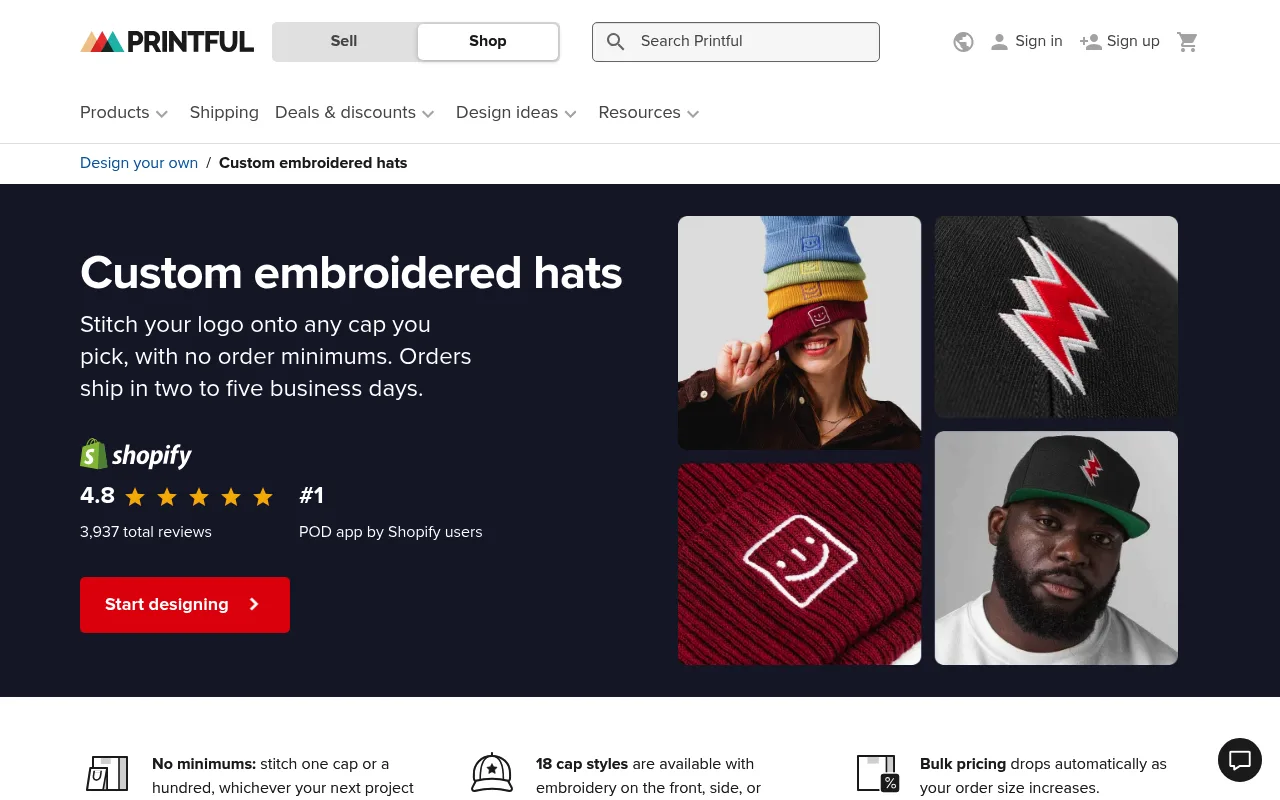
Hats are one of the few apparel products you can test with zero inventory. Some embroidery services have no order minimums: they stitch your logo on a stock cap and ship it per order, in a few business days.
Cheap ways to test:
- Mockups plus a pre-order page. Show two or three designs on real hat photos, collect emails or pre-orders, and send $100 to $200 of targeted traffic at it.
- Print-on-demand test run. Sell 20 to 50 hats via a no-minimum embroidery service. Margins are thin, but you learn which designs people actually buy before committing to a batch.
- A pop-up or a community event. Put a few samples on a table where your customer already hangs out.
The point of Step 2 is to find out which design and which hat shape sell, so Step 3 is a small, informed order and not a gamble.
Step 3: Choose How Your Hats Get Made
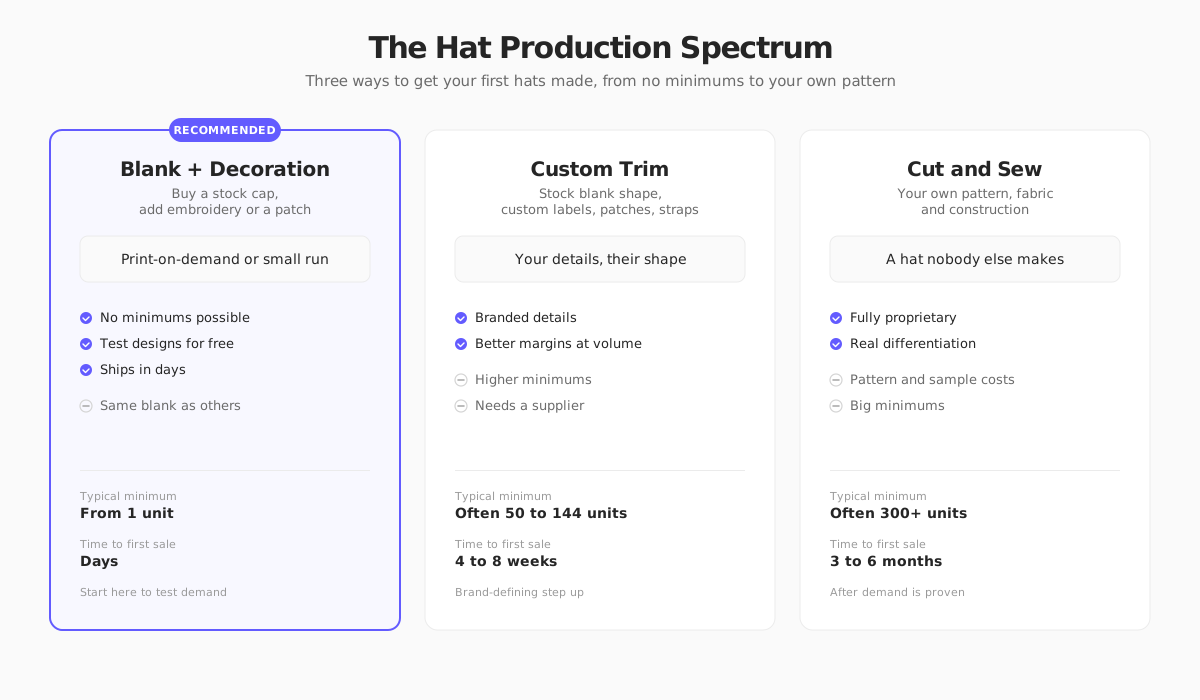
There are three real paths, and they differ a lot in cost, minimums and how defensible the product is.
Blank plus decoration
You buy a stock cap (a blank) and add embroidery, a woven patch or a printed design. It is the fastest path, and minimums can be anywhere from one unit to a few dozen. Unit cost drops with volume: one wholesale blank price list shows a structured six-panel at about $3.25 per unit at 144, before decoration, and a custom-hat wholesaler quotes roughly $7 per hat at 144 pieces including embroidery. The trade-off is that the cap itself is not unique, so your brand lives in the design.
Custom trim
You still start from a stock hat shape, but add custom details: woven labels, a leather or rubber patch, branded straps, metal buckles, custom lining or taping. It costs more and needs a supplier who will run a few dozen to a couple of hundred units, but it is the step where a cap starts to look like yours and not like everyone's.
Cut and sew
You design the pattern, pick the fabrics and have a factory construct the hat from scratch. It is the only way to get a hat nobody else makes, and the most expensive: pattern development, several sample rounds, and higher minimums. Ask each factory for its minimums and sample fees. Do not go here before you know a hat shape sells.
| Path | Upfront cost (rough) | Time to first sale | Control |
|---|---|---|---|
| Blank plus decoration | $0–$2,000 | Days | Design only |
| Custom trim | $2,000–$8,000 | 4–8 weeks | Design plus details |
| Cut and sew | $5,000–$20,000+ | 3–6 months | Total |
These are planning ranges, not quotes.
Most first-time founders should start with blank plus decoration, learn what sells, then move to custom trim. A first batch of 50 to 144 well-chosen hats beats 500 hats of a design you have not tested. Save cut and sew for when a shape and a customer are proven.
Step 4: Get Labeling and Claims Right
Hats look harmless, but the labeling rules are less obvious than for t-shirts, and they differ by region.
In the US
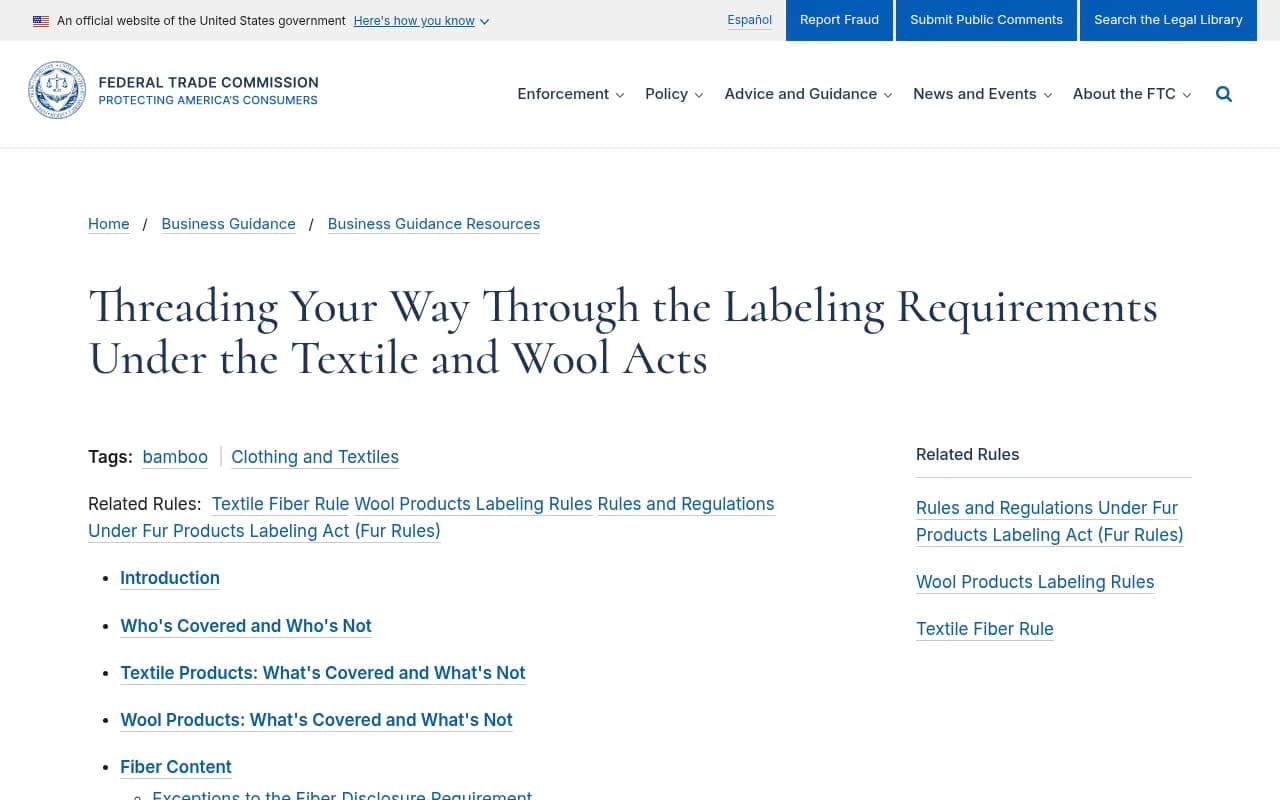
- Hats are exempt from the Textile Act, but not from everything. The FTC's guide says headwear is not covered by the Textile Act, but wool hats are covered by the Wool Products Labeling Act, which applies to any product containing wool. If your beanie or flat cap contains wool, check the wool labeling requirements.
- Made in USA claims. To say "Made in USA" without qualification, the FTC expects "all or virtually all" of the product to be made in the US. "Designed in the USA" or "Embroidered in the USA" are honest but different claims, so describe what actually happened where.
- Do not make health claims about sun-protection fabrics unless you can back them up. "UPF" ratings come from specific tests, so keep the test report from your supplier.
In the EU and UK
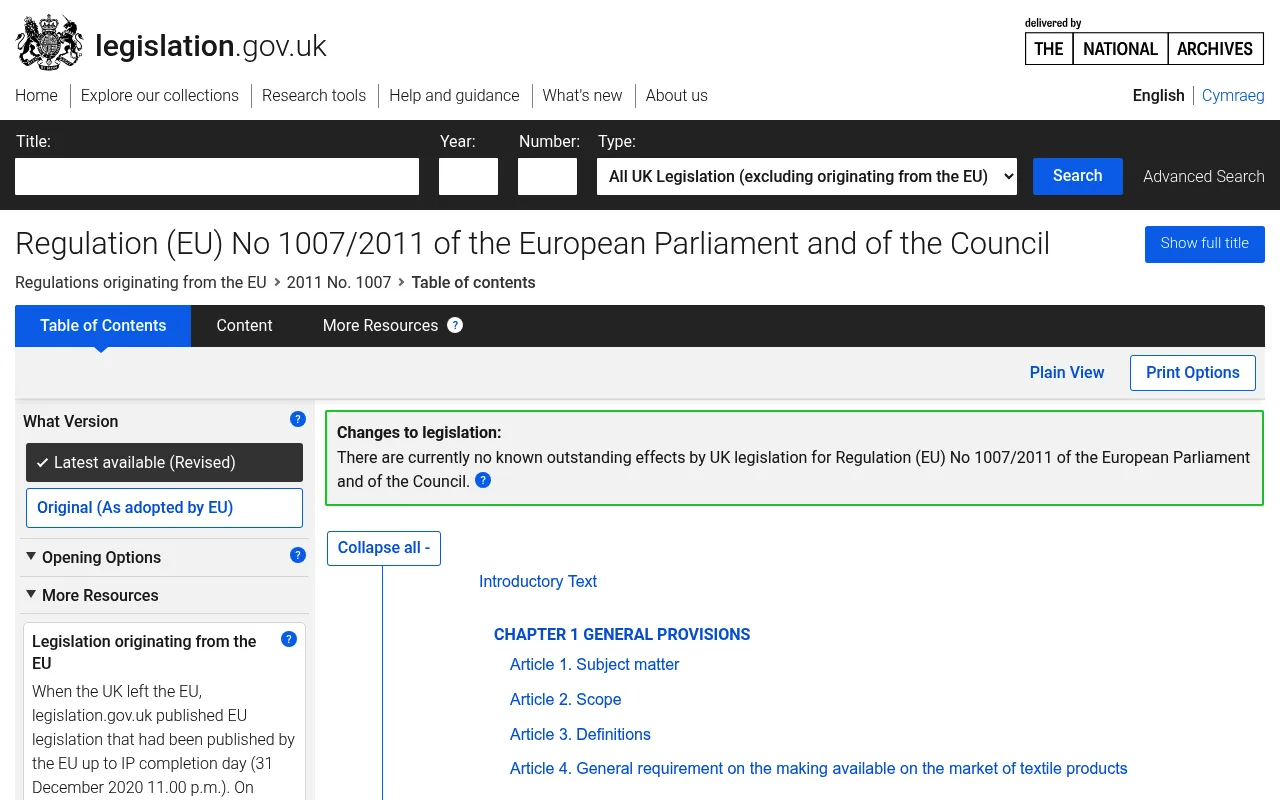
- Fibre composition labels. Regulation (EU) No 1007/2011 requires fibre-composition labelling on textile products sold in the EU. Labels must be durable and legible, use the fibre names listed in the regulation, and be in the language of the country where you sell. Check the regulation's exemptions list for whether your specific hat type is covered. The UK has a similar regime.
- Care labels, origin and size are not set by that regulation, though some member states and retailers require them, so check each market.
Always check the current rules where you sell. This section summarizes US, EU and UK hat labeling rules as of October 2026. Regulations change and vary by country, so confirm the details with your local regulator or a compliance specialist before you produce or sell. This is general information, not legal advice.
Step 5: Price It So the Math Works
The beginner mistake is pricing off the blank: "the cap is $3 and embroidery is $4, so $25 is a huge markup." Then shipping, fees, returns and marketing arrive.
Here is an illustrative breakdown for a custom-trim dad hat, ordered at around 144 units, sold at $38 on your own site:
| Cost component | $ per hat |
|---|---|
| Landed cost (hat, decoration, trim, freight) | $9.00 |
| Card fee (Stripe, about 2.9% + $0.30) | $1.40 |
| Shipping to customer | $5.00 |
| Returns and damage reserve (about 5%) | $1.90 |
| Marketing (about 25% of revenue) | $9.50 |
| What you keep at $38 | about $11 |
That is roughly a 29% net margin. Drop the price to $28 and you keep about $4.50: to make $5,000 you would need around 1,100 hats instead of about 450. Many hat brands reach for the free-shipping threshold (for example, free over $60) and bundles to lift the average order, because shipping a single $38 hat eats a lot of the margin. If the math does not work at your price, simplify the trim, raise the price, or order a higher quantity before you commit.
Step 6: Set Up a Simple Website
A hat site needs great product photos (front, side, back, on-head, flat lay), clear fit and material information, and a checkout that is fast on a phone. Since hats are a classic social-media purchase, the page people land on from an Instagram or TikTok post has to load instantly.
The main options in 2026:
- Your Next Store (us, to be upfront) starts at $30/month, or $25/month billed yearly, with 0% platform transaction fees on every plan (Stripe's standard processing fees still apply). An AI-powered builder sets the store up with you, with color variants and per-variant inventory built in.
- Shopify is the familiar default with a large app ecosystem. Many print-on-demand embroidery services integrate with it, which can make it a natural fit for Step 2 testing. Watch transaction fees if you do not use Shopify Payments.
- Etsy has built-in search traffic and works for handmade or niche designs, with listing and transaction fees.
- Squarespace or Wix suit a first small drop where the brand leans on photography, though many brands outgrow their commerce features.
- Instagram plus a payment link. Fine for a first pre-order. See our guide to selling online with Stripe.
Honest recommendation: if you start with a print-on-demand embroidery service, check which platforms it integrates with before you pick one. Our guide to starting an online store compares the options in more detail.
0% platform transaction fees on every plan. A modern storefront for your hat brand, ready in minutes.
Step 7: Pick One Place to Get Noticed
Hats are worn in public, which is your biggest marketing advantage. Pick one channel and do it seriously:
- Short-form video. Styling clips, "five ways to wear a bucket hat," behind-the-scenes embroidery close-ups.
- Community and events. Sponsor a local run club, a surf contest, a coffee-roaster collab. Hats are the easiest merch to give a community.
- Micro-creators. Send hats to a handful of people your customer already follows.
- Email from day one. Collect every address from pre-orders and events, and announce each new colorway to them first.
- Wholesale, later. Shops buy at roughly half of retail, so re-run your Step 5 math at that price first.
- Paid ads, last. Get organic content and a loyal first group working before you spend on ads.
Gotchas Nobody Mentions
- Fit is not "one size." Head sizes vary and adjustable straps vary in range. Say how big the hat runs, and list the strap range.
- Embroidery limits. Fine detail and tiny text can blur at hat scale. Ask for an embroidery proof (a digital preview) before production.
- Color drift. A "navy" hat from one batch can differ from the next. Photograph in daylight and keep a physical swatch.
- Storage and returns. Hats are bulky and crush easily. Plan your packaging so a hat arrives round.
What It Actually Costs to Start a Hat Brand in 2026
| Your approach | Upfront (rough) | What you get |
|---|---|---|
| No-minimum embroidery | $0–$500 | A handful of tested designs, no inventory, thin margins |
| Blank plus decoration, small batch | $500–$2,000 | 50–144 hats, your own stock, better margins |
| Custom trim | $2,000–$8,000 | Branded details, 144+ hats, a more distinctive product |
| Cut and sew | $5,000–$20,000+ | A proprietary hat, high minimums, several sample rounds |
The upfront cost is rarely what sinks a hat brand. Two things do: ordering a case of a design nobody asked for, and pricing off the blank instead of the full cost stack. The brands still around in year two are the ones that tested with no inventory, chose one customer, priced for shipping and marketing, and labeled honestly. A hat sits at the top of the body where everyone can see it, so the brand on it had better be worth looking at.
FAQ
How much does it cost to start a hat brand?
From almost nothing to $20,000+, depending on the path. No-minimum embroidery lets you test with little or no inventory. A small batch of blanks with decoration is typically in the hundreds to low thousands, while custom trim and cut and sew cost more because of minimums and sample rounds. See the cost table above.
Do I need a license to sell hats online?
You generally need a business registration and any sales-tax or VAT registration where you sell, not a special hat license. Labeling and claims rules matter more, so check the US, EU or UK rules above. See our guide to ecommerce sales tax.
Should I start with print-on-demand or order inventory?
Start with print-on-demand or small-batch blanks to test designs, then order inventory once you know what sells. Print-on-demand margins are thinner, but you take no inventory risk. Once a design proves itself, a 144-unit order usually gives a better unit cost.
Do hats need a fibre content label?
It depends on where you sell. In the US, headwear is exempt from the Textile Act, but wool hats fall under the Wool Act. In the EU, Regulation 1007/2011 sets fibre-composition labelling rules for textile products, so check whether your hat type is covered. Many brands label fibre content anyway because customers expect it.
Can I say my hats are "Made in USA"?
Only if the product meets the FTC's Made in USA standard: all or virtually all of the product, including components, made in the US. Otherwise use a qualified claim that describes what actually happened here, such as "embroidered in the USA with imported hats."
Are hat brands profitable?
They can be, with realistic pricing. In the illustrative example above, a $38 custom-trim dad hat keeps about $11 after landed cost, fees, shipping, returns and marketing. At $28 it keeps about $4.50, which is why free-shipping thresholds and bundles matter.