How to Start a Hair Extensions Business in 2026: The Honest Playbook
 Jakub Neander
Oct 14, 202613 min read
Hair extensions look like a dream product: small, light, high margin and loved by customers who buy again. The catch is that "100% human hair" means whatever the seller says it means, color matching decides who gets returns, and your supplier is the whole business. This guide walks through how to start a hair extensions business in seven steps, in the right order, with the parts most guides skip.
The 7 Steps, in Order
- Pick one customer and one extension type. Not "all hair for all people."
- Find and vet a supplier before you promise anything. Samples first, always.
- Decide what quality claims you can honestly back up.
- Check the legal and ethical basics for your market.
- Price with color-matching, returns and ads in the math.
- Set up a store built for matching and trust.
- Pick one place to get noticed.
Step 1: Pick One Customer and One Extension Type
The market is large and crowded. One research firm estimates the human hair extension market at about $5.4 billion in 2025, and published estimates vary a lot depending on what they count, so treat any single figure as a rough indicator. The point for you is that plenty of people buy, and plenty of brands already compete for them.
The way in is a specific customer. A few angles that work:
- Women with fine or thinning hair who want volume, not length.
- Textured and curly hair where matching texture is a real unmet need and generic brands miss it.
- Brides and event customers who want a fast, temporary look.
- Stylists and salons who buy in bulk and care about consistency batch to batch.
- Men and boys are less served, if you can find a real product need.
Then pick one extension type to start with:
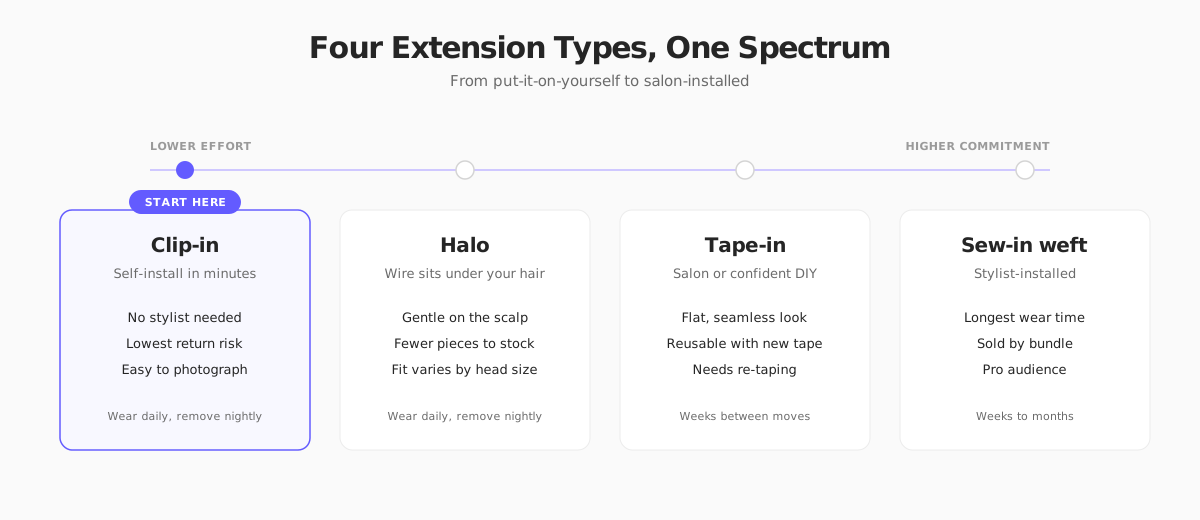
For most first-time brands, clip-in is the right start. Customers can install it themselves, so you do not depend on a stylist, and "does this match my hair" is the main question to answer. Tape-in and sew-in wefts suit a professional audience and need education, certifications or a salon partner.
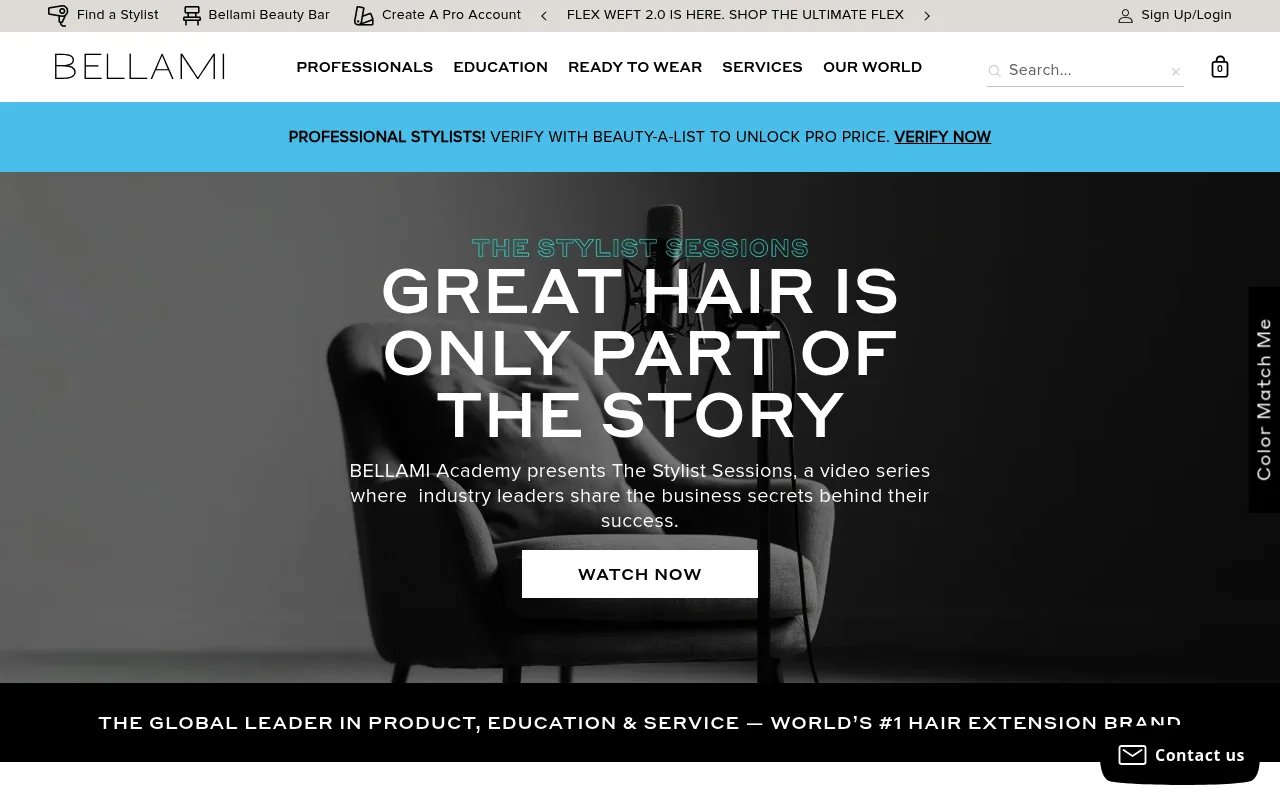
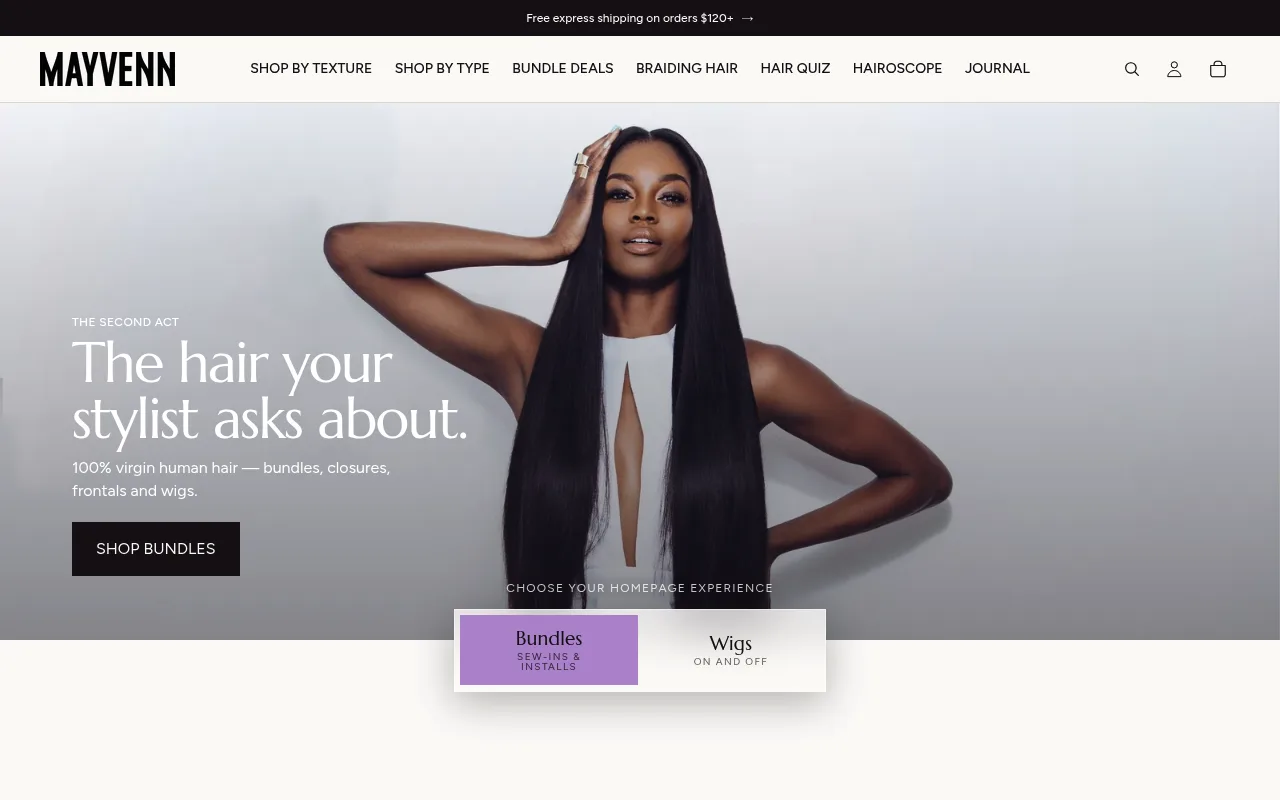
Bellami is a good example of the professional route, with stylist accounts, pro pricing and an education arm, while Mayvenn leans into bundles, closures and a hair quiz that helps customers choose a texture.
Decide whether you are selling to consumers, stylists or both before you pick products. They need different pricing, packaging and support.
Step 2: Find and Vet a Supplier Before You Promise Anything
Your supplier is your product. The same word on a listing can mean very different things.
What the terms usually mean
These terms are not tightly regulated, so definitions vary by supplier:
- Virgin hair generally means hair that has not been chemically processed, such as dyed or permed.
- Remy generally means the cuticles are kept aligned in one direction, which reduces tangling. It does not tell you about origin or processing.
- Non-Remy hair is typically mixed in direction and often treated with silicone coating to feel smooth, which can wear off.
- Synthetic fiber is not human hair at all, and should be labeled that way.
Ask suppliers to define each claim in writing, and be wary of anyone who cannot.
A supplier vetting checklist
- Order samples from at least three suppliers and compare them side by side: shedding, tangling, color accuracy, how they heat-style and how they wash.
- Wash-test them. Wash and dry a sample several times. Some products look great out of the bag and fall apart after two washes.
- Ask where the hair is sourced and how. Ethical sourcing is a real concern in this industry (see Step 4).
- Check MOQs and lead times. Many suppliers want a minimum order per color or length.
- Get color rings or swatches to match your target customers' shades.
- Ask about batch consistency. One great sample means nothing if the next batch is different.
- Pay a small test order before a large one, and pay with a method that offers some buyer protection.
Build in time. Several rounds of samples are normal.
Step 3: Decide What Claims You Can Honestly Back Up
Hair is a trust product. Customers cannot feel it through a screen, so your claims do the work, and they are also your legal exposure.
- Do not say "100% human hair" or "virgin" unless your supplier documents it, and keep the documents.
- Describe processing plainly. If the hair has been color-treated, say so.
- Be specific about length and weight. "20 inch, 140 g" beats "full".
- Show real photos of the product on real people with different hair types and lighting. Stock photos erode trust fast.
- Set honest care instructions. How long the hair lasts depends on handling, so promise a range, not a number.
- Avoid before-and-after claims you cannot verify. In the US, the FTC treats deceptive advertising claims as a problem whatever the product category.
If you cannot test a claim, soften it or leave it out.
Step 4: Check the Legal and Ethical Basics for Your Market
Rules differ by country, and human hair has an extra layer: where it comes from.
In the United States
- Forced labor and imports. US Customs and Border Protection has previously detained shipments of human hair products under withhold release orders tied to forced-labor concerns, including a roughly $800,000 shipment in 2020. Importing goods made with forced labor is prohibited under 19 U.S.C. 1307. If you import, know your supply chain and check CBP's current forced-labor listings, because a seized shipment is a business-ending event for a small brand.
- Advertising and labeling. Claims like "virgin" or "100% human" have to be truthful and substantiated.
- Adhesives and treatments. Tape, glue, and any hair-care products you sell alongside extensions may fall under different rules (for example cosmetics rules), so check each product type.
- Business basics. A business license, a sales tax registration where you sell, and product liability insurance.
In the EU and the UK
- Product safety. Consumer products sold in the EU fall under the General Product Safety Regulation, which includes having a responsible economic operator in the EU and traceability information. The UK has its own, separate product safety regime.
- Chemicals and cosmetics. Dyes, adhesives, care products and some treatments can fall under chemicals or cosmetics rules in the EU and UK, so check each item you sell.
- Consumer rights. EU and UK distance-selling rules give customers a withdrawal window, with some exceptions for goods that are not suitable for return for hygiene reasons once opened. Rules differ, so check how this applies to your product and wording.
Always check the current rules where you sell. This guide summarizes US, EU and UK rules relevant to hair extensions as of October 2026. Regulations change and vary by country, so confirm the details with your local regulator, customs broker or a compliance specialist before you import, label or sell. This is general information, not legal or tax advice.
Step 5: Price With Color Matching, Returns and Ads in the Math
Hair extensions are small and cheap to ship, so freight is not your problem. Your problems are color mismatch, hygiene returns and customer acquisition.
An illustrative example for a clip-in set, with made-up numbers to show the structure:
| Where the money goes | Example |
|---|---|
| Retail price | $150 |
| Product cost (landed, incl. duties) | $45 |
| Packaging and shipping | $9 |
| Payment fees (Stripe, 2.9% + $0.30) | $4.65 |
| Returns and exchanges reserve | $9 |
| Marketing (about 25% of revenue) | $37.50 |
| What you keep | ~$44.85 |
Roughly 30% net margin looks great, and it is easy to lose. If your return rate doubles or your ads get more expensive, it shrinks quickly.
How to protect it:
- Reduce color returns before they happen. Offer color rings or a small swatch set, a shade quiz and photos in natural light. Our posts on ecommerce product photography cover how to shoot color accurately.
- Write a clear return policy. Many brands do not accept returns on opened or installed hair for hygiene reasons, and offer exchanges for unopened items. Say so plainly before checkout. Check your local consumer law, as above.
- Bundle thoughtfully. Sets (for example a clip-in set plus a brush and storage bag) increase average order value without extra ad spend.
- Plan for repeat purchases. Hair wears out, and happy customers buy again. Email matters more here than in most categories.
If the math only works on your very best day, raise the price or change the product.
Step 6: Set Up a Store Built for Matching and Trust
Your site has two jobs: help someone choose the right shade, and make them trust that the hair is what you say it is.
What to include:
- A shade finder or quiz, with real swatch photos and honest guidance on mixing shades.
- Clear specs on every product: type, length, weight, hair origin claim, color name and care.
- Photos on different hair types and tones, plus short video of the clip-in or install.
- Reviews with photos. Social proof matters most when buyers cannot touch the product.
- A visible exchange and returns policy, and a customer service contact.
- Variants that behave: shade, length and weight selectors that do not confuse people.
Your options in 2026, honestly:
- Your Next Store (us) starts at $25/month on the yearly plan, with 0% transaction fees on top of Stripe's processing fees. An AI helper builds the store with you, and search, reviews and email are built in. It fits well if you want a fast, modern store with product variants for shade and length.
- Shopify is the safe default, with a large app ecosystem for shade quizzes and subscriptions. App costs add up, so budget for them. We covered what Shopify takes from a $100 sale.
- Squarespace or Wix are cheap and visual, but you may outgrow them if you need complex variants.
- A marketplace like Etsy or Amazon gives you traffic, but fees are higher and the customer belongs to the platform. Some platforms also restrict certain beauty claims, so read their policies.
- Instagram and a payment link can work for a tiny first batch. See how to sell online with Stripe.
0% extra fees on every sale. A modern website for your hair brand, ready in minutes.
Step 7: Pick One Place to Get Noticed
Hair is visual and personal, so social proof sells it. Pick one main channel and one backup.
- Instagram and TikTok. Transformation videos, install tutorials and "matching my hair" clips are the native format. Consistency beats polish.
- Creators and stylists. Send product to a few dozen small creators or stylists in your niche. Product that photographs well gets reposted.
- Salon partnerships. If you sell tape-ins or wefts, stylists are both customer and channel. A pro account with a clear discount builds loyalty.
- YouTube and search. "How to clip in extensions" and "best extensions for fine hair" are evergreen searches that slowly compound.
- Email and SMS. Collect emails from day one, send shade-match tips and care guides, and remind people to restock.
- Paid ads. Wait until you know your return rate. Hair is competitive, and acquisition costs can eat the margin.
What It Actually Costs to Start a Hair Extensions Business in 2026
Ranges, not quotes. Costs depend on supplier, quality and order size.
| Approach | Upfront cost | What you get |
|---|---|---|
| Test run | A few hundred to $1,500 | Samples, a small first batch of 1 to 2 shades, a simple site |
| Serious small brand | $3,000 to $10,000 | A range of shades, real photography, branded packaging, insurance |
| Full launch | $15,000+ | Wider range, a creator program, paid ads, wholesale accounts |
The largest costs are inventory, samples, photography and marketing. The website is the cheapest part. The biggest risk is inventory in shades that do not sell, so start narrow.
The brands that last are not the ones with the longest hair. They are the ones who vetted a supplier properly, made color matching easy, and told the truth about what the product is.
FAQ
How much does it cost to start a hair extensions business?
A small test run can start at a few hundred to a couple of thousand dollars, mainly for samples, a first batch and a simple website. A more serious launch with photography, packaging and marketing costs more. Inventory and marketing are the biggest lines.
What is the best type of extension to start with?
Clip-in extensions suit most first-time brands because customers can install them without a stylist. Tape-ins and sew-in wefts suit a professional audience and need more education.
What does "Remy" hair mean?
Generally it means the cuticles are kept aligned in one direction to reduce tangling. The term is not strictly regulated, so ask your supplier to define it in writing and test samples yourself.
Where do I find a hair extensions supplier?
Many brands source from manufacturers in Asia, with others working through regional distributors. Order samples from several suppliers, wash-test them, ask about sourcing, and check current forced-labor import rules before you commit.
Can I sell hair extensions in the EU or UK?
Yes, with the product safety, labeling and consumer rights rules that apply in each market. The EU and UK have separate regimes, so check each one.
Do I need a license to sell hair extensions?
You typically need a general business license and sales tax registration where you sell. Extensions are usually not licensed like cosmetics, but accompanying products such as adhesives or care products may be, so check by product.
Should I accept returns on hair extensions?
Many brands do not accept returns on opened or worn hair for hygiene reasons, and offer exchanges on unopened items. State your policy clearly, and check what your local consumer law requires.