How to Start a Dress Brand in 2026: Fit, Fabric, Costs and Selling Online
 Jakub Neander
Oct 13, 202613 min read
Dresses are one of the most emotional things you can sell online: people buy them for weddings, holidays, first dates and the one party they have been looking forward to all year. They are also one of the hardest garments to get right. Fit is unforgiving, fabric drapes differently on every body, and a dress that arrives wrong gets returned. This guide covers how to start a dress brand in the right order: choose a customer, design a small collection, make it in a way that limits risk, price it honestly, follow the labeling rules and sell it online.
The 8 Steps, in Order
- Pick a specific customer and occasion. "Women's dresses" is a category, not a brand.
- Prove people want it before you pay a factory.
- Design a tiny first collection with a tech pack.
- Choose how to produce it: made-to-order, small-batch pre-orders or a stock run.
- Price with real margins, including returns.
- Handle labeling and legal basics.
- Open a store that sells fit and fabric.
- Win one channel first.
Step 1: Pick a Specific Customer and Occasion
Search for dresses and you will find fast-fashion giants, department stores and thousands of small labels. You cannot beat them on price or range. You can beat them on knowing one person well.
Good dress brands are built around a person, an occasion or a fit problem:
- A moment, such as wedding guests, graduations or holiday parties.
- A body type or size range that mainstream brands handle badly: petite, tall, plus size, maternity, nursing-friendly.
- A fabric or value, such as linen summer dresses, deadstock silks or fully sustainable materials.
- A style tribe, such as vintage-inspired, modest fashion or minimalist workwear.
Three real examples of brands with a clear point of view:
- Reformation puts sustainability in the headline of its dress category, and sells dresses sorted by occasion, from going out to weddings.
- Réalisation Par leans on a strong, editorial brand identity, with imagery that sells a mood before it sells a garment.
- Ghost London is a UK label known for flowing, easy-to-wear dresses, with a seasonal story on its homepage.
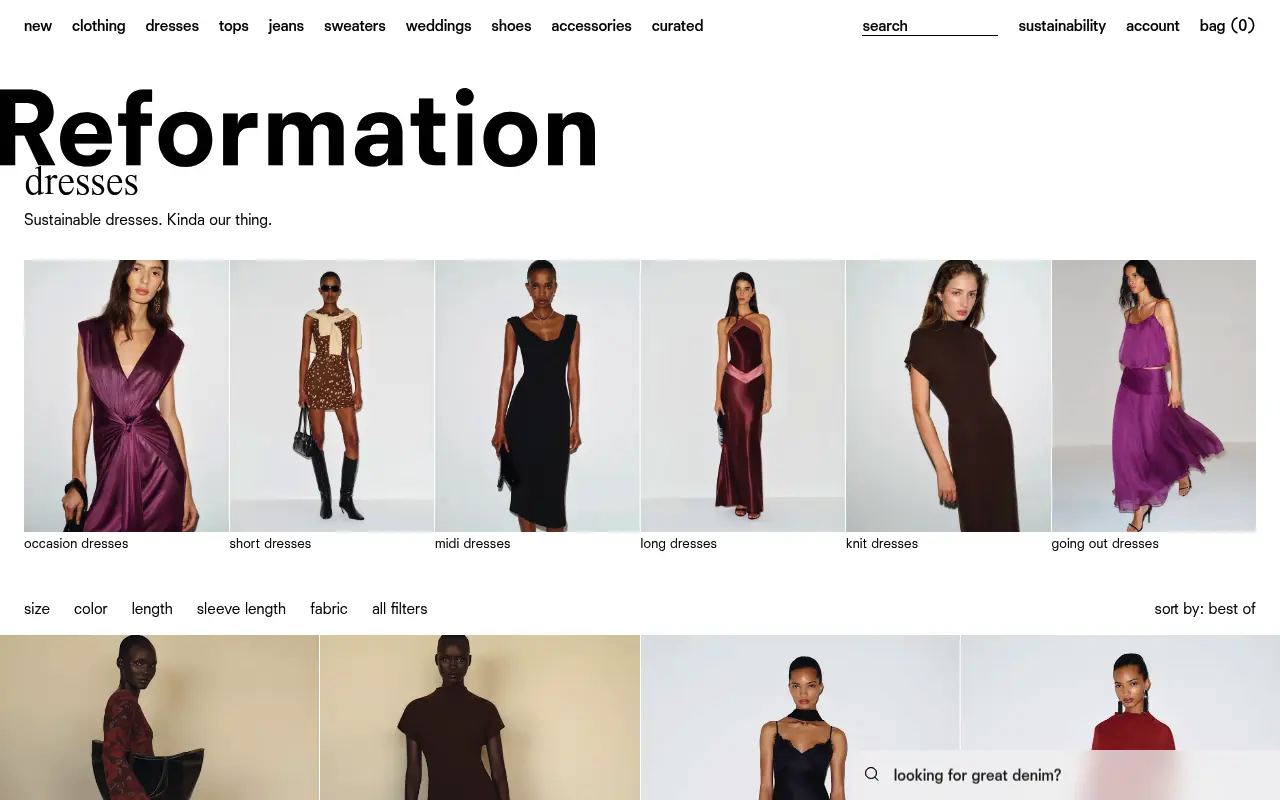
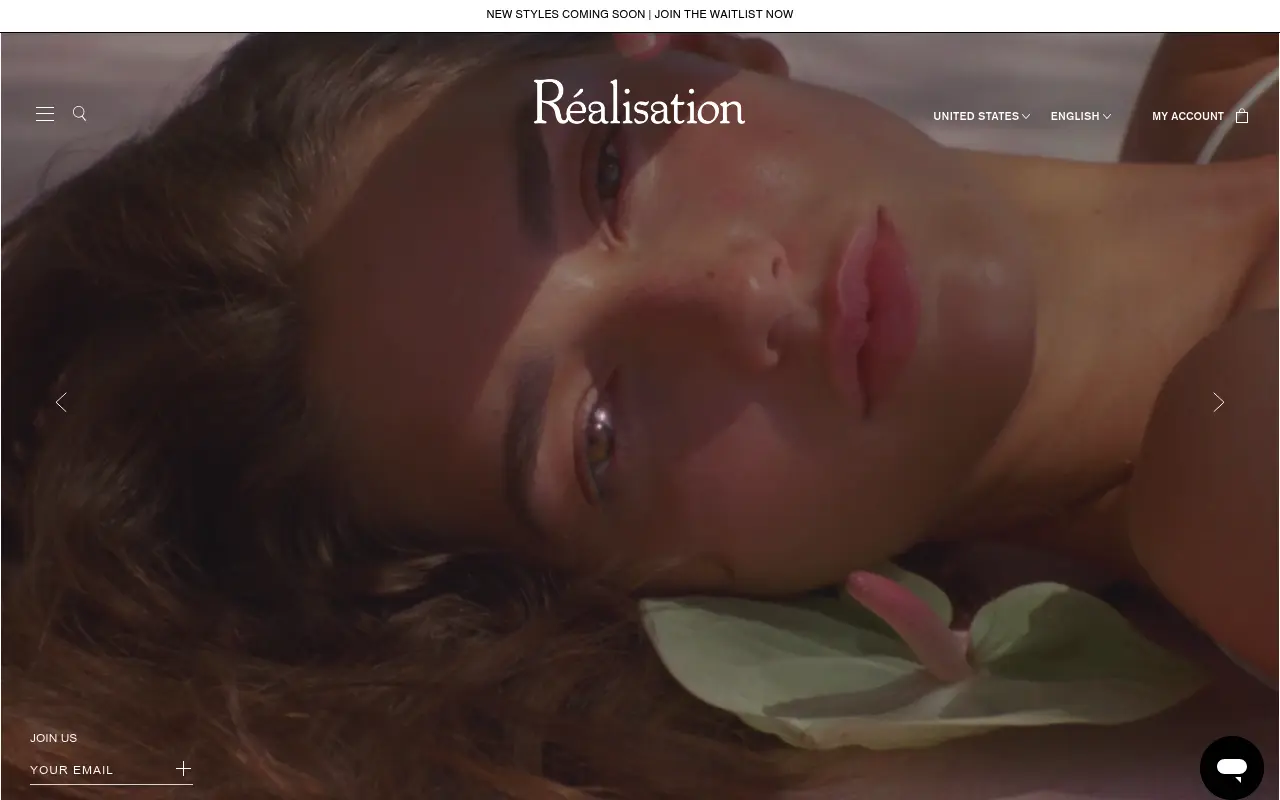
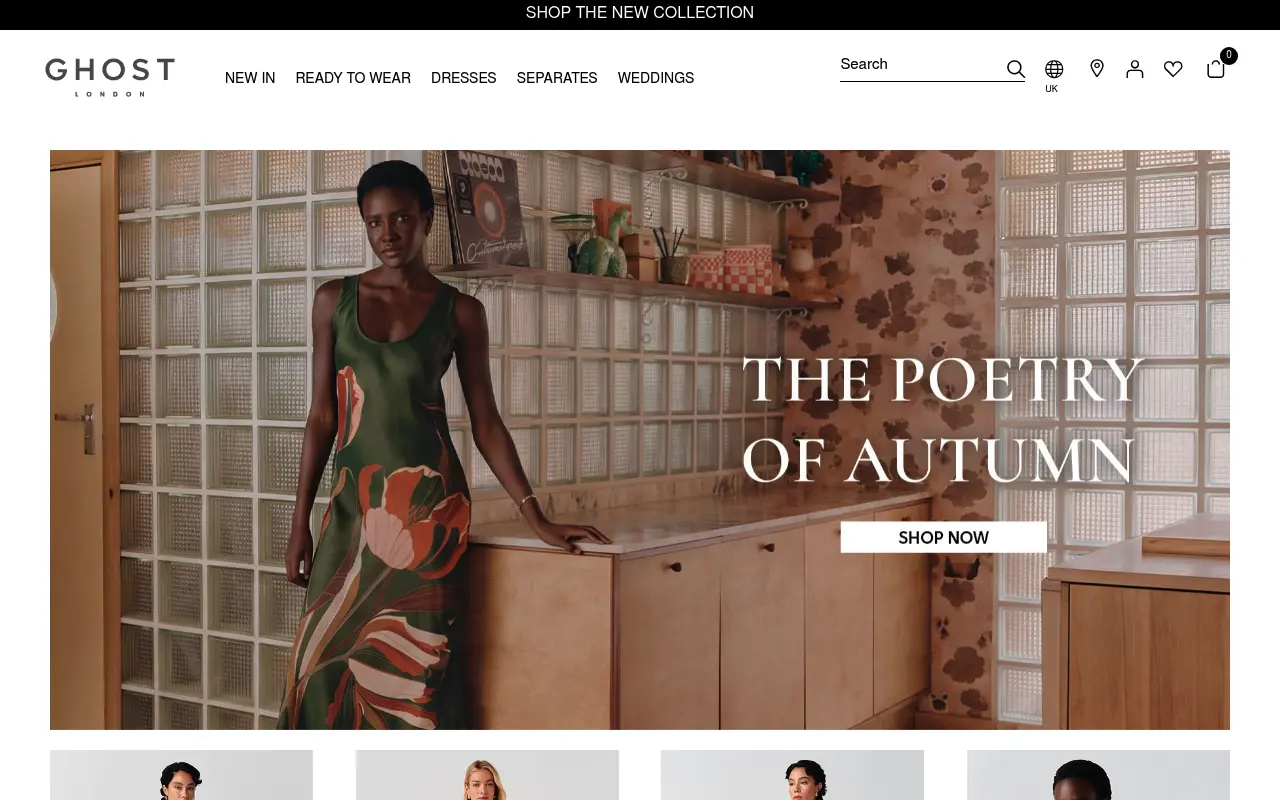
You are not copying these labels. You are noticing how each one picks a lane. If you are still deciding between categories, our general guide to starting a clothing brand covers the choices before you narrow to dresses, and the playbooks for jackets and jeans show how another category thinks about the same problems.
A quick test for your idea: can you describe the customer and the moment she wears the dress in one sentence? "A midi dress for wedding guests who are tired of being told to wear beige" is a brand. "Pretty dresses" is not.
Step 2: Prove People Want It
Clothing is expensive to get wrong. A factory deposit on a design nobody wants is the most common way new labels lose money. Test demand with cheap signals first:
- A waitlist page. Show sketches or mood boards, describe the customer and the fit, and ask for an email. If strangers sign up, you have something. If only friends do, keep looking.
- Pre-orders for a small first run. The best proof is a card number. Even 20 to 30 pre-orders tell you more than 1,000 likes.
- Fit feedback from your target customer. Ask 10 to 15 people in your niche to try a sample and tell you what they would change. Polite praise is useless. You want the person who says the waist sits wrong.
- Competitor research. Read the reviews of similar dresses on other sites. Repeated complaints such as "runs small," "see-through" or "fabric feels cheap" are your product brief.
If you want a deeper look at how to test and launch a first store, our guide to starting an online store covers the customer questions in detail.
Step 3: Design a Tiny First Collection
Resist the urge to launch with 30 styles. A new brand does better with 3 to 6 dresses that look like they belong together.
A solid first collection might be:
- One hero dress you would stake the brand on.
- Two or three variations, such as different lengths or necklines on the same base pattern.
- Two colors or prints at most, so you do not multiply stock.
Each design needs a tech pack, the document a factory builds from. It typically includes a flat sketch, measurements for every size, fabric and trim details, stitching instructions, labels and a grade rule for how the pattern scales between sizes. If you cannot draw, hire a freelance technical designer. A clear tech pack saves far more than it costs because it prevents sample rounds that go nowhere.
Fabric decides how the dress looks and behaves
Fabric is the biggest design decision after fit. Some practical notes:
- Drape and weight. Viscose, satin and crepe flow and move. Cotton poplin holds shape. Choose the fabric first, then the pattern, not the other way around.
- Opacity and lining. Light colors and thin fabrics show through. Add a lining or test in daylight and under flash photography.
- Stretch. Some stretch forgives fit differences between bodies and cuts returns. Fully woven fabric needs very precise grading.
- Care. Dry-clean-only dresses lose customers. If a dress can go in a gentle wash, say so.
- Hold back some fabric. Ask the mill whether you can reserve extra for a second run in the same dye lot, because color can differ between lots.
Sizing: the quiet profit killer
Fit is the main reason dresses come back. Invest in it early:
- Use a fit model or dress form close to your target customer's measurements, and fit samples on real people too.
- Publish detailed size charts in inches and centimeters with garment measurements, not just "S, M, L."
- Add model stats next to every photo: height, size worn and what the model's bust, waist and hips measure.
- Read return reasons after each batch and adjust the pattern.
Step 4: Choose How to Produce It
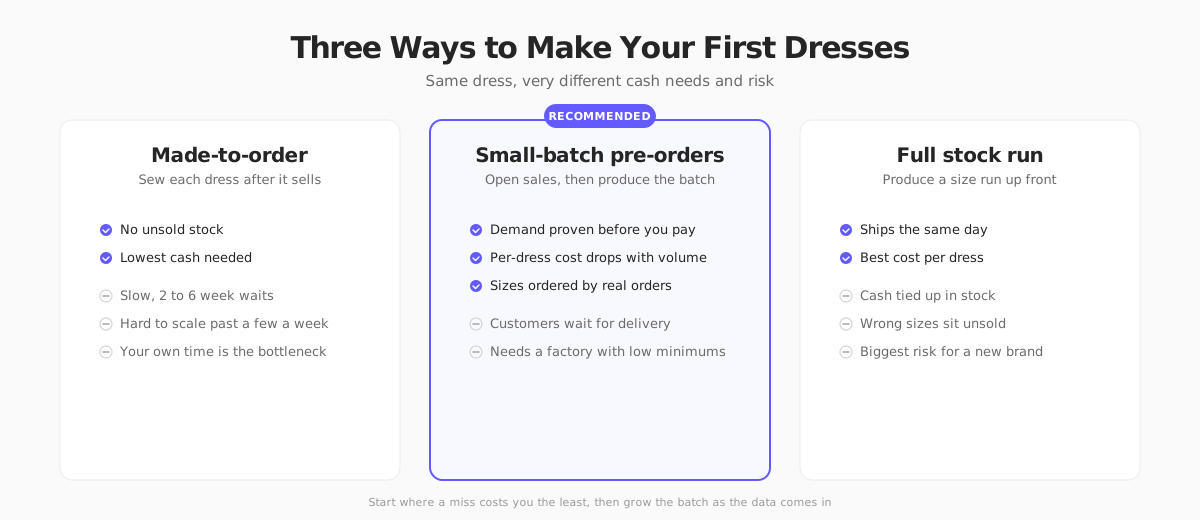
Made-to-order: lowest cash, slowest to scale
A seamstress or small studio sews each dress after it sells. You carry no unsold stock, which is great for testing. The costs are long waits for customers, a higher cost per dress and a hard ceiling on volume. Fine for a first capsule or a custom bridal line.
Small-batch pre-orders: the best starting point for most
You show the design, take orders for a few weeks, then produce exactly what you sold plus a small buffer. Many factories ask for minimum order quantities per style, so look for those that work with small labels, and be ready to compare quotes. Customers wait, so be honest about shipping dates. This is where I would start, because you pay for sizes people actually bought.
A full stock run: the highest risk
Producing a full size run up front lets you ship the same day and gives the best cost per dress. It also locks up cash in styles and sizes that may not sell. Save it for a design that has already proven itself through pre-orders.
Where to find makers
- Local studios and pattern makers for samples and short runs.
- Overseas factories, often through sourcing agents or sourcing marketplaces. Order samples first, and confirm quality control, lead times and shipping terms in writing.
- Cut-make-trim (CMT) workshops, where you supply fabric and a pattern.
Ask for two or three sample rounds and budget for them. Time estimates vary a lot by factory and season, so ask for a schedule and add buffer for sampling, production and shipping.
Step 5: Price With Real Margins
Dress margins are decent, but returns and discounts eat into them. Here is an illustrative example for a $140 midi dress made in a small batch. These are estimates to show the structure, not a quote.
| Line | Example cost |
|---|---|
| Fabric, lining and trims | $18 |
| Cut and sew labor | $22 |
| Labels, hangtag and packaging | $4 |
| Freight and import duty (average per piece) | $6 |
| Landed cost | about $50 |
| Outbound shipping and a share of free returns | $9 |
| Payment processing (about 2.9% + $0.30) | $4.40 |
| Marketing (about 25% of revenue) | $35 |
| What you keep | about $41 |
A common rule of thumb is to price at roughly 2.5 to 4 times your landed cost for direct sales. If you want to sell wholesale to boutiques later, you need room to sell at about half of retail and still make money, so price with that in mind.
Ways to improve the numbers:
- Reduce returns with better size charts, fit notes and clear photos.
- Use stretch or adjustable details such as wrap closures, ties and smocked bodices that fit more people.
- Bundle a dress with a layering piece or accessory to lift average order value.
- Limit markdowns. Discounting trains customers to wait. Use limited drops and small batches to keep demand.
Step 6: Handle Labeling and Legal Basics
Clothing is regulated more than most founders expect. Each rule below depends on where you sell.
In the US
- Fiber content, country of origin and identity. Under the Textile Fiber Products Identification Act, labels generally must state fiber content, the country of origin and the name of the manufacturer, importer or dealer.
- Care labels. The FTC's Care Labeling Rule requires permanent care instructions on most garments.
- Imports. If you manufacture abroad, you will deal with customs, duties and tariffs, which have been changing frequently. Check current rates for your product and origin.
In the EU and UK
- In the EU, Regulation (EU) 1007/2011 requires fiber composition on textile products. Care labels are not required by that regulation, though many brands use standard symbols anyway, and some countries have extra rules.
- In the UK, textile labeling rules largely mirror the EU's fiber composition requirements. See the retained text of Regulation 1007/2011 on legislation.gov.uk and your local trading standards office.
- Selling across borders adds VAT and customs steps. Our guide to selling internationally and ecommerce sales tax guide explain the basics.
Other basics
- Register your business and any tax IDs you need.
- Keep your designs original. Copying another label's print or pattern invites a legal fight, and fabric prints can carry their own copyright.
- Write clear return and shipping policies. Sizing returns are normal in fashion, so decide upfront what you accept.
- Consider product liability insurance, especially for children's or bridal items.
Always check the current rules where you sell. This guide summarizes US, EU and UK textile labeling and import rules as of October 2026. Regulations change and vary by country, so confirm the details with your local regulator, customs authority or a compliance specialist before you label, import or sell. This is general information, not legal advice.
Step 7: Open a Store That Sells Fit and Fabric
A dress shop lives or dies on its product page. The customer cannot touch the fabric or try the dress on, so your page has to answer every question before she asks.
- Photograph on real bodies. Show front, back, movement and a close-up of the fabric. Include more than one model size if you can. Our product photography guide covers a budget setup.
- Show model stats and which size she wears.
- Make the size guide impossible to miss, and link it next to the size selector.
- Describe fabric honestly: composition, weight, stretch, lining, whether it is sheer and how to wash it.
- Make delivery dates clear, especially for pre-orders, and let people sign up for restock alerts.
- Keep returns simple, and state the window and who pays for return shipping.
Your options, honestly:
- Your Next Store (us, to be upfront) starts at $25/month on the yearly plan with 0% platform transaction fees (Stripe's processing fees still apply). An AI builder designs the storefront with you, and checkout runs on Stripe. Good for founders who want a modern, fast, branded store and predictable monthly costs.
- Shopify has the biggest app ecosystem, including size-chart and returns apps. Price the plan plus the apps you will add.
- Squarespace and Wix suit a small, design-led shop with a short collection.
- Etsy brings buyers who already search for handmade and vintage-style dresses, with fees and less control of the customer relationship.
- Instagram plus a payment link is a fair way to test demand. See how to sell online with Stripe.
0% platform fees on every sale. A modern store for your dress brand, ready in minutes.
Whichever you pick, make sure checkout is fast on a phone, because most dress shopping happens there. Our checkout optimization guide lists the details that cost sales.
Step 8: Win One Channel First
Dress brands usually break through on one channel. Choose one and give it a few months.
- Instagram and TikTok. Try-on videos, styling reels and behind-the-scenes sewing clips suit the format. Real customers wearing your dresses beat studio shots.
- Email. Collect addresses from the waitlist onward and send each drop to your list first. Repeat buyers are your best customers.
- Creators and micro-influencers. Send a dress to people your customer already follows, and ask for honest posts with fit details.
- Pop-ups and markets. People want to try dresses on. A weekend stall can also be your best fit lab.
- Wholesale to boutiques. Useful once you have repeat sales, because it multiplies reach but cuts your margin.
- Search. Slow but durable for terms like "wedding guest midi dress" once you have content. See our ecommerce SEO guide.
- Paid ads. Wait until you know which dress converts and how often it is returned.
What Does It Cost to Start a Dress Brand?
Rough planning ranges. Get quotes from your own makers.
| Approach | Upfront | What you get |
|---|---|---|
| Made-to-order capsule | $500 to $3,000 | Samples, a few dresses, photos and a simple store |
| Small-batch pre-order launch | $3,000 to $15,000 | Tech packs, sampling, 3 to 6 styles in a small run, branding |
| Full stock collection | $15,000 and up | Larger runs across sizes, marketing budget, inventory buffer |
Two warnings:
- Sampling costs more than you think. Budget for several rounds per style.
- Returns are a line item. Plan for them in your pricing, not as a surprise.
The dress brands that last are not the ones with the biggest range. They pick a customer, get the fit right and sell what they make with honest photos and clear sizing.
FAQ
How much does it cost to start a dress brand?
A tiny made-to-order launch can start at a few hundred to a few thousand dollars. A small pre-order collection with proper samples, branding and a store more often runs into the low five figures. Larger stock runs cost more. Your fabric, minimums and number of styles drive the total.
Do I need to know how to sew or design?
No. Many founders work with freelance pattern makers, technical designers and factories. You do need a clear point of view and the ability to describe what you want in a tech pack.
How do I find a dress manufacturer?
Start with local studios for samples, then look at overseas factories through sourcing agents or sourcing platforms. Order samples before you commit, and get quality standards, lead times and payment terms in writing.
What is the minimum order quantity for dresses?
It varies by factory, fabric and style. Some work with small labels at low minimums, and others require much larger runs. Ask every factory for its minimums per style and per color before you design.
Do dresses have high return rates?
Fit-sensitive clothing tends to see more returns than other products, and online fashion is known for them. Good size charts, model stats, fabric details and clear photos are the cheapest ways to bring returns down.
Should I start on Etsy, Shopify or my own store?
Etsy brings built-in search traffic with fees and less brand control. Your own store builds your brand and email list. Many new brands test on a marketplace or with pre-orders and then move repeat buyers to their own site.