How to Start a Jacket Brand in 2026: The Honest Playbook
 Jakub Neander
Aug 28, 202614 min read
Jackets are having a real moment: the global jacket market is on track to hit $19.70 billion in 2026 and grow to $29.62 billion by 2033, and Shopify ranks coats and jackets the #9 best-selling product category on its platform. It's also one of the least forgiving categories to get sizing wrong in. This is the guide I'd hand a friend before they spend a dollar on how to start a jacket brand: eight steps, in the right order, with honest 2026 numbers for MOQs, landed costs, import duties, and the sizing math that decides whether you actually keep any of the money.
How to Start a Jacket Brand: The 8 Steps, in Order
- Pick one very specific kind of jacket, or one specific person, to make it for. Not "jackets." One silhouette, for one wearer or one problem.
- Get real people to say "yes, I'd buy this" before you order anything.
- Decide the fabric, insulation, and construction. This is where most of a jacket's cost and character actually comes from.
- Decide how your jackets actually get made. There are four real paths, and they trade capital for margin very differently.
- Price with duties, freight, and returns baked in, not just fabric and labor.
- Handle the labeling and legal work. Fiber content and care labels are federal law, not a nice-to-have.
- Set up a website that can actually show fit and real sizing.
- Pick one place to get noticed. Not all the places. One.
Now the long version.
Step 1: Pick One Very Specific Kind of Jacket to Make
Let's start with the part most guides skip. "I'm going to sell jackets" is not a business, it's a category. Search "bomber jacket" or "puffer jacket" today and you're competing with Uniqlo, The North Face, and a thousand Shein listings, none of which you can out-price or out-distribute. You win by being the obvious answer for one specific kind of wearer, weather, or problem, not by having a jacket that's fine for everyone.
Here's the honest scorecard, jackets compared to an easier first apparel product:
| Jackets | A typical easy first apparel item (tees, totes) | |
|---|---|---|
| Average order value | $60 to $250+ | $15 to $35 |
| Return rate | ~25% on average, driven mostly by fit | Often 10 to 15% |
| Size/color matrix per style | 5 to 6 sizes x 2 to 4 colors, 10 to 24 SKUs per style | 1 to 3 sizes, a handful of SKUs |
| Sample cost before you commit | Real cash: pattern, fabric yardage, sewing time per sample | A print run costs almost nothing to test |
| Selling season | Concentrated in fall and winter for most styles | Year-round |
None of that means don't do it. It means the niche you pick in this step is what makes the size-and-fit problem in Step 5 manageable or brutal. A jacket that only comes in one universal fit for one clearly-defined body type has a much smaller size-return problem than a jacket trying to fit everyone.
Good, specific answers look like this:
- A single, obsessively refined silhouette for one kind of weather. Rains, the Danish rainwear label, started in 2012 as a side project between two design students built around one modern reinterpretation of the classic rubber raincoat. They didn't launch a full outerwear catalog. They launched one silhouette, in one fabric, and got extremely good at it before expanding.
- Extended or adaptive sizing that mainstream jacket brands skip. Petite, tall, plus, or adaptive-fit outerwear (magnetic closures instead of zippers, one-handed fastening) is a real, underserved gap, because most jacket patterns are graded from a single mid-size block.
- A jacket built around one activity. Motorcycle riders who need abrasion-resistant textile or leather that actually protects on asphalt, cyclists who need high-visibility panels and a drop-tail hem, or service-industry workers who need something warm enough for an outdoor shift and durable enough to launder daily.
If you're still deciding whether apparel is the right category at all before you narrow into jackets specifically, our broader playbook for starting a clothing brand covers the customer and production decisions that apply across categories.
The test: if a fast-fashion chain could put your exact jacket on a rack tomorrow without changing anything about who they are, the idea isn't sharp enough yet. Your advantage as a small jacket brand isn't a bigger factory. It's caring about one specific wearer more than a company with ten thousand SKUs ever will.
Step 2: Get People to Say "Yes" Before You Order Anything
Jackets involve more upfront cash per style than almost any other apparel category: real fabric yardage, a pattern, and sewing time, even for a single sample. You don't want to discover your niche or fit was wrong after paying for a first production run.
Three cheap ways to test demand before you spend real money:
- A one-page site with a "Join the waitlist" button. Show renderings or a single hand-sewn sample, describe the specific wearer and the specific problem the jacket solves, and spend $100 to $250 on Instagram or TikTok ads sending your target person there. If fewer than 1 in 50 visitors sign up, the idea isn't landing yet. Go back to Step 1.
- Take pre-orders on your first small run. Same page, but "Pre-order, ships in 8 to 12 weeks" instead of "Join the waitlist." People who hand over a card are the only signal that actually counts.
- List a single style through print-on-demand or a small dropship supplier first (more on both in Step 4), before you ever commit to a private-label production run. If a specific jacket sells reliably for 60 to 90 days through print-on-demand, you have real proof before you commit real capital to a minimum order.
This step costs a weekend and a few hundred dollars in ads. Skipping it can cost you a full private-label MOQ (often 60 to 100 units, more in Step 4) sitting in a closet because nobody actually wanted that specific jacket.
Step 3: Decide the Fabric, Insulation, and Construction
This is the decision that drives most of a jacket's cost, and it's specific to outerwear in a way it isn't for a t-shirt or a pair of jeans. Every one of these choices moves your per-unit cost and your production timeline.
Shell fabric. Nylon and polyester (often quoted by denier, like 400D or 600D) are the standard for bombers, windbreakers, and technical shells: durable, relatively cheap, and easy to treat with a DWR (durable water repellent) coating. Cotton twill and wool blends cost more and behave differently in the rain. Vegan leather (PU-coated polyester) sits in its own cost bracket, closer to real leather in look but far cheaper to source.
Insulation. A shell jacket with no insulation is the cheapest to make. Synthetic insulation (like PrimaLoft or a generic polyester fill) is mid-cost and performs reasonably well wet. Real down is the most expensive option by a wide margin and needs baffle stitching, a construction technique that keeps the fill from shifting into clumps, which adds labor time on top of material cost.
Construction complexity. A simple bomber with a ribbed collar and cuff is faster and cheaper to sew than a technical parka with taped seams, multiple pockets, and a removable liner. Every extra feature is extra labor minutes, and labor is priced per minute in most factories.
Here's what that actually costs per unit, by jacket type, based on industry cost-breakdown data:
| Jacket type | Typical per-unit cost | What drives it |
|---|---|---|
| Lightweight / windbreaker | $15 to $40 | Simple construction, basic shell fabric |
| Bomber | $40 to $80 | Structured collar, ribbed trim |
| Denim jacket | Mid-range | Heavy fabric, reinforced stitching |
| Puffer / quilted | Mid to high | Insulation fill, baffle stitching |
| Parka / winter coat | $100+ | Multiple layers, insulation, waterproofing |
Pick your fabric and construction based on what your specific niche from Step 1 actually needs, not based on what looks most impressive in a mood board. A motorcycle jacket buyer cares about abrasion resistance more than a soft hand-feel. A rainwear buyer cares about seam-taping more than a designer silhouette. Spend the cost where your specific customer will notice it.
Step 4: Decide How Your Jackets Actually Get Made
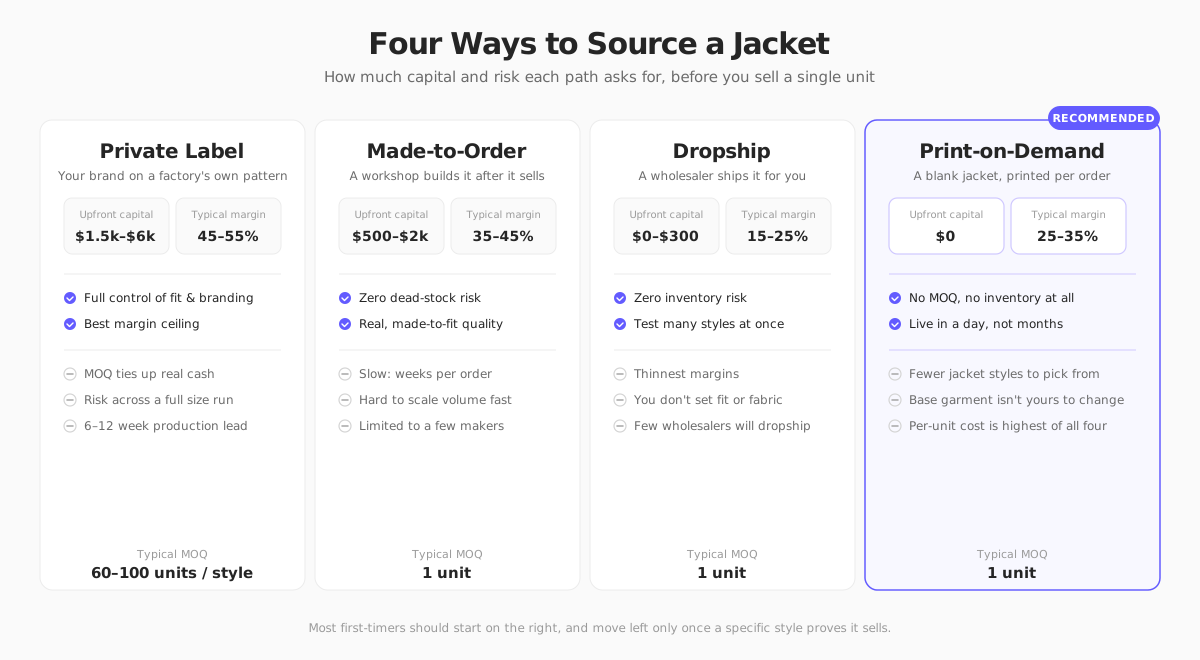
This is the biggest decision in the whole guide, and unlike a lot of product categories, jackets genuinely have four distinct, real paths, not two.
Print-on-demand (the safe way to start)
Print-on-demand (POD) means a supplier holds a blank base jacket and prints, embroiders, or heat-transfers your design onto it only after a customer orders. No inventory, no MOQ, and you can be selling within a day.
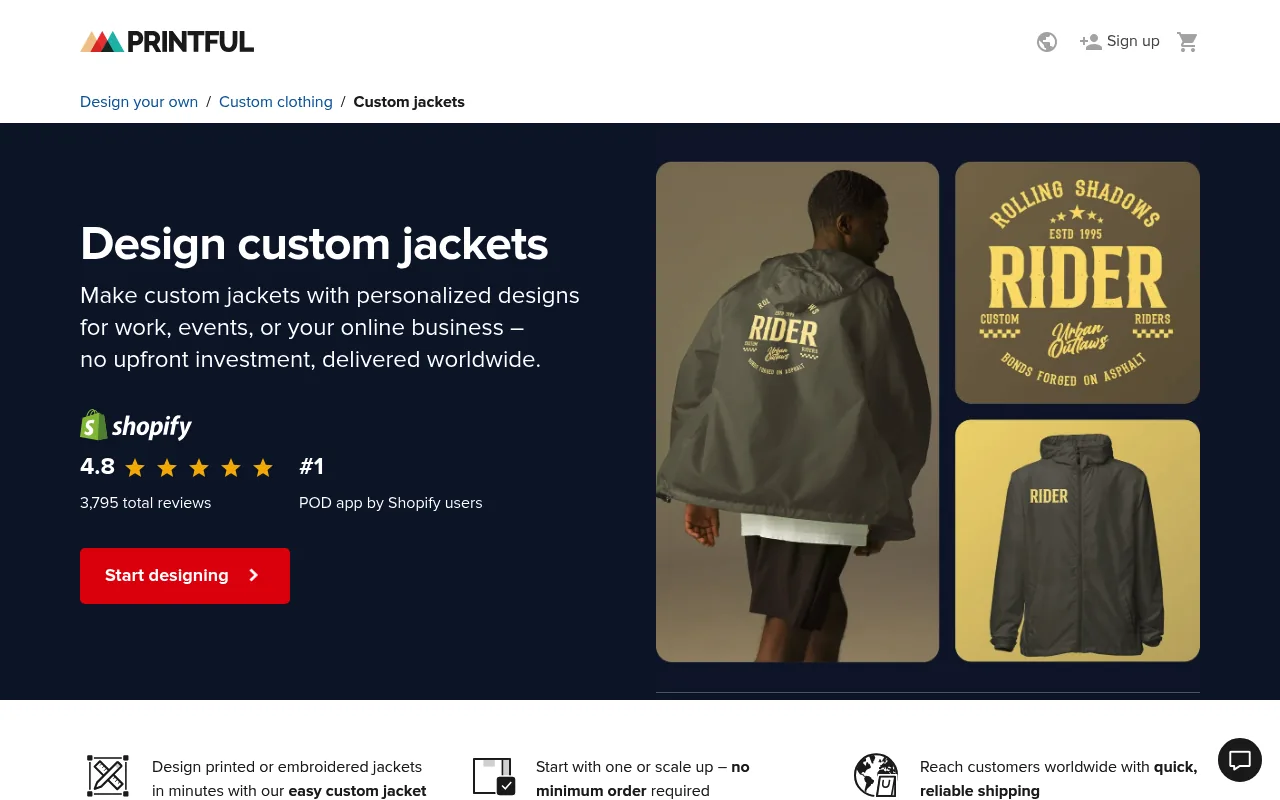
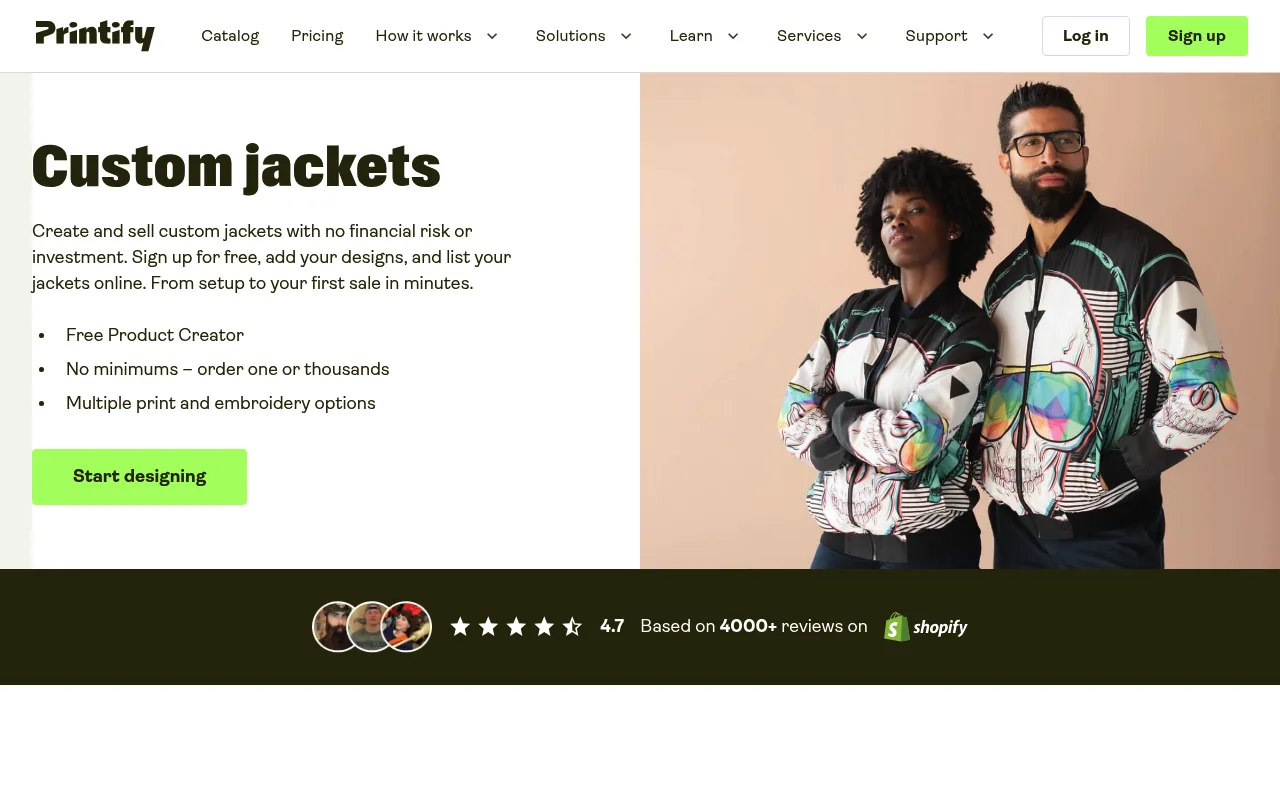
Printful offers custom bombers, fleece jackets, windbreakers, soft-shell jackets, and insulated jackets, and states plainly there's no minimum order: "you can get one custom jacket or hundreds." Order 25 or more of the same style and you get a bulk discount of up to 55%. Printify carries puffer and bomber jackets starting from $22 base cost, also with zero minimums, and both integrate directly with Shopify, Etsy, and most storefronts.
The trade-off: you're limited to whatever base garments the print provider stocks, you don't control the underlying fabric or fit, and per-unit cost is the highest of the four models since you're paying single-unit pricing on every order. This is a testing ground for validating a design and an audience, not usually a permanent model once you know a specific style sells.
Private label (the most control, and the real margin)
A manufacturer builds a jacket on an existing pattern, and you put your own brand, label, and sometimes small fabric or trim tweaks on it. This is where the best margins live, but it comes with a real minimum order.
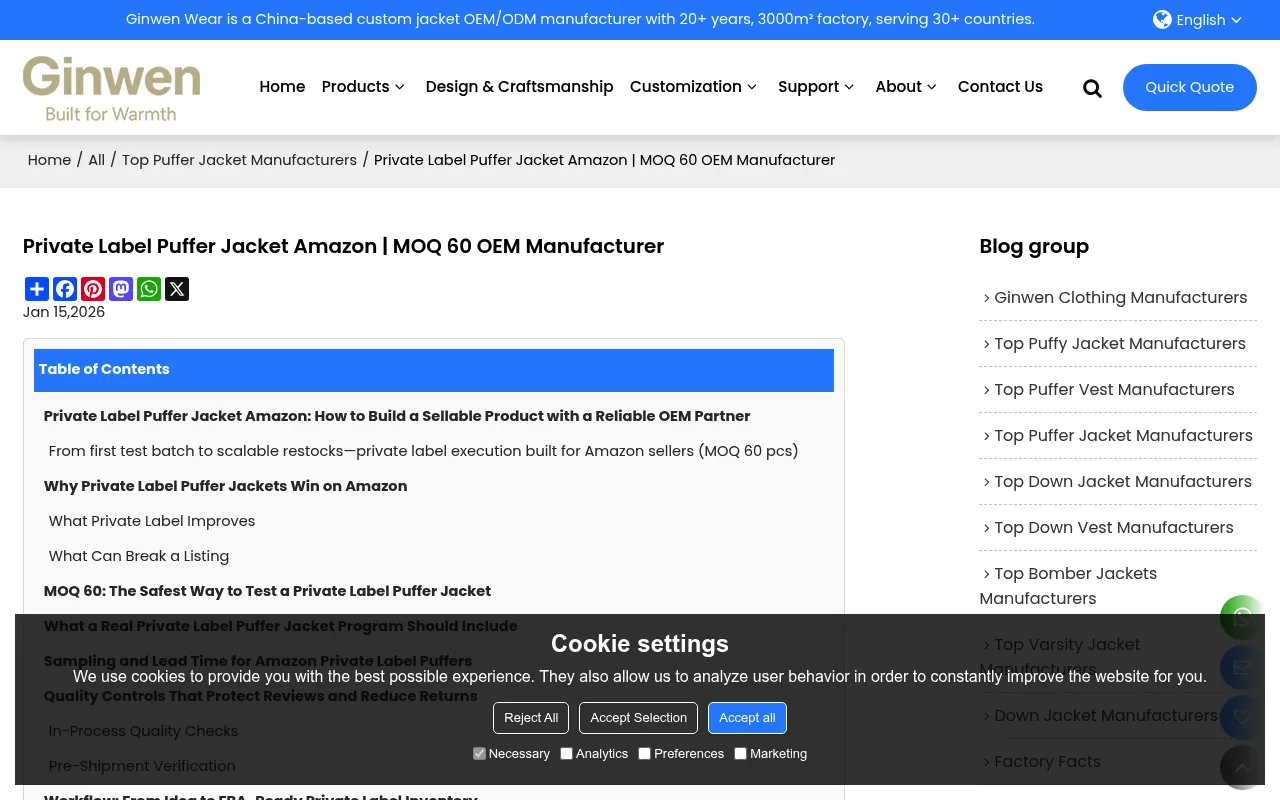
Ginwen, a private-label puffer jacket manufacturer, quotes an MOQ of 60 pieces per style with mixed sizes allowed, which it frames as "a practical starting point" for a first retail-ready size run. Other manufacturers on marketplaces like Alibaba list MOQs anywhere from roughly 20 to 300 pieces depending on the factory and how much customization you want beyond the base pattern.
This model gives you real control over fit, fabric, and branding, and margins commonly in the 45% to 55% range. It also means real cash tied up before you've made a single sale, a production lead time of 6 to 12 weeks, and inventory risk spread across an entire size run, not just one SKU. Save this path for a style you've already validated through print-on-demand or made-to-order.
Made-to-order (best for a premium, low-volume piece)
A small workshop or tailor builds each jacket only after it sells. No dead stock, and often genuinely better construction than a mass-produced run, since a maker working one piece at a time can catch fit issues a factory line won't.
The catch is scale. This model is realistically limited to a handful of makers and a few dozen units a month, and turnaround typically runs several weeks per piece. It fits a narrow, premium niche where customers already expect to wait, not a broad size run across a full catalog.
Dropship (rare, but real, for jackets)
A wholesale apparel distributor keeps stock and ships directly to your customer after it sells. Unlike furniture or home goods, true apparel dropshipping is uncommon, most fashion wholesalers sell in case packs to retailers, not one unit at a time to an end customer, so this path usually means partnering with a wholesale marketplace that explicitly supports single-unit fulfillment, or treating a small overstock supplier as a dropship source. Margins land thin, typically 15% to 25%, and you have no control over the fit or fabric quality your customer actually receives.
Start on the right side of the diagram, not the left. Validate a specific style with print-on-demand or a small made-to-order run first. Move it to private label only once you know, from real sales, that the fit and the demand are both real. A 60-unit MOQ across 6 sizes is a bad place to discover your medium runs small.
Step 5: Price With Duties, Freight, and Returns Baked In
The classic beginner mistake in every category is pricing off a competitor's sticker price. In jackets specifically, two costs get skipped more than in almost any other category: import duties and the return rate.
The duty surprise
If you're importing a private-label jacket from China, budget for real duty, not an afterthought. A polyester jacket (HTS 6202.93.45) carries a base MFN duty of 27.7%, plus a Section 301 tariff of 7.5% on top, for a total duty of 35.2% as of 2026, according to duty-rate data compiled by Greenwich Mercantile and confirmed by Section 301 tariff analysis. Cotton apparel is meaningfully cheaper to bring in, generally 8.7% to 16.5% in base MFN duty, before any Section 301 add-on. Fabric choice from Step 3 isn't just a cost and feel decision, it's a duty-rate decision too.
The return rate is a jacket-specific tax on every order
Sizing, not damage, is the real hidden cost in jackets. Apparel returns average around 25%, with fit issues cited in roughly half of them, and processing a single apparel return costs $25 to $35 all-in once you count reverse shipping, inspection, and restocking. That's a real line item, not a rounding error, and it belongs in your price from day one.
A worked example: a private-label nylon bomber
Landed cost (factory price plus duty and inbound freight) comes to about $62. Price it at 3x landed cost, a reasonable floor for a category with this much return risk, and you get $186:
| Where the money goes | $ |
|---|---|
| Landed cost (product + duty + inbound freight) | $62.00 |
| Card fee (Stripe, 2.9% + $0.30) | $5.69 |
| Outbound shipping to customer (parcel, 1 to 3 lbs) | $12.00 |
| Return and processing reserve (~25% of orders x ~$30) | $7.50 |
| Marketing (~20% of revenue) | $37.20 |
| What you actually keep | ~$61.61 |
That's roughly 33% of revenue kept, a healthy margin for a first apparel product. Now watch what happens at a 2x markup instead, $124 instead of $186. The landed cost, shipping, and return reserve barely move since they're mostly fixed dollar costs, not percentages of the sale price, so what you keep drops to roughly $14, about 11% of revenue. One extra return on that order and you're near breakeven. If a 3x markup makes your jacket too expensive for your niche, the niche or the sourcing model is wrong, not the price.
Step 6: Handle the Labeling and Legal Work
Jackets carry more mandatory labeling than almost any other apparel category, because insulation and fiber content claims are federally regulated in the US and EU alike.
In the US, two separate FTC rules apply. The Textile Fiber Products Identification Act requires a permanent label stating the fiber content by percentage (any fiber over 5% of total weight must be named), the country of origin, and the identity of the manufacturer or a registered RN number. Separately, the FTC's Care Labeling Rule requires a permanent care label with washing, bleaching, drying, and ironing instructions, or the standardized ASTM care symbols in place of text. You need a reasonable basis (testing, manufacturer data, or established industry knowledge) for every instruction on that label. Noncompliance is treated as an unfair or deceptive practice, with real civil penalties attached.
In the EU, Regulation (EU) No 1007/2011 requires every textile product to carry a fibre-composition label in descending order by weight, and that label must be translated into the official language of every EU member state where you sell it, not just English. In the UK, the Textile Products (Labelling and Fibre Composition) Regulations 2012 still apply post-Brexit and largely mirror the EU regulation, since the UK never replaced this framework after leaving the bloc.
Most established manufacturers can pre-print compliant labels as part of your production order. Confirm this in writing before your first run ships, since a missing or wrong fiber-content label is an easy, avoidable way to get a listing pulled from a marketplace.
Poly-bag your jackets for shipping, and budget for it. Most fulfillment suppliers and 3PLs will only ship apparel that arrives poly-bagged, since a jacket shipped loose in a parcel box gets crushed, dirty, or damp in transit. Factor a few cents per unit into your packaging cost, and confirm your supplier's bag opening includes a printed suffocation warning, standard practice across nearly every reputable apparel packaging supplier.
Step 7: Set Up a Website That Can Actually Show Fit
By now you have a validated style, a sourcing model, and a real landed cost. Time to give people a place to buy.
Jacket buyers need more reassurance than most apparel shoppers: real measurements per size (not just S/M/L), photos on multiple body types, a clear fabric and insulation description, and an honest, visible return policy before checkout, not a surprise after the sale. A generic product page built for a single-size candle will lose jacket sales.
The main options in 2026, honestly ranked for a first-time jacket seller:
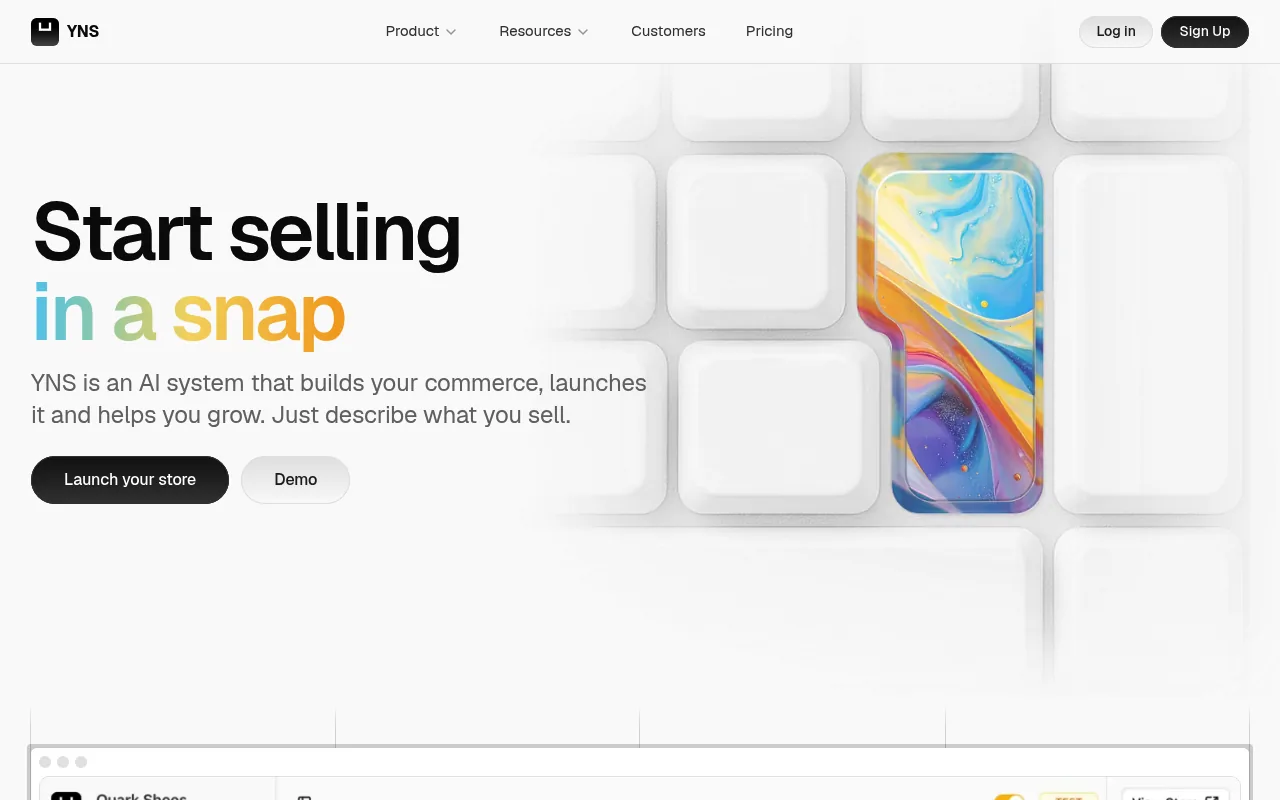
- Your Next Store (us, to be upfront) is a modern storefront with an AI-powered builder, starting at $25/month on the yearly plan with 0% platform transaction fees on every plan. Product pages support multiple images and custom variant attributes, so you can show a real size chart and fabric details instead of just a price and an "Add to cart" button.
- Shopify is the most common choice for apparel sellers because of its size-chart and variant apps, and its direct integrations with Printful and Printify for the print-on-demand path. It starts at $39/month, and Shopify takes a small extra fee on every sale unless you use their own payment processor.
- Etsy works for the made-to-order and small-batch path, less well for a private-label catalog, since buyers there expect handmade or vintage pieces. Expect a 6.5% transaction fee plus listing fees.
- Squarespace or Wix are fine for a small first catalog of a few styles, but most jacket sellers outgrow their variant and size-chart handling once they carry more than one or two silhouettes across multiple sizes and colors.
Honest recommendation for most first-time jacket sellers: get a simple, real website live before you spend marketing money anywhere, even while you're validating on print-on-demand. You need a place with an honest size chart and a visible return policy, and you need to own the customer relationship, since a jacket buyer who fits well in your sizing comes back for the next style, and print-on-demand and marketplace listings rarely capture that repeat customer for you.
0% extra fees on every sale. A modern website for your jacket brand, ready in minutes.
Step 8: Pick One Place to Get Noticed
New jacket sellers almost always win on exactly one channel first, then expand. Trying everything at once, on top of the sizing and sourcing work jackets already demand, is how founders burn out before their first season ends.
Your options, honestly:
- Instagram and TikTok, shown on real bodies in real weather. Jackets sell on how they move and layer, not on a flat product shot. Works if you can post 3 to 5 times a week through the season that matters for your niche.
- Micro-influencers in your exact niche. A motorcycle-jacket brand needs riders, not general fashion accounts. Twenty creators who genuinely fit your customer beat two thousand followers who don't.
- Pinterest, for style-driven niches. People plan a season's wardrobe on Pinterest months ahead of buying. Slower than Instagram, but it converts unusually well for outerwear because the intent is already there.
- Google and SEO. Slow, 6 to 12 months, but durable for a specific search like "waterproof commuter jacket" or "adaptive fit winter coat." Plant this now, don't expect it to carry your first season.
- Email, captured from the waitlist in Step 2. Jackets have a real consideration window, people browse for days or weeks before buying, especially once they've been burned by a bad-fitting online purchase before. Capture the email, follow up, don't rely on a first-visit conversion.
- Paid ads. Wait until organic content is already working. Return rates in apparel already eat margin, and a bad ad campaign stacked on a 25% return rate is how a promising first season loses money.
Pick one main channel and one backup. Run both for a full season, at minimum, before adding a third.
What It Actually Costs to Start a Jacket Brand in 2026
The real-world ranges, by sourcing model:
| Your approach | Upfront cost | Monthly spend | What you get |
|---|---|---|---|
| Print-on-demand test | $0–$300 | $30–$100 | Unlimited styles to test, a real website, 25–35% margins, zero inventory |
| Made-to-order | $500–$3,000 | $150–$300 | A few signature pieces, no dead stock, 30–40% margins |
| Private label, first run | $2,500–$10,000 | $500–$1,500 | Full control of fit and branding, 45–55% margins, real MOQ risk |
| Full first collection, multiple styles | $15,000–$50,000+ | $2,000+ | A real seasonal line, wholesale accounts, staff |
Two honest warnings hidden in that table:
- A private-label first run will not break even in one season. Between the 6 to 12 week production lead, duties, and the return reserve from Step 5, plan for two to three selling seasons before things turn consistently green, longer than most beginner ecommerce categories.
- Print-on-demand is the only row where you can validate a real style without capital sitting in a specific size run. Every row past it carries real risk that a size or color that doesn't move turns into a cash-flow problem fast.
If your plan depends on every size selling evenly, your plan is wrong. Budget for at least one size or color that undersells the rest, because in jackets, one usually does.
The jacket sellers who make it past their first winter aren't the ones with the flashiest lookbook. They're the ones who picked one specific wearer to obsess over, priced duties and returns into the number from day one, and validated a style with almost no capital before they ever touched a minimum order. Do those three things and the rest is patience, a well-fitted size chart, and a factory that actually answers your emails.
FAQ
How much does it cost to start a jacket brand in 2026?
Anywhere from $0 to $50,000+, depending entirely on your sourcing model. Print-on-demand through a supplier like Printful or Printify can start with no upfront spend at all, since there's no minimum order and no inventory. Made-to-order through a small workshop runs $500 to $3,000 for your first few pieces. Private label, the model with the best margins, typically needs $2,500 to $10,000 for a first MOQ run of 60 to 100 units, once you add duty and inbound freight to the factory price. Most of the cost difference comes down to inventory risk, not the website.
Is print-on-demand jacket printing actually profitable?
Yes, but margins are the thinnest of the four models, typically 25% to 35%, because you're paying single-unit pricing on every base garment instead of a volume discount. It's genuinely useful for validating which specific style and design actually sells before committing to a private-label minimum order, and both Printful and Printify support bulk discounts once volume picks up. Treat it as a testing ground first, and a possible long-term channel second, not necessarily your only model forever.
What's a realistic MOQ for private label jackets?
Most private-label jacket manufacturers quote 60 to 100 pieces per style, often with mixed sizes allowed within that count. Some factories on marketplaces like Alibaba list MOQs as low as 20 to 50 pieces for simpler styles with less customization, while highly customized designs (unique patterns, specialty trims) can push minimums higher. Confirm whether the MOQ is per style or per style-per-color before you commit; some factories count each colorway separately.
How do you reduce the return rate on jackets sold online?
The single biggest lever is an accurate, size-specific measurement chart, not just S/M/L, since roughly half of apparel returns come down to fit rather than the product itself. Publish chest, sleeve, and length measurements per size, show the jacket on multiple body types in real photos, and be explicit in the product description about whether a style runs true to size, oversized, or fitted. None of this eliminates returns entirely in a 25%-average category, but it meaningfully reduces the fit-driven share of them, which is the largest chunk.
Do I need a business license or trademark to sell jackets?
The basics are the same as any small business: a business license from your city (usually $50 to $100 a year) and a sales tax permit where required in your state. A trademark on your brand name isn't legally required to start selling, but it's worth filing once you have real sales, since a jacket brand's name and logo are core to repeat business. Fiber-content and care labeling, covered in Step 6, are the compliance items that are genuinely mandatory from your very first sale, not optional until you scale.
How long does it take to launch a jacket brand?
On the print-on-demand path, plan for 2 to 4 weeks: a bit of time to validate a design and set up your website, then launch with zero production lead time. On the private-label path, plan for 3 to 5 months, since sourcing a factory, developing a sample, and waiting through a 6 to 12 week production run for your first MOQ order usually takes longer than beginners expect, especially the first time through a fitting round.