How to Start a Baby Clothing Brand in 2026: A Safety-First Playbook
 Jakub Neander
Oct 9, 202613 min read
Baby clothing looks like the gentlest category in fashion and is one of the most regulated. Adult clothing can be launched with a sample and a prayer. A baby garment needs lab testing, a certificate, a permanent tracking label, and in some cases a very specific cut, before the first one legally ships. This is the honest playbook for how to start a baby clothing brand in 2026: eight steps in the right order, the safety rules that decide your design, and the margin math most "launch your kids' brand" guides skip.
How to Start a Baby Clothing Brand: The 8 Steps, in Order
- Pick one parent and one problem. Not "cute clothes for babies."
- Prove demand with a small preorder or a waitlist before you pay for a production run.
- Choose how the garments get made: print on demand, blanks you decorate, cut and sew, or private label.
- Design for the safety rules first, then for the look.
- Test, certify and label. This is the step that separates a baby brand from an ordinary apparel brand.
- Price for returns, sizing and testing, not just fabric.
- Set up a store that handles sizes, restocks and gift buyers.
- Pick one channel to get noticed. For baby, that is usually gifting and parents' recommendations.
Here is each one in full. If you want the broader apparel basics first (sourcing, tech packs, minimums), our clothing brand guide covers them; this post focuses on what changes when the wearer is under two.
Step 1: Pick One Parent and One Problem
Baby clothing is a crowded shelf. Carter's, Gap and Target sell bodysuits for a few dollars, so you cannot win by being a slightly nicer bodysuit. You win by being the obvious answer for one specific parent with one specific problem.
Good wedges look like this:
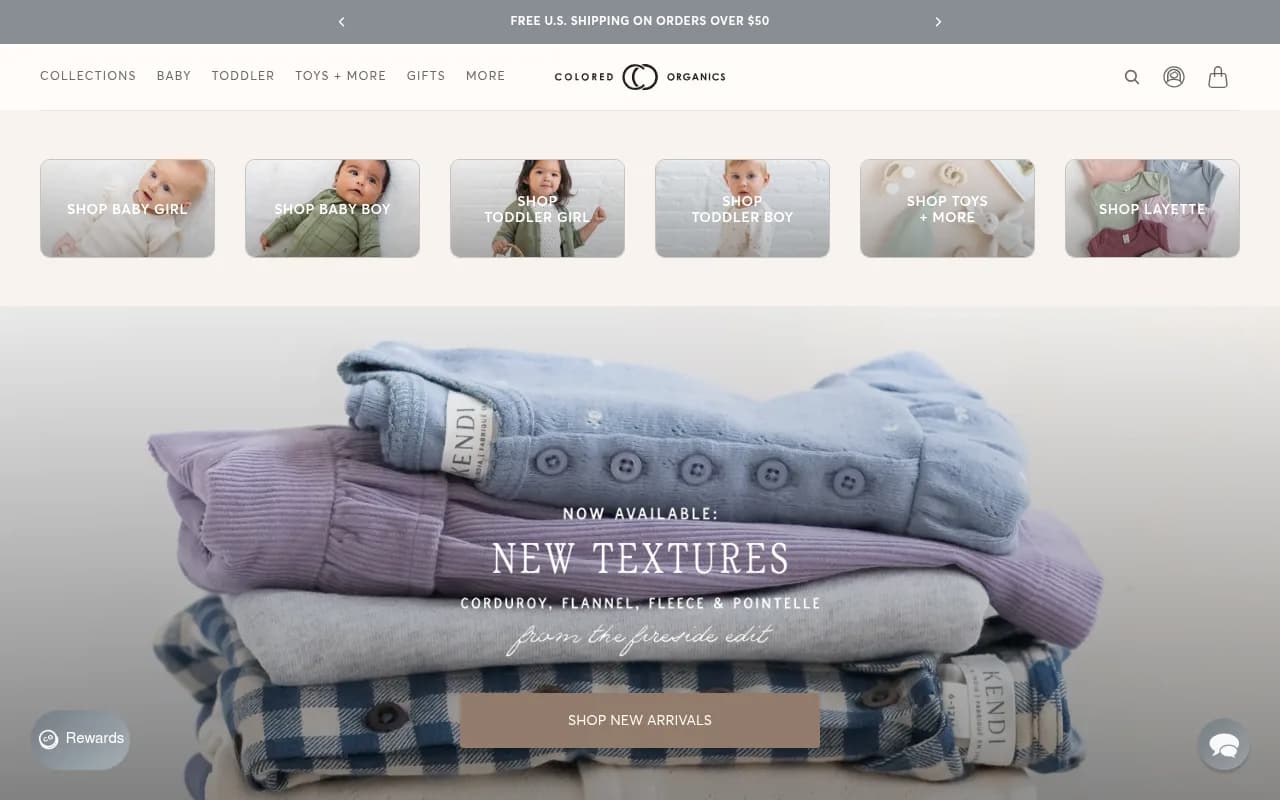
- A fabric promise. Colored Organics built its brand around organic and natural fabrics for babies and toddlers, with a calm, muted palette that is clearly not trying to compete with primary-color mass-market lines.
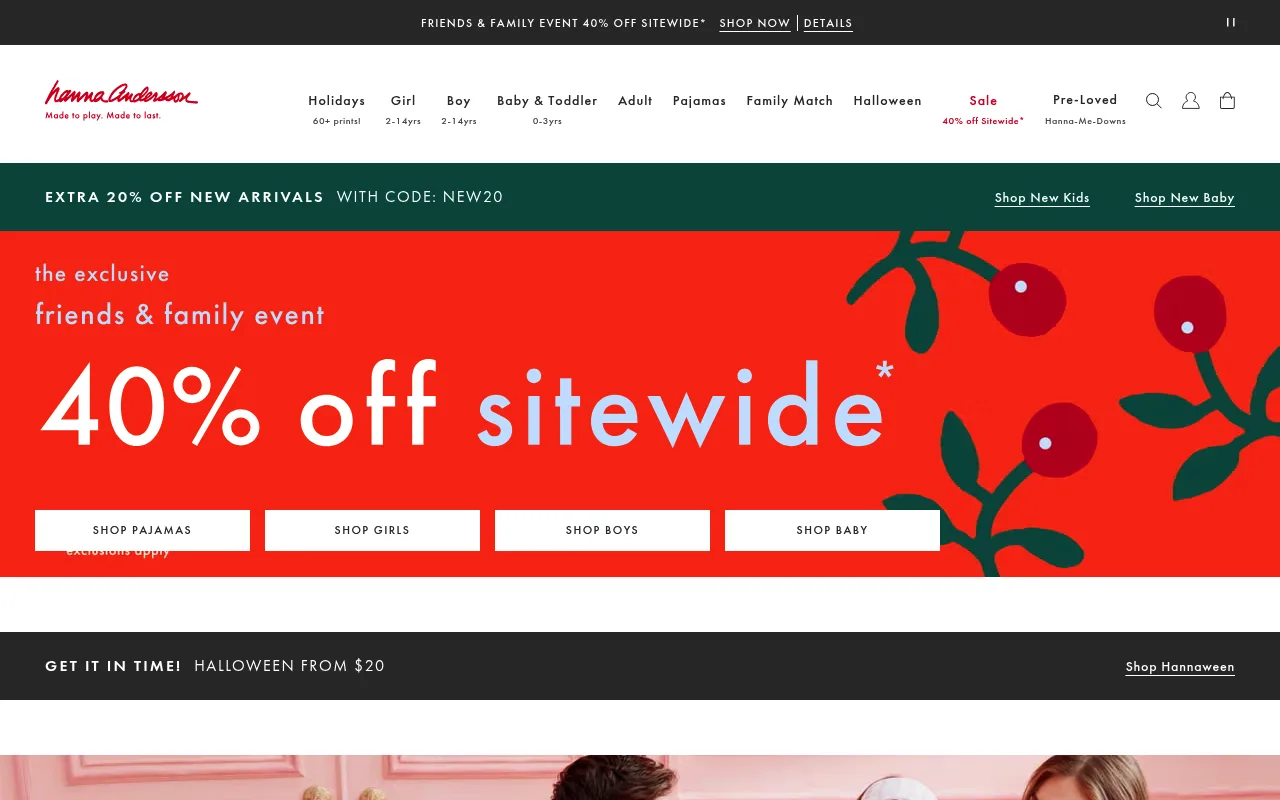
- A quality-and-longevity promise. Hanna Andersson uses the tagline "Made to play. Made to last." and sells matching family pajamas, which turns one garment into a gifting and photo-card ritual.
- A problem the big brands ignore. Sensory-friendly seams, adaptive snaps for babies with feeding tubes or hip dysplasia casts, extra-long rompers for tall newborns, gender-neutral basics, clothing that grows through three sizes.
The test: could Carter's put your garment on a shelf tomorrow without changing a thing? If yes, you have a product, not a brand. Pick the parent first. A first-time mom on a gift registry shops very differently from a parent of a toddler who destroys a pair of leggings every month.
Step 2: Prove Demand Before You Pay for Production
Apparel punishes guessing. Every style comes in multiple sizes and colors, and unsold sizes are stranded inventory because a baby outgrows them in weeks. So validate before you commit.
Three cheap ways:
- A preorder drop. Show 2 or 3 styles with real samples or mockups, take preorders for 2 to 3 weeks, and produce only what sold. This is the single best test for baby clothing, because gifting buyers happily wait.
- A waitlist plus a small ad test. A one-page site, $100 to $200 of Instagram or TikTok spend aimed at your target parent, and a signup form. If very few visitors leave an email, the angle isn't landing yet.
- A small batch of blanks you decorate. Order plain bodysuits and print your design on them. You learn which design sells without owning a cut-and-sew pipeline.
Pay attention to the reason people buy. Baby clothing sells on gifting, milestones and photos far more than on fashion. If your first buyers are grandmothers and friends rather than parents, your marketing in Step 8 changes.
Step 3: Choose How the Garments Get Made
Four real paths, with different costs and different regulatory responsibilities.
Print on demand
You upload a design, a partner prints and ships it. There is no inventory and no upfront cost, which makes it the cheapest way to test. The catch: you are still the brand, so you are still the party legally responsible for the product's safety certification, whatever the partner does. Choose partners that publish their blank garments' compliance documentation and can supply testing paperwork for infant sizes.
Blanks you decorate
You buy plain garments (organic cotton bodysuits, muslin swaddles) and add prints or embroidery yourself. You control the finish, and your testing job is mostly about the blank, the inks and the trims. Ask your blank supplier for test reports and keep them.
Cut and sew
Your own pattern, your own fabric. Minimums commonly start at around 100 to 300 units per style at small factories, and vary widely by region and fabric, so ask for quotes rather than trusting any single number. This is where brands like the ones in Step 1 end up, because it is the only path to a garment nobody else sells. It is also the slowest and most expensive way to get a wrong size chart.
Private label
You choose from a manufacturer's existing patterns and add your label. Faster than cut and sew, with less differentiation. Fine for a basics line while you build the story.
| Path | Upfront cost | Time to first sellable unit | Control over design | Safety paperwork |
|---|---|---|---|---|
| Print on demand | Near zero | Days | Low (print only) | Yours to verify |
| Blanks you decorate | Hundreds of dollars | 1 to 3 weeks | Medium | Yours, with supplier reports |
| Cut and sew | Thousands per style | 2 to 4 months | Full | Yours, per style |
| Private label | Hundreds to low thousands | 1 to 2 months | Low to medium | Shared, but you still certify |
Start with preorders on blanks or print on demand, then move to cut and sew once a style sells out. A first cut-and-sew run in the wrong size curve is a very slow way to learn that parents wanted 3 to 6 months, not newborn.
Step 4: Design for the Safety Rules First
This is where baby clothing differs most from ordinary apparel. The rules are not only paperwork; they change what you can design.
Cords and drawstrings
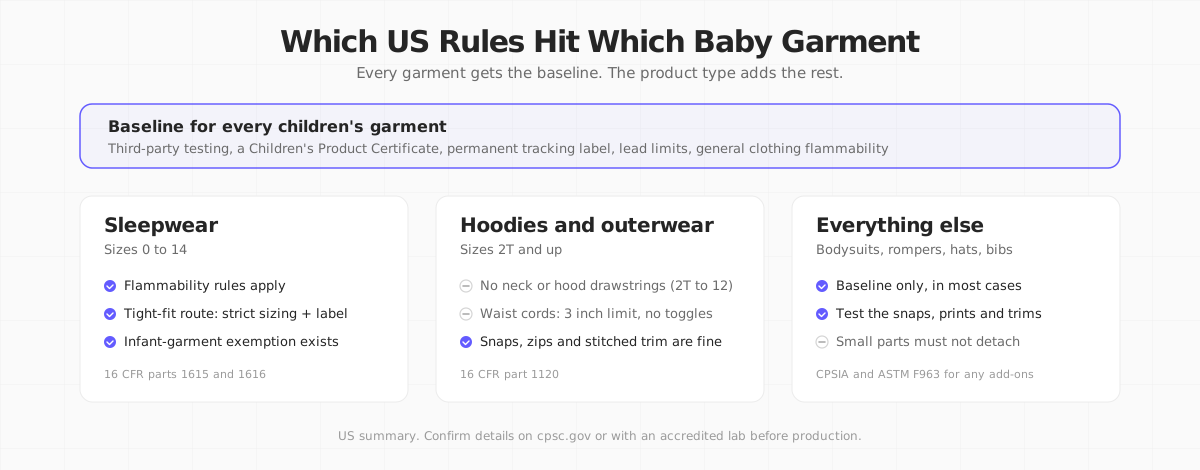
In the US, the CPSC treats drawstrings at the neck and hood of children's upper outerwear (sizes 2T to 12) as a substantial product hazard, and limits waist and bottom drawstrings in sizes 2T to 16, for example to 3 inches outside the channel, with no toggles or knots on the free ends. The rule is 16 CFR part 1120, explained in this CPSC FAQ. The practical lesson for a baby brand: skip the hood cords and decorative ties entirely. Snaps, zippers and sewn-down trim cost you nothing in style.
Sleepwear flammability
Children's sleepwear is covered by flammability standards for sizes 0 to 6X and 7 to 14. Per CPSC guidance, garments that meet the infant sizing and labeling definition, and tight-fitting garments that meet the sizing, measurement and labeling rules, are exempt from the flame-resistance testing, though they still need to meet the general clothing textile flammability rule. This is why many baby pajamas are snug and carry a "wear snug-fitting, not flame resistant" label. If your design is a loose, roomy nightgown, the rules change, and so does your testing bill.
Small parts and add-ons
A button, bow, appliqué, or snap that can detach is a choking hazard for a baby who puts everything in their mouth. Anything attached should survive a pull test, and add-on toys or rattles are regulated as children's products in their own right. When in doubt, embroider instead of attaching.
Materials and chemicals
US children's products have lead limits, and in the EU the REACH chemical rules restrict substances in textiles. In practice this is where fabric, dye and print-ink choices matter. Organic cotton does not by itself guarantee a passing test result. The inks and trims are tested too.
Step 5: Test, Certify and Label
In the US, a children's product needs a Children's Product Certificate based on third-party testing by a CPSC-accepted lab, plus permanent tracking labels. Four habits keep this manageable:
- Check the lab is CPSC-accepted for the specific tests you need. Acceptance is granted test by test. Use the CPSC's lab search before you order.
- Keep supplier paperwork. Test reports from your fabric mill or ink supplier can reduce what you need to test yourself, if you keep them organized and tied to the garments.
- Put the tracking information on a label you already have. The tracking label can be combined with the care and content label, so you don't need a second tag in a tiny neck.
- Don't forget textile labeling. In the US, garments also need an FTC-compliant label with fiber content, country of origin and your name or RN number. The EU and UK have their own fibre-composition labeling rules.
Always check the current rules where you sell. This guide summarizes US, EU and UK baby clothing safety rules as of October 2026. Regulations change and vary by country, so confirm the details with the CPSC, your local trading standards office or a product compliance specialist before you produce or sell. This is general information, not legal advice.
If you sell in the EU or UK
The rules differ, and a US-only brand that starts shipping to Europe needs a short second pass:
- Cords and drawstrings have a dedicated European standard, EN 14682, which governs cords on children's clothing; Irish safety guidance says that hoods and necks of young children's clothing should not have cords, and that any cords left must be secured and not trail below the hem (HSE).
- Nightwear has its own flammability requirements. Ireland and the UK each have their own nightwear flammability rules (Irish labels cite I.S. 148, for example), so nightwear is the category to research first if either is a target market.
- Product safety and labeling are covered by general product safety law in both markets, and textile fibre content and care labeling rules apply on top. You need a named responsible person in the market, which for a non-EU brand usually means an importer or authorised representative.
If Europe is part of your plan on day one, our guide to selling internationally covers VAT, duties and the logistics side.
Step 6: Price for Returns, Sizing and Testing
The classic mistake is pricing from the cost of fabric. Baby clothing has hidden costs: testing, size exchanges, and the fact that parents buy and return aggressively because they cannot know how big a baby will be.
The rule many apparel brands use is 3x to 4x landed cost for retail. Here is a realistic breakdown for a $48 two-piece organic cotton sleeper:
| Cost component | $ per set |
|---|---|
| Fabric, cut and sew | $11.50 |
| Trims, labels and tags | $1.00 |
| Packaging (box or bag, tissue) | $1.20 |
| Testing and certification, spread across the run | $1.80 |
| Total landed cost | $15.50 |
Sell it at $48 (about 3.1x) and here is where the money goes:
| Where the money goes | $ |
|---|---|
| Landed cost | $15.50 |
| Card fee (Stripe, about 2.9% + $0.30) | $1.69 |
| Shipping to customer | $4.00 |
| Returns and size-exchange reserve (about 8%) | $3.84 |
| Marketing (about 25% of revenue) | $12.00 |
| What you keep | ~$10.97 |
That is a 22.9% net margin. To clear $3,000 from a first run, you need to sell about 274 sleepers. Drop the price to $36 and you keep roughly $3.28 a set, so the same $3,000 takes about 915. If the math doesn't work at your planned price, don't launch at that price: simplify the trims, raise the price, or change the product.
Two details that move this math more than fabric choice:
- Returns are mostly sizing. A clear size chart with the baby's length and weight, and a free exchange policy, usually costs less than refunds.
- Gifting lifts your price ceiling. A gift buyer compares your sleeper with other gifts, not with the $8 pack at Target. That is where premium positioning works.
Step 7: Set Up a Store That Handles Sizes, Restocks and Gifts
You need honest product photos, a size chart per style, and a checkout that doesn't get in the way. Your options in 2026:
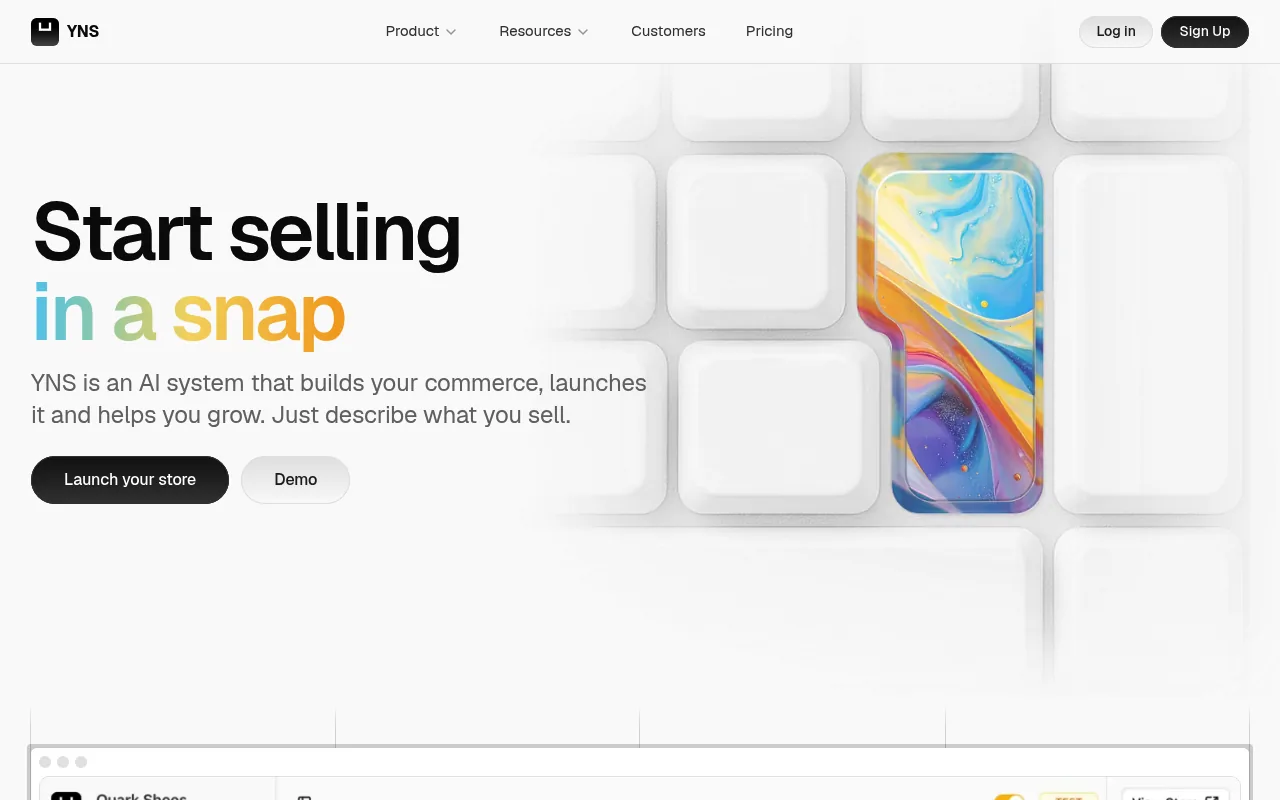
- Your Next Store (us, to be upfront) starts at $30/month, or $25/month billed yearly, with 0% platform transaction fees on every plan (Stripe's standard processing fees still apply). An AI-powered builder helps you set up the store, products support variants, so sizes and colors live on one product page with inventory tracked per variant, and discount codes and shipping integrations are built in. That matters for apparel, where one style can have eight size and color combinations.
- Shopify is the familiar default at $39/month, with a huge app ecosystem for size charts, back-in-stock alerts and gift wrapping. Apps add up, and Shopify takes a small extra fee on certain payment paths.

- Etsy is a strong fit for handmade and small-batch baby clothing, with built-in search traffic from gift shoppers. The trade-off is transaction and listing fees, and the buyer thinks of themselves as an Etsy shopper first.
- Squarespace or Wix are quick for a small preorder drop, though apparel with many size and color variants can outgrow them.
Honest recommendation: run your first preorder from a simple store, not a custom build. Switch platforms later only if a real constraint appears. If you're still choosing, our guide to starting an online store compares the options in more detail.
0% platform transaction fees on every plan. A storefront for your baby clothing brand, with sizes and colors handled as variants.
Step 8: Pick One Channel to Get Noticed
Baby clothing sells on trust and gifting. Pick one channel and do it properly:
- Gift registries and baby showers. The highest-intent buyers in the category. Make your product gift-ready (box, card, "newborn to 3 months" bundles) and your photos readable at registry-thumbnail size.
- Parent communities and micro-creators. Send samples to 15 to 20 parents who actually match your wedge. Honest photos of a real baby wearing it beat a polished campaign.
- Pinterest and Instagram. Seasonal, visual and evergreen, with milestone-photo content that gets saved and shared.
- Local boutiques and markets. Wholesale at roughly half your retail price leaves little margin, so recompute Step 6 before agreeing.
- Email, from day one. Collect every address from preorders and markets. Parents come back in 3 to 6 months when the next size is needed, and email is how you reach them.
- Paid ads, last. Start them after you know which style sells.
What It Actually Costs to Start a Baby Clothing Brand
Realistic ranges, which vary with your volume, market and number of styles:
| Your approach | Upfront cost | What you get |
|---|---|---|
| Print on demand, 5 designs | $200 to $800 | Samples, a simple store, a preorder test |
| Blanks you decorate | $1,000 to $3,000 | Small stock, your own prints, test reports for the blank |
| Cut and sew, 2 to 3 styles | $5,000 to $20,000 | Your own pattern, full size run, testing per style |
| Larger launch with wholesale | $20,000+ | Several styles, photography, compliance across markets |
The cost that surprises people is not fabric, it is the size curve. A style in six sizes and three colors is 18 stock-keeping units, and every unsold one is stuck inventory. Start with fewer styles in fewer sizes and let the data tell you what to add.
The baby clothing brands that last are not the ones with the cutest print. They are the ones that picked one parent, tested before they produced, built safety into the design rather than bolting it on, and priced in the real cost of a returned size. The paperwork is the boring part. It is also the part that lets you sleep.
FAQ
How much does it cost to start a baby clothing brand?
From a few hundred dollars with print on demand to $5,000 to $20,000 for a small cut-and-sew run, depending on styles, sizes and testing. Testing and certification are real line items for children's products, so get quotes from a lab before you budget.
Do I need testing to sell baby clothes?
In the US, children's clothing generally needs third-party testing by a CPSC-accepted lab and a Children's Product Certificate, plus permanent tracking labels. The EU and UK have their own product safety and labeling rules. Check the current requirements for the market you are selling in.
Can I sell homemade baby clothes on Etsy?
Yes, but the same safety rules apply to handmade as to factory-made. Being small or handmade does not exempt a children's product. Keep your test reports and certificates and put your tracking information on the label.
Are drawstrings allowed on baby clothes?
Not on the neck or hood of children's upper outerwear in the US in sizes 2T to 12, and waist cords are limited in length with no toggles. European guidance is similarly strict about cords near the neck. The simplest design choice is to avoid cords and use snaps or zippers.
How long does it take to launch a baby clothing brand?
Plan 3 to 6 weeks for a print-on-demand or blanks preorder test, and 4 to 8 months for a first cut-and-sew run once you count sampling, grading, testing and production lead time.