How to Start a Furniture Store in 2026: The Honest Playbook
 Michał Miszczyszyn
Aug 25, 202614 min read
Furniture is one of the most profitable categories in ecommerce, and one of the hardest for a beginner to actually run. Order values are high, margins can be excellent, and the US furniture market is projected to hit $185.17 billion in 2026. But furniture is heavy, breakable, and expensive to move, and the shipping problem sinks more first-time furniture stores than a bad product ever does. This is the guide I'd hand a friend before they list a single sofa: seven steps, in the right order, with an honest read on whether furniture is even the right first business for you.
The 7 Steps, in Order
- Be honest about why furniture is hard, then pick one specific kind of piece. Not "furniture." One category, for one kind of room or person.
- Get real people to say "yes, I'd buy this" before you commit to any inventory.
- Choose how your furniture actually gets to customers. There are three real sourcing paths, and freight cost is what decides between them.
- Solve shipping before you solve marketing. This is the step that makes or breaks a furniture store.
- Price with freight baked in. The honest rule for a category where shipping can cost more than the product.
- Set up a website that can actually sell something this big.
- Pick one place to get noticed. Not all the places. One.
Now the long version.
Step 1: Be Honest About Why Furniture Is Hard, Then Pick One Specific Piece
Let's start with the part most guides skip. Furniture is not a beginner-friendly product the way a t-shirt or a candle is. A candle that arrives broken costs you $6. A dining chair that arrives broken costs you $150, plus a freight claim, plus a customer who now has a half-empty dining set and a bad first impression. Every mistake in furniture is bigger and slower to fix than in almost any other category.
Here's the honest scorecard, compared to an easier first product:
| Furniture | A typical easy first product (candles, tees) | |
|---|---|---|
| Average order value | High: $150 to $2,000+ | Low: $15 to $60 |
| Shipping cost per order | Often $80 to $600+ | Usually $5 to $15 |
| Online return rate | 19% to 23% | Often under 10% |
| Damage risk in transit | High: heavy, awkward, easy to chip or tear | Low |
| Cash tied up per unit | High if you hold stock | Low |
| Time to sell through a batch | Slow: weeks to months per piece | Fast: days to weeks |
None of this means don't do it. It means go in with your eyes open, and it means the sourcing and shipping decisions in Steps 3 and 4 matter far more here than they do for most first businesses. If you read this whole guide and the shipping section still feels like too much to take on right now, that's a completely reasonable conclusion, and our broader playbook for starting any online store covers lighter categories that are genuinely easier to learn on.
If you're still in, the next decision is which furniture. "I'm going to sell furniture" is not a business. Search "modern furniture" and you'll compete with Wayfair, Article, and West Elm on their turf, with none of their buying power. You win by being the obvious answer for one specific kind of room, person, or problem.
Good answers look like this:
- Small-space furniture for apartment dwellers, designed to fit through a standard doorway and a narrow stairwell.
- Nursery and kids' furniture for new parents who want something specific: non-toxic finishes, convertible cribs, a particular aesthetic.
- Home office furniture for remote workers, built around a specific problem like small rooms, standing desks, or cable management.
- Outdoor furniture for a specific climate, like coastal-rated pieces that hold up to salt air.
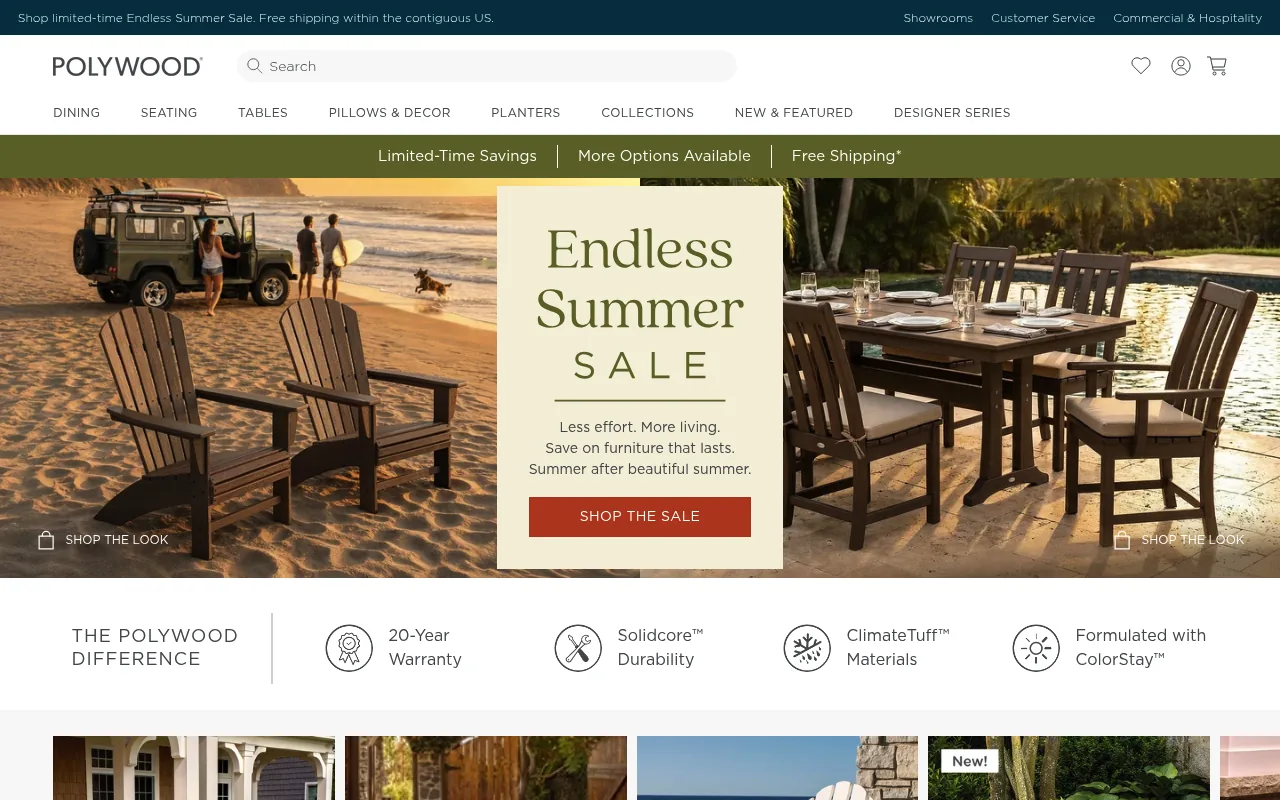
That last one describes brands like Polywood, built entirely around one material story: recycled-plastic outdoor furniture that doesn't rot, fade, or need to be brought in every winter. One clear promise, marketed relentlessly to people who've been burned by outdoor furniture that didn't survive a season.
The test: if Wayfair could list your exact piece tomorrow without changing anything about who they are, your idea isn't sharp enough yet. Your advantage as a small furniture seller isn't a bigger warehouse. It's caring about one specific room or person more than a marketplace with ten million SKUs ever will.
Step 2: Get Real People to Say "Yes" Before You Commit to Any Inventory
This step matters more in furniture than almost anywhere else, because the cost of guessing wrong is so much higher. A candle maker who guesses wrong is out $500. A furniture seller who orders a container of a sofa nobody wants is out $10,000 to $40,000, plus the freight to send it back or the warehouse fee to store it while it doesn't sell.
Three cheap ways to test demand before you spend real money:
- A one-page site with a "Join the waitlist" button. Show renderings, real photos from a manufacturer's catalog, or a prototype. Explain the specific problem the piece solves. Spend $150 to $300 on Instagram or Pinterest ads sending your target person there. If fewer than 1 in 50 visitors sign up, the idea isn't landing. Go back to Step 1.
- Take pre-orders for the first small run. Same page, but "Pre-order, ships in 6 to 10 weeks" instead of "Join the waitlist." People who put down a deposit are the only signal that actually counts.
- List a single piece via dropshipping first (more on this in Step 3), before you ever buy inventory. If a specific dresser or accent chair sells reliably for 60 to 90 days through a dropship supplier, you have real proof before you commit capital to holding that same piece yourself.
This step costs a weekend and a few hundred dollars in ads, at most. Skipping it can cost you tens of thousands in a first container order for furniture nobody wanted, sitting in a warehouse you're still paying rent on.
Step 3: Choose How Your Furniture Actually Gets to Customers
This is the biggest decision in the whole guide, and unlike most product categories, the "right" answer for furniture changes based purely on how much of the shipping cost and risk you're willing to carry yourself.
Dropshipping (the safe way to start)
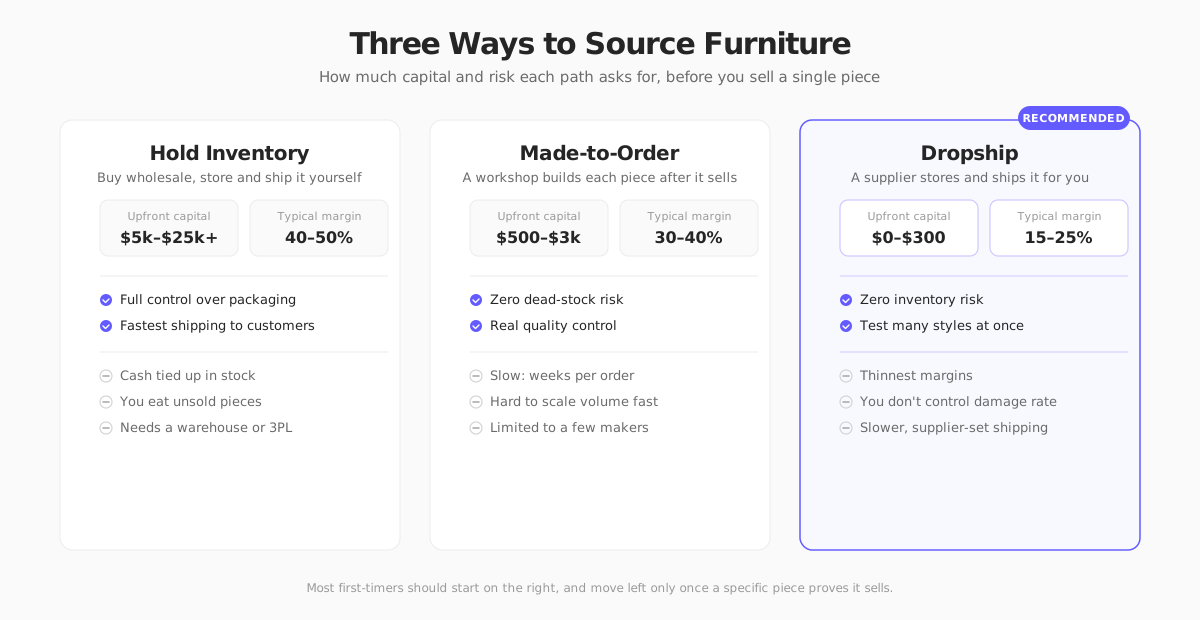
Dropshipping means a supplier keeps the inventory and ships each order directly to your customer after it sells; you never touch or store the piece yourself. You list it, mark it up, and the supplier handles storage and the freight carrier relationship.
For furniture, this is the honest recommendation for almost every total beginner. Suppliers like Modway, a US-based furniture wholesaler with over 10,000 SKUs and no minimum order quantities on its trade program, will ship directly to your customer from warehouses on both coasts. You're not negotiating freight contracts or renting a warehouse in month one.
The trade-off is margin and control. Dropship markups on furniture typically land in the 15% to 25% range, thinner than almost any other model, because the supplier is doing the storage and fulfillment work. You also don't control the packaging quality or the exact freight carrier, which means when something arrives damaged, and in furniture, something eventually will, you're the one fielding the angry email even though you never touched the box.
Made-to-order (best for a specific, premium piece)
A local workshop, small furniture maker, or a network like CustomMade builds each piece only after someone orders it. No warehouse, no dead stock, and often genuinely better craftsmanship than mass production.
The catch is speed. Made-to-order furniture routinely takes 4 to 12 weeks per piece, and it's hard to reliably fulfill more than a few dozen orders a month this way unless you're working with multiple makers. This model fits a narrow, premium niche where customers already expect to wait, not a broad catalog.
Hold inventory (the most control, and the most risk)
You buy wholesale, sometimes buying an existing manufacturer's design and putting your own brand on it (often called private label or white label), store it yourself or through a 3PL (a third-party logistics company that warehouses and ships on your behalf), and control the entire experience from packaging to delivery.
This is where the real margin lives, commonly 40% to 50%, and it's the only model where you control the packaging quality that determines your damage rate. It's also the only model where a slow-selling piece is entirely your problem, tying up real cash in a warehouse, and it's the model that requires the most working capital before you've made a single sale.
Save this path for a piece you've already validated. Start on dropshipping or made-to-order, learn which specific items actually sell in your niche, then move the winners to a hold-inventory model once you know the demand is real and you understand your actual freight costs from Step 4.
Step 4: Solve Shipping Before You Solve Anything Else
This is the step that separates furniture stores that survive from the ones that quietly lose money on every order. Get this wrong and even a great product with real demand can bleed you dry on freight and damage claims.
Parcel vs. LTL: know which one your piece needs
Standard parcel carriers like UPS and FedEx work for furniture under 150 lbs and under 108 inches per side, which covers small pieces like side tables, chairs, and flat-pack items. Anything bigger moves via LTL freight ("less-than-truckload"), a shipping method where your piece shares a truck with other companies' shipments instead of filling a whole trailer. Base LTL rates for a sofa on a 1,000-mile lane run roughly $280 to $420 for commercial delivery, before you add anything for delivering to an actual house.
Freight class: the number that sets your rate
Every LTL shipment gets assigned a freight class, a number from 50 to 500 based on the item's density: how much space it takes up relative to its weight. Furniture typically falls in the 100 to 175 range, and the classification matters more than you'd expect. According to freight industry data, a 10-class bump from 125 to 150 can add 15% to 25% to your line-haul rate, purely because a bulky, low-density item takes up more truck space than a compact, heavy one. A well-packed, flat-packable design can genuinely be cheaper to ship than the same piece assembled.
The fees nobody warns you about
The base freight rate is rarely the number a beginner budgets for. Delivering to a home, rather than a commercial loading dock, adds real accessorial fees on top:
| Fee | What it's for | Typical cost |
|---|---|---|
| Residential delivery | Delivering to a house instead of a business | $150 to $225 |
| Liftgate service | Lowering the piece from the truck without a loading dock | $115 to $185 |
| Inside delivery | Carrying the piece past the doorway | $120+ |
| White-glove delivery | Full-service delivery: inside, unboxed, assembled, debris removed | $200 to $500+ |
Add those to the base rate and a sofa that costs $280 to $420 to ship commercially can run $580 to $780 delivered to a customer's home. That number needs to be in your price from day one, not discovered after your first order.
Get 3 to 5 freight quotes for every SKU before you list it, either directly from carriers or through a freight broker. Rates vary meaningfully by lane and carrier, and the quote you get for a 500-mile shipment tells you nothing about what a 2,500-mile shipment will cost. Don't guess a flat shipping fee and hope it averages out.
Damage is a packaging problem, not bad luck
Furniture leads ecommerce categories in delivery damage, and it's largely preventable. Proper crating, corner protectors, and pallet-banding cut claim rates dramatically compared to loose-handled pieces on a shared LTL truck. If you're dropshipping, this is entirely on your supplier, which is exactly why the supplier's packaging standards matter as much as their price. If you're holding inventory yourself, budget real money for packaging before you budget for anything else in your supply chain.
Step 5: Price With Freight Baked In
The classic beginner mistake in every category is pricing off a competitor's sticker price. In furniture, it's especially dangerous, because the competitor's sticker price already has their negotiated freight rates baked in, and yours won't be nearly as good on day one.
Here's the honest rule: price at least 3x your landed cost (product plus what it costs to get it to you), and treat outbound freight to the customer as its own real line item, not something you'll "figure out later." For furniture, freight is often the single biggest cost in the order after the product itself, sometimes bigger.
Returns are a real, quantifiable cost too, not just an annoyance. Furniture and home goods return 19% to 23% of the time online, and one detailed cost analysis found that at a 22.7% return rate and roughly $80 per return to process (reverse freight, damage write-downs, and handling), you're carrying about $18 of expected return cost on every $400 order before you spend a dollar on marketing. Build that into your price, don't discover it in your bank statement.
Quick example for a mid-size accent chair. Landed cost is $150. You sell it for $450 (3x):
| Where the money goes | $ |
|---|---|
| Landed cost (product + inbound freight) | $150.00 |
| Card fee (Stripe, 2.9% + $0.30) | $13.35 |
| Outbound freight to customer (avg, parcel-eligible piece) | $95.00 |
| Return and damage reserve (~22% of orders) | $18.00 |
| Marketing (~20% of revenue) | $90.00 |
| What you actually keep | ~$83.65 |
So a $450 chair nets you roughly $84, about 19% of revenue. To clear a $5,000 first dropship test or sample run, you'd need to sell around 60 pieces, which is a realistic first-quarter goal for a validated niche, not a vague revenue target.
Now watch what happens if you price at 2x instead of 3x, $300 instead of $450. The landed cost, freight, and return reserve are mostly fixed dollar costs, not percentages of the sale price, so they barely move. Run the same table at $300 and you land at roughly negative $32, you'd be losing money on every chair you ship. This is the trap that's specific to freight-heavy categories: cutting the price doesn't shrink your biggest costs, so the markup floor is higher here than in almost any other product category. If the math doesn't work at 3x, the piece is wrong, not the price. Pick a different SKU, negotiate freight, or simplify packaging. The worst outcome in furniture is discovering six months in that your bestseller loses money on every order once a return comes in.
Step 6: Set Up a Website That Can Actually Sell Something This Big
By now you have a validated piece, a sourcing model, and freight costs you actually understand. Time to give people a place to buy.
Furniture buyers need more reassurance than most shoppers: real dimensions, honest photos from multiple angles, clear delivery timelines, and a shipping cost they can see before checkout, not a surprise at the end. A generic "add to cart" flow built for $20 t-shirts will lose furniture sales.
The main options in 2026, honestly ranked for first-time furniture sellers:
- Your Next Store (us, to be upfront) is a modern storefront with an AI-powered builder, starting at $25/month on the yearly plan with no extra fees per sale. Product pages support multiple images and custom attributes, so you can show real dimensions and materials instead of just a price and an "Add to cart" button, and because pricing is flat, a $450 order doesn't cost you more in platform fees than a $45 one. Good fit once you need a real brand home, not just a place to test a single dropship SKU.

- Shopify is the most common choice for furniture sellers because of its freight and shipping-rate app ecosystem; there's a plug-in for nearly every LTL and accessorial scenario. It starts at $39/month, but those shipping and quoting apps commonly add another $50 to $300/month, and Shopify takes a small extra fee on every sale unless you use their own payment method.
- Etsy works well for the made-to-order path in Step 3, less well for private-label or dropshipped pieces, since buyers there expect handmade, one-of-a-kind items. Expect a 6.5% transaction fee plus listing fees.
- Squarespace or Wix are fine for a small first catalog of a handful of pieces, but most furniture sellers outgrow their variant and shipping-rule handling once they carry more than a few SKUs.
- A marketplace listing (Wayfair, Amazon) plus your own site. Marketplaces bring instant traffic and already understand furniture logistics, but they also compress your margin further on top of your supplier's cut, and you never own the customer relationship. Treat a marketplace as a second channel, not your only one, once your own site is live.
Honest recommendation for most first-time furniture sellers: get a simple website live before you spend real marketing money anywhere, even if you're starting purely with dropshipped SKUs. You need a place that shows real dimensions and an honest shipping estimate, and you need to own the customer relationship for the repeat business furniture buyers eventually bring (they redecorate, they furnish a second room, they refer a friend).
0% extra fees on every sale. A modern website for your furniture store, ready in minutes.
Step 7: Pick One Place to Get Noticed
New furniture sellers almost always win on exactly one channel first, then expand. Trying everything at once, especially on top of the operational work furniture already demands, is how founders burn out in month two.
Your options, honestly:
- Pinterest (underrated for furniture). People plan entire rooms on Pinterest months before they buy. It's slower than Instagram to show results but converts unusually well for home goods, because the intent is already there.
- Instagram and TikTok, styled in real rooms. Furniture sells better shown in context (a real living room, a real apartment) than on a white background. Works if you can post 3 to 5 times a week for 6 to 12 months.
- Sending pieces to interior-design and home creators. Pick 20 to 30 creators whose aesthetic matches your niche from Step 1. A single well-styled post showing your piece in a real room often outperforms a paid ad, because it answers the question every furniture shopper actually has: "will this look right in a space like mine?"
- Local design firms and staging companies. If your niche fits a specific aesthetic, interior designers and home stagers are a genuine wholesale channel, not just a marketing one; they buy repeatedly once they trust your quality and your delivery timelines.
- Google and SEO. Slow (6 to 12 months) but durable for specific searches like "small-space sectional" or "non-toxic crib." Plant seeds now, don't expect it to carry year one.
- Email. Furniture has a longer consideration window than almost any other category; people browse for weeks before buying. Capture every email from day one and follow up, don't rely on someone converting on their first visit.
- Paid ads. Skip this until organic content is already working. Furniture ad costs run high because the purchase decision is slow and the AOV attracts competitive bidding, and a return that eats your margin makes a bad ad campaign worse.
Pick one main channel and one backup. Run both for six months before adding a third.
What It Actually Costs to Start a Furniture Store in 2026
The real-world ranges, by sourcing model:
| Your approach | Upfront cost | Monthly spend | What you get |
|---|---|---|---|
| Dropship test | ~$300–$1,000 | ~$50–$150 | Unlimited SKUs to test, a real website, 15–25% margins, zero warehouse |
| Made-to-order | ~$1,000–$5,000 | ~$200–$400 | A few signature pieces, no dead stock, 30–40% margins |
| Small wholesale (hold inventory) | ~$8,000–$30,000 | ~$800–$2,000 | Full margin control, faster shipping, real inventory risk |
| Serious retail launch | $50,000+ | $4,000+ | Multiple product lines, staff, a white-glove delivery network, wholesale accounts |
Two honest warnings hidden in that table:
- A hold-inventory launch will not break even in one quarter. Between freight, storage, and the return reserve from Step 5, plan for 12 to 18 months of cash flow before things turn green, longer than most beginner ecommerce categories.
- Dropshipping is the only row where you can validate a real furniture brand without your own capital sitting in a warehouse. Every row past it carries real inventory risk that a slow-selling SKU can turn into a cash-flow problem fast.
If your plan depends on every piece selling on schedule, your plan is wrong. Budget for at least one SKU that doesn't move the way you expected, because in furniture, one usually doesn't.
The furniture sellers who make it past year one aren't the ones with the prettiest showroom photos. They're the ones who solved shipping before they touched a marketing budget, priced freight into every SKU instead of guessing, and picked one specific kind of room to be the obvious answer for. Do those three things and the rest is patience, good packaging, and a freight broker who actually returns your calls.
FAQ
How much does it cost to start a furniture business in 2026?
Anywhere from $300 to $50,000+, depending entirely on your sourcing model. A dropship test with a supplier like Modway can start under $1,000 since you never buy inventory. Made-to-order through a small workshop runs $1,000 to $5,000 for your first few pieces. Holding your own wholesale inventory, the model with the best margins, typically requires $8,000 to $30,000 to start, because you're buying and storing real stock before you've made a sale. Most of the cost difference comes down to inventory risk, not the website.
Is dropshipping furniture actually profitable?
Yes, but the margins are thin, typically 15% to 25%, roughly half of what a hold-inventory model can earn. It's a real, workable way to start with no warehouse and no capital tied up in stock, and it's the honest recommendation for validating which specific pieces sell before you commit real money to buying inventory yourself. Treat it as a testing ground, not necessarily your permanent model.
What's the difference between LTL freight and parcel shipping for furniture?
Parcel shipping (UPS, FedEx) works for furniture under 150 lbs and under 108 inches per side, like small tables, chairs, and flat-pack pieces. Anything bigger needs LTL ("less-than-truckload") freight, where your item shares a truck with other companies' shipments. LTL costs significantly more and adds real accessorial fees for residential and inside delivery, so a piece's size and weight directly determine which shipping method, and roughly what cost, you're working with.
Do I need a warehouse to sell furniture online?
Not to start. If you dropship or use a made-to-order model, your supplier or maker stores and ships the piece, and you never need warehouse space. You only need a warehouse, or a 3PL (a third-party logistics company that stores and ships for you) once you move to a hold-inventory model, which is worth doing only after you've validated real, repeat demand for specific pieces.
Is furniture actually a good business to start as a total beginner?
Honestly, it's one of the harder categories to pick as your very first ecommerce business. Freight complexity, high damage risk, and a 19% to 23% return rate mean the operational learning curve is steeper than almost any other physical product. That said, it's genuinely doable if you start with dropshipping or made-to-order (so you're not risking real inventory capital), pick one specific niche instead of a broad catalog, and treat Step 4 (shipping) as seriously as the product itself. If you've never run any online store before, consider starting with a smaller, lighter product to learn the basics of validation, pricing, and marketing first, then bring those lessons into furniture once you're ready to take on the shipping complexity.
What licenses do I need to sell furniture online?
The same basics as any small business: a business license from your city (usually $50 to $100 a year) and a sales tax permit if required in your state. If you sell upholstered furniture, it also needs to meet the CPSC's federal flammability standard, based on California's TB 117-2013, with a permanent label stating compliance. Most established manufacturers already handle this compliance and labeling for you; confirm it in writing before you list anything upholstered. Product liability insurance is strongly recommended, not legally required, but a structural failure or an injury claim is exactly the kind of risk a small brand can't absorb without it.
How long does it take to launch a furniture store?
On the dropship path, plan for 4 to 8 weeks: a couple weeks to validate demand, time to set up a supplier account and your website, then launch. On the hold-inventory path, plan for 3 to 6 months, since sourcing, freight negotiation, and getting your first container or pallet order in usually takes longer than beginners expect. Anyone promising a fully stocked furniture warehouse business in two weeks is skipping the freight research.