
Best Bloom by Medusa Alternatives in 2026 (Honest Picks)
 Jakub Neander
May 19, 202611 min read
Bloom by Medusa is an AI chatbot that builds you a working online store: you describe what you sell, it puts the store together for you. It also charges per "credit" (each chat with the AI spends one), runs on a hosted platform called Medusa Cloud, and gets opinionated about how your store is built. If you're shopping for alternatives because the credit math feels tight, you want a different platform underneath, or you just want to compare before committing, this is the shortlist. Seven Bloom alternatives, ranked for what actually matters when you're trying to launch a real store, not a demo.
Bias disclosure: We make Your Next Store, one of the tools on this list. It competes directly with Bloom in the same "AI builds your store on top of a real commerce backend" category. Where we've used a tool ourselves we say so; where we're going off documentation and published case studies, we say that too. Medusa (the engine behind Bloom) has been in production since 2021 and is genuinely excellent. We respect what they're building.
TL;DR: The Best Bloom Alternatives for 2026
- Closest like-for-like swap: Your Next Store. AI builds your store on top of a managed commerce backend, you keep the source code, 0% platform transaction fees, flat pricing from $30/mo. The most direct Bloom competitor on this list.
- Same Bloom credits, used differently: Medusa Cloud Develop tier ($29/mo) already includes 50 Bloom credits a month. Pair them with Cursor or Claude Code on your storefront repo and you can stretch them much further than chat alone.
- Best for pure vibe-coding a storefront app: Lovable. Generates a beautiful React storefront, you bring the commerce backend (Stripe + Supabase, or a Shopify integration).
- Best browser-based AI coder: Replit. Agent codes, runs, and hosts in one tab. Same "no commerce engine" caveat as Lovable.
- Best with a copy-paste prompt template: Bolt.new. Fast prototypes, deploys to Bolt Cloud. We have a full Bolt.new ecommerce prompt template that covers the wiring it skips.
- Best if you already sell on Shopify: Shopify Magic. AI helpers everywhere in the admin, no migration needed. It writes copy and rearranges layouts; it doesn't rebuild your store.
- Best non-developer, design-first AI: Wix AI or Shoplazza. Both build a full working store from a prompt, both lock you in once you're there.
What Bloom by Medusa Actually Is
Before talking alternatives, it helps to be specific about what Bloom is, because most "Bloom alternatives" articles on the open web are about Bloom Nutrition or a CRM with the same name.
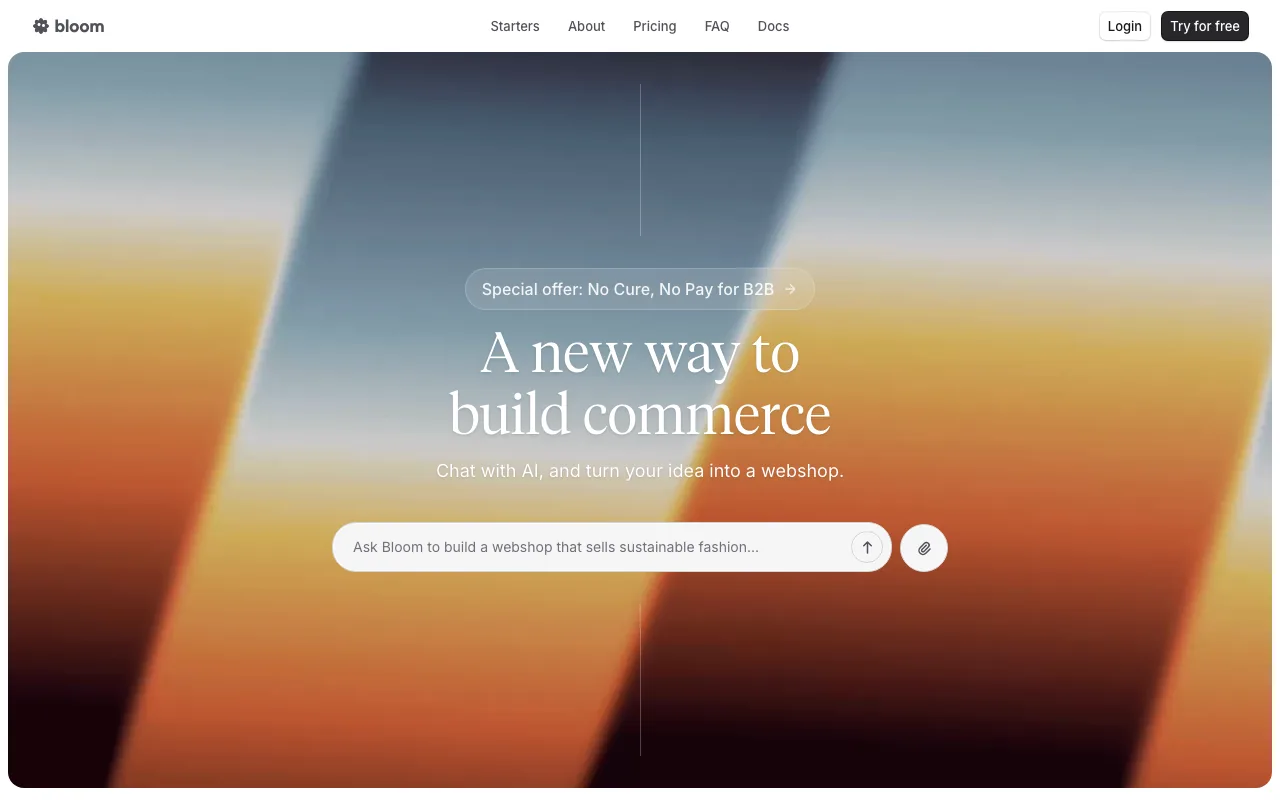
Bloom by Medusa is the AI chat layer on top of the Medusa commerce engine. You describe the store you want in a chat box, Bloom generates a storefront, admin dashboard, and product catalog in a few minutes, and you can keep iterating by chatting. The output is a real Medusa 2.0 project: real source code, real database, real admin. You can open the repo and edit it by hand whenever you want. Publishing pushes the store to Medusa Cloud with a custom domain.
It's the most ambitious thing Medusa has shipped since their v2.0 rewrite in October 2024, and it's a credible answer to the "describe a store, get a store" pitch that Lovable and Bolt.new can't deliver on (because they don't have a commerce backend underneath).
How Bloom pricing actually works. This is the part most "Bloom alternatives" articles get wrong. Bloom credits are not a separate paid product. They come bundled into Medusa Cloud plans: the Develop tier ($29/mo) includes 50 Bloom credits, Launch ($99/mo) and Scale ($299/mo) include more. There's also a free tier on bloom.chat for trying it out, with monthly credits plus automatic daily refills (the exact numbers shift; Bloom's docs have current figures). Publishing to a custom domain pushes you onto a paid Medusa Cloud plan.
The implication: your monthly Bloom bill is a Medusa Cloud bill. Plus usage-based extras for excess compute hours ($0.16/hour), additional environments ($10-$60/month), extra seats ($30/month), and overage on edge requests. The cleanly transparent base price is the floor, not the ceiling.
Why People Look for Bloom Alternatives
A few honest reasons reviewers and case studies surface:
Credit math. Bloom's Develop tier gives you 50 AI credits a month. That sounds like a lot until you watch an agent spend a credit on each "move the reviews under the price" request, then another on "actually, put them back." If you iterate weekly on a real store for a year, you'll feel the meter. Tools with flat monthly AI allowances avoid it entirely.
Medusa Cloud tie-in for production. Bloom-published stores run on Medusa Cloud. You can fork the code and self-host (the source is genuinely yours), but that means owning your own infra: PostgreSQL, Redis, file storage, payment integrations, backups, scaling, monitoring. Realistic infra budget is $500-$2,000/month plus DevOps time. Some teams want that. Many do not.
Wanting the open-source storefront, not the AI. If you came for Medusa's commerce engine and just wanted a clean Next.js storefront template, you don't need Bloom at all. Medusa's storefront starter plus an AI coding tool like Cursor or Claude Code on your repo gets you there. Same credits, more leverage.
Wanting a different stack underneath. Medusa is great. It's also a specific stack: Node.js, modular architecture, GraphQL-adjacent admin SDK. If you'd rather your AI built on Next.js + Stripe + PostgreSQL with full source-code ownership from day one, that's a different platform.
Wanting flat pricing. Medusa Cloud's base plan plus credit overage plus compute overage plus extra environments plus extra seats can outgrow the headline number quickly. Some founders just want one fixed monthly line item that covers AI, hosting, and commerce together.
How We Ranked These
We've shipped commerce platforms full-time since 2023 and run extensive hands-on time with the YNS, Lovable, Bolt.new, and Replit builders. For Bloom, Medusa Cloud, Shopify Magic, Wix AI, and Shoplazza we're working from product documentation, vendor case studies, and what their pricing pages publicly say. We flag the difference where it matters.
The ranking targets the actual question people search "Bloom alternatives" for: is there another AI tool that will build a working store I can sell from, without locking me in or running out of credits at the wrong moment?
| Criterion | What we checked |
|---|---|
| AI that builds, not just helps | Does it generate a fresh store, or just write product descriptions? |
| Real commerce engine | Cart, checkout, inventory, tax, shipping, refunds: built in, not DIY |
| Pricing transparency | Public pricing page, no "contact us" for headline numbers |
| Code ownership | Can you take what you built somewhere else? |
| Production reality | What's the real bill once you ship, not just the headline plan |
Quick Comparison
| Platform | What the AI Does | Built-in Commerce? | Real Monthly Floor |
|---|---|---|---|
| Your Next Store | Builds a fresh store on a real commerce backend | Yes (built in) | $30/mo flat, 0% platform fees |
| Bloom by Medusa | Builds a fresh store on Medusa | Yes (via Medusa) | $29/mo Develop (50 credits) + usage |
| Medusa Cloud (no Bloom) | None (you bring the code) | Yes (Medusa engine) | $29-$299/mo + usage |
| Lovable | Generates a storefront codebase | No (you wire Stripe + Supabase) | $25/mo Pro (100 + 5/day credits) |
| Replit | Agent codes a storefront app | No (you wire it) | $20/mo Core ($25 credits/mo) |
| Bolt.new | Prompt-to-codebase | No (you wire it) | $25/mo Pro (10M tokens/mo) |
| Shopify Magic | AI helpers inside Shopify | Yes (Shopify) | $29/mo Basic annual + 2.9% + $0.30/sale |
| Wix AI / Shoplazza | Picks and fills a design | Yes | From ~$29/mo |
Prices reflect public pricing in May 2026, US plans where applicable. Credits, transaction fees, and overage costs vary; always confirm on the vendor's pricing page.
The 7 Best Bloom Alternatives
1. Your Next Store
Best for: Anyone who wants Bloom's "describe a store, get a store on a real commerce backend" pitch, without the credit meter, without the usage-based extras, and with the source code in your hands from day one.
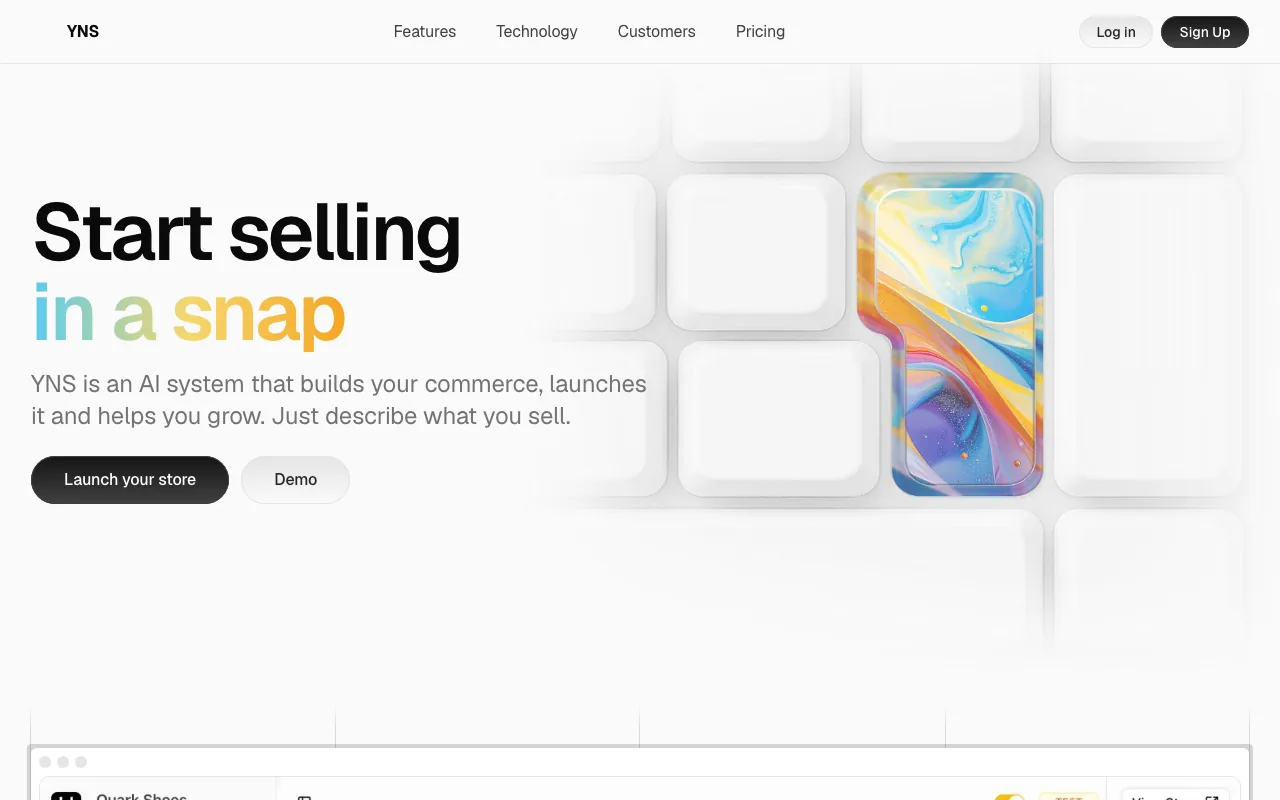
Your Next Store is the closest like-for-like alternative to Bloom on this list. The pitch is structurally identical: chat with an AI, watch a real working store get built in a sandbox, publish when you're ready, keep editing forever. The differences are in the wiring underneath and in the pricing model.
Under the hood, YNS is a Next.js 16 storefront on top of a managed commerce backend that handles products, variants, carts, orders, inventory, customers, search, and translations. Stripe handles payment processing only. Every change the AI makes lives in your own private Git repo, deployed to Vercel, fully editable by you or a developer whenever you want. If you ever leave, you take the codebase with you and keep going.
What makes it stand out (vs Bloom):
- Flat monthly pricing, no usage extras. Starter is $30/mo, Growth $60/mo, Pro $360/mo. Each plan includes a fixed AI credit allowance (25/100/500). No compute-hour meter, no preview-environment add-ons, no per-seat fees stacked on top.
- 0% platform transaction fees on every plan. You pay Stripe's standard processing fee and nothing on top. Medusa Cloud's processor and platform fee structure varies by plan and configuration.
- Live stores you can actually visit. mascotai.yournextstore.com is an AI-built store from a single prompt. million.yournextstore.com is loaded with one million products to prove the backend scales. demo.yournextstore.com is the default Next.js storefront template.
- Performance is a feature, not an afterthought. YNS storefronts use Partial Prerendering and React Server Components by default. The mascotai.yournextstore.com store scores 88/100 on Lighthouse mobile with a 2.5-second LCP, which is why pages feel instant on cellular (more on speed engineering).
- GEO-ready out of the box. Structured data, sitemaps, llms.txt, and an AI discoverability audit so your products show up when shoppers ask ChatGPT or Gemini.
Honest tradeoffs (where Bloom wins):
- Medusa is older and more battle-tested. Medusa launched in 2021 and the v2.0 rewrite has been in production since late 2024. The YNS backend is newer. If you have B2B requirements like multi-region price lists, complex tax setups, or a Medusa-specific integration you depend on, Bloom inherits that maturity.
- Medusa's plugin ecosystem is broader. Bloom can wire in third-party integrations that already exist as Medusa modules. YNS is a younger ecosystem; some niches haven't been built yet.
- No free tier. Bloom lets you play with free credits before paying. YNS starts at $30/mo from day one. We trade a free tier for predictable pricing.
You can chat with Elliot, the YNS AI builder, on the homepage and watch it generate a working store live. No credit card needed to try it. If you've used Bloom, the workflow will feel familiar. The difference is what shows up on your monthly bill.
Describe your store. Watch it get built. Keep the code. Flat monthly pricing, no compute meter, no platform transaction fees on top of Stripe.
2. Medusa Cloud (Using Bloom Credits Sparingly)
Best for: Developers who like Medusa specifically and want to stretch the bundled Bloom credits as far as possible by doing the storefront work in their own IDE.
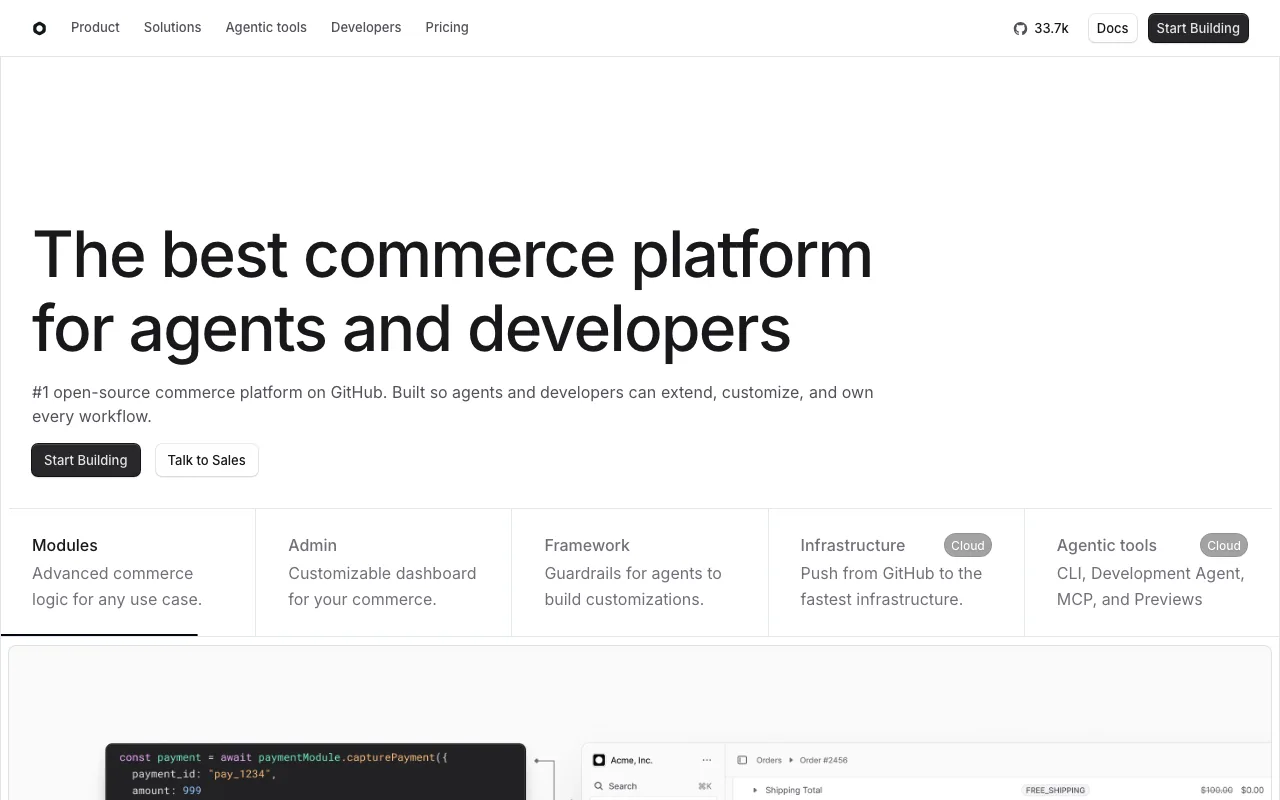
This is the alternative most people overlook. Every Medusa Cloud plan already includes Bloom credits, but you don't have to spend them all on chat-based generation. Fork Medusa's official Next.js starter, open it in Cursor or VS Code with Claude Code, and you get an AI-assisted Medusa workflow where the AI does the typing in your repo and Bloom credits cover the parts where you actually want chat-driven changes.
What makes it stand out:
- Public flat pricing for the platform. Develop $29/mo, Launch $99/mo, Scale $299/mo. Bloom credits and Medusa Cloud infrastructure are bundled.
- Full Medusa flexibility. Modules for B2B, multi-warehouse inventory, complex promotions, multi-region pricing, custom workflows. The platform is genuinely deep.
- You bring the storefront stack. Next.js, Astro, Nuxt, raw HTML, anything that can hit an HTTP API. Bloom locks you into the storefront template it generates; raw Medusa Cloud doesn't.
Tradeoffs:
- You write the storefront. This is the whole point, but it's also the whole catch. If your goal was "AI builds my whole store from a chat box," raw Medusa with light AI assistance isn't quite that.
- Compute and seat usage adds up. Medusa Cloud charges base plan + usage for compute hours, edge requests, preview environments, and seats. The real bill scales with how busy your store gets and how many people work on it.
- No admin AI assistant. Bloom's chat lives inside the admin and helps with daily ops. Self-driven Medusa workflows don't include that until you wire your own.
3. Lovable, Replit, and Bolt.new (The Vibe-Code-A-Storefront Trio)
These three tools all sit in the same bucket: prompt-driven AI that generates a real React codebase, with no commerce engine underneath. Different vibes, same architectural tradeoff. Bundling them because the verdict for "Bloom alternatives" is mostly the same: you get a beautiful storefront shell, and you build the actual store on top.
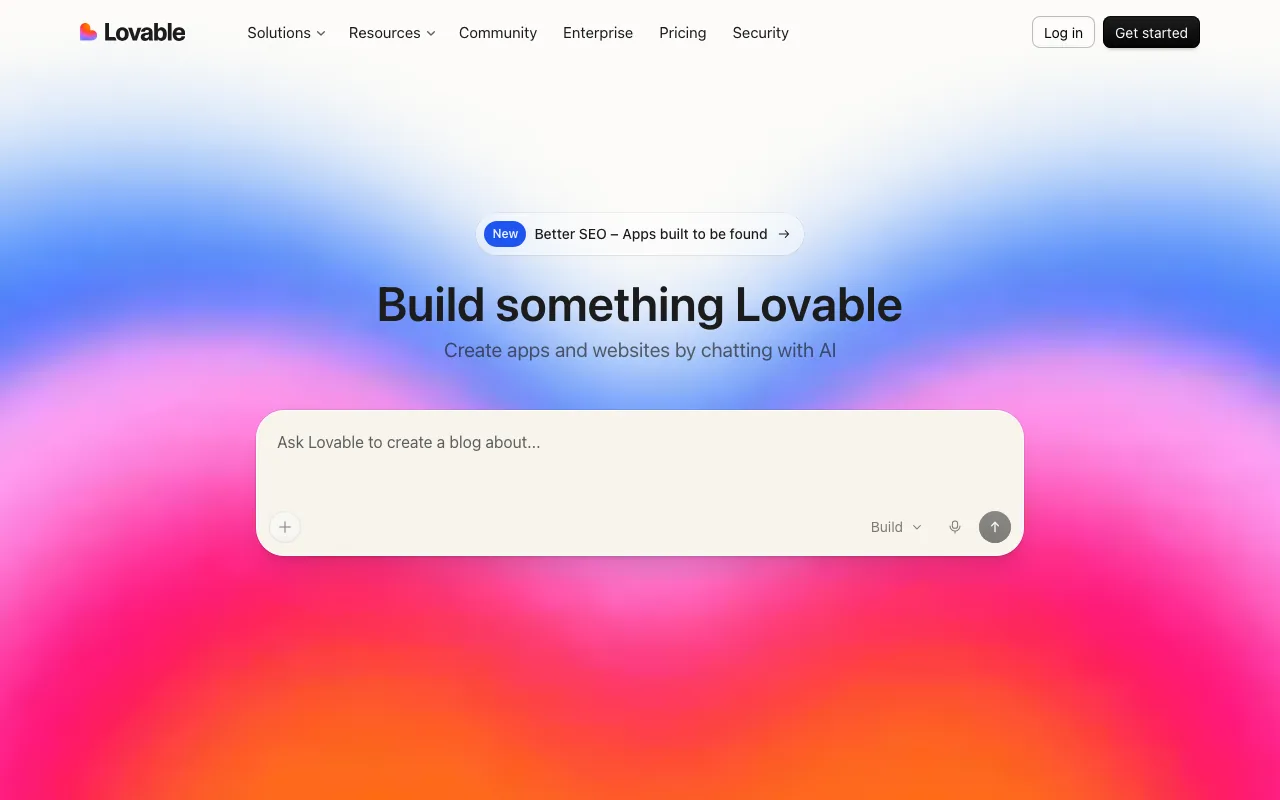
Lovable ($25/mo Pro: 100 monthly credits + 5 daily, credits roll over) generates a React codebase from a prompt and pushes it to your GitHub. The visual output is the strongest in this trio: brand-led stores, small catalogs, design-first interfaces. A "Lovable ecommerce store" is a beautiful storefront with a cart UI and product grids, but no products table, no inventory, no checkout, no admin panel. You finish the store with Stripe + Supabase, or with Lovable's official Shopify integration.
Replit ($20/mo Core billed annually, $25 of bundled AI credits per month) is a browser coding workspace where the AI agent writes, runs, and hosts apps for you. Same "real code, no commerce engine" caveat as Lovable. What's different: the code sits next to the chat, so you can see and override exactly what the agent did. Better for learning, better for surgical fixes, same homework on the commerce side.
Bolt.new ($25/mo Pro, 10M tokens/month with rollover) is StackBlitz's prompt-to-codebase tool. Vite + React + TypeScript by default. Built-in Bolt Cloud database and hosting if you don't want to wire your own. Same commerce gap as the other two. The reason it's worth singling out: we wrote the full Bolt.new ecommerce prompt template covering the Stripe and Supabase wiring it doesn't include. If you like Bloom's chat-driven feel but want it for more than just commerce, Bolt is the closest match.
The shared tradeoff vs Bloom. Bloom hands you Medusa's full backend on day one: products, variants, inventory, tax, shipping, refunds, order management, admin. These three hand you a storefront and a homework assignment. The first 80% appears in minutes. The last 20% (variants, inventory, tax, refunds) is genuine engineering work. Plan a weekend or a week, not an afternoon.
4. Shopify Magic
Best for: People who already sell on Shopify and want AI helpers everywhere in the admin, not a brand-new store generated from scratch.
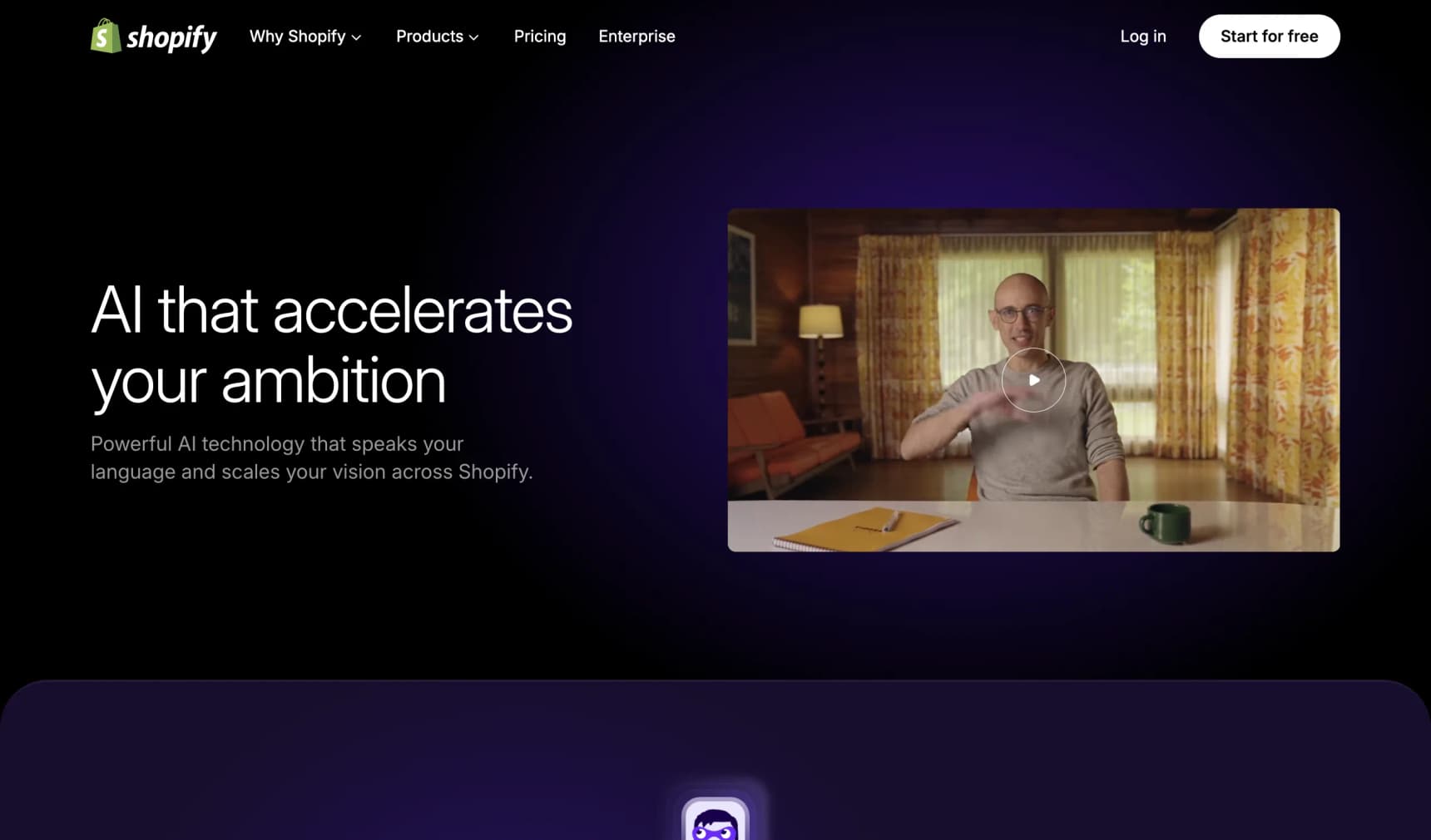
Shopify Magic is the bundle of AI features built into Shopify: writing product descriptions, drafting email campaigns, editing photos, answering customer questions via Sidekick. If you already run a Shopify store, it's the lowest-effort way to add AI to your daily workflow.
It's on this list as the honest answer to "what if I don't actually need a new store, I just need AI?" Plenty of Bloom interest comes from existing store owners who think they need to switch platforms when they really just want AI helpers. Shopify Magic is what they're looking for.
What makes it stand out:
- Real Shopify under the hood. POS, multi-currency, wholesale, the largest app marketplace in ecommerce. None of that is rebuilt; it's just there.
- AI helpers on every screen. A button writes the description, drafts the email, cleans up the photo.
- No migration. You stay on Shopify. The AI is included with your existing plan.
Tradeoffs:
- It doesn't build new stores. Ask Magic to "redesign my homepage" and you get rearrangements of your existing layout, not a fresh design. Bigger changes still need a designer or a developer.
- Shopify's fees still apply. Basic is $29/mo annual ($39 monthly), plus 2.9% + $0.30 per online card sale on Shopify Payments and an extra 2% on third-party processors. See our Shopify transaction fees breakdown for the full math.
- Less ambitious than Bloom. Magic is AI-as-a-feature. Bloom is AI-as-the-product.
5. Wix AI / Shoplazza
Best for: Non-technical sellers who want the friendliest possible "answer a few questions, get a store" experience, and don't care about owning code.
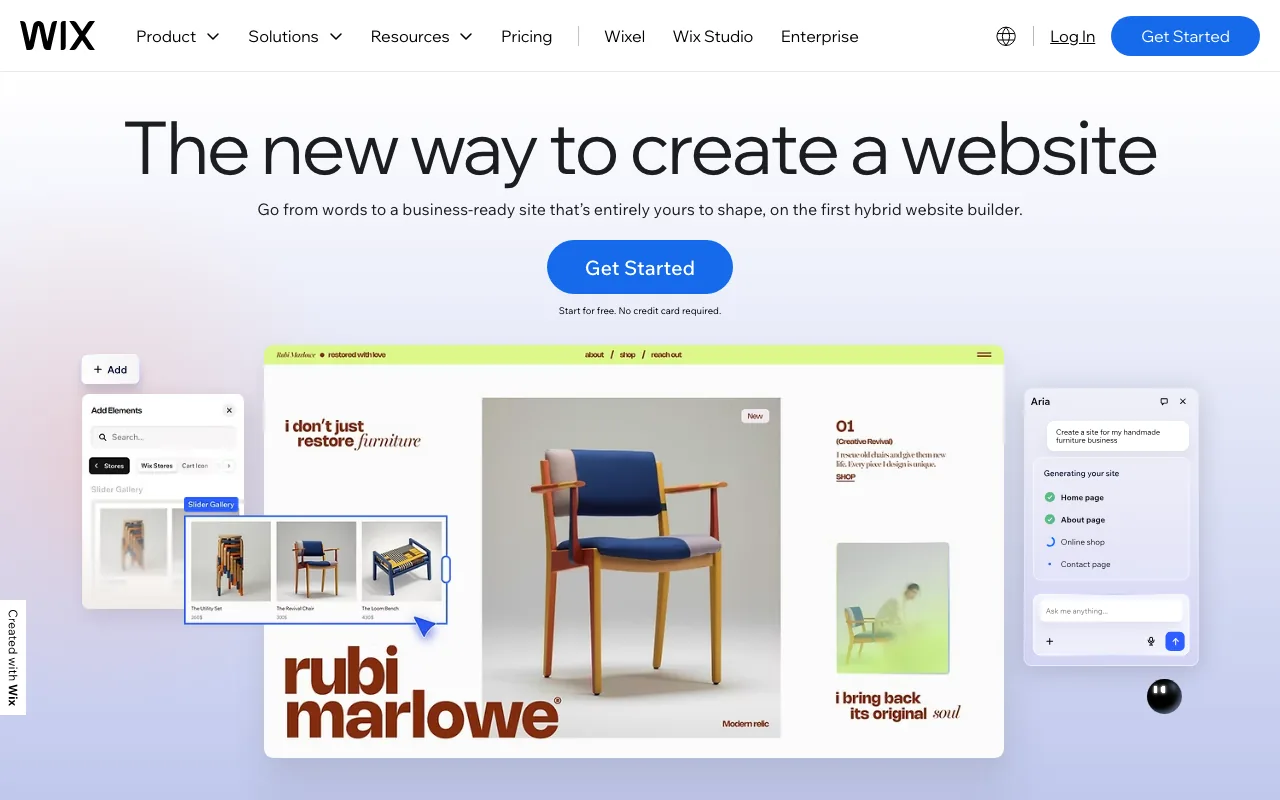
The two best "pure no-code AI store builders" are Wix AI and Shoplazza. Both ask you a handful of questions, pick a template from a large library, fill it with AI-generated copy and imagery, and hand you a finished site. Both run a real commerce backend underneath (variants, stock, tax, checkout, shipping), so you can actually sell from day one.
The difference from Bloom is the depth of customization. Wix and Shoplazza are picking and filling a design. Bloom (and YNS) are building a fresh design from scratch. For most first-time sellers, the difference doesn't matter for the first 100 orders. After that, the fresh-design approach scales much further.
What makes them stand out:
- The friendliest beginner experience on this list. Drag, drop, click, done.
- Everything in one bill. Domain, hosting, email, payments, blog.
- Real commerce works on day one. Unlike Lovable / Replit / Bolt.new, you don't have to wire anything.
Tradeoffs:
- You can't take your store with you. Wix sites and Shoplazza stores don't migrate cleanly elsewhere. Outgrow them and you rebuild.
- AI is picking, not inventing. The result looks good because the template library is good, not because the AI created something fresh for your brand.
- Checkout and product page layout are mostly fixed. Asking for "checkout that looks like Apple's" is the kind of thing Bloom or YNS can do and Wix can't.
For a deeper look at where Wix wins and loses, see the best Wix ecommerce alternatives.
How to Pick the Right Bloom Alternative
Three honest questions sort the list:
"I want exactly what Bloom promises, just with flat pricing and no usage-based bill." → Your Next Store. Same architecture (AI on a real commerce backend), predictable pricing, code in your own GitHub repo. The closest direct swap.
"I'm a developer who likes Medusa specifically. How do I stretch my Bloom credits?" → Medusa Cloud plus your own AI coding tool (Cursor, Claude Code, Codex) on the storefront repo. Same Bloom credits, more leverage per credit.
"I want to vibe-code an app that happens to sell things, and I'm fine wiring commerce by hand." → Lovable, Replit, or Bolt.new. Pick by where you want to code (GitHub repo, browser tab, browser tab with Cloud). Read our Bolt.new ecommerce prompt template first. It'll save you a week.
"I already use Shopify and just want AI helpers." → Shopify Magic. Don't migrate.
"I've never built a website and just want one online tonight." → Wix AI or Shoplazza. Either gets you live without any fuss, both lock you in once you're there.
For a wider view across the entire AI store builder category (Framer, 10Web, Hostinger Horizons, Durable, and more), see our best AI store builders guide.
What People Get Wrong About AI Store Builders
After watching founders cycle through these tools, the same misunderstandings keep coming up:
"The demo is the product." Every builder on this list has a great first-prompt demo. The real test is the 50th change six weeks in. "Move the reviews under the price." "Add a quiz before checkout." "Show shipping cost on the product card." Tools that picked a template can't do these. Tools that generate a fresh design can. Tools without a commerce engine can do the design but not the data. Pick tools that score on all three.
"Credits are unlimited at the limit nobody told me about." Bloom, Lovable, Replit, and Bolt all meter usage. Flat-pricing tools (YNS, Wix, Squarespace) don't. The right model depends on how much you'll actually iterate. If you build once and ship, credits are fine. If you tweak weekly for years, flat pricing compounds in your favor.
"I'll self-host the open-source version later." This is one of the most expensive sentences in ecommerce. Self-hosting Medusa, Saleor, or any commerce engine is a real DevOps job. Plan for $500-$2,000/month in infrastructure plus the people-hours to keep it healthy. If you're a developer who wanted that anyway, great. If you're a founder who wanted to sell candles, do not commit to self-hosting because the demo looked clean.
"AI-built means SEO-bad." It doesn't, but only if the platform was built that way. Modern Next.js storefronts (YNS, Vercel Commerce, the Medusa starter behind Bloom) score in the 90s on Lighthouse without tuning. Template-driven AI builders (Wix, Shoplazza) are heavier and slower out of the box. For the GEO and AI search angle specifically, we wrote about how AI changes ecommerce SEO.
FAQ
What is Bloom by Medusa?
Bloom is the AI chat layer on top of the Medusa commerce engine. You describe the store you want, Bloom generates a working storefront, admin, and product catalog on top of Medusa, and you keep editing through chat. Published stores run on Medusa Cloud. Bloom credits come bundled with Medusa Cloud plans (50/month on the $29 Develop tier, more on Launch and Scale).
Is Bloom by Medusa free?
Bloom has a free tier with monthly credits and automatic daily refills, designed for trying it out. To publish to a custom domain and run a real store, you need a paid Medusa Cloud plan starting at $29/month (Develop), which includes 50 Bloom credits. Higher plans include more credits, more compute hours, and other Cloud features. Usage-based add-ons (extra compute hours, preview environments, seats) sit on top of the base plan.
What's the best free alternative to Bloom?
There isn't a true like-for-like free alternative. Medusa itself is open source and free to self-host if you have DevOps capacity. Lovable has a free tier for storefront code generation (no commerce engine). Your Next Store doesn't have a free plan but is open for direct signup at a flat $30/mo with no usage extras.
Can I take my store with me if I leave Bloom?
Yes, technically. Bloom-generated stores are real Medusa projects with real source code that you can fork and self-host. The catch is that self-hosting Medusa is a serious infrastructure commitment: PostgreSQL, Redis, file storage, payment integrations, backups, scaling, monitoring. Plan for $500+/month in infrastructure plus at least part-time DevOps. Your Next Store has a similar export model on the storefront side (you keep the Next.js repo and can deploy anywhere), with the backend managed for you on the YNS plan.
Bloom vs Your Next Store: which should I pick?
Bloom if you want Medusa's commerce maturity, are comfortable with usage-based pricing layered on a $29-$299/mo base, and prefer a Node.js + modular module stack. YNS if you want a flat $30/mo bill, 0% platform transaction fees, and a Next.js + React + TypeScript storefront you own outright. We obviously make YNS, so the cleanest test is to build the same prompt in each tool in the same week and compare the outputs. The first-pass demo will tell you most of what you need to know.
Is there a Bloom alternative that doesn't use AI at all?
Medusa Cloud self-driven is the cleanest answer: same commerce engine as Bloom, AI optional. If you'd rather have a more turnkey hosted experience without any AI, Shopify is the default. For a deeper look, see our best ecommerce platform for developers roundup.
The Question to Ask Before You Pick
Before pricing, before the demo, before the logo on the homepage: "Will this tool still make the change I want six months from now, and will the bill still match what I signed up for?" Most AI store builders pass the first question and fail the second, or pass the second and fail the first. Bloom and YNS are the two tools we think genuinely pass both. The rest of this list is for when neither of those is the right fit.
Pick by who you want to be in six months, not by which demo runs best in the next ten minutes.
Related Blog Posts
- Best AI Store Builders in 2026: the full landscape, not just Bloom-alikes
- Bolt.new Ecommerce Prompt Template: the prompt that saves you a week
- Lovable Shopify Integration: Honest Review: when Lovable + Shopify makes sense
- Open Source Shopify Alternatives: Medusa, Saleor, Vendure, and the rest
- Best Ecommerce Platform for Developers
- How to Build an Ecommerce Website with Next.js
- AI Ecommerce: The Two Revolutions Nobody's Connecting