Best Genstore AI Alternatives in 2026 (Honest Picks)
 Jakub Neander
May 19, 202614 min read
Genstore AI sells a clean promise: type a sentence describing your store, get a working shop in two minutes, then let a roster of AI helpers named Genius, Olivia, and Dean run your marketing while you sleep. The demo is genuinely impressive. The small print is where it gets interesting. The free version only lets you list 20 products and stamps "Genstore" on your store. If you want to take payments through your own Stripe or PayPal account instead of Genstore's built-in one, Genstore takes an extra cut on every sale (between 0.6% and 2%, depending on plan). Real users say the AI design looks promising at first, then leaves small things crooked. And if you ever want to move your store somewhere else, you can take your product list with you, but not the store itself. Below: eight alternatives that match the "type a sentence, get a store" speed without the same trade-offs, with our own product's weaknesses named first.
Honest heads-up: We make Your Next Store. It's our #1 pick because we built it for the same kind of seller Genstore is built for – people who want an AI to do the heavy lifting – but without the extra cut on every sale and without trapping your store. Every place YNS is weaker than the competition is named below. Other tools get credit where they're genuinely better, including where Genstore beats us. All prices and features come from the companies' own pricing pages and from G2 and Product Hunt reviews.
TL;DR: The Best Genstore AI Alternatives
- Best overall: Your Next Store. AI builds you a real store you actually own. No extra cut on sales when you use your own Stripe. And if you ever outgrow us, you can take the store with you, for free.
- Best if you want the safe, proven option: Shopify with Shopify Magic. Largest app ecosystem on the planet, every tutorial you can Google has a Shopify version.
- Best AI store generator built on Shopify: Dropmagic. Generates a unique Shopify store from a niche, hands you the Shopify dashboard you already know. Free trial, then $79/mo on top of Shopify.
- Best if you want to drag things around yourself: Wix. Wix's AI sketches a first draft from a short description; you click and drag to move anything anywhere on the page.
- Best prompt-to-store on a budget: Hostinger Horizons. Cheapest entry point. "Vibe code" your store or app from a prompt, with bundled hosting.
- Best for dropshipping at the entry tier: Shoplazza. Type-a-sentence setup, extra cut on sales ranges 0.5%–2% (same as Genstore at the high end, smaller at the low end), strong for shipping to other countries.
- Best no-code "business OS": Selldone. Drag, drop, point, click. Built for SMEs who want one platform for store, POS, and community.
- Best if you already use WordPress: 10Web. Wraps a WordPress store with an AI designer. You keep the WordPress export if you ever leave.
- Best simple AI-from-a-form: Jotform AI Store Builder. Answer a few questions, get a store. Limited but honest about what it is.
Why People Are Looking for Genstore Alternatives in 2026
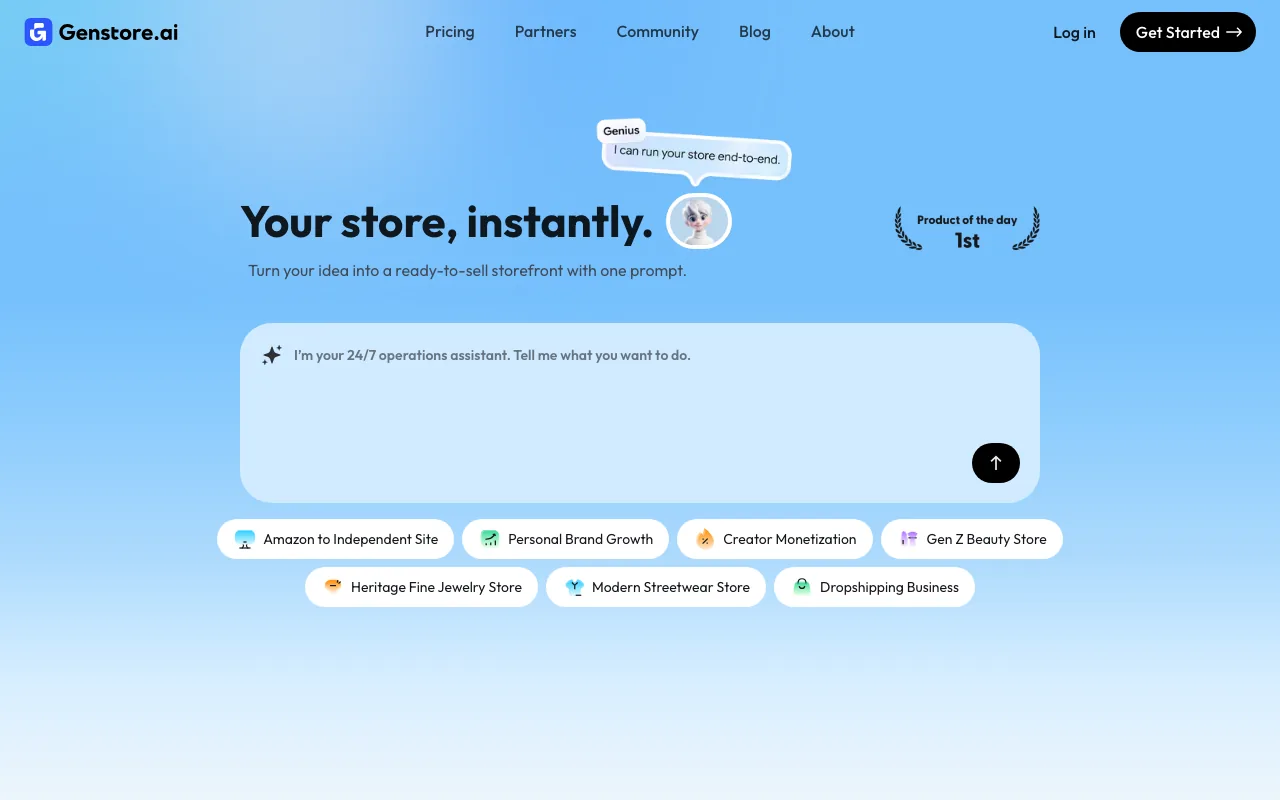
Genstore is a real product doing real work, and we'll say where it shines below. But the searches that brought you here usually map to one of seven specific frictions. Worth naming them.
1. The extra cut if you use your own payment account. Genstore gives you two ways to take payments. Use Genstore's built-in checkout and you pay about the same card fee Stripe normally charges (2.8% + 30¢ per sale on the Lite plan, slightly lower on bigger plans). That's it. But if you'd rather connect your own Stripe or PayPal account (because you already have one, or because Genstore's checkout isn't available in your country), Genstore takes an extra slice on every sale: 2% on Lite, 1% on Growth, 0.6% on Scale. Shopify does the same thing to push you toward Shopify Payments. So does Genstore. To put numbers on it: a small store doing $5,000 in sales a month on Lite, using their own Stripe, hands $100/month to Genstore on top of the $25 monthly fee. Your Next Store and Selldone, both on this list, take zero extra cut regardless of which payment account you connect.
2. The 20-product cap on the free plan, plus the watermark. Five free credits a day and 20 products is enough to demo your idea to a friend. It isn't enough to actually open. The store also displays Genstore branding until you upgrade.
3. The design AI plateaus before it polishes. The most consistent feedback across G2 and Product Hunt reviews is the same: the first AI pass looks promising, then spacing, alignment, and small visual hierarchy details fall short, and the editor doesn't give you enough control to fix them by hand.
4. The marketing AI runs without enough oversight. Olivia (the marketing agent) can launch email campaigns and run ad copy automatically. Reviewers consistently ask for approval flows: "let me check what you're about to send before you send it." For some sellers that's a feature. For others it's a reason to look elsewhere.
5. You can't really take your store with you. If you outgrow Genstore one day, the only thing you can take is a spreadsheet of your products. You can't download the design, the page layouts, or the AI-generated copy and use it on another platform. The store you built lives on Genstore's servers, or it doesn't live anywhere.
6. The dropshipping framing isn't for everyone. Genstore leans into AliExpress and DSers integrations heavily. If you're a real brand making real products, half the onboarding asks questions about dropshipping niches that don't apply.
7. The track record is short. Genstore launched recently. Independent third-party reviews are still thin, the app ecosystem is small, and the long-term reliability story is still being written. Some sellers prefer to wait until the company has been around a few release cycles before betting their livelihood on it.
None of this means Genstore is a bad product. The agent-based UX is genuinely clever, the speed-to-first-store is real, and the dropshipping flow is the smoothest of any AI builder we tested. The question is whether what you give up matches what you get back.
How We Ranked These
Most "Genstore alternative" lists rank by feature count and miss the point. The reader came to Genstore for AI doing the work, not for a 47-row feature matrix. This list is judged on the six things that actually matter for that audience, in this order.
| Criterion | What we checked |
|---|---|
| What the AI really does | Does it build a store, pick a template, or write code you have to finish? |
| Real cost | Monthly fee + any cut the platform takes on sales + card fees + extra apps you'll need |
| Default design quality | Does it look professional without hiring a designer? |
| Customization ceiling | Where does "fully customizable" quietly stop? |
| Portability | If you outgrow it, can you take your store, or do you start over? |
| Track record | Is anyone actually running real stores on this in production? |
Quick Comparison: Genstore vs the Alternatives
| Platform | What the AI Does | Starting Price | Extra Cut on Sales (When Using Your Own Stripe/PayPal) | Can You Take Your Store With You? |
|---|---|---|---|---|
| Genstore AI | Generates a full store from a prompt | $25/mo (Lite) | +2% on Lite, +1% on Growth, +0.6% on Scale | No |
| Your Next Store | Builds a real store with code you own | $30/mo (Starter) | 0% on every plan | Yes (open-source storefront) |
| Shopify + Magic | AI helpers inside Shopify themes | Basic (entry, varies by region) | 2% on Basic, 1% on Grow, 0.6% on Advanced; 0% on Shopify Payments | Products yes, design no |
| Dropmagic (on Shopify) | Generates a unique Shopify store from a niche | $79/mo + your Shopify plan | Whatever Shopify charges | Via Shopify |
| Wix + ADI | Picks and fills a design from a prompt | $29/mo (Core) | Varies by payment provider | No |
| Hostinger Horizons | Vibe-codes a site or app from a prompt | $6.99/mo (Explorer) | Depends on payment setup | No |
| Shoplazza | Builds a store from a prompt | $29/mo (Basic) | 0.5%–2% | No |
| Selldone | Drag-and-drop with AI assist | Free, paid from ~$9.99/mo | 0% on paid plans | No |
| 10Web | Builds a WordPress shop | $11/mo (Ecommerce Starter) | Whatever WordPress charges | Yes (WordPress export) |
| Jotform AI Store | Answer a form, get a store | Free / $39/mo (Bronze) | Varies | No |
Prices reflect yearly billing where available, as of May 2026. Check each vendor for current rates.
The List
1. Your Next Store
Best for: Sellers who want what Genstore promises (an AI that actually builds a store) without the extra slice on every sale, and who want to keep their store if they ever move on.
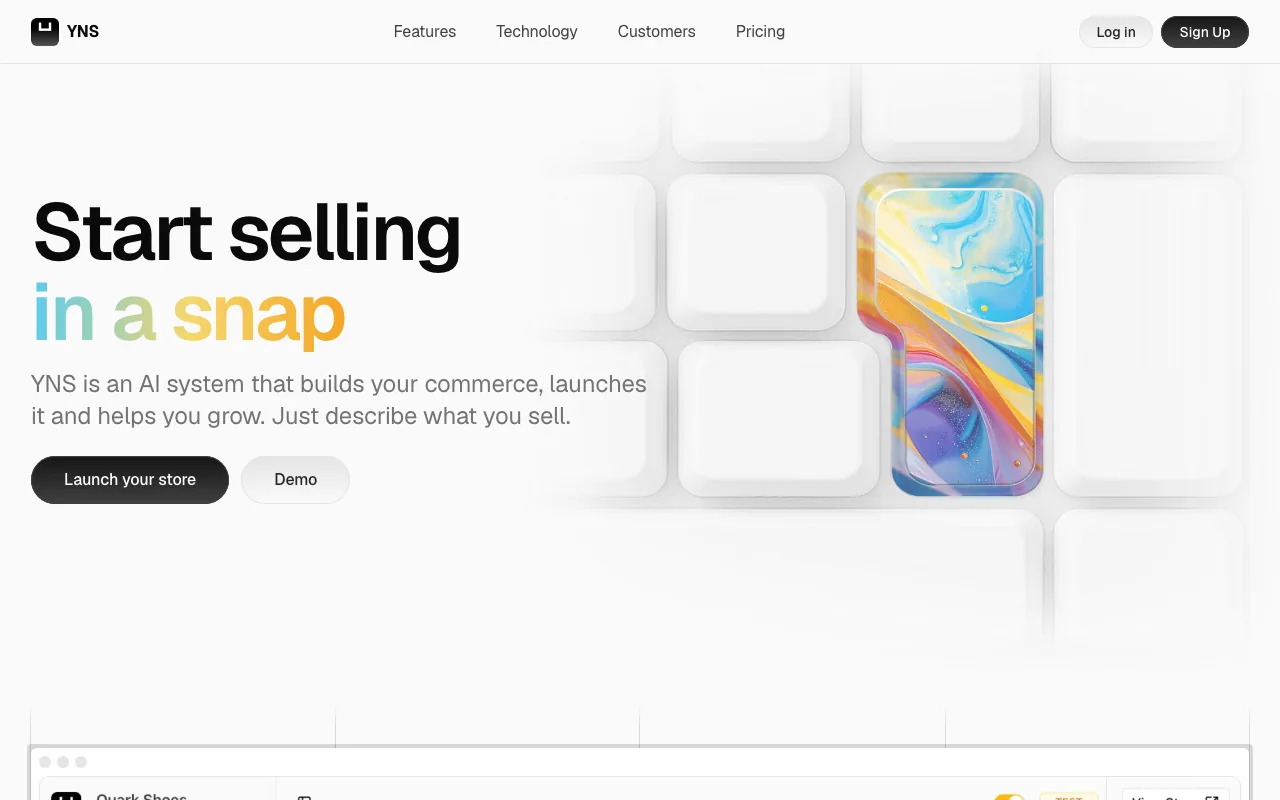
Your Next Store sits in the same bucket as Genstore: you describe your store in plain English, the AI builds it. The differences are where each company chose to put its weight.
What makes it stand out vs Genstore:
- Zero extra cut on every sale. YNS charges $30 / $60 / $360 per month for Starter / Growth / Pro. That's all. You hook up your own Stripe account, you pay Stripe's normal card fee, and nothing extra goes to us. Genstore's Lite plan takes another 2% per sale when you use your own Stripe (1% on Growth, 0.6% on Scale). For a small store doing $5,000/month on Lite who already has Stripe, switching to YNS saves $100 a month.
- The store is yours, forever. Every change the AI makes is saved into your own private copy of the store, hosted on our servers, but you can download all the code from GitHub for free and run it on your own hosting if you ever want to. With Genstore, there's no version of this. The day you leave, you leave with a list of product names and prices and start over.
- Built to be found by ChatGPT and Google AI. YNS adds the behind-the-scenes labels search engines and AI assistants need to find and quote your store. Genstore's SEO is consistently rated as light by reviewers. We wrote about why "showing up in AI search" is the new battleground.
- It loads fast. YNS uses some newer web tricks to keep the storefront quick even on slow phones. We measured the difference.
- Real stores you can click through right now. mascotai.yournextstore.com (a real customer's store, built entirely by the AI), million.yournextstore.com (a million products, to show the engine can handle it), and demo.yournextstore.com (a clean default to look at).
Trade-offs (honestly):
- No free plan. Genstore has one. We don't. If $30/month is a hard "no" before you've made your first sale, Genstore's free tier is genuinely useful for a weekend of tire-kicking.
- The dropshipping flow is rougher. Genstore's DSers and AliExpress integrations are slicker than anything we ship. If you're starting a dropshipping store specifically, Genstore's onboarding will feel built for you. YNS works for dropshipping, but it isn't tuned for it.
- Fewer pre-built "AI agents." Genstore has six named agents that handle different jobs (marketing, SEO, support, design). YNS has the Elliot AI builder and an AI assistant. If you want a personality-per-task UX, Genstore is more fun.
- Smaller marketing-channel integration menu than incumbents. Klaviyo and Mailchimp are first-class on Genstore. With YNS you can wire them up, but they aren't one-click yet.
Pricing: $30/mo Starter, $60/mo Growth, $360/mo Pro. Zero extra cut on any plan; you connect your own Stripe and pay only Stripe's normal card fee. See the pricing page for what's in each plan.
2. Shopify (with Shopify Magic)
Best for: People who want the proven, boring choice. Less AI personality, more "everyone knows how to use it."
Shopify is the platform Genstore positions itself against. It's the right choice for a lot of stores. Shopify Magic, the AI layer built into the admin, helps you write product descriptions, generate email subject lines, edit photo backgrounds, and answer customer messages. It doesn't generate a whole store from a prompt the way Genstore does, but for the 90% of merchant tasks that aren't "build a store from scratch," it's the most polished AI in the category.
Where Shopify beats Genstore:
- Largest app ecosystem on the planet. 16,000+ apps cover every niche, including dozens of "AI store builder for Shopify" tools (Dropmagic, see below) if you want the prompt-to-store experience on top of Shopify's backend.
- Real support, real documentation. Shopify University, 24/7 chat, every YouTuber who has ever opened an online store has a Shopify tutorial. Genstore's docs are still being built out.
- In-person sales. Shopify POS hardware, retail integration, and unified inventory across online and physical stores are years ahead of anything in the AI-builder category, Genstore or YNS included.
Where Shopify is worse than Genstore:
- No "type a prompt, get a store" experience. Shopify Magic is task-by-task, not whole-store generation. If your goal is "I want a complete first draft of a store in two minutes," Shopify can't do that without a third-party add-on.
- Same "extra cut" trick as Genstore, almost the same numbers. If you use Shopify but accept payments through your own Stripe or PayPal instead of Shopify's built-in payments, Shopify takes 2% / 1% / 0.6% per sale on its Basic / Grow / Advanced plans. Genstore takes 2% / 1% / 0.6% on Lite / Growth / Scale. Same trick, almost the same numbers. Both want you on their built-in checkout.
- Pricing creep. Once you've added the apps you'll actually need (review apps, upsell apps, abandoned-cart apps), the entry-tier Shopify Basic plan typically lands at $80-120/month in real cost. See our breakdown of what Shopify takes from a $100 sale.
Pricing: Three main plans (Basic, Grow, Advanced). With yearly billing the entry plan lands under $30/mo in most countries. Check the pricing page for the current price where you live. Card fees and the cut Shopify takes on sales (when you use a non-Shopify payment account) both drop on bigger plans.
3. Dropmagic
Best for: People who want Genstore's "prompt-to-store" magic but want to end up on Shopify, with all its app and support ecosystem.
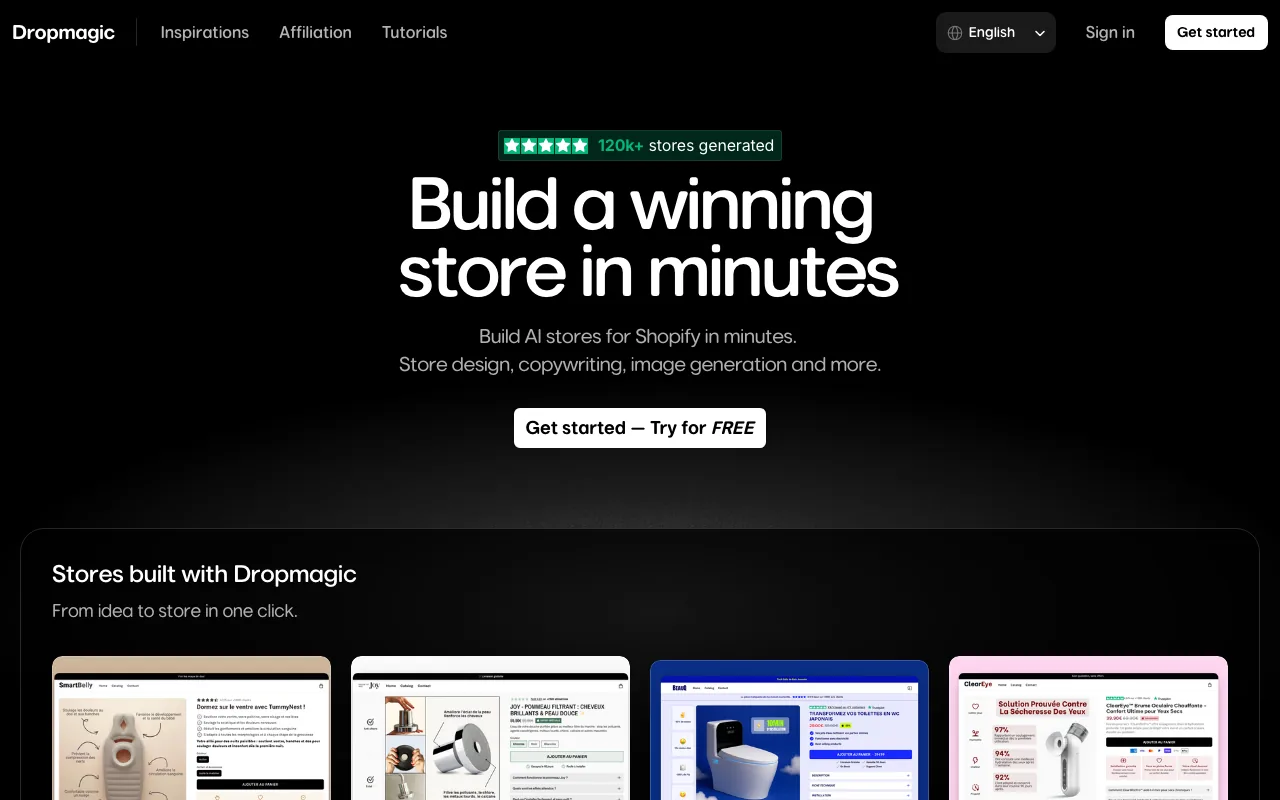
Dropmagic is the most direct head-to-head with Genstore in this list. You describe your niche, Dropmagic builds the store, and the store lives on Shopify. You get the AI generation upfront, then the Shopify backend forever after.
Where Dropmagic beats Genstore:
- The output is a Shopify store. You own a Shopify account. You can hire any Shopify developer in the world to extend it. You can install any of the 16,000+ Shopify apps. None of that is true with Genstore.
- Persona-based copywriting. Dropmagic tries to write product pages in the voice of a specific customer persona rather than generic AI-flavored marketing English. The output is consistently less obviously-AI than Genstore's first pass.
- Free trial before you commit. Dropmagic has a free tier that lets you generate a store, with paid plans (around $79/month for the PRO tier as of writing) unlocking unlimited AI copywriting and image generation. Cancellable anytime.
Where Dropmagic is worse than Genstore:
- Two subscriptions instead of one. You pay Dropmagic monthly and Shopify monthly. Genstore is a single bill.
- No ongoing AI agents after the build. Dropmagic's AI is heavy on the upfront generation. Once your store is live, there's no Olivia running marketing for you next quarter, no Luna optimizing SEO continuously. You're back to running a normal Shopify store.
- Less "all-in-one" feel. Genstore is one dashboard for the AI, the store, the marketing, the support. Dropmagic plus Shopify is two products you stitch together.
4. Wix (with Wix ADI and AI Assistant)
Best for: People who care more about visual freedom than AI agents. Click anywhere, place anything, let AI scaffold the structure.
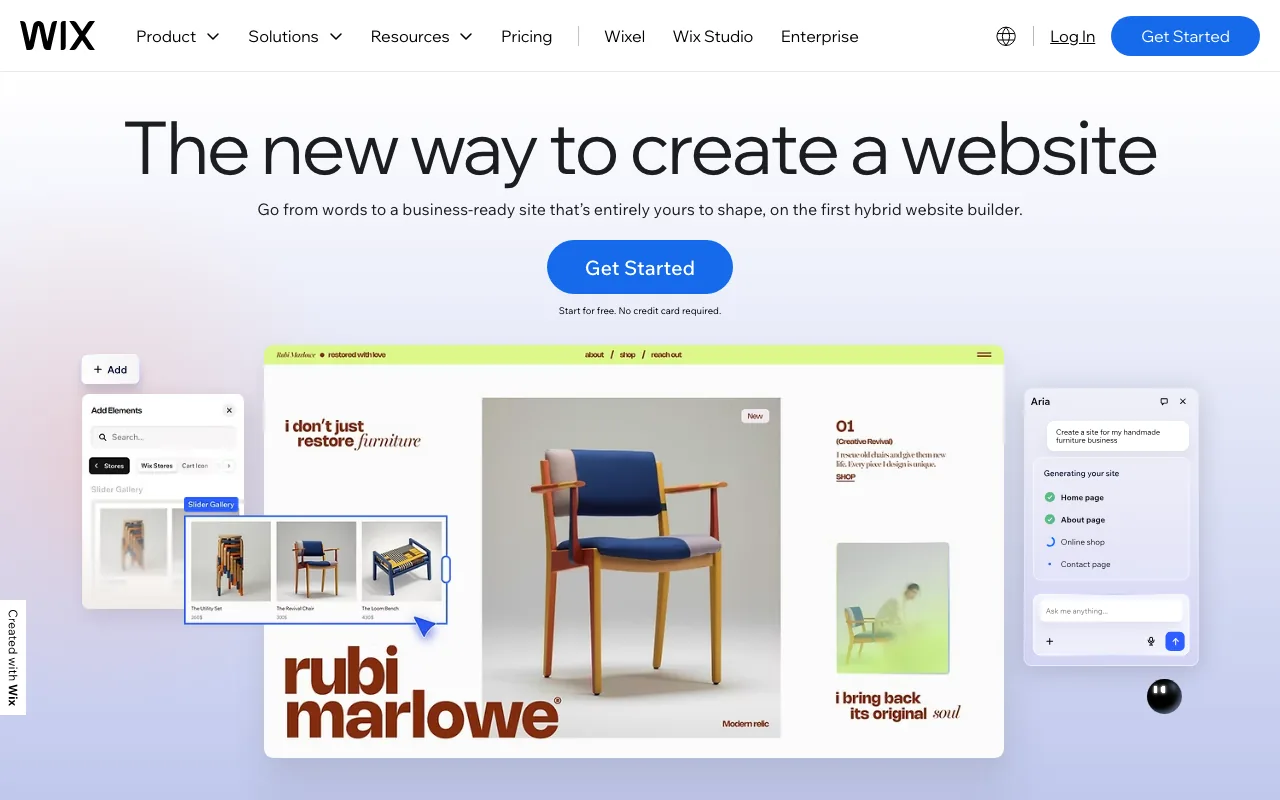
Wix is the most direct visual-editor competitor in the category. Wix ADI (Artificial Design Intelligence) generates a first draft from a short prompt, and the Wix AI Assistant helps with copy and images as you edit. You then drag, drop, and arrange elements anywhere on the canvas. This is the opposite end of the spectrum from Genstore's "AI does it all, you just chat" approach.
Where Wix beats Genstore:
- True drag-and-drop control. If the AI puts a section in the wrong place, you grab it and move it. With Genstore, you have to re-prompt and hope.
- Mature template library. Wix has hundreds of starting templates and a decade of design refinement. Some look dated. The best ones still rival Shopify's premium themes.
- One subscription covers everything. Domain, hosting, email, store, blog, scheduling. The "Core" plan ($29/month) is everything most beginners need.
Where Wix is worse than Genstore:
- The AI does less work. Wix ADI is closer to "AI templating" than "AI building." Genstore's agents will keep iterating, optimizing, and shipping campaigns. Wix tools help you do those things; they don't do them for you.
- Wix sites are notoriously hard to migrate off. If you outgrow Wix, you start over somewhere else.
- SEO has improved but still trails purpose-built ecommerce platforms. For a small site, Wix is fine. For a content-heavy ecommerce site that needs to rank, it's a constraint.
5. Hostinger Horizons
Best for: People with $7 a month and a Sunday afternoon. The cheapest credible "AI builds my site" entry point.
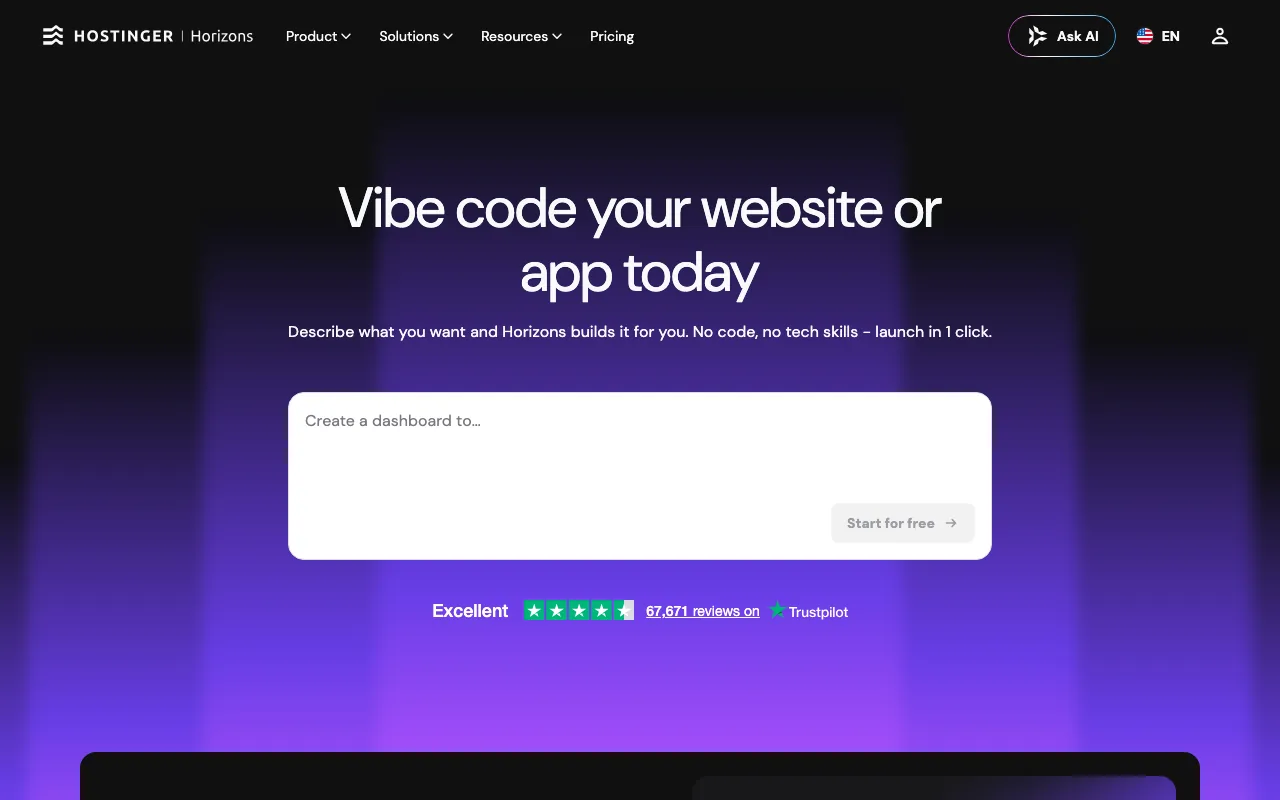
Hostinger Horizons is the cheapest credible AI builder in the category. You describe your site or app in plain English, the AI generates it from scratch ("vibe code your website or app today" is the literal homepage tagline), and you can add a product catalog with Stripe or PayPal checkout. Pricing runs $6.99/month for the Explorer tier (30 AI credits) up to $79.99/month for Hustler (400 credits and early features), with bundled hosting on every plan.
Where Hostinger beats Genstore:
- Price. $6.99/month for the entry tier versus Genstore's $25/month Lite. If money is the main constraint, this is the answer.
- Bundled domain and hosting. Hostinger is a hosting company first, so the domain and SSL are included in a way that "feels free" versus other builders where you tack them on later.
- Simpler mental model. You're not learning six AI agents. You describe what you want, it builds.
Where Hostinger is worse than Genstore:
- No always-on AI agents after the build. Horizons generates the site in one pass. There's no Olivia running campaigns next quarter, no Sara optimizing product pages on her own.
- More website-builder than ecommerce platform. Inventory, variants, and shipping are functional but light. If you have more than 50 products, you'll feel the seams.
- No serious dropshipping integrations. Genstore's DSers/AliExpress flow is purpose-built. Hostinger isn't.
6. Shoplazza
Best for: Dropshippers and international sellers specifically. Direct competitor to Genstore on this audience.
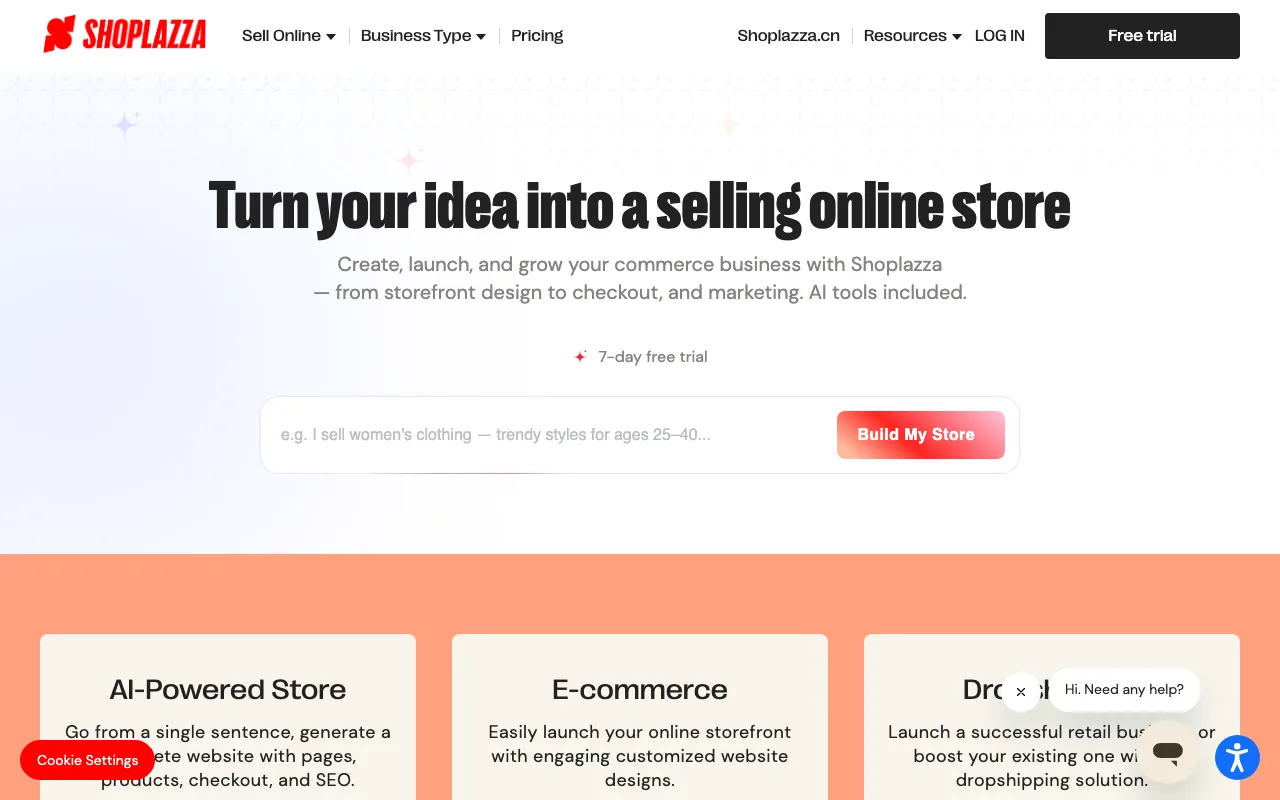
Shoplazza is the international-focused, dropshipping-friendly platform that competes with Genstore for the same audience. The AI generates a store from a prompt and the platform handles multi-currency, international shipping, and marketplace integrations with TikTok and Amazon out of the box.
Where Shoplazza beats Genstore:
- Smaller cut on sales as you grow. Shoplazza's extra cut on sales (when you use your own Stripe instead of theirs) ranges from 2% on the entry plan down to 0.5% on the higher ones. Genstore's Lite is 2%, the same as Shoplazza's entry plan. But Shoplazza drops to 0.5% on its top tier, lower than Genstore's 0.6% top tier.
- More mature international features. Multi-language, multi-currency, region-specific shipping rules, and direct integrations with international payment methods (Boleto, OXXO, Konbini, etc.).
- Better-tested dropshipping at scale. Shoplazza powers a meaningful number of cross-border dropshipping stores already. Genstore is newer to the volume.
Where Shoplazza is worse than Genstore:
- The AI is less of a personality. Shoplazza's AI is a "build a store" wizard, not a roster of always-on agents. If the agent UX is what you liked about Genstore, you'll miss it.
- Quieter brand in the US/EU. Most documentation and support content is geared toward APAC sellers. The English docs are improving but lag the Chinese versions.
7. Selldone
Best for: SMEs who want one no-code platform for online store, POS, and community, with AI nudges along the way.
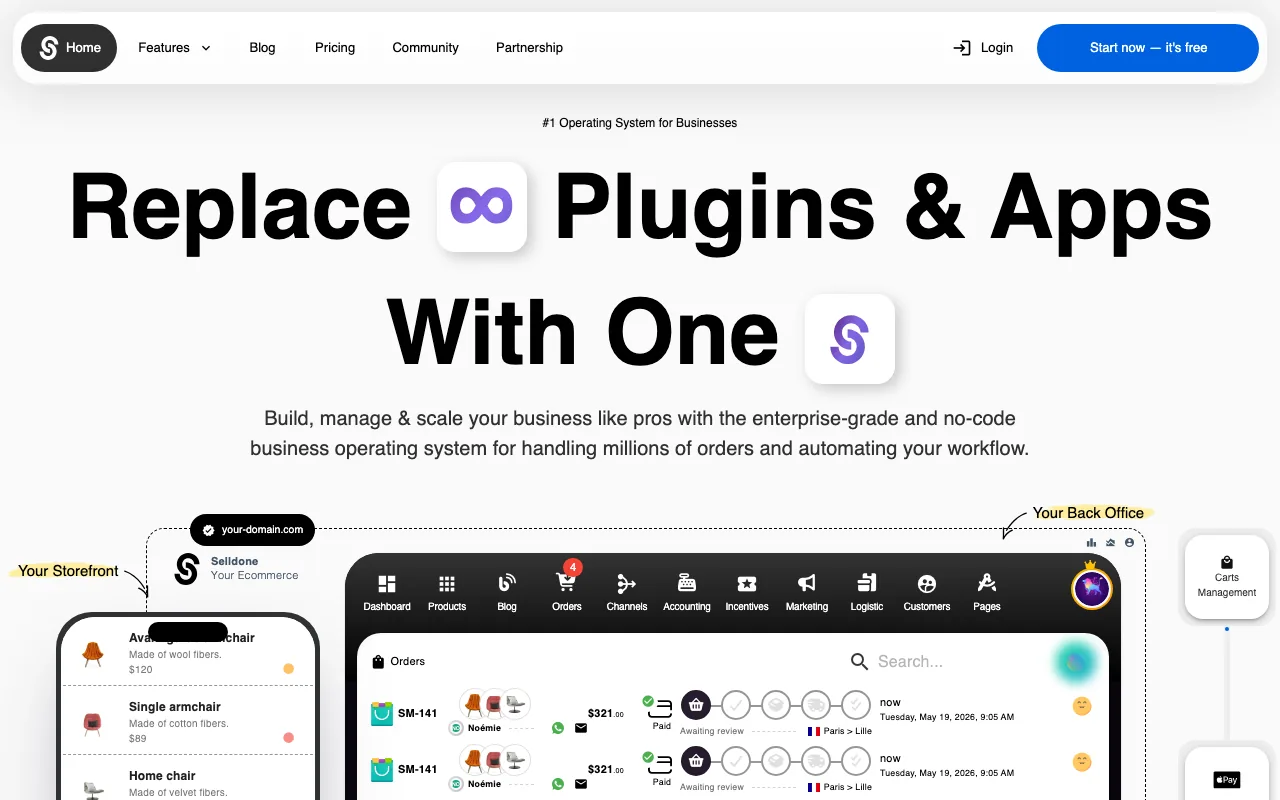
Selldone positions itself as a "Business OS as a Service": an all-in-one platform for online store, POS, customer community, and business operations. It's closer to Genstore in ambition (a single platform that runs your business) than to Wix or Hostinger (which are website builders that happen to sell things).
Where Selldone beats Genstore:
- Genuine free plan. Start free, upgrade when you actually need to. The free tier on Selldone isn't watermarked the way Genstore's is.
- POS and community. If your business includes any in-person sales, an event, or a community of customers you want to talk to, Selldone bundles those. Genstore doesn't.
- No extra cut on sales. Just like YNS. Genstore takes 0.6%–2% on every sale if you use your own Stripe instead of theirs.
Where Selldone is worse than Genstore:
- Less "AI does the work" feel. Selldone has AI features, but they're sprinkled through a no-code editor rather than fronted as the main interface. If "I chat, the AI builds" is what you want, Genstore is closer.
- Smaller community than the incumbents. It's growing fast and the product is solid, but Stack Overflow won't have your answer.
8. 10Web
Best for: People who want WordPress's flexibility and ownership, with an AI designer wrapped around it.
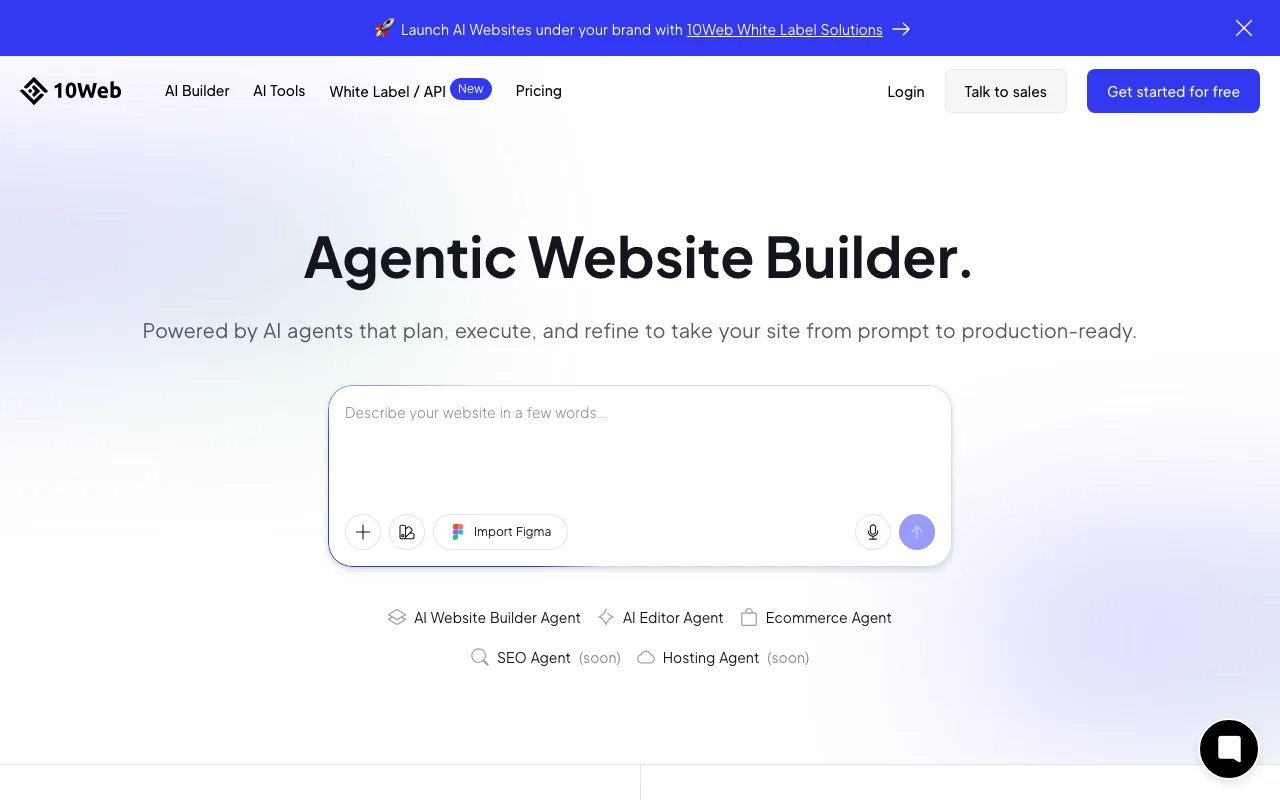
10Web is what Genstore would look like if it were built on WordPress and WooCommerce instead of a proprietary backend. The AI designer generates the site, the WooCommerce store handles products, and you can hand the WordPress install to any developer on earth if you ever want to extend it.
Where 10Web beats Genstore:
- Real export. If you outgrow 10Web, you can move your WordPress + WooCommerce site to any host. That's the entire WordPress ecosystem's superpower.
- WordPress plugin ecosystem. Tens of thousands of plugins for everything from advanced shipping rules to obscure tax compliance to fan-favorite SEO tools (Yoast, RankMath). Genstore's plugin story is much smaller.
- Better blogging. WordPress is still the gold standard for content publishing. If your store strategy includes a serious content marketing investment, this matters.
Where 10Web is worse than Genstore:
- WordPress overhead. Even with 10Web's wrapper, you'll eventually touch WordPress concepts (plugins, updates, conflicts). Genstore is a closed box on purpose, and for many sellers that's a feature.
- No always-on AI agents. The 10Web AI builds the site upfront. After that, you're running a normal WooCommerce store. No Olivia running campaigns, no Sara optimizing product pages.
9. Jotform AI Store Builder
Best for: The simplest possible "answer a few questions, get a store" experience for tiny catalogs.
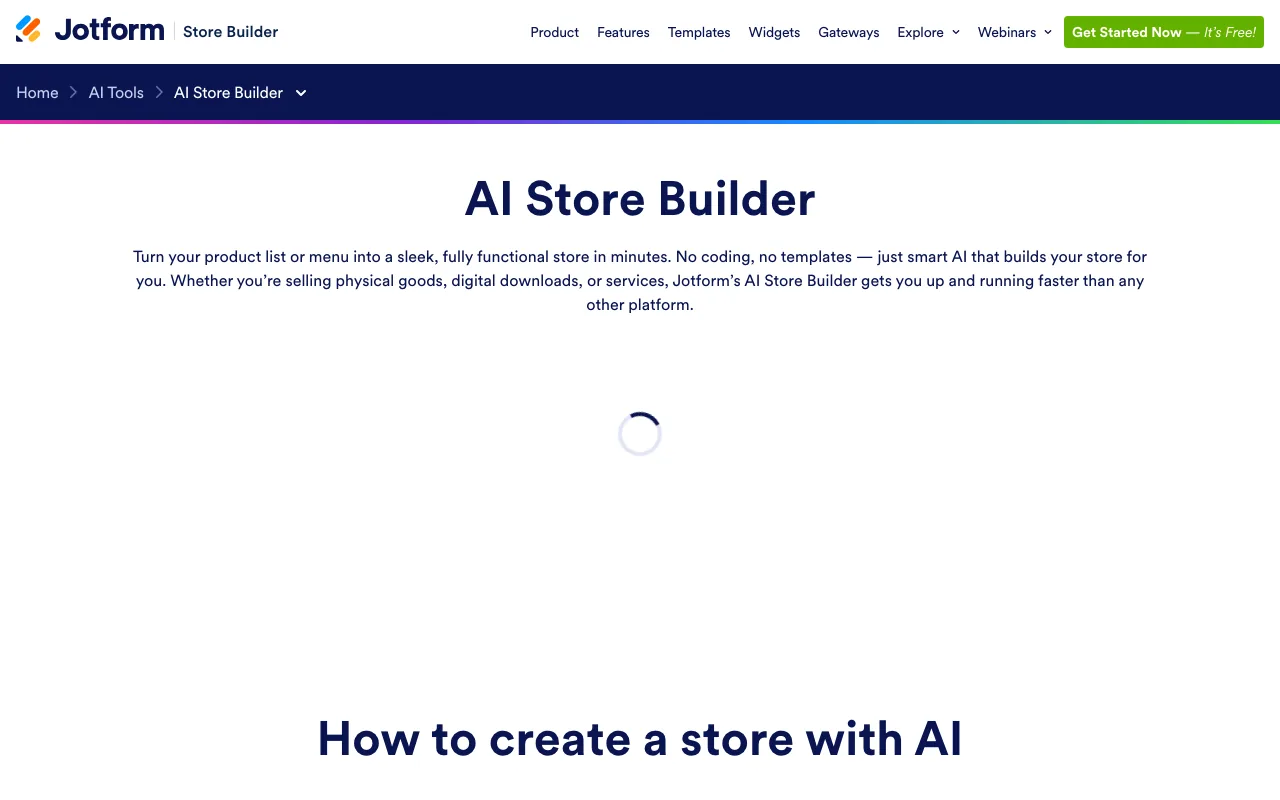
Jotform AI Store Builder is the smallest, most honest option in this list. You answer a short form, Jotform's AI assembles a simple store, you sell. It's not trying to be Genstore. It's trying to be "the spreadsheet I had with prices, but now it's a checkout page."
Where Jotform beats Genstore:
- No subscription friction at the smallest size. The free plan supports a tiny catalog properly. If you're selling five SKUs to your newsletter, this is enough.
- Form-builder roots show. Order forms, custom checkout fields, donation flows, "pick a tier" pricing pages: Jotform's heritage as a form tool means these are very smooth.
Where Jotform is worse than Genstore:
- Not a real ecommerce platform. Variants, inventory, multi-currency, shipping rules: all very light. You'll hit the ceiling at a catalog of a few dozen products.
- No store-runs-itself agent UX. This is a builder, not an operator. There's no equivalent to Olivia or Luna.
When Genstore Itself Is the Right Pick
We've spent this whole article on alternatives, but the honest answer is sometimes "stay on Genstore." Specifically:
- You're starting a dropshipping store from scratch. Genstore's DSers/AliExpress integration is the smoothest in the AI-builder category. None of the alternatives match it for that audience without bolting on a separate tool.
- You value the agent-personality UX. "Talk to Olivia about a campaign, talk to Luna about SEO, talk to Sara about products" is a real innovation in interface design. None of the alternatives in this list do it that way. If that's what makes you actually use the tool, that compound effect matters more than a 1-2% transaction fee.
- You want the free plan to genuinely tire-kick. YNS doesn't offer one. Selldone does, but the AI experience is weaker. If "$0 to try, $25 if I commit" is your decision frame, Genstore wins.
If those three don't apply, you'll probably be happier with one of the alternatives above.
What "AI Store Builder" Actually Means (and Why It Matters Here)
A quick framing that helps you read the rest of the category, including future products we haven't named.
Most AI store builders fall into one of three buckets:
- The AI picks a ready-made design. Wix ADI, Jotform AI Store. Fast, fine, ceilinged.
- The AI generates a fresh design on top of a real ecommerce platform. Your Next Store, Genstore, Shoplazza, Selldone, 10Web, Hostinger Horizons. The sweet spot for most beginners.
- The AI writes code, and you supply the store. Lovable, Bolt, Replit. Beautiful demos, no products or inventory included. We covered this trap in detail in our best AI store builders guide and our Bolt.new ecommerce prompt template.
Genstore is Bucket 2. Most of its credible alternatives are also Bucket 2, which is why this list focuses there. If you're considering Bucket 3 because the demo looks slick, read the AI store builders post first. The "where do the products live?" question matters more than the demo suggests.
FAQ
Is Genstore AI legit, or a Shopify wrapper?
Genstore is a standalone platform, not a Shopify front-end. It runs its own hosting, processes payments, and manages your products on its own infrastructure. That's why it can offer the "type a prompt, get a store" experience end-to-end, and it's also why there's no export path: there's no underlying Shopify or WordPress to fall back to.
Does Genstore take a percentage of my sales?
It depends on how you take payments. If you use Genstore's built-in checkout, you pay roughly the same card fee Stripe normally charges (2.8% + 30¢ per sale on Lite, slightly less on Scale) and nothing extra to Genstore. If you'd rather use your own Stripe or PayPal account, Genstore takes an extra cut on every sale: 2% on Lite, 1% on Growth, 0.6% on Scale. A store doing $10,000 in sales a month on Lite, using its own Stripe, hands $200 to Genstore on top of the $25 monthly fee. Your Next Store, Selldone, and BigCommerce don't take this extra cut, no matter which payment account you connect.
What's the closest direct alternative to Genstore?
Your Next Store. Both build a real store from a sentence, both are made for beginners, both run on the company's own servers so you don't have to set anything up. The two real differences: YNS doesn't take an extra cut on sales even if you use your own Stripe, and YNS lets you take your store with you if you ever leave (Genstore doesn't). Genstore has a free plan, and its named AI helpers (Olivia, Luna, Sara) are genuinely fun to use. Pick on those four points.
Can I move my Genstore store to Shopify or Your Next Store?
You can download your list of products and import it into any other platform. You can't download the design of your store or any of the AI-written pages, because Genstore is a sealed box from the outside. In practice: you keep your products and prices, but you redesign the store from scratch on the new platform.
Which is better for dropshipping: Genstore or Shoplazza?
For pure dropshipping with AliExpress as the supplier, Genstore's DSers integration is the smoother experience and the agent UX (especially Sara handling product imports and Olivia handling campaigns) reduces busy-work meaningfully. Shoplazza has lower transaction fees at scale, more mature international shipping, and stronger marketplace integrations (TikTok Shop, Amazon). If you're optimizing for time-to-first-sale, pick Genstore. If you're optimizing for cost-at-volume, pick Shoplazza.
Is there a free AI store builder that isn't watermarked?
Selldone's free plan is the only one in this list that doesn't add a "Powered by..." footer or visible branding to your store. The trade-off is the AI does less work than Genstore's. Jotform's tiny store on the free plan is also unbranded but is a much smaller product overall.
What about Lovable or Bolt.new as a Genstore alternative?
They're in a different category. Lovable and Bolt.new generate a website that looks like a store, but it isn't one. There are no products, no stock tracking, no checkout, no place to manage orders. To actually sell, you (or a developer you hire) have to bolt on payments, a database, an admin panel, taxes, shipping, and a way to handle each order, by hand. We wrote about that gap in our Bolt.new ecommerce prompt template. If you liked Genstore because you don't want to deal with developers, these aren't the answer.