US Import Duties for Ecommerce After De Minimis
 Jakub Neander
Nov 10, 20269 min read
If you ship parcels to American customers from outside the US, the duty-free ride is over. Until 2025, almost every order under $800 crossed the border without a cent of duty. Today there is no duty-free treatment for low-value shipments, the tariff rules underneath keep moving, and the customer at the door is the one who gets surprised. This guide explains what changed, how US import duties for ecommerce are calculated now, and what to do about it in your store.
What De Minimis Was, and What Replaced It
"De minimis" is customs shorthand for a value below which a shipment is not worth taxing. In the US it was $800 per person per day. Under that line, imports entered duty-free and with minimal paperwork, which is why small parcels from marketplaces and independent stores flowed in by the hundreds of millions.
That exemption is suspended for all shipments. CBP now publishes dedicated rules for low-value shipments on its ecommerce page, and the old duty-free path is closed.
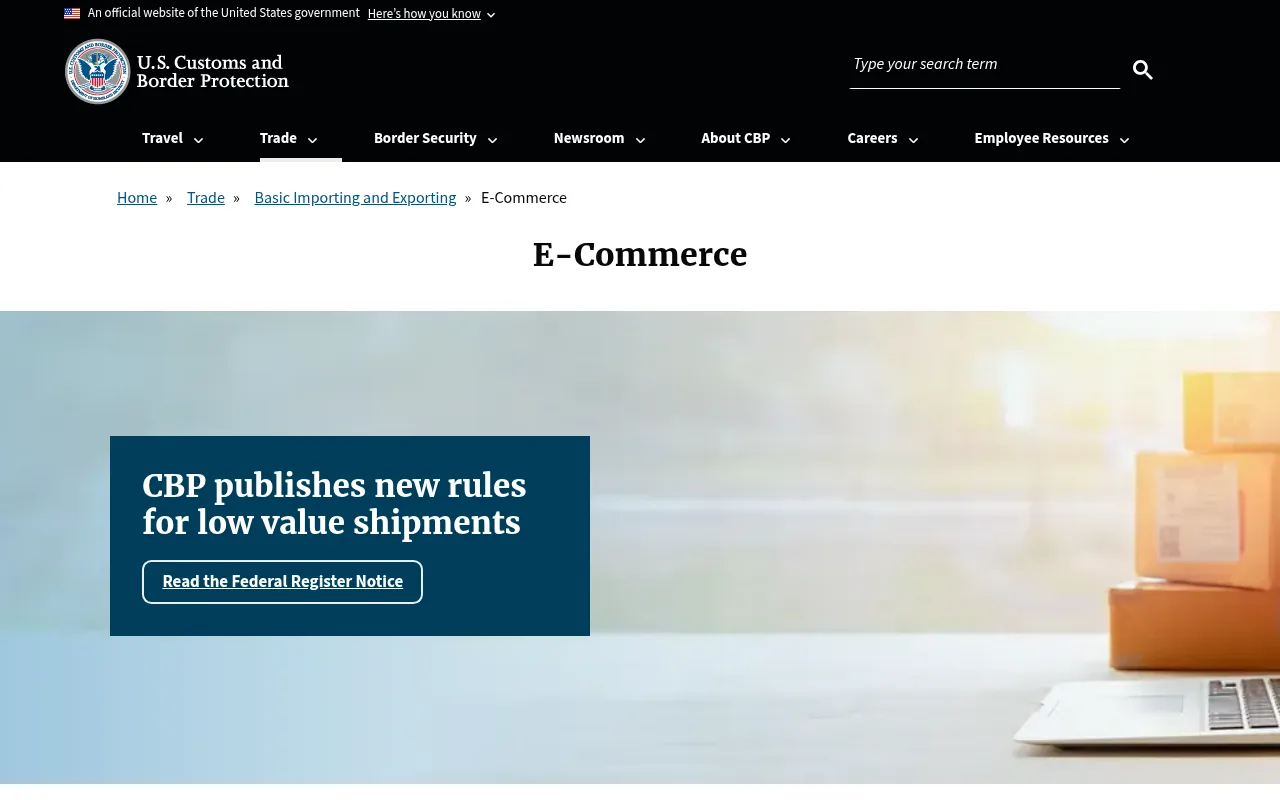
The legal footing has been contested, so here is the short version of how we got here, based on reporting from Supply Chain Dive and the running tracker at Zonos:
- August 2025: the suspension started for commercial shipments, under an executive order citing emergency powers.
- February 20, 2026: the Supreme Court ruled that IEEPA does not authorize tariffs. The same day, a new order kept the de minimis suspension in place. Replacement duties started on February 24.
- July 24, 2026: the temporary 10% global surcharge expired. Regular duties plus Section 232 and Section 301 tariffs now apply to postal shipments too.
- January 20, 2027: a new customs entry type for postal shipments (Entry Type 13) becomes mandatory.
- July 2027: a law Congress passed ends commercial de minimis permanently.
A trade court also upheld the suspension in August 2026, though appeals remain possible. Treat the direction as settled and the details as moving.
How US Import Duties Are Calculated Now
Every parcel now has a duty bill. It is built from four inputs.
1. The product's tariff classification
Each product maps to a Harmonized Tariff Schedule (HTS) code. The code sets the base duty rate, called the MFN (most favored nation) rate. A cotton t-shirt, a ceramic mug and a phone case all have different rates, and some are zero.
2. The country of origin
Duty depends on where the goods were made, not where you ship from. A shirt made in Vietnam and shipped from your warehouse in Germany is a Vietnamese shirt to US customs. This is the single most common mistake for stores that ship from one place but source from another.
3. Additional tariffs on top
Separate tariff programs stack on the base rate depending on origin and product:
- Section 301: a forced-labor tariff took effect July 24, 2026: 10% for 17 economies (including Canada, Mexico, India and the UK) and 12.5% for most other investigated economies, including China and Vietnam. Some trading partners such as the EU, Japan and South Korea are capped relative to the base rate.
- Section 232: product-based tariffs, for example on steel, aluminum and certain other goods. Goods already under Section 232 are exempt from the Section 301 forced-labor tariff.
- Country-specific actions: such as the extra duties on certain Brazilian and Canadian goods.
These programs change often. Zonos keeps a dated list, and CBP's guidance is the source of truth.
4. Fees on top of duty
Beyond the duty itself, a formal or informal customs entry can carry a merchandise processing fee, and a customs broker usually charges a handling fee. Carriers such as DHL, FedEx and UPS often add a disbursement or clearance fee when they pay duty on the customer's behalf. Those fees are real money on a $30 order.
An illustrative example
This is not a quote. Rates depend on your exact HTS code and origin.
| Line | Example |
|---|---|
| Order value | $60 cotton t-shirt, made in Vietnam |
| Base MFN duty (illustrative 16.5%) | $9.90 |
| Section 301 forced-labor tariff (12.5%) | $7.50 |
| Estimated duty | $17.40 |
| Share of the item price | about 29% |
If you did not price that in, you either eat the cost or your customer does. Neither makes a good first impression.
DDP vs DAP: Who Pays at the Border
Two terms decide who pays, and when.
| DAP / DDU (duties unpaid) | DDP (duties paid) | |
|---|---|---|
| Who pays duty | The customer, on delivery | You, at checkout |
| Checkout price | Lower, but incomplete | Higher, but final |
| Customer experience | Surprise bill, refused parcels | Predictable |
| Your risk | Returns, chargebacks, bad reviews | Estimating duty wrong |
For postal shipments, the new rules push toward the DDP model. Since July 24, 2026, prepaid duties are required on postal shipments valued at $2,500 or less, and those shipments must be entered by the owner or purchaser or by a licensed US customs broker acting for them.
In practice, DDP means collecting an estimated duty and tax amount at checkout and using a carrier or duty-management provider that files the entry for you. The honest tradeoff: DAP is easier to set up and worse for conversion. DDP takes integration work and makes the experience much better.
Show the landed cost early. Shoppers abandon when a surprise charge shows up at the door, and the damage lands on your reviews. Quote the full landed cost (item, shipping, duty, tax) on the product page or in the cart.
What Selling to the US Costs You Beyond Duty
Duty is only one layer. Stores selling into America also deal with:
- Sales tax. Destination US states can require you to collect it once you cross their economic nexus threshold. Our ecommerce sales tax guide covers the rules and how to track them.
- Returns. A return across a border can trigger duty refunds, drawback claims or a second round of fees. A clear return policy for US orders saves arguments later.
- Shipping speed. Express carriers clear parcels fastest. Postal routes are cheaper but are in transition as Entry Type 13 arrives.
What to Do in Your Store: A Checklist
- Classify your products. Assign an HTS code and a country of origin to every item. A spreadsheet is fine to start.
- Price for landed cost. Work out duty for your top 20 products and decide whether to absorb, share or pass it on.
- Pick DDP or DAP per carrier. Ask each carrier or fulfillment partner how they handle duty collection, entries and fees.
- Show duty at checkout. An estimate beats a surprise. Say clearly in your shipping policy who pays what.
- Update your policies. Shipping, returns and refunds pages should cover duties, refused parcels and what you do when a package is returned.
- Re-check quarterly. The rules changed several times in a year. Put a reminder in your calendar.
For a broader view of carriers, zones and delivery options, see our ecommerce shipping strategy guide.
How This Compares to the EU and UK
If you sell worldwide, the US is no longer the odd one out.
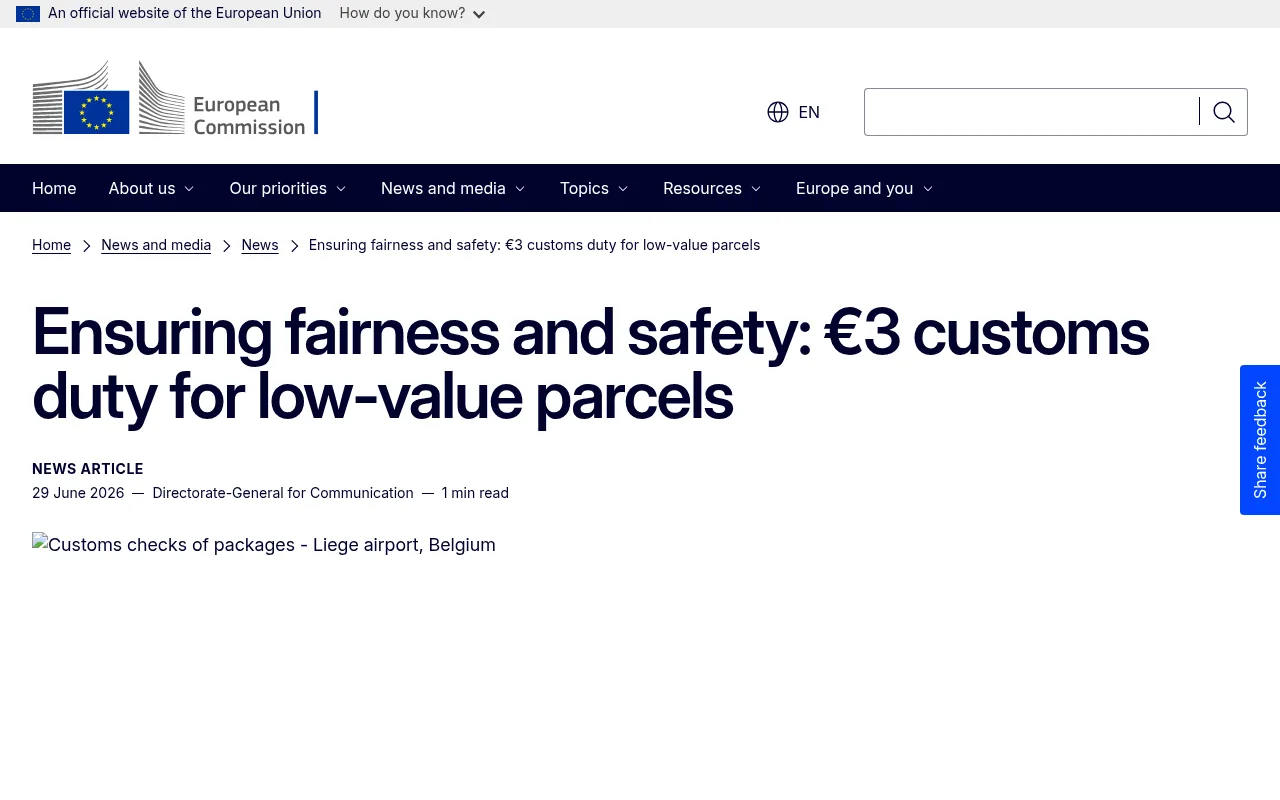
- EU. The €150 customs duty exemption has ended. Since 1 July 2026, a temporary flat €3 customs duty applies to low-value parcels, alongside VAT. Our EU VAT OSS guide covers the VAT side.
- UK. Import VAT is charged at the point of sale for consignments up to £135, and the UK has signaled changes to its low-value customs relief. Check GOV.UK for the current position.
The direction is the same everywhere: governments no longer treat small parcels as too small to tax.
Always check the current rules where you sell. This guide summarizes US and EU import duty rules as of November 2026. Tariff rates, legal authority and carrier procedures change often and vary by product and origin, so confirm the details with your carrier, a licensed customs broker or a trade specialist before you set prices. This is general information, not legal or tax advice.
Where Your Next Store Fits
Your Next Store is an AI-powered commerce platform with a managed backend and an open-source Next.js storefront. It does not calculate customs duty for you, so we will not pretend it does. What it does give you is the groundwork: shipping rates through the Shippo integration, optional tax calculation through Stripe Tax for sales tax, product attributes where you can keep HS codes and country of origin, and full control of your shipping and returns pages. You pair it with a carrier or duty provider for the actual clearance.
Plans start at $30 a month with 0% platform transaction fees, so the cost of selling abroad is mostly the cost of the border itself.
FAQ
Is there still a $800 duty-free limit for US imports?
No. The de minimis exemption is suspended for all low-value shipments, and Congress has written its permanent end into law, effective July 2027. Parcels that used to enter duty-free now owe the normal duty plus any applicable additional tariffs.
Who pays import duty on an ecommerce order, the seller or the buyer?
It depends on how you ship. Under DAP the buyer pays on delivery. Under DDP the seller pays at checkout and remits the duty. For postal shipments under $2,500, duties must now be prepaid and the entry filed by the owner or purchaser or a licensed customs broker.
Does the country of origin or the shipping origin decide the duty?
The country of origin, meaning where the goods were made. Shipping from a warehouse in a third country does not change the origin of the product.
Do I still pay duty if I only sell small, cheap items?
Yes. Value no longer exempts a parcel from duty. Low-value orders feel it most, because fixed fees and percentage duties weigh heavier on a $20 order than on a $200 one.
Related Blog Posts
Before you spend more on ads,
check your store.
Get a free 25-point checklist to find what could be holding back your sales, from product pages to checkout.