
PrestaShop Alternatives for Beginners (2026 Honest Picks)
 Jakub Neander
May 6, 202611 min read
Picture Marie. She makes handmade soap in Lyon, sells around 50 SKUs in French and English, and picked PrestaShop because she'd read "free and open source." Six months later her bookmarks bar reads: cPanel, the Addons marketplace, two Stack Overflow tabs, and a half-finished Trello board called "things to fix before launch." PrestaShop powers around 250,000 sites and processed €22 billion in sales in 2024, so plenty of merchants make it work. The question this guide answers is the one Marie should have asked first: if you're a non-technical beginner, are you the kind of merchant PrestaShop is built for? And if not, what do other Maries actually move to?
Bias disclosure: We build Your Next Store. It's our #1 pick for beginners leaving (or considering) PrestaShop. Every claim is sourced or hedged, every YNS weakness is named, and competitors get credited where they actually win.
TL;DR: The Five PrestaShop Alternatives Beginners Actually Move To
- Best for most beginners: Your Next Store. Describe the brand to an AI, get a working store. No server, no PHP, no Addons shopping. 0% platform transaction fees and updates included.
- The safest non-technical default: Shopify. Around 13,000 apps in the Shopify App Store, 24/7 support, and the platform your accountant has already heard of.
- Easiest drag-and-drop floor: Wix. Free-canvas editor and a beginner-grade AI generator. The shortest path from "no website" to "site live this weekend."
- Best looking out of the box: Squarespace. The prettiest defaults of anything on this list. Worth picking if your store is design-led and your catalog is small.
- Most built-in features without buying modules: BigCommerce. Multi-currency, abandoned cart, gift cards, B2B price lists, all at $29/month with no add-ons.
Honorable mentions (section below): Ecwid, Square Online, Hostinger Horizons, WooCommerce.
What "Free Open-Source PrestaShop" Actually Costs Marie
The headline trap on PrestaShop is the word "free." The Classic edition costs nothing to download. Running it as a real store costs everything else. Below is what Marie's first year on PrestaShop Classic looks like in a realistic, not worst-case, configuration.
| Cost item | Realistic year-one range | Notes |
|---|---|---|
| Managed PHP hosting | $120–$360 | Shared hosting works for a hobby; a real store needs backups, staging, and decent CPU |
| Premium theme (one-time) | $80–$300 | Free themes exist; most merchants buy one |
| Three or four paid modules | $150–$600 | Advanced shipping, abandoned cart, advanced SEO, GDPR. Browse the Addons marketplace for current prices |
| SSL + domain | $0–$100 | Most hosts include SSL now |
| One-time developer help | $0–$800 | Optional in theory; the median first-time merchant ends up paying for it |
| Maintenance time | Your evenings | Or someone else's invoiced |
| Realistic year-one total | ~$350–$2,160 | Plus your time |
Compare: Shopify Basic at $29/mo annual is $348/year. Your Next Store Starter is $360/year. Both include hosting, backups, security, updates, and almost every feature Marie needs out of the box.
The honest summary: PrestaShop is rarely the cheapest option once you account for hosting, the two or three Addons most stores end up buying, and the hours you'll spend reading documentation. PrestaShop also offers a Hosted plan that takes care of infrastructure. Public pricing wasn't on their site at the time of writing, so verify directly.
What Beginners Actually Get Stuck On With PrestaShop
These are the moments where Marie stops, opens a new tab, and types "PrestaShop alternatives." Five things, ranked by how often they trigger the search.
1. Server setup is step zero. Before you sell anything, you choose a host, point a domain, install PHP at the right version, run the installer, and harden the admin URL. SaaS platforms (Shopify, Wix, Your Next Store, Squarespace, BigCommerce) skip every one of those steps. PrestaShop Hosted skips them too; PrestaShop Classic does not.
2. Features that "should be built in" are paid Addons. Advanced shipping, abandoned cart emails, advanced SEO, real search, GDPR consent, page builders. Each is sold separately on the Addons marketplace, each is a third-party piece of code with its own update cadence, and the bill shows up after you thought you were done shopping.
3. Theme customization wants Smarty and PHP. PrestaShop's templating layer is Smarty, a PHP template engine. Real customization beyond the theme's built-in toggles means editing .tpl files in HTML, CSS, and a templating syntax niche enough that AI coding assistants give you mediocre answers about it. Marie can ask ChatGPT for help with Shopify Liquid all day; with Smarty she gets the digital equivalent of a shrug.
4. Updates can break Addons. Every minor PrestaShop release is a small project: read the changelog, check Addon compatibility, take a backup, run on staging, then promote. The tracker on GitHub shows the surface area: the official PrestaShop repo carries roughly 1,900 open issues against 1.6k+ closed, and a chunk of them are core/Addon interactions that bite real stores at upgrade time. SaaS platforms ship updates to you.
5. Support is community-first. The official forum is active and helpful, but it's not 24/7 chat. Shopify, Wix, Squarespace, and Your Next Store all answer tickets while you sleep. PrestaShop's paid expert services and the Hosted plan add support; Classic by itself does not.
Smaller annoyances accumulate: dense back office, performance tuning on you, region-specific tax setup that combines core settings and paid Addons. None of this makes PrestaShop bad. It makes it technical. The decision is how much sysadmin work you actually want to do.
Quick Comparison
| Platform | Entry price | Hosting included | AI builder | Multi-currency at storefront | Platform transaction fees |
|---|---|---|---|---|---|
| PrestaShop Classic | Free download | No (you provide) | No | Paid Addon | None (your hosting) |
| Your Next Store | $30/mo | Yes | Yes (native) | Yes | 0% on every plan |
| Shopify | $29/mo (annual) | Yes | Limited (Magic) | Yes (Grow+) | 0% with Shopify Payments; 0.5–2% otherwise |
| Wix | $29/mo (annual) | Yes | Yes (ADI) | Yes (Business+) | 0% on commerce plans |
| Squarespace | $23/mo (annual) | Yes | Limited | Single only | 0% on Core+ |
| BigCommerce | $29/mo (annual) | Yes | Limited | Yes (storefront-level) | 0% on every plan |
Important honesty: PrestaShop's 0% platform fee is real. The trade is that you absorb hosting, security, and updates instead. The SaaS column buys those back for $23–$30/mo.
The 5 Best PrestaShop Alternatives for Beginners
1. Your Next Store
Best for: Marie. Specifically. First-time merchants with a small but evolving brand who want a working store this weekend without learning PHP.
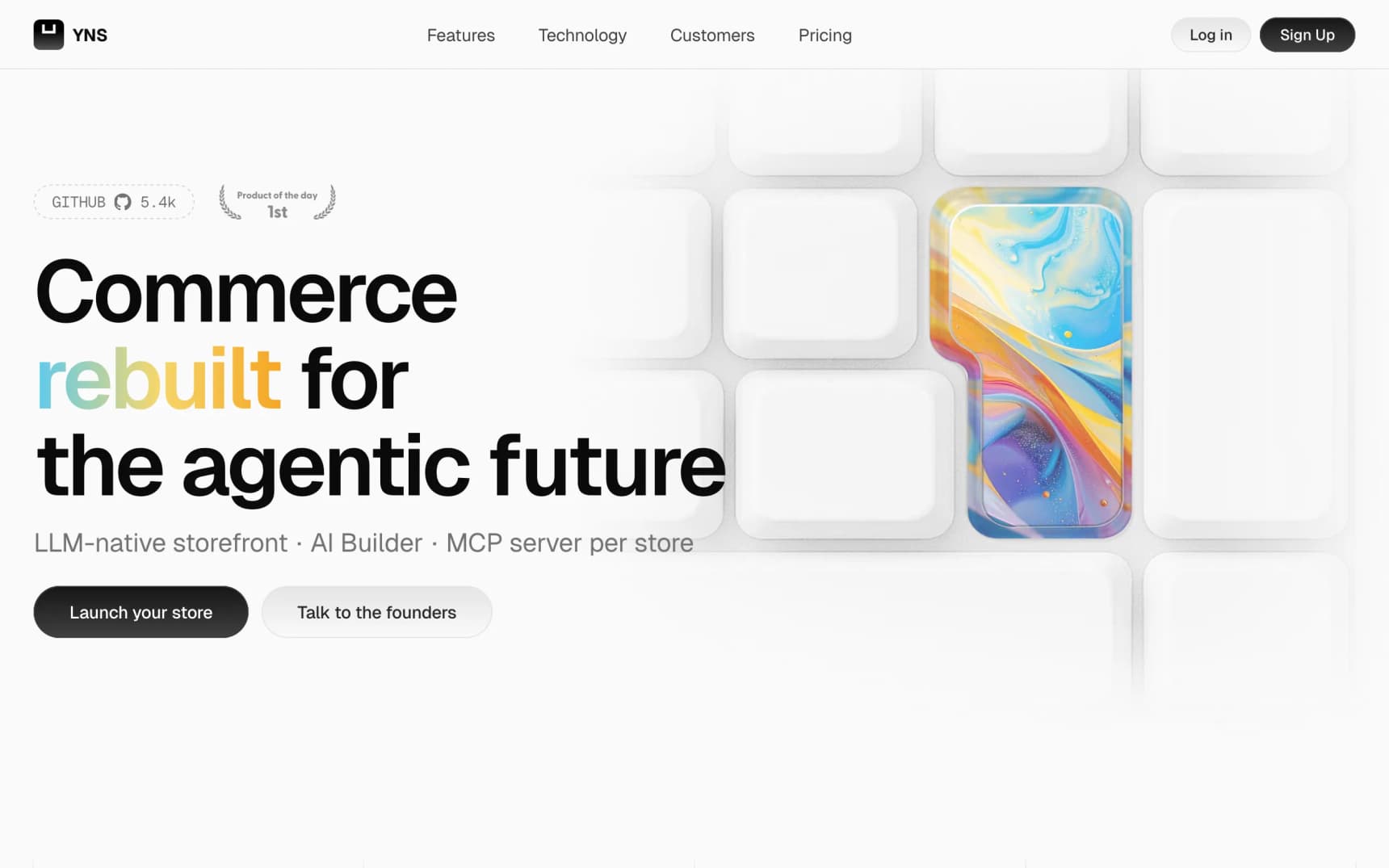
Your Next Store is built on the exact premise that broke PrestaShop for many beginners: design-led ecommerce should not require a developer. Marie opens the chat, types "small-batch handmade soap, Lyon, French and English, warm minimalist," and the AI generates a working store: products, cart, checkout, the lot. When she wants changes (a countdown for the spring batch, a quiz to recommend a fragrance, a different homepage section), she asks in the same chat. There are no FTP credentials. There are no .tpl files. There is no Addons marketplace to shop on launch day.
What replaces PrestaShop's specific frustrations: server setup is gone, the Addons checklist is built in (multi-currency, real search, abandoned cart on higher tiers, GEO/AI discoverability), and updates ship to you invisibly. Three things Marie can verify before signing up: the live demo is public (open it on her phone and run Lighthouse herself), million.yournextstore.com runs 1,000,000 products on the same backend, and the storefront template is open-source on GitHub for the day "I never want to be locked in" matters. Stack: Next.js 16, Partial Prerendering, React Server Components. The architecture conversation is How Is Your Next Store So Fast?.
Where it actually wins for a PrestaShop migrant:
- AI ships a working store, not a demo. We compared the field in Best AI Store Builders of 2026.
- Hosting, updates, and security are included in the $30/mo plan, which is the part that PrestaShop's "free" never was.
- High-90s mobile Lighthouse on the public demo. PrestaShop performance varies widely with hosting; if Marie wants a defensible default, this is one less knob.
- Open-source storefront escape hatch, in case "I want to own my code" matters later.
Where it falls short, honestly:
- No free plan. Starter is $30/mo; PrestaShop Classic is technically $0 if you donate your evenings.
- Payments are Stripe-only (Klarna, Apple/Google Pay come via Stripe; no native PayPal or Square yet).
- App ecosystem is young compared to Shopify's. Check first if Marie needs a niche plugin.
- Newer platform. If "longest track record" is on the shortlist, pick Shopify.
Pricing: Starter $30/mo, Growth $60/mo, Pro $360/mo. 0% platform fees across all plans.
Verify before you commit. Open the live demo on your phone, then describe a store to Elliot, the AI Builder and watch one come together.
2. Shopify
Best for: Beginners who want the most boring, lowest-risk default in ecommerce.

Shopify is the platform Marie's accountant, designer, and shipping carrier have all already heard of. It's ecommerce-first from the database up, the Shop Pay checkout has documented conversion uplift, and the Shopify App Store carries roughly 13,000 apps (compared to PrestaShop's smaller official Addons catalog). For a non-technical beginner, the appeal is: nothing technical happens, ever.
The trade is cost. Shopify charges 0.6%–2% platform fees on every sale unless you use Shopify Payments, and a real store typically runs 3–10 paid apps adding $50–$300/mo. The math is in our Shopify transaction fees deep dive and How much Shopify takes from a $100 sale.
Wins for a PrestaShop migrant:
- Largest app store in ecommerce, period. Whatever Addon Marie was shopping for on PrestaShop, Shopify has 30 versions of it.
- 24/7 chat and phone support on every plan.
- Multi-channel (Amazon, TikTok Shop, Instagram, Google) built in.
Where it falls short vs PrestaShop:
- Marie doesn't own anything. Code, data, and storefront live on Shopify's servers.
- Default themes look fine, not designed; theme work usually means Liquid or a paid designer.
- Running costs rise fast with apps; on PrestaShop she'd have paid once.
Pricing (annual billing): Basic $29/mo, Grow $79/mo, Advanced $299/mo.
3. Wix
Best for: Beginners whose specific frustration is "I want this thing exactly here."
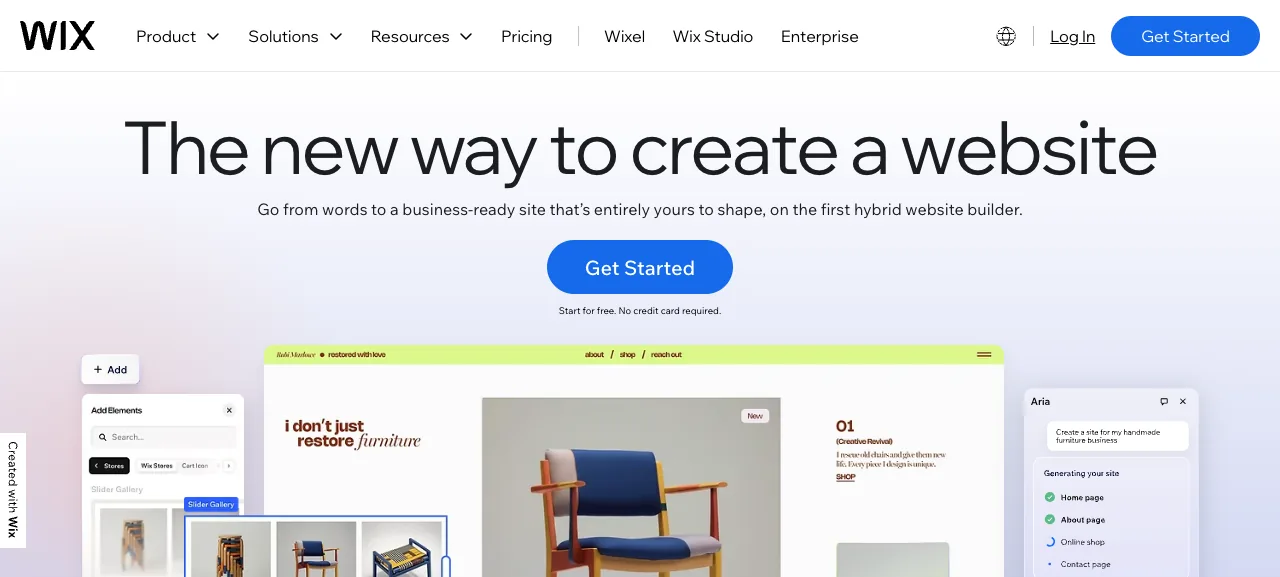
Wix is the closest thing on this list to "answer five questions, get a website." Its AI generator (Wix ADI) turns a short brief into a working site in minutes, and the editor is true free-canvas drag-and-drop with pixel placement. For a merchant who has never used PrestaShop's back office, Wix is the gentlest move.
It loses against the dedicated commerce platforms above when ambitions grow. If Marie's plan is 10–200 SKUs, mostly domestic, Wix is excellent. Past that, ceilings appear.
Wins for a PrestaShop migrant: No installation, no Addons shopping, no Smarty. 900+ templates, mature AI generator, abandoned cart on the entry Core plan.
Where it falls short vs PrestaShop: Can't switch templates after publishing without rebuilding. Renewal pricing often jumps after year one (see our Wix ecommerce alternatives guide). Marie doesn't own the data the way she does with self-hosted PrestaShop.
Pricing (annual billing): Core $29/mo, Business $39/mo, Business Elite $159/mo.
4. Squarespace
Best for: Design-led beginners with small catalogs who want their store to look like a designer touched it.

Squarespace ships the prettiest defaults on this list. If Marie's brand lives or dies on visual identity (a candle line, a furniture studio, a curated lifestyle shop), Squarespace gets her 80% of the way there with no design work. Compared to PrestaShop, she trades extensibility for taste.
It's not the right pick for catalog-heavy stores. The specific ceilings beginners hit (250-variant cap, single-currency display, smaller app marketplace) are documented in Best Squarespace Commerce Alternatives in 2026.
Wins for a PrestaShop migrant: Best out-of-the-box templates of anything here. First-party blog, galleries, scheduling, email campaigns; one admin, one bill. 0% transaction fees on Core and up.
Where it falls short vs PrestaShop: 250-variant cap per product (PrestaShop has none). Single-currency display. No app marketplace at PrestaShop's scale.
Pricing (annual billing): Core $23/mo (commerce starts here), Plus $39/mo, Advanced $99/mo.
5. BigCommerce
Best for: Beginners who want SaaS simplicity but resent paying for features they expect to be built in.
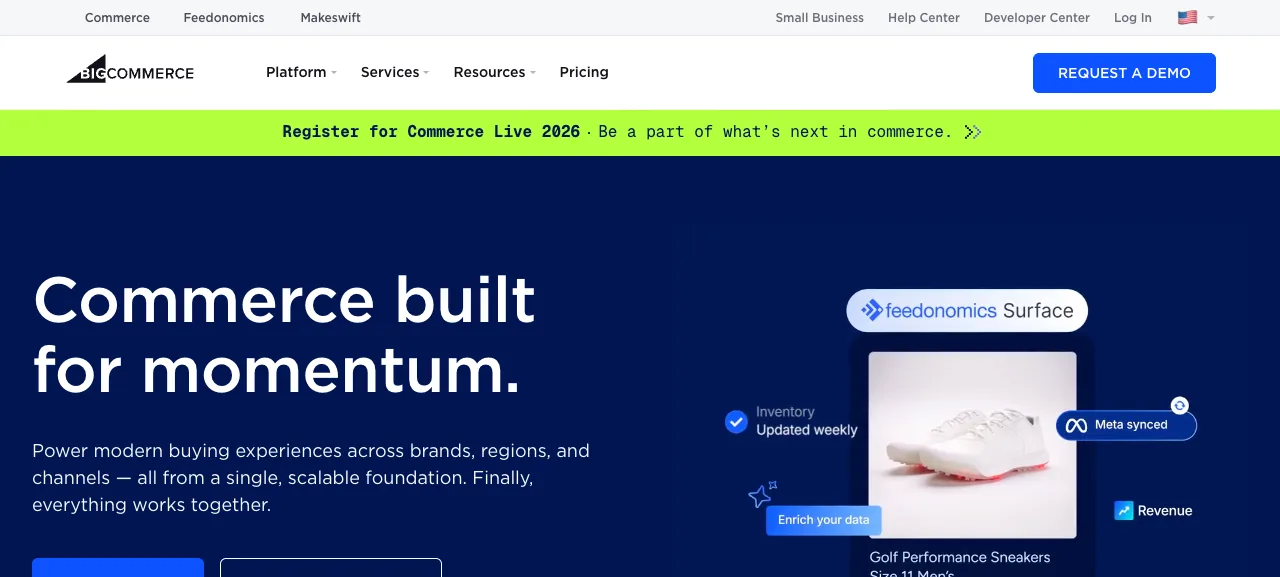
BigCommerce is the SaaS that bundles the modules PrestaShop and Shopify both charge for. Unlimited variants, real multi-currency at the storefront level, gift cards, abandoned cart, B2B price lists: all on the $29/month entry plan, no apps required.
For a PrestaShop migrant accustomed to "the platform should ship multi-currency without buying an Addon," BigCommerce is the closest philosophy match in the SaaS world.
Wins for a PrestaShop migrant: 0% platform transaction fees on every plan. More built-in features than any other SaaS here. Geolocation-based currency switching out of the box.
Where it falls short vs PrestaShop: Admin UI is functional, not delightful. Revenue-tiered plans force upgrades at $50K/$180K/$400K/year whether or not Marie wants the new features. Default themes look adequate, not distinctive.
Pricing (annual billing): Standard $29/mo, Plus $79/mo, Pro from $399/mo (revenue-tiered).
Honorable Mentions
Ecwid by Lightspeed: Embeddable store widget. Drops into any existing site (WordPress, Wix, even static HTML). Useful if Marie already has a site she likes and wants to bolt commerce on from underneath. Free starter; paid plans from $25/mo.
Square Online: Genuinely free starter with unlimited products. Tight POS integration if she also sells in person. Right answer for hybrid retail or food businesses already using Square.
Hostinger Horizons: AI site builder priced for the "couple of coffees a month" budget. Covered in Best AI Store Builders. Cheaper than every option above; commerce features are thinner.
WooCommerce: Free WordPress plugin, largest ecommerce footprint by install count, full data ownership. Architecturally similar to PrestaShop (you self-host, you wrangle plugins), so it solves the "I want to own my stack" need but not the "PrestaShop is too technical" need. More in WooCommerce Alternatives (2026).
What PrestaShop Quietly Does Well
A fairness pass, because every alternative above has weaknesses PrestaShop doesn't:
- You own the stack. Code, database, storefront. If PrestaShop the company disappeared tomorrow, the store wouldn't.
- No platform fee, ever. Hosting plus payment processor is the entire bill on the platform side.
- Mature i18n. PrestaShop is European-built and ships 76+ languages and 200+ payment methods by default. International stores have less translation work to do here than on most SaaS competitors.
- Powerful admin once you learn it. Multi-store, multi-currency, multi-language, complex catalogs and pricing rules. PrestaShop can model things that defeat Squarespace and Wix.
- A real community. Active forum and certified agency network.
If Marie is technical (or wants to be), if she sells across many countries and languages, and if owning the stack matters to her more than time-to-first-sale, the right answer might be "stay on PrestaShop, get good at it." The alternatives above only win when one of those three doesn't hold.
How to Migrate from PrestaShop
The destination varies; the steps don't.
- Export products, customers, and orders as CSV from the PrestaShop admin. Shopify and BigCommerce ship official PrestaShop importers that handle this for you.
- Map your URLs. PrestaShop URLs typically look like
/category/N-slugor/N-slug.html. Pull the top 100 from Google Search Console and prepare 301 redirects on the new platform before flipping DNS. - Reconfigure payments. PrestaShop's payment configuration doesn't transfer. Set up Stripe, Shopify Payments, or whichever processor the new platform uses, and run a small live test order.
- Test checkout end-to-end. Real card, real shipping rate, real tax calculation. Then refund yourself.
Budget one weekend for a small catalog (under 100 SKUs), one or two weeks if Marie is redesigning as she migrates.
FAQ
Is there a PrestaShop alternative that's actually free?
Square Online has a real free plan with unlimited products; you pay payment processing only. WooCommerce is a free plugin (you pay $20–$50/mo for production-grade hosting). Ecwid has a free starter tier. PrestaShop Classic itself is free if Marie treats her own time as $0/hour, which is a fair accounting choice for hobby stores and a misleading one for everything else.
Which alternative is easiest for someone non-technical?
Your Next Store for the "describe it, get it" path: AI generates a working store from a short brief. Wix ADI for a similar feel without an AI agent in the loop. Squarespace if Marie would rather pick a beautiful template and edit visually. Shopify for the safest default. None require touching a server.
Is PrestaShop better for SEO than Shopify or Wix?
PrestaShop is competitive on SEO because Marie controls everything (URLs, schema, meta tags, server response times) at the cost of having to configure it all. Shopify and Wix are good on SEO defaults but more constrained. Modern stacks like Your Next Store ship structured data and AI discoverability by default, which is the SEO frontier in 2026. The "best SEO platform" is the one she actually configures.
Will I lose SEO rankings if I switch from PrestaShop?
Not with disciplined redirects. The risk is changing URLs without 301s, which can drop rankings for weeks while Google recrawls. Pull the top 50–100 URLs from Google Search Console, map each to the new platform's URL structure, and test redirects on staging before flipping DNS. Industry case studies of platform migrations with proper redirects typically see organic recovery within 4–8 weeks.
Can I keep my PrestaShop modules and themes if I switch?
No. PrestaShop modules are PHP code targeting PrestaShop's specific architecture; they can't run on Shopify, Wix, Your Next Store, or any other platform. Themes are also platform-specific. Plan to replace functionality with the new platform's built-in features. The good news: most of what beginners pay for as PrestaShop Addons is built into the SaaS alternatives above.
What about PrestaShop Hosted?
PrestaShop Hosted removes the server work (no FTP, no PHP versions, no MySQL tuning) and is worth a look if Marie wants the PrestaShop admin without the sysadmin tax. Public pricing wasn't on their site at the time of writing; verify directly. Note: Hosted does not remove the Addons-shopping pattern. Multi-currency, advanced shipping, and similar features are still typically paid modules.
Related Blog Posts
- Best AI Store Builders of 2026
- WooCommerce Alternatives (2026)
- Best Squarespace Commerce Alternatives in 2026
- How to Start an Online Store
- Open Source Shopify Alternatives
PrestaShop's price tag is honest about the software and silent about your time. If Marie wants to learn PHP, run a server, and shop the Addons marketplace, the price tag is the deal of the year. If she wants to make soap, the alternatives above are the deal of the year. Pick the one that matches the job you actually showed up to do.
Ready for an easier start? Open the Your Next Store live demo or see every alternative side-by-side.