How to Start a Thrift Store in 2026: The Honest Playbook
 Jakub Neander
Aug 25, 202612 min read
Secondhand is one of the few retail categories actually growing right now, and it's one of the cheapest businesses a total beginner can start. You don't need a factory, a formula, or a manufacturer minimum. You need eyes for a good find, a fair price, and a place to sell. This is the guide I'd hand to a friend before they buy a single item: seven steps, in the right order, with honest numbers for what it actually costs in 2026, and a clear lean toward selling online instead of (or alongside) a physical shop.
The 7 Steps, in Order
- Pick a very specific kind of secondhand goods to sell. Not "thrift stuff." One category.
- Get a small group to say "yes, I'd buy this" before you buy inventory.
- Pick how you'll source items: thrift hunting, wholesale liquidation, or consignment.
- Price every item with a repeatable rule, not a guess.
- Photograph and list items so they actually sell.
- Pick where to sell: your own website, marketplaces, or a physical space.
- Pick one place to get noticed. Not all the places. One.
Now the long version.
Step 1: Pick a Very Specific Kind of Secondhand Goods to Sell
The fastest way a new thrift business fails is being "a little bit of everything." A folding table of assorted mugs, old sweaters, and random home decor doesn't give anyone a reason to remember you. The resellers who do well are the ones a specific type of shopper looks at and thinks, this person gets exactly what I want.
So before you buy a single item, decide who you're sourcing for and what you'll specialize in. A good answer is specific enough that it almost sounds too small. A bad answer is "vintage clothes."
If you're still deciding whether reselling secondhand goods is even the right business for you, our broader playbook for starting any online store walks through the customer and category decisions before you commit.
Good answers look like this:
- Y2K and early-2000s streetwear, for shoppers who want the exact silhouette they remember from middle school.
- Mid-century furniture and home decor, for people furnishing an apartment who can't afford (or don't want) a new West Elm sofa.
- Kids' clothing in like-new condition, for parents tired of paying full price for something a toddler will outgrow in four months.
- Designer handbags and accessories, authenticated and priced fairly, for shoppers priced out of retail but not willing to risk a fake.
The test: if a Goodwill superstore could put your exact inventory on a shelf tomorrow without changing anything, you haven't picked a sharp enough angle. Your advantage as a small reseller isn't volume, it's taste. You can care about one specific category more than a 200-location nonprofit chain ever will.
One tailwind worth knowing: the global secondhand apparel market hit an estimated $393 billion and grew 13% year over year in 2025, according to ThredUp's 14th annual resale report, now representing roughly 10% of all apparel spend. The U.S. secondhand market alone is projected to reach $78.8 billion by 2030, growing nearly four times faster than the broader clothing retail market. That growth is real, but it also means more competition. A sharp niche is how you stand out in a crowded, growing category instead of getting lost in it.
Step 2: Get a Small Group to Say "Yes" Before You Buy Inventory
This is the step almost every first-timer skips, and it's the one that separates a business from an expensive hobby. You don't need a truck full of inventory to find out if your idea is good. You need to find out if it's good before you fill a truck.
Three cheap ways to test:
- A one-page website with a "Join the waitlist" button. Show a handful of items you already own or have sourced, describe your niche in one sentence, and ask for an email. Spend $50 to $100 on Instagram or Pinterest ads to send your target shopper to it. If fewer than 1 in 50 people who land on the page sign up, the niche isn't clicking yet. Go back to Step 1.
- List 10 to 15 real items and see what actually sells. Source a small first batch (see Step 3), photograph and list it properly (see Step 5), and watch what moves in the first two weeks. Real sales are a far stronger signal than likes or comments.
- Ask 20 people in your target group directly. Friends, their friends, people in relevant online communities for your niche. Show them photos of 5 to 10 pieces you're considering and ask what they'd pay. If nobody names a number close to what you need to charge, the math won't work.
This step costs a weekend and maybe $100 to $200 in sourcing. Skipping it can cost you a garage full of secondhand goods nobody wants at your price.
Step 3: Pick How You'll Source Inventory
This is the decision that shapes everything else: how much cash you need up front, how fast you can restock, and how unique your inventory looks online. There are three real paths, and which one fits depends mostly on how much money you can put in before you've made a sale.
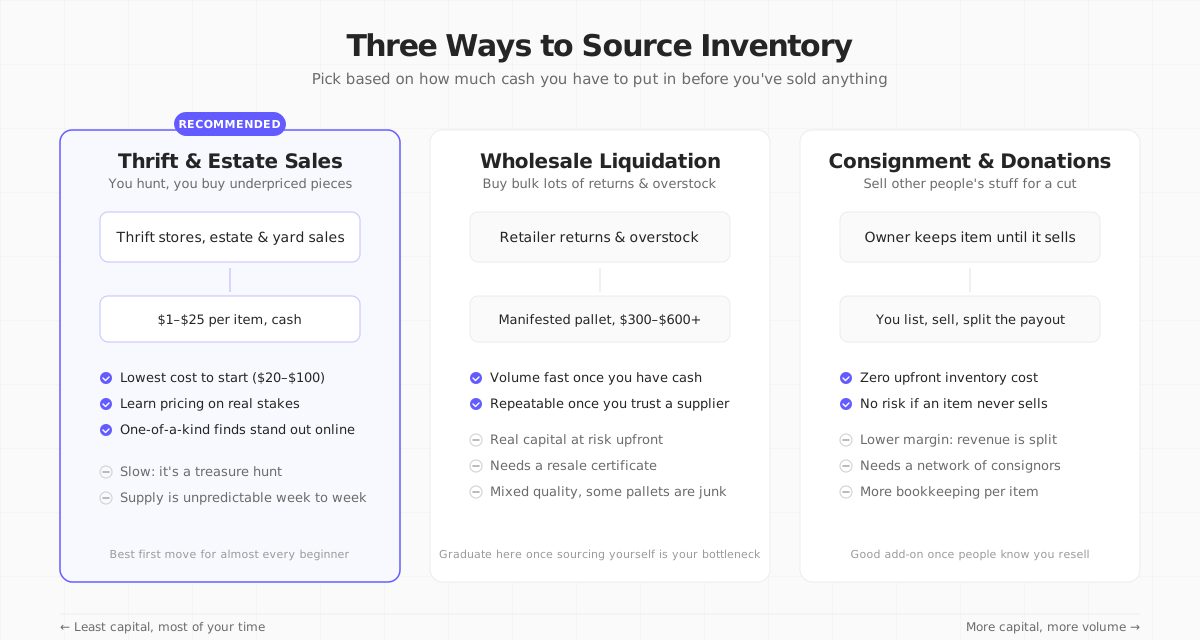
Option A: Thrift and Estate-Sale Hunting (cheapest, most common starting point)
You visit thrift stores, estate sales, yard sales, and auctions yourself, and buy underpriced items you know you can resell at a real markup. This is the classic "reselling" model, and it's how the large majority of successful solo resellers start.
The upside: you can start with $20 to $100, you learn pricing and quality-checking on real stakes instead of a spreadsheet, and every item you find is genuinely one-of-a-kind, which is exactly what makes a resale listing stand out in search results and on marketplaces.
The catch: it's a treasure hunt. Supply is unpredictable week to week, and it takes real time to build the eye for what will actually resell versus what will sit in a bin for six months. Most experienced resellers say it takes 10 to 20 sourcing trips before your instincts get reliable.
This is the right starting point for almost every beginner. It's the lowest-risk way to learn the business before you commit real capital.
Option B: Wholesale Liquidation Pallets (more capital, more volume, faster)
Retailers sell their customer returns, shelf pulls, and overstock in bulk through liquidation marketplaces like B-Stock (which runs official liquidation auctions for Amazon, Walmart, and Target) and Direct Liquidation. You buy a "manifested" pallet, meaning a spreadsheet lists every item, its original retail price, and its condition code, so you have some idea what you're getting before it arrives.
A realistic manifested pallet runs $300 to $600, and industry guides put realistic returns at 30% to 60% ROI when you buy manifested, check comparable resale prices before bidding, and have a system for processing what arrives. Unmanifested "mystery" pallets are cheaper per unit but riskier: you genuinely don't know what's inside until it's yours.
Two things worth knowing before you buy a pallet:
- You'll typically need to register as a business and hold a resale certificate (sometimes called a seller's permit) to buy at wholesale prices and avoid paying sales tax on inventory you plan to resell. Your state's department of revenue issues these, usually for a small fee or free.
- Not everything on a pallet is sellable. Budget for 10% to 20% of items being damaged, missing parts, or not worth listing. Factor that loss into your price-per-item math before you bid.
Graduate to this option once thrift and estate-sale hunting becomes your bottleneck, meaning you can sell inventory faster than you can personally find it.
Option C: Consignment and Donations (no upfront cost, lower margin)
You list and sell items on behalf of someone else, whether that's a family member cleaning out a closet, a local community donation drive, or a formal consignment arrangement, and split the proceeds once an item sells. If it never sells, you never paid for it.
This is the lowest-risk option financially, since there's no inventory cost, but it comes with real tradeoffs: your margin per item is lower because you're splitting revenue, you need a steady network of people willing to consign or donate to you, and there's more coordination overhead (tracking who owns what and paying them out correctly).
Good as an add-on once people know you resell, but it's rarely enough volume on its own to build a business around in year one.
Honest recommendation: start with Option A. It's cheap, it teaches you the skills every other option depends on (spotting quality, knowing what resells, pricing confidently), and it doesn't require any business infrastructure to begin. Add wholesale liquidation once sourcing becomes your bottleneck, and treat consignment as a nice bonus channel, not your foundation.
Step 4: Price Every Item With a Repeatable Rule
The classic beginner mistake in reselling: pricing by gut feeling. It leads to underpricing your best finds and overpricing things nobody wants, and both mistakes cost you money.
The most common rule among experienced resellers is the 50/25/10 rule, based on the item's original retail price and its condition:
- 50% of original retail for items less than a year old, in excellent condition, with tags or barely worn.
- 25% of original retail for items a few years old in good, wearable or usable condition with light signs of use.
- 10% of original retail for older, well-worn pieces that still have real use left in them.
For items where you don't know the original retail price (most thrifted and estate-sale finds), the more useful version is the 3x rule: price the item at roughly 3 times what you paid for it, then check that number against recent sold listings (not asking prices) on eBay or Poshmark for the same or a very similar item, and adjust to the median of the last 10 comparable sales.
A quick example. Say you find a lightly worn designer sweater at an estate sale for $8.
| Step | What you do |
|---|---|
| Starting point | $8 cost x 3 = $24 baseline |
| Check comps | Last 10 sold listings for the same sweater average $38 |
| Condition adjustment | Yours is excellent, no pilling or stains, so no discount needed |
| Listed price | $36–$38 |
If instead the sold comps averaged $18, you'd price near $18 to $20, not $36, no matter what the 3x rule suggested. Comps beat formulas every time there's a conflict between them.
One more honest number: as a rough floor, an item generally isn't worth listing online once fees, shipping, and your time are accounted for unless it can sell for at least $15 to $20. Below that, sell it in a bulk lot, donate it, or set it aside for a local flea market table instead of individually photographing and listing it.
Keep a simple spreadsheet or notes doc of what you paid, what you listed items for, and what they actually sold for. After 30 to 50 sales, you'll have your own personal pricing data, which beats any rule of thumb.
Step 5: Photograph and List Items So They Actually Sell
This is the step that separates resellers who make real money from resellers who don't, and it has nothing to do with sourcing skill. Two people can source the exact same item and one sells it in three days while the other's listing sits for three months, purely because of the photos and the description.
Photos: what actually matters
- Natural light, no flash. Shoot near a window during the day. Flash washes out fabric texture and color, which are the two things buyers care most about with secondhand goods.
- A plain, uncluttered background. A blank wall, a clean bedsheet, or a simple backdrop. Busy backgrounds make phones stop scrolling for the wrong reason.
- 5 to 8 photos per listing minimum: the full front, the full back, a close-up of any fabric or material detail, a close-up of the brand tag or maker's mark, and a close-up of every flaw (a stain, a small hole, a scuff) with no exceptions.
- Show flaws honestly. This feels counterintuitive, but it's the single biggest driver of trust and lower return rates in resale. Buyers who feel surprised by a flaw leave bad reviews and file returns; buyers who saw it upfront and bought anyway rarely do either.
Descriptions: what buyers are actually searching for
Secondhand shoppers search by specific, concrete terms, not vibes. A strong title and description include:
- Brand name, spelled correctly and exactly as printed on the tag.
- Item type (crewneck sweater, not just "top").
- Size, including the tag size and, for clothing, actual measurements (chest, length, waist) since secondhand sizing runs inconsistently across brands and decades.
- Material, if it's on the tag (cotton, wool, leather).
- Condition, using consistent language across every listing: new with tags, excellent, good, fair.
- Era or style, if relevant to your niche (Y90s, Y2K, vintage 1970s).
A listing titled "Vintage Levi's 501 Straight Leg Jeans, Men's 32x30, High-Rise, Good Condition" will out-sell "Cool old jeans" every time, because it matches exactly what a specific buyer typed into search.
Step 6: Pick Where to Sell
By now you have a sourced, priced, photographed batch of items ready to go. This is where most beginner guides only talk about opening a physical storefront. We're going to spend more time on the online side, because that's where most first-time resellers should actually start, and because it's usually the faster, cheaper path to your first sale.
Marketplaces (fastest way to your first sale)
Marketplaces bring their own shoppers, so you skip the hardest part of starting any online business: getting anyone to find you. The tradeoff is fees and a customer who thinks of themselves as a shopper on that platform, not a customer of yours.
| Platform | Seller fee | Best for |
|---|---|---|
| eBay | ~13% + payment processing | Broad category range, collectibles, auction-style pricing |
| Poshmark | $2.95 flat under $15, 20% at $15+ | Women's fashion, activewear, designer pieces |
| Depop | ~3.3% + $0.45 per sale | Y2K, streetwear, a younger buyer audience |
| Mercari | 10% flat | Mixed general inventory, simple listing flow |
| ThredUp | They set the price, you get a share | Zero-effort clothing offload: you ship a bag, they photograph, list, and sell it for you |
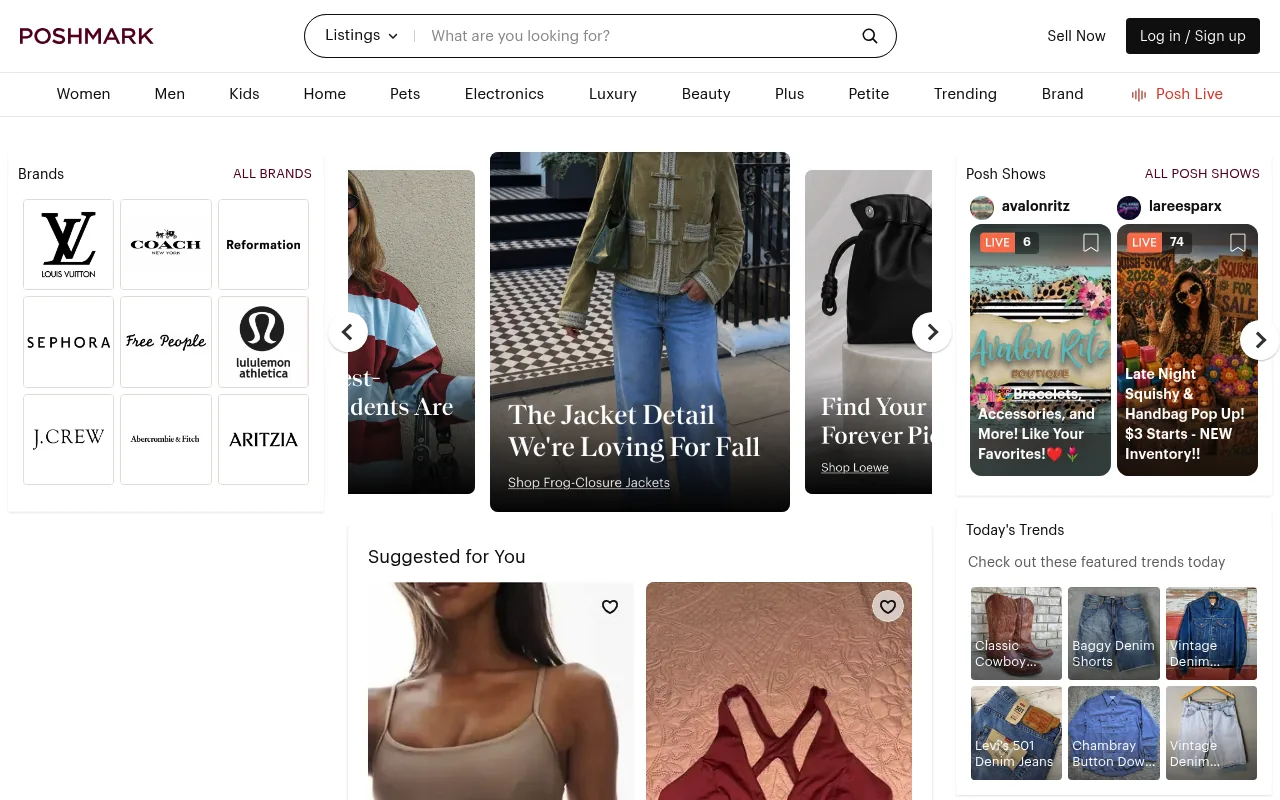
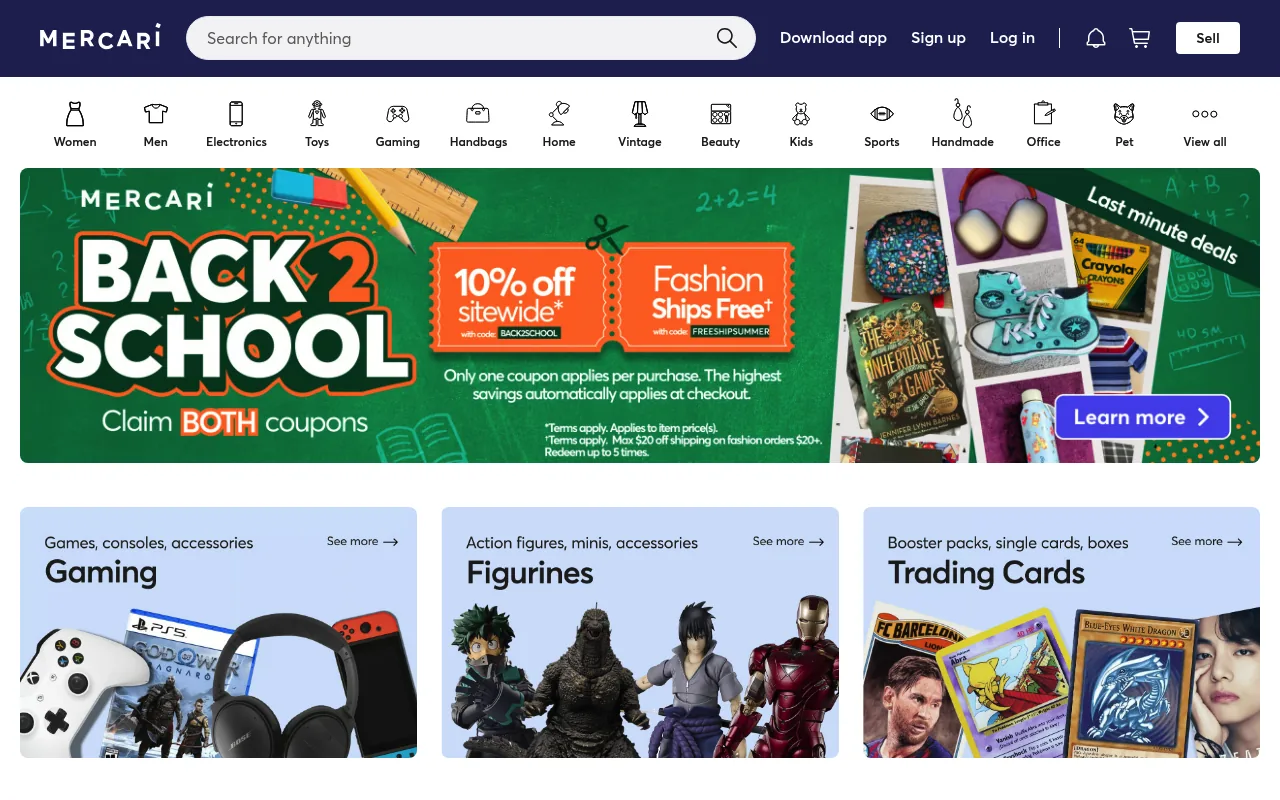
A well-documented pattern in resale: sellers who list the same item on three or more platforms report 40% to 60% faster sell-through than single-platform sellers, since each marketplace has its own search traffic and its own buyer habits. Cross-listing takes more admin work (updating stock everywhere when something sells), but it's usually worth it for anything above a basic starter volume.
Your Own Website (where you actually build a brand)
Marketplaces are great for your first sales. They're a weak place to build something that's actually yours, since you don't own the customer relationship, you're bound by their fee structure and rules, and you can't build repeat buyers into an email list or a following. Once you have a real niche and a few dozen sales behind you, a simple website of your own becomes worth setting up.
You don't need anything complex. You need product photos (which you already have from Step 5), a clear "Buy" button, and a checkout that doesn't scare people off.
The main options in 2026, honestly ranked for a first-time secondhand seller:
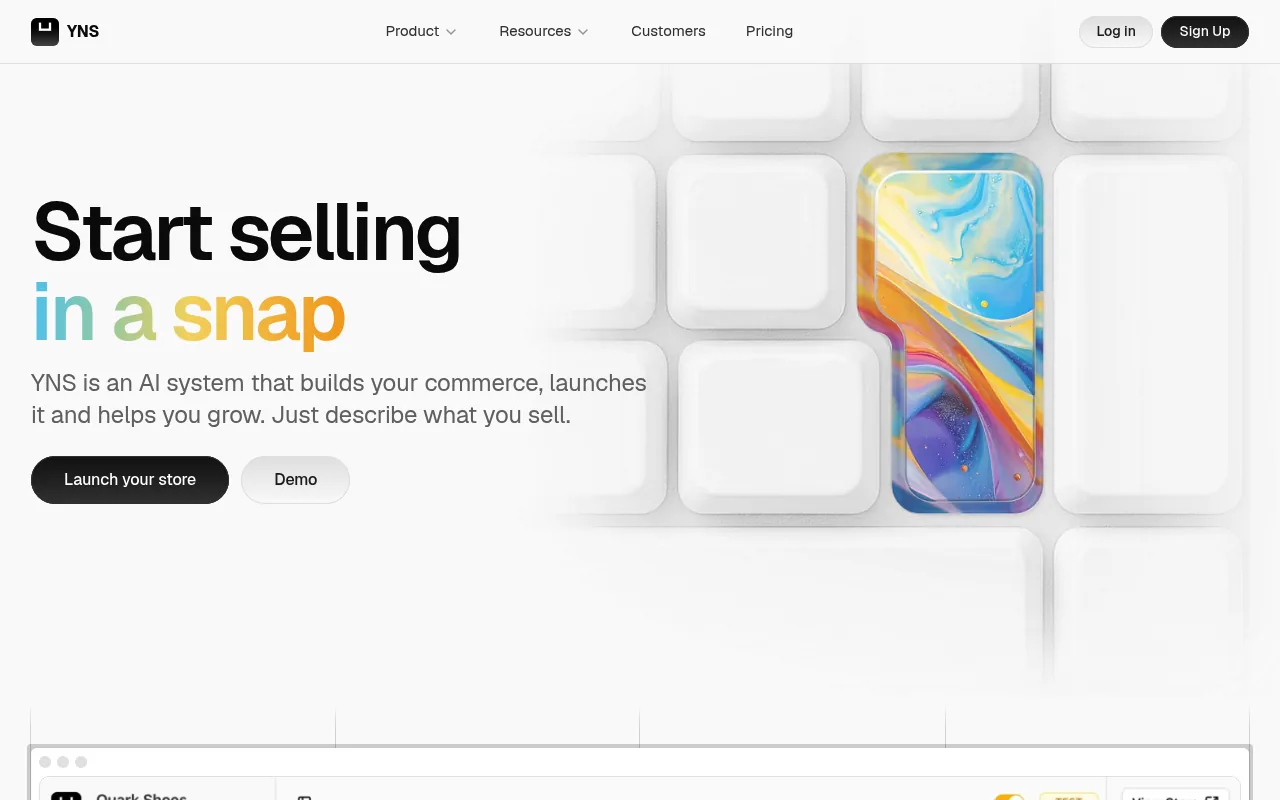
- Your Next Store (us, to be upfront) is the simplest way to get a modern-looking store online without becoming a tech person. Starts at $25/month on the yearly plan, with no extra fees per sale beyond standard card processing. An AI helper builds the store with you, and search, reviews, and email are already built in, so you're not bolting together a dozen paid plug-ins for a one-person resale shop.
- Shopify is the safe, well-known middle ground. $39/month, and just about every tool you'd want (size charts, reviews, email) has a plug-in. The tradeoff: those plug-ins add up to another $200 to $500/month once you're running at real volume, and Shopify takes a small extra fee on every sale unless you use their own payment processor.
- Squarespace or Wix are cheap to start and very visual, fine for a small first collection of listings. Most resellers who grow past a hobby outgrow them within a year.
- Instagram plus a payment link. If your niche already has an audience on Instagram, you can post items, take orders in DMs, and use a simple Stripe payment link as checkout. It's manual and it costs $0. Graduate to a real site once tracking inventory in your DMs stops being manageable.
Honest recommendation for 90% of first-time resellers: start on one or two marketplaces on day one, since that's the fastest route to your first sale and to learning what your niche actually wants. Set up a simple website of your own once you have a real customer base and want to keep more of each sale, build an email list, and stop being at the mercy of a marketplace's fee changes and policy shifts.
No extra fees per sale. A modern website for your resale shop, ready in minutes.
A Physical Space (the traditional route, and why it's a bigger commitment)
A brick-and-mortar thrift shop is the model most people picture when they hear "thrift store," and it's a legitimate business, but it's a meaningfully bigger commitment than everything above. A retail lease, insurance, a point-of-sale system, and typically at least part-time staff push realistic startup costs into the $20,000 to $100,000 range before you've sold a single item, largely driven by the lease deposit, buildout, and initial fixtures.
If a physical space is genuinely part of your plan (a storefront gives you walk-in donation traffic, foot-traffic sales, and a community presence that's hard to replicate online), the honest sequence is to prove your niche and pricing online first, the way this guide lays out, and then use those real sales numbers to negotiate a lease and secure financing with actual evidence instead of a guess. A local weekend pop-up or a table at a flea market is a much lower-risk way to test the in-person side before signing a year of rent. Our guide to opening a retail store walks through the lease, licensing, and POS decisions in more depth once you're ready for that step.
Step 7: Pick One Place to Get Noticed
New resale businesses almost always win on exactly one channel in their first year, then expand. The beginner trap is trying to do everything at once and doing none of it well.
Your options, honestly:
- Instagram and TikTok (free, slow, effective). Resale content performs unusually well because "thrift haul" and "come thrifting with me" formats are genuinely popular. Works if you can post 3 to 5 times a week for 6 to 12 months before it compounds. Most people quit at month three. Don't be most people.
- Local flea markets and pop-up events. The most underrated channel for new resellers. A weekend table can move $200 to $800 of inventory, lets you meet your actual buyers face to face, and gives you content to post that week.
- Facebook Marketplace and local buy-sell groups. Zero fees, local pickup, and works well for anything too bulky or heavy to ship affordably, like furniture and home goods.
- Cross-listing on multiple marketplaces (see Step 6). Not technically a "marketing channel," but for resale specifically, it functions like one: more search surfaces means more buyers find you without any extra work per platform.
- Email. The most profitable channel once you have repeat customers, especially useful the moment you have your own website. Collect emails from your first sale onward.
- Google and SEO. Slow (6 to 12 months) but powerful if your niche has people searching for something specific, like "vintage Levi's 501 men's 32x30" or "mid-century walnut coffee table." Worth building into your website's product titles from day one.
Pick one main channel and one backup. Run both for six months. Add a third only when the first two are actually making you money.
What It Actually Costs to Start a Thrift Business in 2026
The real-world numbers, pulled from cost breakdowns and industry data from ZenBusiness, B-Stock, and the ThredUp Resale Report:
| Your approach | Upfront cost | Monthly spend | What you get |
|---|---|---|---|
| Weekend side hustle | ~$200 | ~$30 | Thrift-sourced inventory, listings on 1-2 marketplaces |
| Serious solo reseller | ~$1,000 | ~$150 | Regular thrift + one liquidation pallet, your own simple website, cross-listed |
| Growing resale business | ~$5,000 | ~$600 | Multiple liquidation pallets, a helper for photography/listing, paid ads, storage space |
| Physical storefront | $20,000–$100,000 | $3,000+ | Retail lease, POS system, staff, walk-in donation intake |
Two honest warnings hidden in that table:
- A physical storefront is a real retail business, not a bigger version of online reselling. It comes with a lease, insurance, and staffing obligations that don't go away in a slow month. Prove your model online first.
- The $200 weekend version is the only one where you genuinely can't lose much. Every row above it has real capital at risk, whether that's a liquidation pallet that underperforms or a lease you're locked into.
If your plan depends on every pallet being a winner, your plan is wrong. Budget for the fact that some sourcing trips and some pallets simply won't pay off, and price the rest accordingly.
The resellers who last aren't the ones with the best eye for a bargain. They're the ones who price honestly, photograph like it matters, and pick one channel to actually win on. Do those three things and the treasure hunting takes care of itself.
FAQ
How much money do I need to start a thrift or resale business?
As little as $200 to $500 if you start by thrifting and estate-sale hunting and list on free marketplace accounts. A serious solo operation with a wholesale liquidation pallet and your own website runs closer to $1,000 to $2,000. A physical storefront is a different category of business entirely, typically $20,000 to $100,000 once you account for a retail lease, buildout, insurance, and a point-of-sale system.
Do I need a business license to resell secondhand items?
For casual, low-volume selling, most people start without formal registration and add it once sales become regular income. Once you're sourcing intentionally and selling as a business, register as an LLC or sole proprietorship ($50 to $500 depending on your state) and get a resale certificate (also called a seller's permit) from your state, which lets you buy wholesale inventory without paying sales tax on it upfront and is typically required to bid on liquidation pallets. Check your state and city's rules for home-based business licenses if you're storing or processing inventory at home.
What's the best place to sell secondhand items online for a beginner?
Start with one or two marketplaces that match your niche: Poshmark for fashion, eBay for broad categories and collectibles, Depop for a younger streetwear audience, Facebook Marketplace for bulky local items. Marketplaces bring you buyers immediately. Add your own website once you have a real customer base and want to keep more of each sale.
How do I price thrifted items so they actually sell?
Use the 3x rule as a starting point (price at roughly 3 times what you paid), then check recent sold listings, not asking prices, for the same or similar items and adjust to the median of the last 10 comparable sales. If comps and the 3x rule disagree, trust the comps. As a rough floor, an item generally isn't worth individually listing online unless it can sell for at least $15 to $20 after fees.
Should I start with a physical thrift store or sell online first?
Sell online first, almost always. It costs a fraction of a physical lease, lets you test your niche and pricing with real sales instead of a business plan, and doesn't lock you into a year of rent before you know if the model works. A physical storefront, pop-up, or flea market table is a great next step once you have proof your niche sells, not the first move.
Is reselling secondhand goods actually profitable?
Yes, with the right sourcing and pricing discipline. Items sourced through thrifting typically cost $1 to $25 and resell for 3 to 5 times that after accounting for fees and shipping, which is a healthy margin by retail standards. The businesses that struggle are usually the ones pricing by guesswork instead of checking sold comps, or the ones who sunk cash into a liquidation pallet or a lease before validating that their niche actually sells.
What should I do with items that don't sell?
Bundle similar low-value items into a single lower-priced lot listing, mark them down in stages (a common approach is 20% off after 30 days, 40% off after 60 days), or donate them for the tax deduction and move on. Holding onto slow-moving inventory hoping for a perfect buyer ties up cash and storage space you could put toward your next sourcing trip.