How to Start Dropshipping in 2026: A Realistic Guide
 Jakub Neander
Sep 3, 202611 min read
Dropshipping is the lowest-capital way to test a product idea: you never buy inventory, you never pack a box, and you can be live in a weekend. It's also the business model with the thinnest margins and the highest ad-spend risk, and most people who try it quit within a year. This guide covers both halves honestly: how the model actually works, what it costs in 2026, and the specific mistakes that separate the stores that make it to month twelve from the ones that don't.
What Dropshipping Actually Is
Dropshipping is a retail model where you sell a product without holding it. A customer orders from your store, you forward that order to a supplier, and the supplier ships it directly to the customer under your branding. You never see, touch, or warehouse the item. Your job is picking what to sell, pricing it, and getting people to your store; the supplier's job is manufacturing, storing, and fulfilling.
The diagram below shows the full loop. It's simpler than most tutorials make it sound, and simpler is exactly why the model is so easy to start and so easy to get wrong.
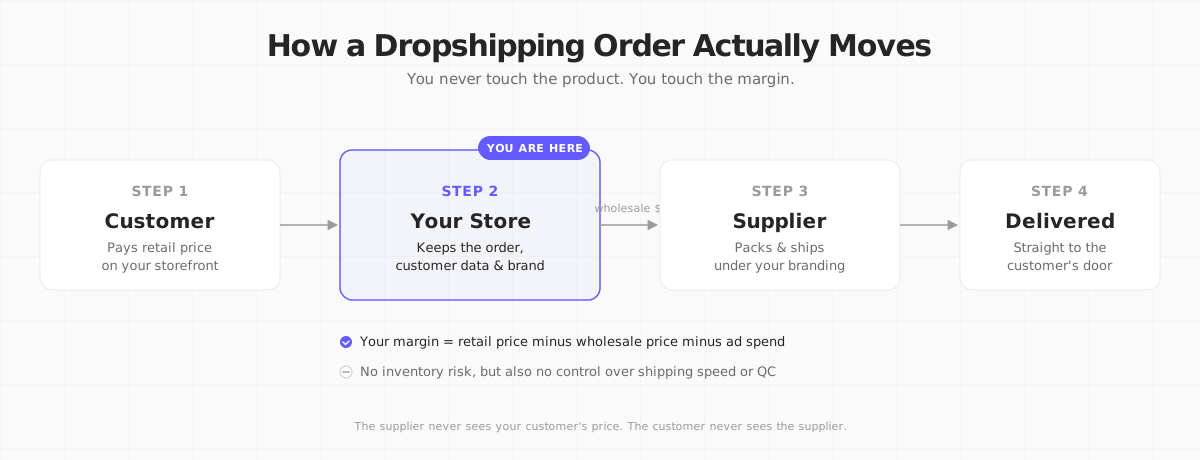
Because you're not tying up cash in stock, your downside on any single product is small. But that same lack of inventory means you have no control over packaging quality, shipping speed, or stockouts, three things customers judge you on even though a supplier three time zones away actually controls them.
Is Dropshipping Still Worth It in 2026?
Yes, but the easy version of the pitch (find a "winning product," run some ads, retire in six months) has been dead for years. What's changed:
- Margins have compressed. Most general dropshipped goods run 10-30% gross margin after supplier cost, with successful operators clustering around 15-25% once you also account for ad spend. Specialty categories do better: pet products average around 60% margin, and private-label jewelry can run 45-80%.
- Ad costs are higher, and so is the bar for creative. Meta and TikTok ad auctions reward genuinely good video and UGC-style content now, not a stock product photo and a countdown timer.
- Customers are pickier about shipping speed. (If you also ship some stock yourself, our shipping strategy guide covers how to price it.) A 3-week AliExpress shipping time, which was tolerable in 2018, reads as a red flag in 2026. Suppliers with US or EU warehouses (Zendrop, CJdropshipping's US line, Printful) exist specifically to fix this.
- Success rates are still low. Most estimates put first-year survival for new dropshipping stores at 10-20%, roughly in line with small retail businesses generally. The stores that make it usually treat it as a real merchandising business, not a get-rich-quick side hustle.
None of that means don't do it. It means budget for it like a real business: a few hundred dollars for testing ads, realistic margin math before you pick a product, and a plan for what happens if your first three product tests fail (they probably will).
Step 1: Pick a Niche You Can Actually Defend
"General store" dropshipping, where you list a random assortment of trending AliExpress products, is the version most likely to fail. It has no repeat customers, no brand, and no defense against the next person who finds the same product on the same supplier feed.
Pick a niche narrow enough that you can become the obvious choice for one type of buyer:
- Passionate micro-audiences beat broad categories. "Pickleball accessories" beats "sporting goods." "Cat enrichment toys" beats "pet supplies."
- Look for products with a story, not just a use case. Items that are hard to explain in a single product photo (a training tool, a niche hobby part) support content marketing and organic reach in a way commodity items don't.
- Check for repeat-purchase potential. Consumables and accessories (refills, replacement parts, seasonal variants) turn a one-time buyer into a subscriber-shaped customer, which is where the real margin shows up over a year.
- Validate demand before you commit, using Google Trends for multi-year interest, and a specific subreddit or Facebook group to confirm real people are already discussing the problem your product solves.
If you're choosing between dropshipping and other low-capital models entirely, our broader guide to starting an online store walks through that decision before you commit to a niche.
Step 2: Choose and Vet Suppliers
Your supplier is your factory, warehouse, and shipping carrier rolled into one, so this decision matters more than your store's theme ever will. A few well-known options, each with a different tradeoff:
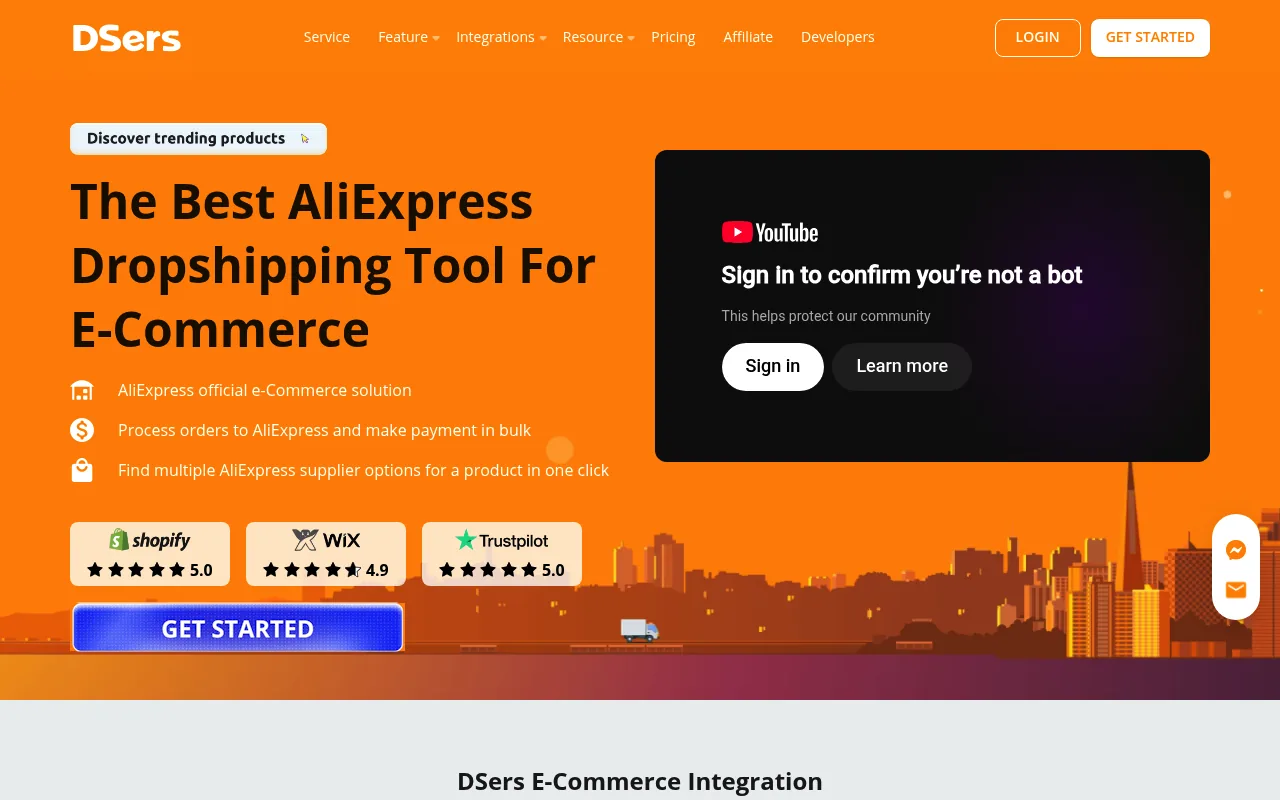
DSers automates order placement to AliExpress suppliers in bulk, which is the standard low-cost entry point. Shipping from China typically runs 1-3 weeks even with ePacket-style options, so set expectations with customers accordingly.
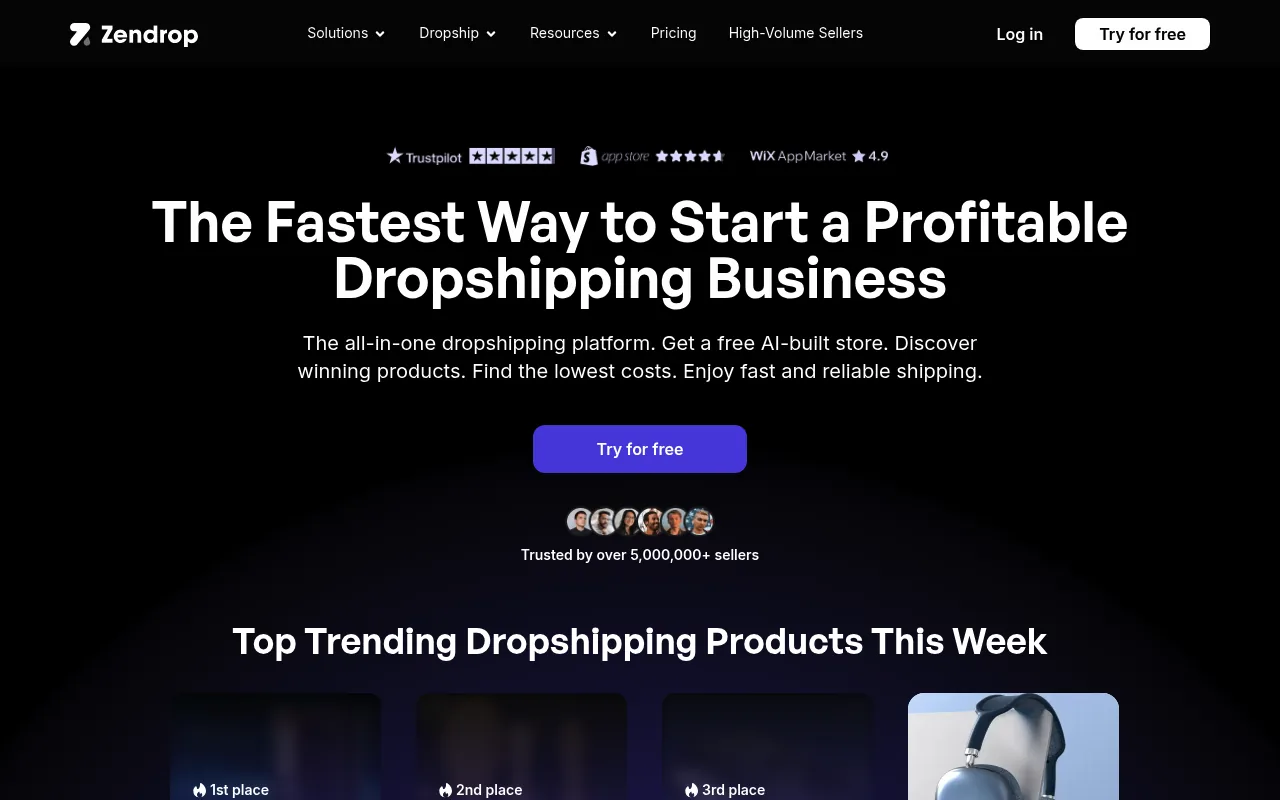
Zendrop and similar US/EU-warehouse suppliers cut shipping to 3-7 days for a subset of catalog items, at a higher per-unit cost. For anyone selling to US or EU customers, this tradeoff is usually worth it once you have proven demand.
Printful and other print-on-demand suppliers are a different flavor entirely: no upfront design catalog, you supply the artwork and they manufacture on order. Margins are often better here because you're selling design, not a commodity item anyone can source.
Whichever you pick, before listing a single product:
- Order a sample yourself. Photos lie. You need to hold the actual item and see the actual packaging.
- Ask about defect and return rates in writing. A supplier who won't answer this is telling you the answer.
- Confirm production and shipping times separately. "5-day shipping" often excludes 3-5 days of production you weren't told about.
- Check for multiple suppliers per product where possible, so one factory's stockout doesn't take your bestseller offline.
Step 3: Price for a Real Margin, Not a Vibe
A common beginner mistake is doubling the supplier cost and calling it a price. That ignores ad spend, payment processing, returns, and the platform fee you're paying somewhere. A more honest formula:
| Cost component | Typical range |
|---|---|
| Supplier (wholesale) cost | Your baseline |
| Payment processing | ~2.9% + $0.30 per transaction |
| Paid ad spend (blended CAC) | 15-40% of revenue for a new store |
| Returns and refunds | 2-8% of revenue depending on category |
| Target markup over wholesale | 2.5-4x, higher for niche/branded goods |
If a 3x markup makes your product uncompetitively priced against the exact same item on Amazon or Temu, that's a signal to pick a different product, not to shrink your margin until the math stops working. The stores that survive their first year are usually the ones selling something a customer can't trivially price-compare, not the ones racing to the bottom on a commodity phone case.
Step 4: Build the Store
Your store needs to load fast, look credible, and make checkout painless, three things that directly affect conversion rate regardless of what you're selling. This is also the step where "dropshipping tutorial" content gets the most vendor-biased, so take the specific platform recommendations (including ours) with appropriate skepticism and check that the fundamentals hold: real product images (not just supplier stock photos), clear shipping-time expectations set on the product page itself, and a checkout that doesn't force account creation.
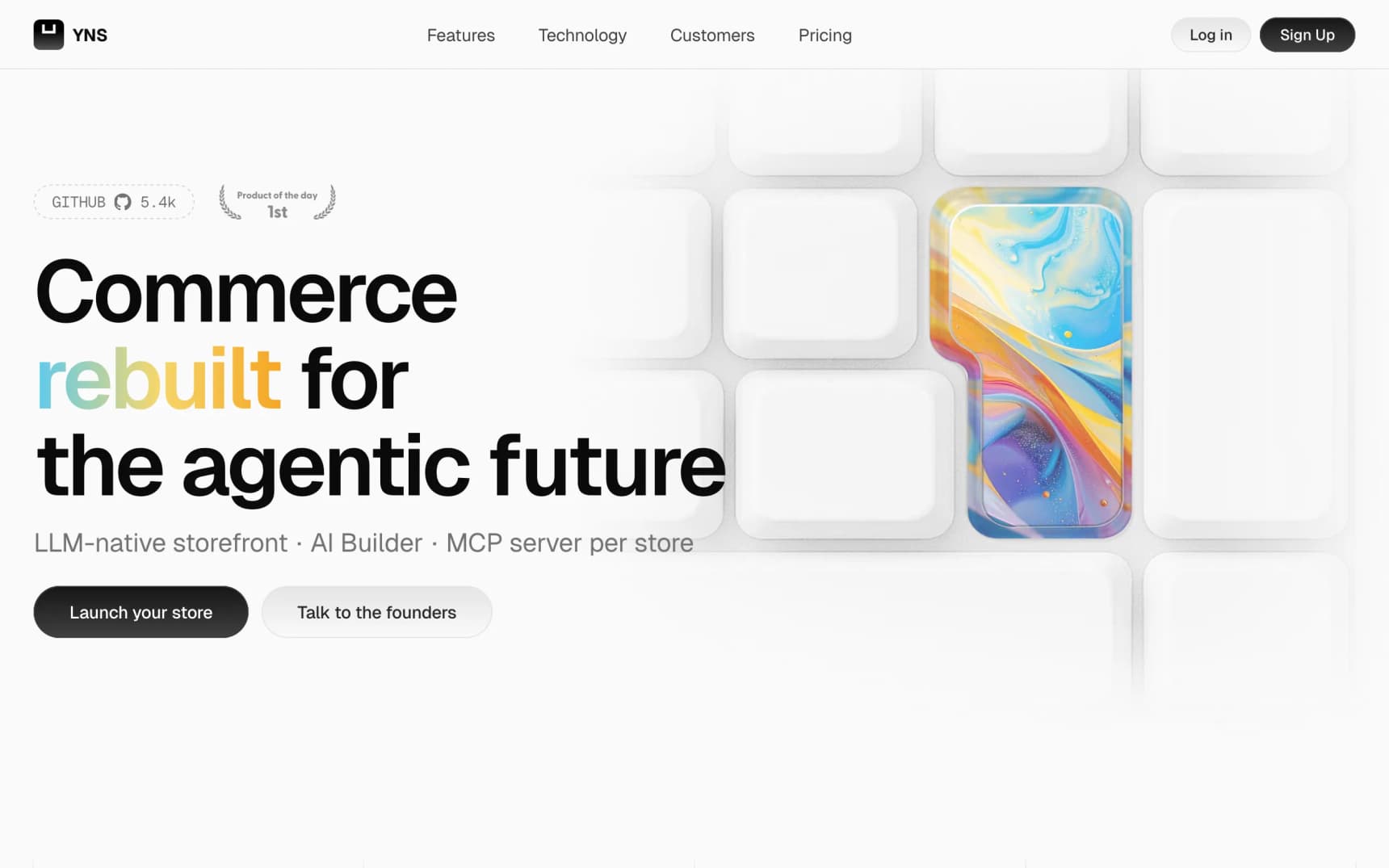
This is one of the places our own product, Your Next Store, is relevant: it's built on Next.js with server components and Partial Prerendering, so pages that would otherwise load slowly on a typical theme-based storefront load fast by default, which matters directly for ad-driven traffic that bounces in seconds if the page stalls. You describe what you're selling and the AI builder scaffolds a storefront from there, then you connect a supplier feed the same way you would on any platform. If you'd rather run your own infrastructure, the open-source storefront template is free and self-hostable, though note it's the frontend only and still needs a commerce backend behind it.
Whatever platform you use, set up Stripe (or your processor of choice) before you launch ads, not after. Our guide to selling online with Stripe covers the setup if you're doing it for the first time.
Step 5: Handle the Legal and Compliance Basics
Dropshipping is legal everywhere it's commonly done, but a few rules trip up first-timers:
In the United States, the FTC's Mail, Internet, or Telephone Order Merchandise Rule requires you to have a reasonable basis for any shipping time you advertise, or default to 30 days if you don't state one. If a supplier delay means you can't hit that window, you're required to notify the customer and offer a refund or the option to keep waiting. This is the single most commonly violated rule in dropshipping, precisely because supplier shipping times are the one thing you don't fully control.
In the EU and UK, the Consumer Rights Directive gives customers a 14-day right of withdrawal on most goods bought online, separate from any return policy you write yourself. You can't opt out of it by writing "all sales final" in your terms. If you're shipping into the EU/UK from outside, also budget for import VAT handling, since customers getting hit with a surprise customs bill is one of the fastest ways to generate chargebacks and bad reviews.
Beyond that: register a real business entity once you have consistent revenue (not before), keep supplier invoices for tax purposes, and make sure your product descriptions match what actually ships, since "false origin of country" and similar deceptive-advertising claims are an active FTC enforcement area as of 2026.
If you're planning to sell to customers outside your home country from day one, our guide to selling internationally covers tax, shipping, and localization in more depth than fits here.
Step 6: Market Without Burning Your Test Budget
Most new dropshipping stores fail from marketing spend, not product choice. A realistic approach:
- Start with a fixed test budget per product, not per campaign. $200-500 to get statistically meaningful signal on whether a product converts, before you scale spend up.
- Organic content is not optional anymore. A short-form video that actually shows the product solving a specific problem consistently outperforms static image ads in 2026's auction, and it's free to produce.
- Track contribution margin per order, not just ROAS. A campaign with a 3x return on ad spend can still lose money once you subtract supplier cost, processing fees, and returns.
- Kill losers fast, and be honest about what "losing" means. If a product isn't profitable after a real test (not two days and $40), move to the next one instead of "optimizing" a fundamentally bad product-market fit.
Common Mistakes That Kill Dropshipping Stores
- Choosing a product because it's trending, not because it has margin. Trending means everyone else found the same supplier feed you did.
- Ignoring shipping time until customers complain. By then you've already generated the refund requests and the chargebacks.
- Skipping the sample order. The fastest way to discover a supplier's real quality is to be their customer once, before your customers are.
- Underpricing to compete with marketplaces you can't actually compete with. You will lose a price war against Temu. Compete on curation, speed, or a niche they don't serve instead.
- Treating it as passive income. Supplier communication, customer service, and creative testing are ongoing work, not a one-time setup.
FAQ
How much money do I need to start dropshipping in 2026?
Realistically $500-2,000: a few hundred dollars for a storefront platform and domain, $200-500 for initial ad testing per product, and a buffer for sample orders and refunds while you find product-market fit. You can technically start for less, but under-testing a product usually just means you fail slower without learning why.
Is dropshipping still profitable in 2026?
Yes, for operators who treat it as a real merchandising business: a defensible niche, verified suppliers, and disciplined ad testing. Average net margins after ad spend tend to land in the 10-20% range, with niche and print-on-demand categories running higher. It's not the passive, guaranteed model some course sellers advertise.
Do I need an LLC to start dropshipping?
Not on day one in most jurisdictions. Many operators start as a sole proprietor to validate demand cheaply, then form an LLC (US) or equivalent limited-liability entity once revenue is consistent, mainly for liability protection and cleaner taxes. Check your specific state or country's rules, since requirements (and the point at which you legally must register) vary.