How to Start an Essential Oils Business in 2026
 Jakub Neander
Aug 31, 202612 min read
Essential oils are one of the friendliest products a beginner can start selling: a bottle costs pennies to fill, customers already know what they're buying, and the wellness market keeps growing. They're also one of the easiest products to get sued or shut down over, because the exact same bottle of lavender oil is a harmless cosmetic in one sentence and an illegal, unapproved drug in the next, depending only on what you say about it. This is the honest playbook for how to start an essential oils business in 2026: seven steps, in the right order, with real sourcing options, real costs, and the regulatory gotchas that have already earned two of the industry's biggest names FDA and FTC warning letters.
Total beginner? This is written for you. Every rule and bit of jargon gets explained in plain English the first time it shows up.
Not in the US? Read Step 4 closely either way. The claims rules in the first half of that step apply almost everywhere in some form. The second half covers the EU and UK, where the rules aren't just "a local equivalent" of the US ones: they require a specific safety dossier and a named legal person before you can sell at all, which is a genuinely different regime, not a lighter or heavier version of the American one.
How to Start an Essential Oils Business: The 7 Steps, in Order
- Pick a very specific person or problem. Not "essential oils for everyone." One use case, or one kind of customer.
- Get real people to say "yes, I'd buy this" before you order bulk oils.
- Decide how your product actually gets made: resell pure oils, formulate your own blends, go private label, or commission a custom formula.
- Do the regulatory work. What you say about your oils determines which legal category you're in, and the EU/UK add a requirement the US doesn't have.
- Set the price so the math works.
- Set up a simple website where people can actually buy.
- Pick one place to get noticed.
Now the long version.
Step 1: Pick a Very Specific Person or Problem
The fastest way a new essential oils business fails is trying to be "for everyone." Search "lavender essential oil" on any marketplace and you'll see thousands of nearly identical amber bottles at nearly identical prices. Researchers size the global essential oils market anywhere from roughly $15 billion to over $30 billion in 2026 depending on methodology, which tells you the category is real and growing, not that a generic bottle of lavender oil is a business.
You win by being the obvious choice for one specific person or one specific use case, not a slightly nicer version of what already exists. Good answers look like this:
- A specific aesthetic and use case the mass market ignores. Vitruvi, founded by siblings Sean and Sara Panton in 2014, built its entire brand around minimalist, ceramic-diffuser home-scenting for people who wanted their living room to smell intentional, not like a candle aisle. That single, consistent point of view got it stocked at Nordstrom as the first essential oil brand the retailer carried, and it later raised $4.5 million to keep building on that same design-first niche.
- A safety-specific audience the category talks past. Most diffuser blends on the market say nothing about pets, but plenty of oils (citrus, in particular) aren't safe to diffuse around cats. Product lines like animalEO, formulated by a veterinarian specifically for species-appropriate dilution, exist because "safe for the whole household" is a real, underserved claim when it's actually true.
- A single job the oil does, not a vague wellness story: a roll-on marketed specifically for a work-from-home focus ritual, or a blend sold specifically for a bedtime wind-down routine, sells better than "essential oils for relaxation and wellness."
The test: if a big-box wellness aisle could put your exact bottle on a shelf tomorrow without changing anything about who it's for, your idea isn't sharp enough yet. If you're still deciding whether essential oils are the right category to start in at all, our broader guide to starting an online store walks through the customer and category decision first.
Step 2: Get Real People to Say "Yes" Before You Buy Bulk Oils
You don't need a case of 100ml bottles to find out if your blend idea is good. You need to find out before you buy a case of 100ml bottles, especially once you know (Step 3) that formulating your own line means testing ratios over several batches before one feels right.
Three cheap ways to test demand:
- A one-page site with a waitlist or pre-order. Show two or three planned blends, a real photo of a test bottle, and a specific description of who it's for. Spend $100 to $200 on Instagram or TikTok ads sending your target customer there. If fewer than roughly 1 in 50 visitors sign up, the idea isn't landing yet.
- Give away small samples to 15 to 20 people in your target group. Ask two questions only: "Would you actually buy this?" and "What would you change?" A polite "smells amazing!" doesn't count. You want the person who says the scent fades in an hour.
- A local market or pop-up table. Let people smell the actual blend before they buy. Watch what they pick up, not just what they say.
This step costs a weekend and maybe $100 in sample bottles. Skipping it can cost you a full production run of a scent nobody wanted.
Step 3: Decide How Your Product Actually Gets Made
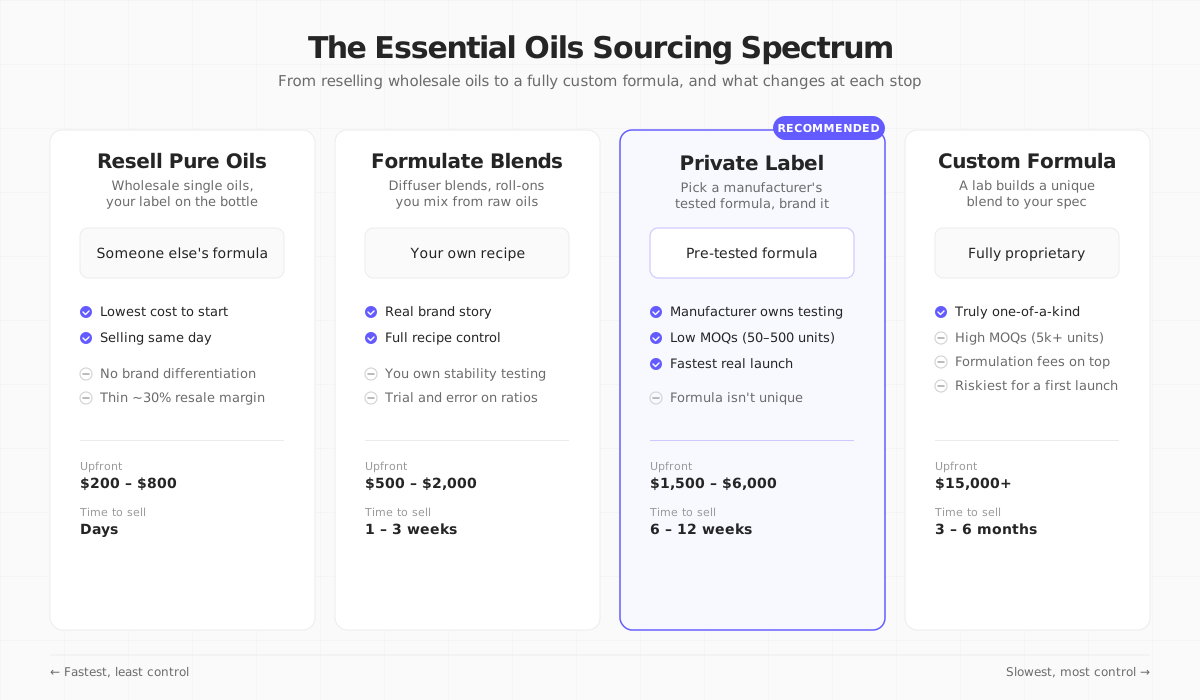
This is the decision that shapes your cost, your timeline, and how much of the recipe is genuinely yours. There are four real paths.
Resell pure wholesale oils
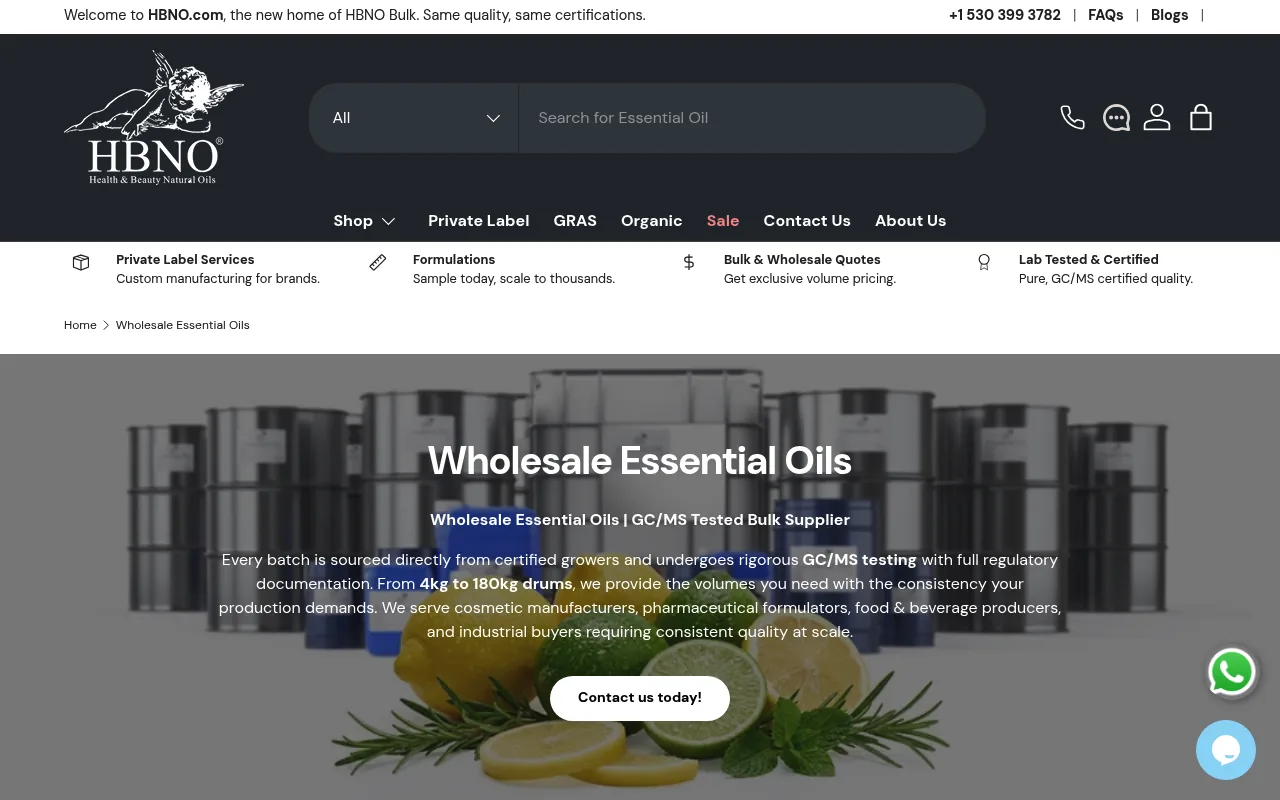
You buy single, unblended essential oils in bulk from a wholesale supplier and put your label on the bottle. Suppliers like HBNO and Edens Garden sell single oils by the kilo with batch-specific GC/MS reports (gas chromatography-mass spectrometry, the lab test that confirms an oil's actual chemical makeup matches what's on the label, not a synthetic substitute). This is the fastest, cheapest way to a sellable product, and typical reseller margins run around 30% at retail. The trade-off: you're not differentiated. Anyone can buy the same oil from the same supplier.
Formulate your own blends
Instead of reselling single oils, you combine them into original diffuser blends or roll-ons, like a "Focus" blend of rosemary and peppermint, or a "Wind Down" roll-on of lavender and chamomile in a carrier oil. This is where a real brand starts to exist, since the recipe is yours. It also means you own the ratio testing, the shelf-life and stability of the blend, and the safety diligence on every oil you combine (some oils interact or become photosensitizing in combination, which a formulator needs to check, not guess).
Private label
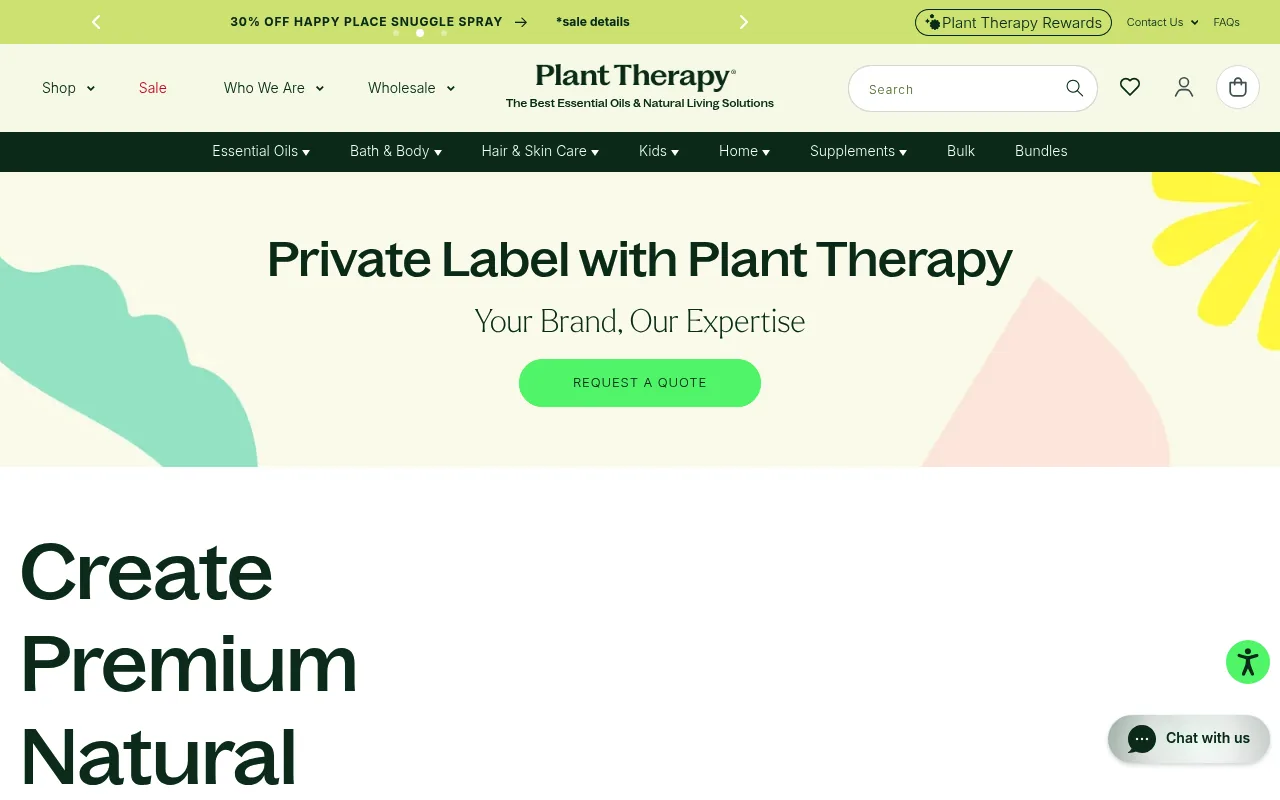
A manufacturer already has tested, pre-formulated blends. You pick from their catalog (or a lightly customized version) and put your branding on it. This is the middle ground most first-time founders should start from: the manufacturer has already done the ratio testing and stability work, and MOQs at beginner-friendly suppliers like Plant Therapy run as low as 250 units per SKU, with some competitors accepting orders as small as 50 units. Landed cost for a private-label 10ml bottle (oil, glass bottle, dropper or roller, printed label) typically runs roughly $2 to $4 depending on packaging.
Custom formulation
A lab develops a completely unique blend to your exact spec. This is how you end up with a truly proprietary product, and it's how beginners most often overspend: minimums at custom aromatherapy manufacturers commonly start in the low thousands of units per SKU, plus formulation and stability-testing fees on top of the product itself.
| Path | Upfront cost | Time to sellable inventory | Formula control |
|---|---|---|---|
| Resell pure oils | $200–$800 | Days | None (someone else's oil) |
| Formulate your own blends | $500–$2,000 | 1–3 weeks (ratio testing) | Full |
| Private label | $1,500–$6,000 | 6–12 weeks | Low to medium |
| Custom formulation | $15,000+ | 3–6 months | Full, proprietary |
Most first-time founders should start with private label, not a fully custom formula. The manufacturer has already tested the blend and knows how it ages, which means your first launch is about validating a brand and an audience, not debugging a recipe. Move to your own formulation or a custom lab blend once you know which scent story actually sells.
Step 4: Do the Regulatory Work
This is the step that trips up more essential oil founders than any other, and it's the one place where the rules genuinely diverge by country, not just by degree.
The US: it's about what you say, not what's in the bottle
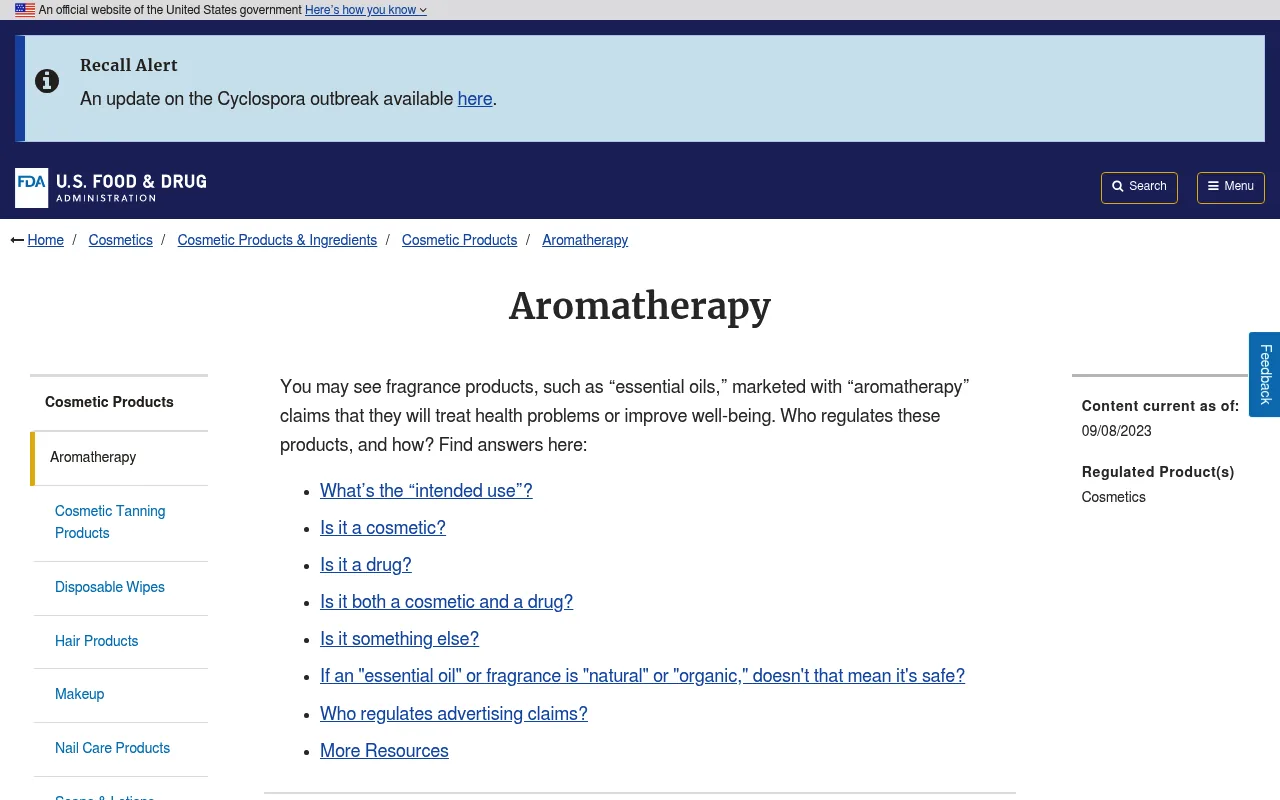
In the US, the FDA doesn't classify a product by ingredient, it classifies it by intended use, and intended use is judged almost entirely by your claims. The FDA's own guidance on aromatherapy puts it plainly: a product "intended only to cleanse the body or to make a person more attractive" is a cosmetic, while claims that a product will "relieve colic, ease pain, relax muscles, treat depression or anxiety, or help you sleep" are drug claims. The moment you make a therapeutic claim, your bottle of lavender oil legally becomes an unapproved new drug, no matter how natural the ingredient is.
This isn't a hypothetical. In 2014, the FDA sent Young Living a warning letter after distributors promoted its oils for treating conditions including Ebola, Parkinson's, and cancer. In 2023, the FTC charged three doTERRA distributors with making unfounded claims that the company's oils could treat or prevent COVID-19, each settling for a $15,000 penalty. Both companies are legitimate, large businesses; the claims came from what individual sellers said in webinars and on social media, not from the core product. That's the real lesson: your labels can be perfectly compliant while a single Instagram caption undoes them.
Practically, this means:
- Never say "treats," "cures," "heals," or name a specific medical condition on your label, product page, or social posts, even in a customer testimonial you repost.
- "Promotes relaxation" and "a calming scent" are fine. "Relieves anxiety" or "eases pain" are not: those are drug claims.
- Cosmetics don't need FDA pre-approval, but you're fully responsible for safety and honest labeling under the same MoCRA framework our skincare brand guide covers in more detail, including a small-business exemption from facility registration and product listing for brands averaging under $1 million a year in cosmetic sales.
The EU and UK: a mandatory safety file before you sell anything
This is where essential oils genuinely diverge from a lot of other starter categories, and it's not optional paperwork you can skip as a small brand the way MoCRA's exemption lets you in the US.
Any cosmetic product placed on the EU or UK market, roll-ons, blends, diffuser oils marketed for skin contact included, needs, under EU Regulation (EC) No 1223/2009:
- A Cosmetic Product Safety Report (CPSR): a formal safety assessment, carried out by someone with a recognized qualification in toxicology, pharmacy, or medicine, covering every ingredient and the finished product.
- A Responsible Person, a company or individual legally based in the EU (or in the UK, for the UK market) who takes on legal liability for the product's safety, holds the Product Information File, and submits the product notification, via the SCPN portal in Great Britain.
- Allergen labeling. Essential oils are unusually allergen-dense: common constituents like limonene, linalool, geraniol, and eugenol occur naturally in citrus, floral, and clove-type oils and must be declared on the label above set thresholds, the same rule that applies to synthetic fragrance.
There is no small-brand exemption from the Responsible Person or CPSR requirement. A one-person Etsy shop selling roll-ons to customers in France needs exactly the same safety file as a large manufacturer. In practice, most beginners selling into the EU or UK use a private-label manufacturer or a compliance consultancy that already has a Responsible Person service bundled in, rather than building this from scratch.
If you plan to sell to EU or UK customers, confirm your manufacturer or a compliance service can cover the Responsible Person and CPSR before you launch there, not after your first sale. This is a launch blocker in a way the US small-business exemption simply isn't.
Insurance, everywhere
Product liability insurance for a small essential oils or aromatherapy business generally runs in a similar range to other small cosmetics brands, commonly cited around $500 to $2,000 a year for a $1 million policy, though your actual quote depends on your country, volume, and whether you formulate blends yourself or resell pre-tested private-label product. A single allergic-reaction or skin-irritation claim, which essential oils are genuinely prone to given how concentrated they are, can cost far more than several years of premiums. Don't skip it to save the monthly fee.
Step 5: Set the Price So the Math Works
The classic beginner mistake: "the grocery-store lavender oil costs $6, so I'll charge $10 and feel generous." That math rarely survives contact with real costs, because a mass-market bottle is filled on an industrial line at a scale you'll never match.
Here's a realistic breakdown for a private-label 10ml roll-on blend with simple label packaging:
| Cost component | $ per bottle |
|---|---|
| Oil blend, bottle, roller, and label (landed) | $3.25 |
| Card fee (Stripe, ~2.9% + $0.30) | $0.76 |
| Shipping to customer | $4.25 |
| Returns/damage reserve (~3%) | $0.48 |
| Marketing (~25% of revenue) | $4.00 |
| What you actually keep, selling at $16 | ~$3.26 |
That's about 20% net margin on a roughly 5x markup over landed cost, which lines up with why most experienced sellers in this category price at 3x to 5x their true per-unit cost, not the 2x a lot of beginners default to. To clear $3,000 from a first production run, you'd need to sell roughly 920 bottles, plus more to cover samples, photography, and any market or pop-up fees from Step 2.
Watch what happens at $12 (about 3.7x): profit per bottle collapses to around $0.49, since shipping and landed cost don't shrink just because the price does, meaning you'd need to sell over 6,000 bottles for the same $3,000. If the math doesn't work at your planned price, don't launch at that price. Simplify the packaging, raise the price, or find a lower-cost sourcing path before committing to a full production run.
Step 6: Set Up a Simple Website
By now you have a validated blend or two, real pricing math, and hopefully a waitlist or a few pop-up sales. Time to give people a place to buy beyond a folding table.
You don't need anything elaborate: honest product photos of the actual bottle, an ingredient list, and a checkout that doesn't scare people off.
The main options in 2026, honestly ranked for a first-time essential oils founder:
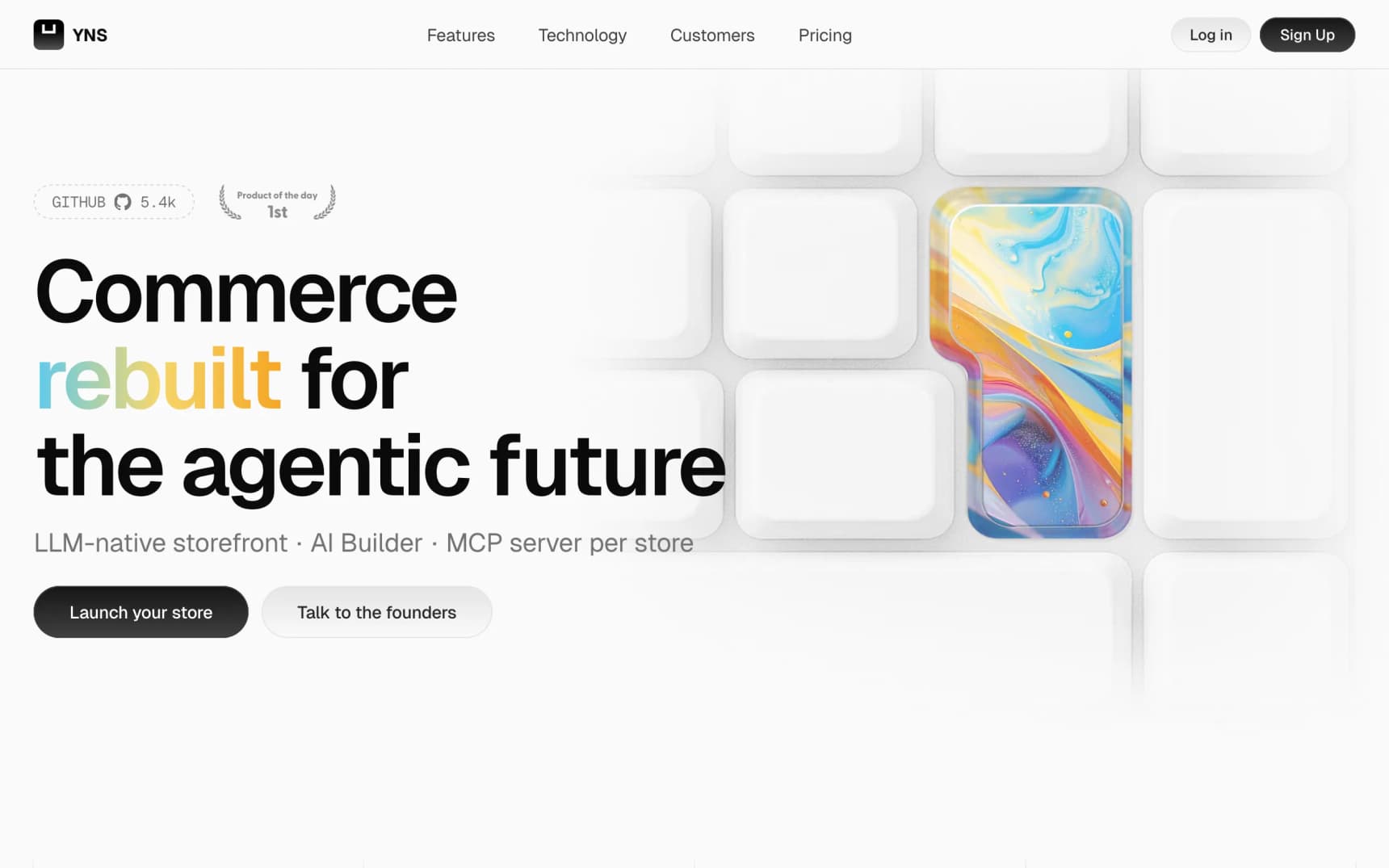
- Your Next Store (us, to be upfront) starts at $30/month, or $25/month billed yearly, with 0% platform transaction fees on every plan (Stripe's standard processing fees still apply). An AI-powered builder sets the store up with you, and product search, reviews, and email are already built in, which matters here since scent and use-case descriptions do a lot of the selling online that a customer would otherwise get from actually smelling the bottle in a shop.
- Etsy is a genuinely strong fit for small-batch blends and gives you built-in search traffic from people already shopping for exactly this kind of product. The trade-off is a 6.5% transaction fee plus listing and ad fees, and your customer thinks of themselves as an Etsy shopper first, your brand second.
- Shopify is the safe, familiar middle ground at $39/month, with an app for nearly anything (subscription refill boxes, scent-quiz product finders). Those apps add up fast, often another $200 to $500/month at real volume, and Shopify takes a small extra fee on every sale unless the customer pays with Shop Pay.
- Squarespace or Wix are cheap and visually easy for a first small drop, especially if your brand leans on photography and ritual-style storytelling. Most brands outgrow the commerce and inventory features within a year or two.
- Instagram or TikTok plus a payment link. If you're selling two or three blends to an audience you already have from pop-ups, you can DM-sell and check out with a Stripe payment link. Costs close to $0 and works until volume makes it unmanageable by hand.
Honest recommendation for most first-time founders: validate in person (Step 7's local channels) before investing heavily in a website, since letting someone smell the blend teaches you more in an afternoon than any analytics dashboard will in month one. Once you have a repeatable blend lineup, a simple site on YNS, Shopify, or Etsy earns its cost back quickly.
0% platform transaction fees on every plan. A modern storefront for your essential oils business, ready in minutes.
Step 7: Pick One Place to Get Noticed
New essential oils businesses that try to be everywhere at once (a full content calendar, wholesale outreach, paid ads, and a market circuit, all in month one) usually do all of them badly. Pick one, run it seriously, and expand from there.
- Local markets and pop-ups. Essential oils have the same unfair advantage soap and candles do: you can let a stranger smell the product and close the sale on the spot. A weekend table typically costs $20 to $75 for a farmers market day, more for a weekend craft fair.
- Instagram and TikTok content. Blend-mixing videos, "what's actually in this roll-on" ingredient breakdowns, and diffuser setup content perform well because scent is a visual, sensory category people like watching, even without smelling it.
- Wholesale to local spas, yoga studios, and boutiques. Once you can reliably fulfill 100+ bottles a batch, a sample and a one-pager to shops that fit your aesthetic can open real doors. Standard wholesale runs at roughly half your retail price, so revisit your Step 5 math at that price point first.
- Email, from day one. Collect every email you can, from waitlist sign-ups to pop-up customers. It's the highest-margin channel you'll have once people already know the brand.
- Paid ads, last. Cold-start acquisition for a commodity-adjacent product is expensive. Get an in-person following and organic content working first, then use ads to amplify what's already proven.
What It Actually Costs to Start an Essential Oils Business in 2026
Realistic ranges by how you source your product:
| Your approach | Upfront cost | Monthly spend | What you get |
|---|---|---|---|
| Resell wholesale single oils | $200–$800 | ~$100 | 3–5 oils, sellable same day, markets + Instagram |
| Formulate your own blends | $500–$2,000 | ~$200 | 2–3 original blends, full recipe control, a simple site |
| Private label | $1,500–$6,000 | ~$400 | 250–500 units per SKU, branded packaging, wholesale-ready |
| Custom formulation at volume | $15,000+ | $1,500+ | A truly proprietary blend, thousands of units, lab-backed testing |
Two honest warnings hidden in that table:
- The upfront cost is rarely what trips people up. The claims discipline is. A founder who nails their sourcing and pricing but writes "eases anxiety" on a product page can undo all of it with one FDA or FTC letter.
- Private label is not a "lesser" starting point. It gets a real, tested, sellable product into real hands in weeks instead of months, which is worth more early on than a fully proprietary blend nobody's tried yet.
The essential oil businesses that make it past year one aren't the ones with the most exotic blend on day one. They're the ones that picked a specific person or use case, tested demand before committing to a batch, understood exactly which claims turn a cosmetic into an unapproved drug, and, if they sell internationally, lined up a Responsible Person before the first EU or UK sale. In this category, the label is the product: get the wording right and the oil underneath barely has to try.
FAQ
How much does it cost to start an essential oils business?
Anywhere from $200 to $15,000+, depending on how you source your product. Reselling wholesale single oils can start around $200 to $800. Formulating your own blends typically runs $500 to $2,000 once you account for testing multiple ratios. Private label, the realistic middle ground for most first-time founders, runs $1,500 to $6,000 for an initial run across a few SKUs. Custom formulation with a lab starts at $15,000 and climbs quickly, driven by minimum order quantities and formulation fees rather than the oil itself.
Do I need FDA approval to sell essential oils?
Not if you're selling them as a cosmetic. The FDA does not pre-approve cosmetic products, and a bottle of essential oil marketed only to scent a room or make someone "smell nice" generally falls under cosmetic rules, not drug rules. The moment you or anyone selling on your behalf claims it treats, cures, or relieves a medical condition, the product legally becomes an unapproved drug, which is exactly what got Young Living and doTERRA distributors FDA and FTC warning letters. Cosmetics do fall under MoCRA, the 2022 federal cosmetics law, though most small brands qualify for its facility-registration exemption under $1 million in average annual sales.
Can I say my essential oils help with sleep or anxiety?
Be very careful with the wording. "A calming scent" or "part of a relaxing bedtime routine" is standard cosmetic marketing language. "Relieves anxiety," "helps you sleep," or "treats insomnia" are drug claims under FDA guidance, regardless of how true you believe them to be, and they can trigger the same kind of warning letter major essential oil companies have already received. When in doubt, describe the experience (scent, ritual, mood) rather than a medical outcome.
Do I need a Responsible Person to sell essential oils in the EU or UK?
Yes, for any cosmetic product (which includes roll-ons and blends meant for skin contact) sold to customers there, regardless of how small your business is. Unlike the US, which exempts small brands from some MoCRA paperwork, the EU and UK have no small-business exemption from needing a Cosmetic Product Safety Report and a Responsible Person legally based in the market you're selling into. Most first-time founders selling internationally use a private-label manufacturer or compliance consultancy that already provides this service rather than building it themselves.
Is an essential oils business actually profitable?
It can be, with realistic pricing. A private-label 10ml roll-on with a $3.25 landed cost, sold at $16 (about 5x), nets roughly $3.26 after card fees, shipping, a returns reserve, and real marketing spend, around 20% net margin. That's a solid, sustainable small business, but it rewards founders who price at 3x to 5x true cost from the first batch rather than the 2x markup many beginners default to out of politeness.
Private label or formulate my own blends, which should I start with?
Private label, for almost every first-time founder. The manufacturer has already done the ratio testing and stability work, MOQs at beginner-friendly suppliers run as low as 250 units per SKU, and you can be selling in 6 to 12 weeks. Move to your own formulation once you know which scent story and use case actually sells, and you want a recipe that's genuinely yours rather than a manufacturer's catalog blend with your label on it.
Related Blog Posts
- How to Start a Skincare Brand in 2026: The Honest Beginner's Playbook
- How to Start a Soap Business in 2026: The Honest Playbook
- How to Start a Candle Business in 2026: The Honest Beginner's Playbook
- How to Start an Online Store in 2026: 7 Steps to Your First Sale
- How to Sell Online with Stripe in 2026: 5 Options