European Payment Methods: BLIK, iDEAL, Klarna and More
 Jakub Neander
Oct 27, 202610 min read
Europe is not one payment market, it is a dozen of them stitched together. A Dutch shopper expects iDEAL, a Polish shopper expects BLIK, a Belgian one reaches for Bancontact, and a German one often wants to pay later. If your checkout only shows a card form, you quietly turn those shoppers away. This guide covers the main European payment methods, who uses each, what they cost you in effort, and how to pick the short list for your store.
Why Local Payment Methods Matter in Europe
In the US, a card (plus Apple Pay and Google Pay) covers most shoppers. In Europe, local schemes grew up alongside national banking systems, so many shoppers have a strongly preferred method and an unfamiliar checkout feels risky to them.
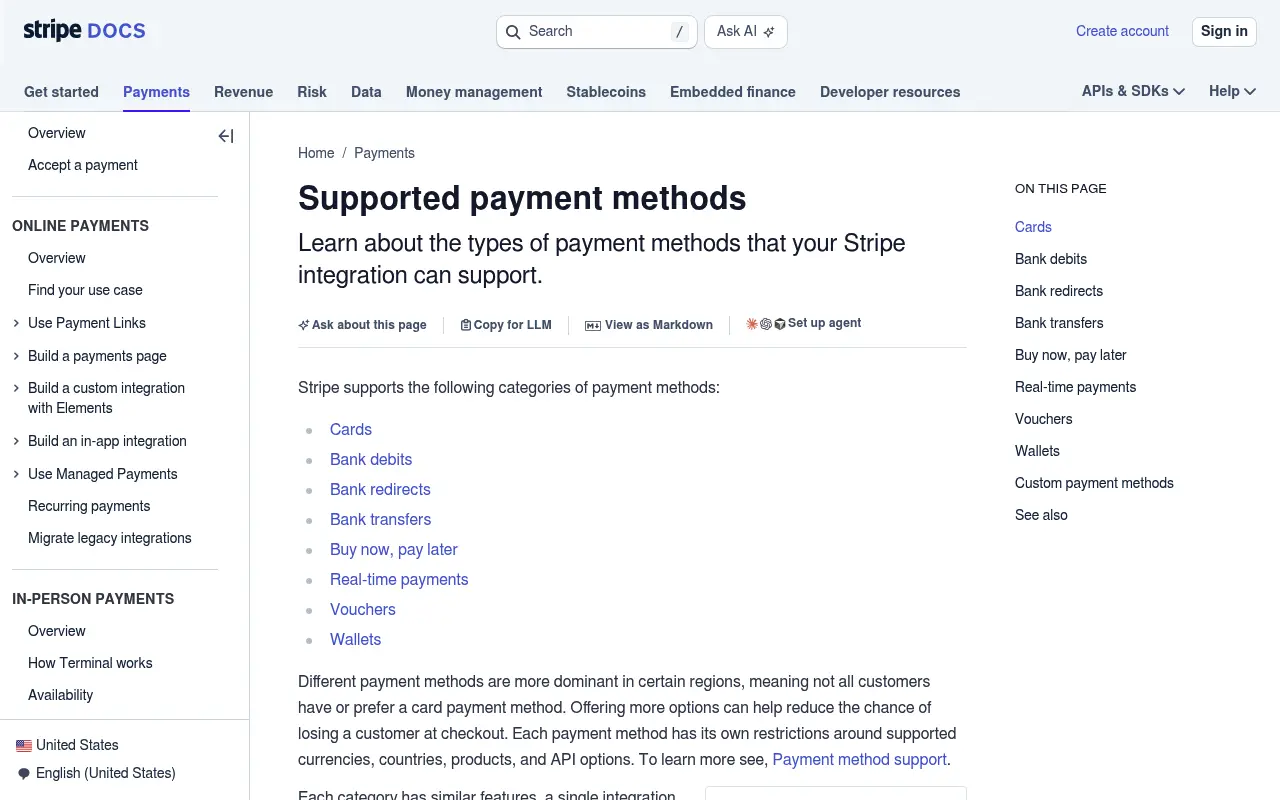
Stripe says it plainly in its payment methods documentation: different methods dominate in different regions, and offering more options can reduce the chance of losing a customer at checkout. That is the whole case in one sentence. A local method is not a nice extra; for the right market it is the default way to pay.
There are two more reasons to care:
- Cost. Many bank-based methods are cheaper per transaction than cards. Check your provider's current pricing, because it varies by method and country.
- Fewer chargebacks. Bank redirects and app-confirmed payments are authenticated by the shopper's bank, so card-style disputes are rarer.
The Local Favorite by Market
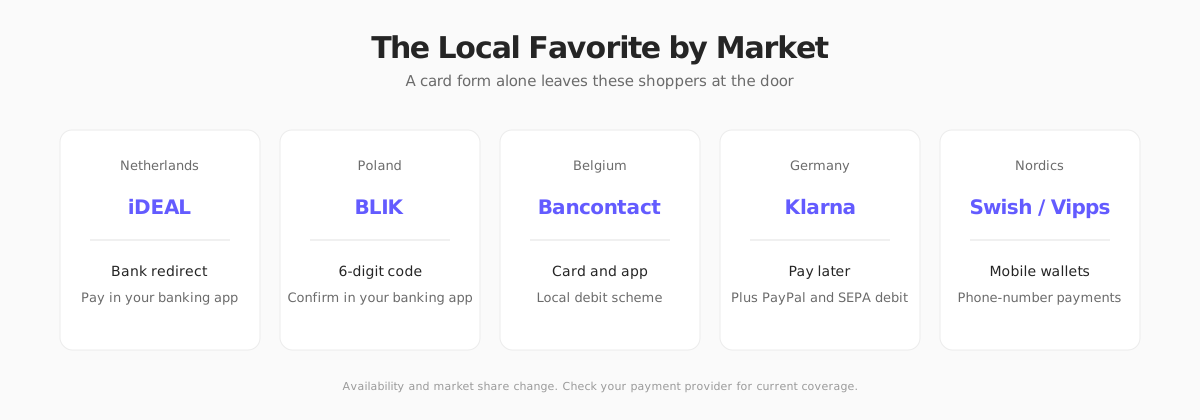
Use this as a map, not a rulebook. Market shares move, so confirm current figures with your payment provider before you commit.
| Method | Main market | How it works | Type |
|---|---|---|---|
| iDEAL | Netherlands | Redirect to your bank, approve in the banking app | Bank redirect |
| BLIK | Poland | Enter a 6-digit code, confirm in the banking app | Mobile bank code |
| Bancontact | Belgium | Pay with a Belgian debit card or the Bancontact app | Debit scheme |
| Przelewy24 | Poland | Pick your bank, pay by online transfer | Bank redirect |
| Klarna | Germany, Nordics, Austria and more | Pay now, pay later or in instalments | Buy now, pay later |
| SEPA Direct Debit | Eurozone | Authorize a debit from an IBAN | Bank debit |
| Swish, Vipps MobilePay | Sweden, Norway, Denmark, Finland | Approve in a mobile wallet tied to a phone number | Mobile wallet |
iDEAL: The Netherlands
iDEAL is the default way to pay online in the Netherlands. The shopper picks their bank, is redirected to its app or site, approves the payment and returns to your store. It is fast and familiar, and there is no card to type.
Worth knowing:
- It works in euros only, and the shopper needs a Dutch bank account.
- The payment is final once approved, so there is no card-style chargeback. Refunds are yours to send.
- The Dutch banks are moving customers to the European Wero wallet over time. Keep an eye on your provider's announcements rather than assuming the iDEAL name stays the same.
If you sell physical goods to Dutch customers and only offer cards, iDEAL is usually the first method to add.
BLIK: Poland
BLIK is the single most important method for selling to Poland. The shopper opens their banking app, generates a 6-digit code, types it at your checkout and confirms in the app. No card details, no redirect.
Worth knowing:
- It works in Polish zloty (PLN). Show prices in PLN for Polish shoppers, which helps conversion on its own.
- The code expires quickly, so the checkout should clearly tell shoppers to confirm in their app right away.
- BLIK is also available inside Polish wallets, such as InPost Pay.
If Poland is a serious market, BLIK plus Przelewy24 plus cards covers nearly every shopper. Our guide to selling internationally covers the shipping and tax side of the same expansion.
Bancontact: Belgium
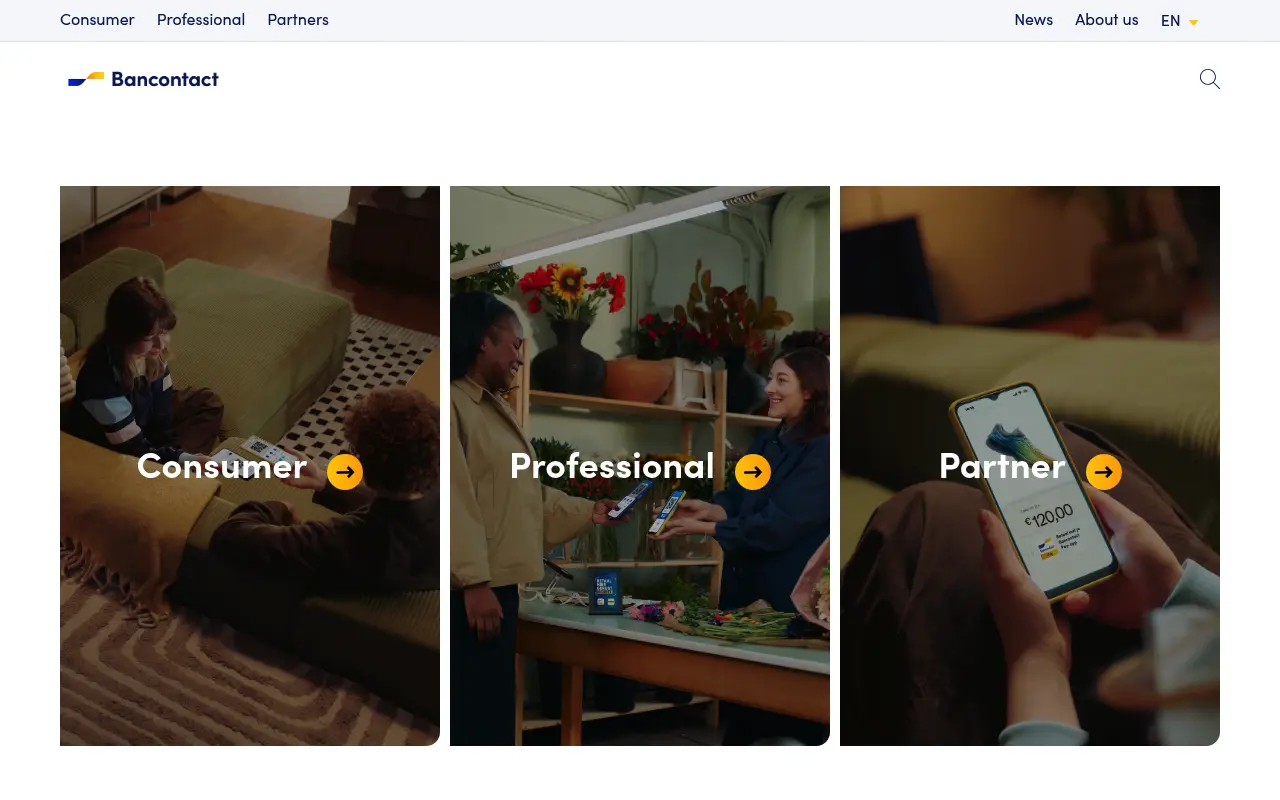
Bancontact is the Belgian debit scheme, used both in shops and online. Shoppers pay with a Bancontact card or the Bancontact app, and many Belgian cards are co-branded with Maestro or Visa, so it sits alongside cards rather than replacing them.
Worth knowing:
- Euros only, and Belgian consumers are the audience.
- Belgium is multilingual (Dutch, French, German), so translate your checkout, not only your product pages.
Klarna and Buy Now, Pay Later
Klarna lets shoppers pay now, in 30 days or in instalments. It is especially popular in Germany, Sweden and other Northern European markets. It tends to lift average order value on higher-priced items, because the shopper sees a smaller number at checkout.
Worth knowing:
- You get paid up front; Klarna carries the credit risk, though it charges higher fees than most bank methods.
- Eligibility is decided per shopper and per order, so it will not appear for everyone.
- Consumer-credit rules for pay-later products are tightening in Europe. If you advertise instalments, check the current rules in each country.
SEPA Direct Debit: The Eurozone Workhorse
SEPA Direct Debit pulls money from a shopper's IBAN after they authorize a mandate. It is the standard way to take recurring payments in the eurozone, so it is the natural pick for subscriptions.
Worth knowing:
- Settlement is slower than a card, and the shopper can dispute a debit for a period after it happens.
- It is a better fit for subscriptions and repeat customers than for one-off impulse buys.
If you sell subscriptions, read how to sell subscriptions online before choosing between cards and direct debit.
Nordic Mobile Wallets: Swish and Vipps MobilePay
In Sweden, Swish is the everyday way to pay: the shopper approves in an app tied to their phone number. Vipps MobilePay does the same job across Norway, Denmark and Finland. If the Nordics are a real share of your sales, add the local wallet alongside Klarna and cards.
How to Pick Your Payment Method Shortlist
You do not need every method. More options also means more reconciliation, more refund paths and more support questions. A practical rule:
- Start with your data. Look at where your orders and abandoned carts come from by country.
- Add one method per big market. iDEAL for the Netherlands, BLIK for Poland, Bancontact for Belgium, Klarna for Germany.
- Keep cards and wallets. Cards, Apple Pay and Google Pay still cover most international shoppers.
- Add a pay-later option last, and only if your average order value justifies it.
- Measure. Compare conversion and cart abandonment by country before and after each method.
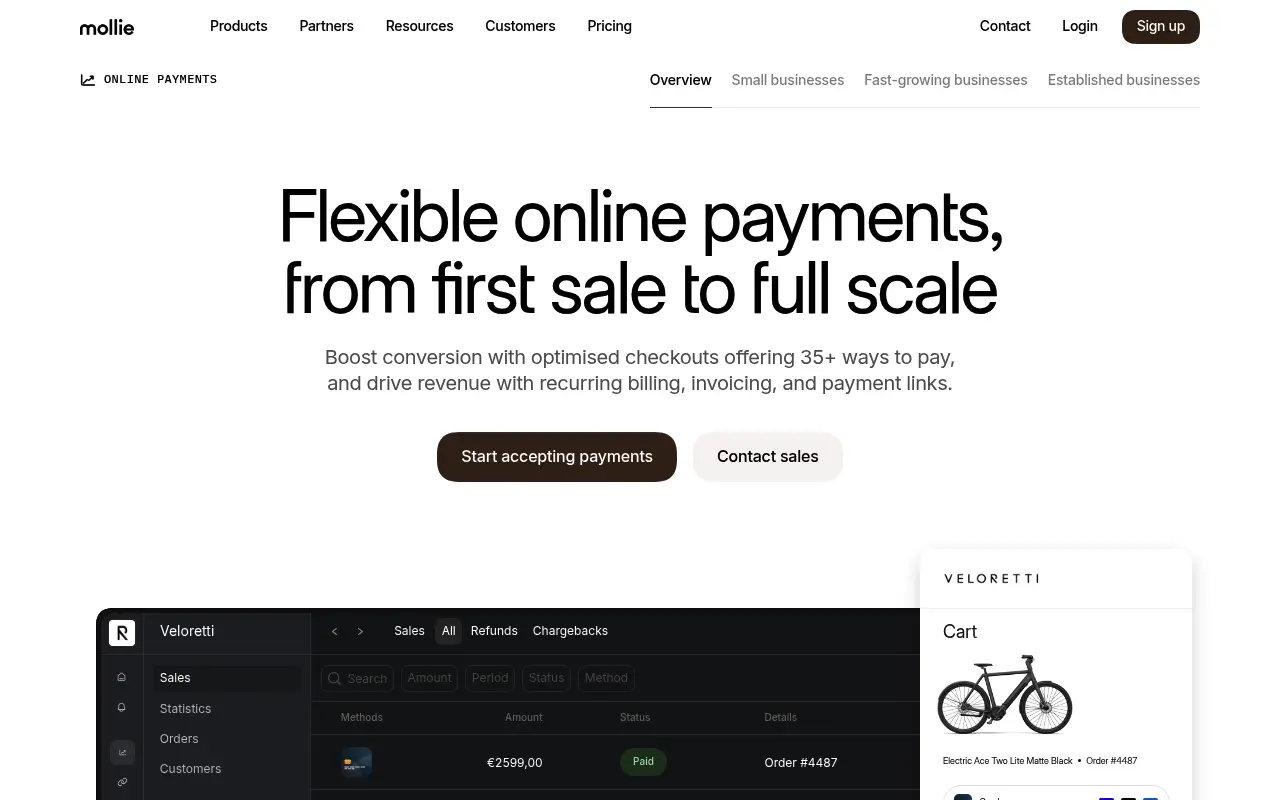
Mollie, another European payment provider, advertises 35+ ways to pay in a single integration, which shows how wide the spread of methods gets. You do not need to match that number to win.
Show the Right Methods to the Right Shopper
Offering a method is only half the job. Order and presentation matter:
- Detect the shopper's country and show their local method first.
- Match the currency to the method. BLIK in PLN, iDEAL in EUR.
- Do not add surcharges. In the EU, the Payment Services Directive generally bans surcharges on most consumer card and SEPA payments, so build the cost into your prices.
- Explain the flow in one line. "You will confirm in your banking app" prevents most failed BLIK and iDEAL attempts.
- Handle failures gracefully. Let the shopper retry or switch method without rebuilding the cart.
For the rest of the checkout, our checkout optimization playbook covers fields, trust signals and speed.
Always check the current rules where you sell. This guide describes European payment methods and related EU rules as of October 2026. Payment regulations, consumer-credit rules and scheme details change and differ by country, so confirm the specifics with your payment provider or a local specialist. This is general information, not legal advice.
Accepting European Payment Methods With Your Next Store
Your Next Store is a commerce backend with an open-source Next.js storefront, and payments run through Stripe. That matters here because Stripe supports most of the methods above, including iDEAL, BLIK, Bancontact, Przelewy24, SEPA Direct Debit and Klarna. Which ones your shoppers see depends on what you enable and which countries and currencies you sell in, so check your Stripe settings and Stripe's per-method requirements.
For Poland and the Baltics, YNS also has dedicated add-ons: PayNow, InPost Pay and Montonio, where you can try BLIK and card payments in a sandbox first. YNS charges 0% platform transaction fees on every plan, so the only per-payment cost is what the payment provider charges. See pricing for the plans.
Test every new method in sandbox mode with a real phone before launch. A BLIK code or an iDEAL redirect that works on desktop can still trip up on mobile, where most European shoppers pay.
FAQ
What is the most popular payment method in Europe?
There is no single winner. Cards and wallets such as Apple Pay lead across the continent, but local methods dominate their home markets: iDEAL in the Netherlands, BLIK in Poland, Bancontact in Belgium and Klarna or PayPal in Germany. Pick by market, not by continent.
Do I need to accept BLIK if I sell to Poland?
If Poland is a meaningful market, yes, it is worth adding. Polish shoppers are used to confirming in their banking app, and a card-only checkout can feel like friction. Pair it with Przelewy24 and cards for broad coverage.
Are European payment methods cheaper than cards?
Often, but not always. Many bank-based methods cost less per transaction than cards, while buy now, pay later options usually cost more. Compare current pricing from your payment provider for each method and country.
Can I accept these methods from outside Europe?
Usually yes, if your payment provider supports your business country. Most methods settle in euros or the local currency, so check currency, payout and account requirements first.