Is Shopify Open Source? What You Can and Can't Change
 Jakub Neander
Oct 1, 20269 min read
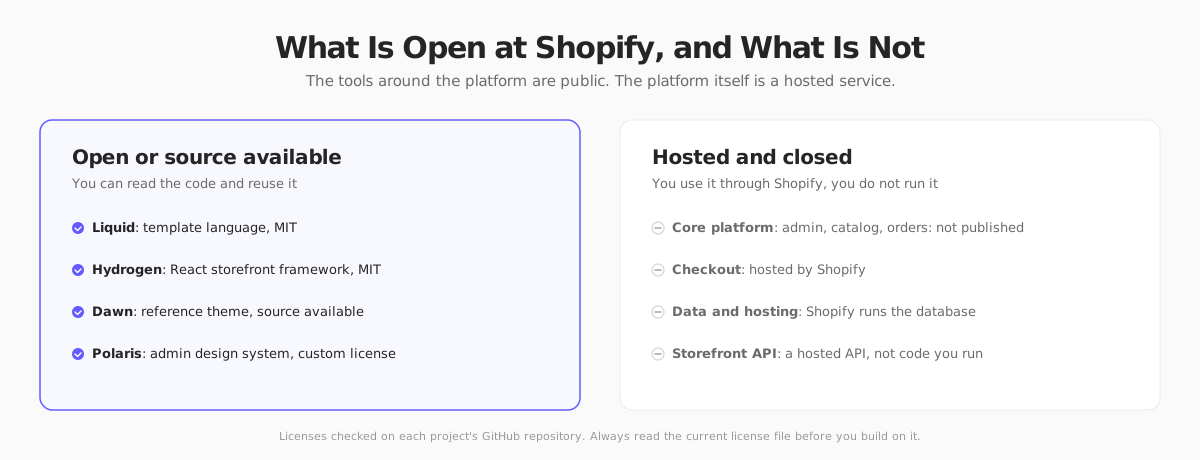
Is Shopify open source? No. Shopify the platform is a hosted, proprietary service, but a surprising amount of the code around it is public. You cannot download Shopify, run it on your own server or change how its checkout, admin or database work. You can read and reuse its template language, its React storefront framework and its reference theme. The difference decides how much freedom you really have, so here is the honest map of what is open, what is not, and what to do if you need the whole stack.
The Short Answer
- Shopify itself is not open source. It is software as a service. You rent a store, and Shopify runs the code, the database and the checkout.
- Some Shopify projects are open. Liquid and Hydrogen are MIT-licensed. Dawn is described by Shopify as source available. Polaris uses a custom license.
- Open parts still connect to a closed core. Hydrogen, for example, needs a Shopify store to talk to.
That last point is the one that matters. Open source tooling that can only run against one vendor's hosted backend gives you code to read, not a platform to own.
What Shopify Has Open-Sourced
| Project | What it is | License (per its GitHub repo) |
|---|---|---|
| Liquid | The template language behind Shopify themes, also used outside Shopify | MIT |
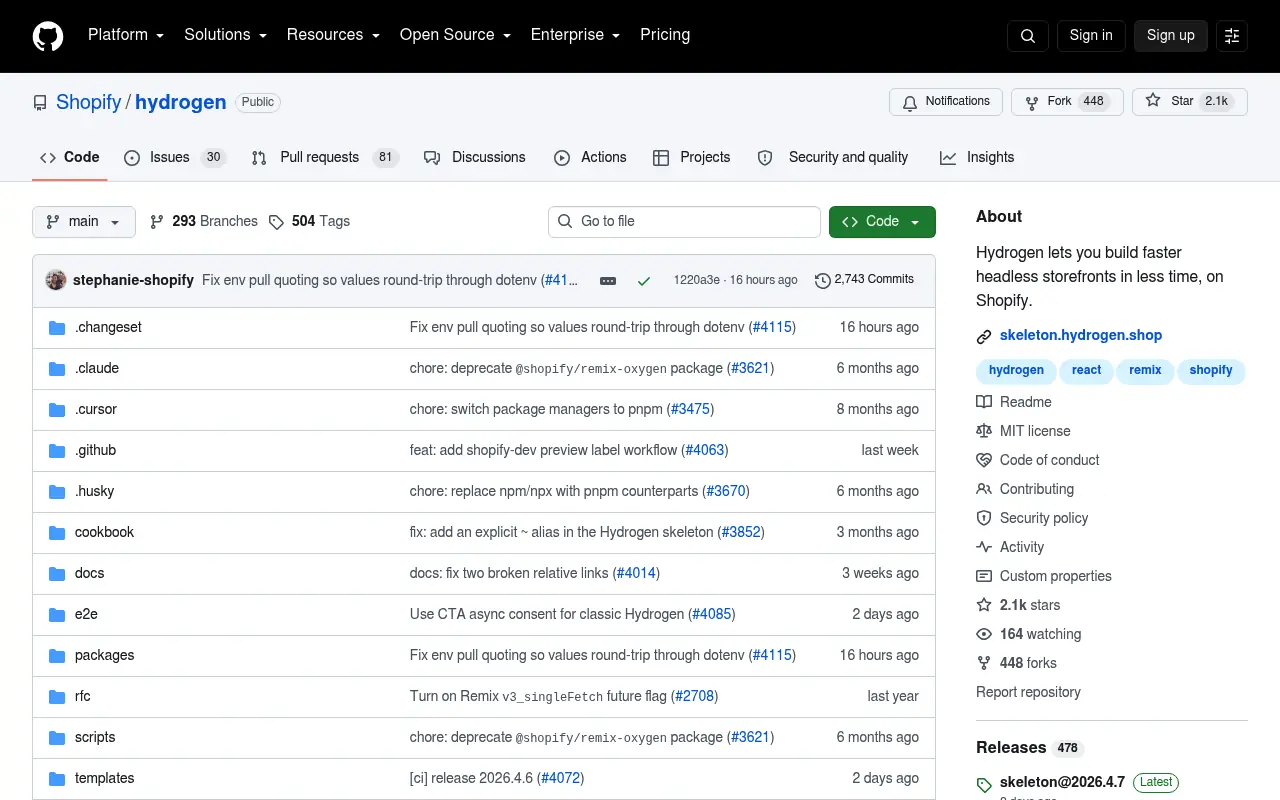
| Hydrogen | React framework for custom storefronts | MIT |
| Dawn | Reference theme with Online Store 2.0 features | Shopify's own license; the README calls it source available |
| Polaris | Design system for building admin apps | Custom license based on MIT, limited to apps that work with Shopify |
Two of these are worth a closer look.
Liquid: open, but only a template language
Liquid is genuinely open and has been reused in static site generators and other systems. But it only renders templates. It does not give you a database, a cart or an order system.
Hydrogen: open code, hosted backend
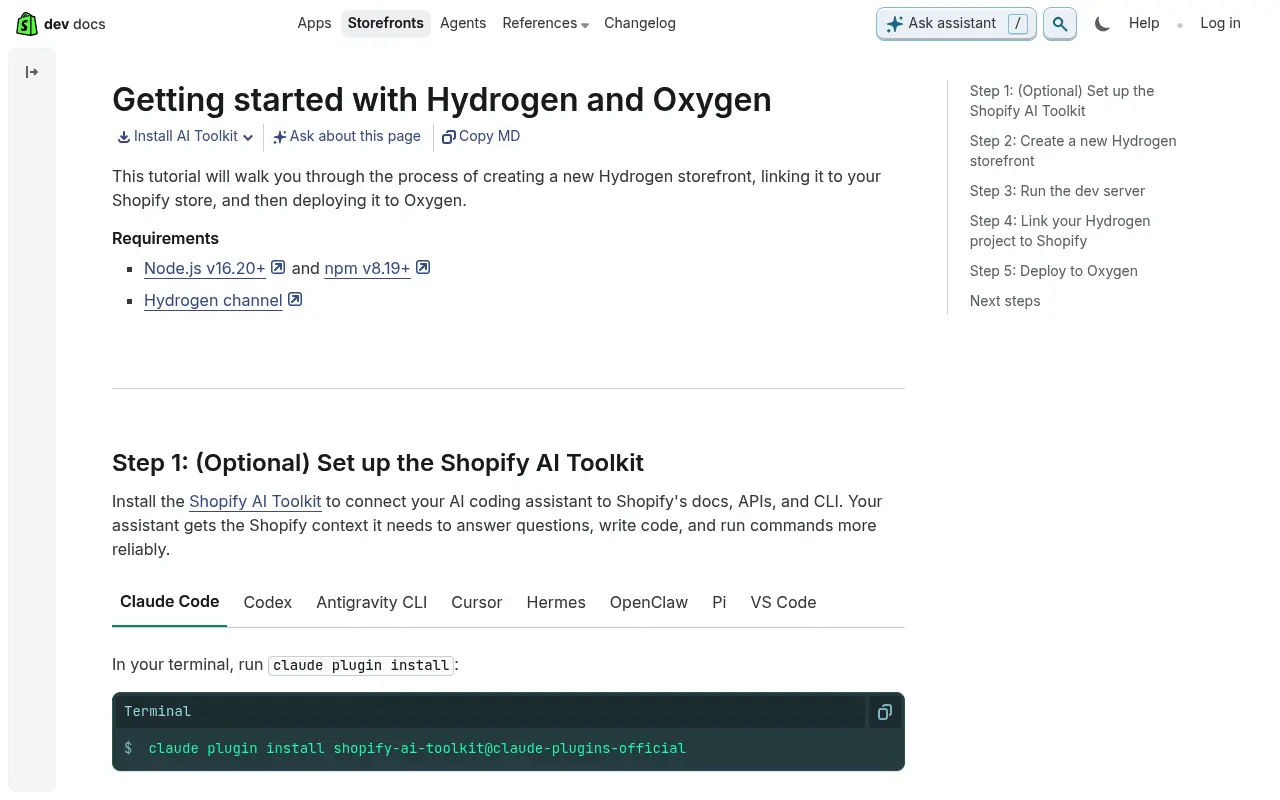
Hydrogen is Shopify's framework for custom storefronts. The code is public and MIT-licensed. The catch is in the setup guide: the tutorial has you create a storefront and link it to your Shopify store, and the framework talks to Shopify through its Storefront API. Hosting is typically Oxygen, Shopify's edge hosting that is bundled with paid plans. You can start with mock data, but a real store still needs a real Shopify account behind it.
If you are weighing Hydrogen as a way out of theme limits, our Hydrogen alternatives guide covers the real costs and the other frameworks.
What You Can Change on Shopify
You have more freedom than "closed" suggests, up to a line:
- Theme code. You can edit Liquid, CSS and JavaScript in your theme, or fork Dawn as a starting point.
- Apps. Apps add features through Shopify's APIs and extension points, and the app store covers most common needs.
- A custom storefront. Hydrogen or any framework can sit in front of the Storefront API (see what headless commerce is).
- Checkout, within limits. Shopify offers extension points for the checkout, and the deepest customization has historically been reserved for Shopify Plus. Check current plan details before you commit.
What You Cannot Change
- The platform code. You cannot read, fork or patch Shopify's core.
- Where it runs. You cannot self-host the platform, move it to another cloud or run it in your own region on your own terms.
- Pricing and rules. Plans, transaction fees and policies are set by Shopify. A store that does not use Shopify Payments pays an extra fee per sale, which we calculated in how much Shopify takes from a $100 sale.
- Your data model, in the deep end. You can extend products and orders with metafields and metaobjects, but you cannot add a table or change how the database works.
None of this is a flaw for most stores. A hosted platform is a product with a lot of upside: no servers to patch, a mature payments flow and a huge app ecosystem. It just is not open source.
Why People Ask This Question
The searcher usually has one of four reasons:
- Cost. They want to avoid a monthly plan and transaction fees. Open source is not free, but it moves cost from subscription to hosting and engineering time.
- Control. They want to change checkout logic or the data model.
- Exit risk. They want to be sure they can leave without rebuilding everything.
- Developer preference. They want a codebase in their own repo, in TypeScript, that an AI coding tool can read end to end.
If your reason is one of these, the open alternatives below are worth a look. If your reason is simply "I want to sell a product this month", Shopify's hosted model is a feature, not a limitation.
Open Source Alternatives to Shopify
| Option | What you get | What you run |
|---|---|---|
| WooCommerce | Open source plugin on WordPress, huge ecosystem | WordPress hosting, updates, security |
| Medusa | TypeScript commerce framework with a cloud option | Backend, database and storefront (or use their cloud) |
| Saleor | GraphQL-first, multi-channel commerce platform with a cloud option | Backend and database (or their cloud) |
| Vendure | TypeScript headless commerce framework | Backend and database |
Each one trades a monthly subscription for more responsibility. For the full comparison, see open source Shopify alternatives for developers and our ranking of the best open source ecommerce platforms.
Where Your Next Store Fits
Your Next Store sits in between, and we want to be precise about it. The storefront is an open-source Next.js template you can fork and fully customize. It talks through the Commerce Kit SDK to a managed commerce backend that handles products, carts, orders and inventory, with Stripe doing payment processing only. So the honest summary is:
- Open: the storefront code, the REST API and the SDK you build against
- Hosted: the backend and admin, on plans from $30/month with 0% platform transaction fees (Stripe's processing fees still apply)
- Not open: the managed backend itself, and there is no free plan
If you need to self-host every layer, Medusa, Saleor or Vendure are the better fit. If you want an open storefront plus a managed backend and an AI builder, YNS is one option. For the architecture details, see Next.js vs Shopify.
What Nobody Tells You
- "Open source" on a README is not a platform. Check whether the project runs without the vendor's hosted service.
- Licenses differ. Liquid and Hydrogen are MIT, but Polaris restricts use to Shopify-related apps. Read the license file, not the blog post.
- Self-hosted is not free. You trade a subscription for hosting, upgrades, monitoring and security work.
- Leaving is a migration either way. Even from a closed platform you can export products and customers. The hard part is rebuilding the theme and the integrations.
FAQ
Is Shopify open source?
No. Shopify the platform is proprietary and hosted. Some related projects, such as Liquid and Hydrogen, are open source under MIT licenses.
Is Shopify Hydrogen open source?
Yes. Hydrogen is MIT-licensed. It still needs a Shopify store behind it, since it reads your data through Shopify's Storefront API.
Can I self-host Shopify?
No. Shopify is a hosted service, and there is no self-hosted edition. Open alternatives such as WooCommerce, Medusa, Saleor and Vendure can be self-hosted.
What is the best open source alternative to Shopify?
It depends on your skills. WooCommerce suits WordPress teams, Medusa and Vendure suit TypeScript developers, and Saleor suits GraphQL teams. If you want an open storefront with a managed backend, Your Next Store is another option.
Final Word
Shopify is open at the edges and closed at the core. Decide whether you need to own the core, and if you do not, enjoy the convenience of not running it.