How to Start a Gift Basket Business: A Real Guide
 Jakub Neander
Aug 27, 202613 min read
A gift basket business is one of the few retail categories where you don't have to invent a product at all: you're curating other people's products into one that feels like a single, thoughtful gift. That's also exactly what makes it deceptively tricky. The barrier to entry is low enough that anyone with a glue gun and some cellophane wrap can list one on Etsy this weekend, and high enough in the details, what you're allowed to put in the box, how you price a bundle of ten different SKUs, and how you keep inventory from expiring before the holiday rush, that most first-timers get at least one of those details wrong. This is the honest playbook for how to start a gift basket business in 2026: eight steps, in the right order, with real numbers for what it costs and where beginners lose money.
How to Start a Gift Basket Business: The 8 Steps, in Order
- Pick a very specific occasion, recipient, or problem. Not "gift baskets for everyone." One event, one relationship, or one gap on the shelf.
- Get real people to say "yes, I'd buy this" before you build out inventory.
- Decide how your baskets actually get made: hand-assembled from purchased goods, private-label components, or a hybrid of both.
- Do the regulatory work. What's legal to put in a basket, and what isn't, depends entirely on what you put in it.
- Get curation, packaging, and timing right. Gift baskets have a cash-flow rhythm most guides never mention.
- Set the price so the math works on a product that's really ten small products stacked into one.
- Set up a simple website where people can actually buy.
- Pick one place to get noticed. For gift baskets, the highest-value channel usually isn't the one people assume.
Now the long version.
Step 1: Pick a Very Specific Occasion, Recipient, or Problem
The fastest way a new gift basket business fails is trying to be "for everyone." Search "gift baskets" online and you'll find thousands of nearly identical listings: a wicker basket, some cellophane, a ribbon, and a vague assortment of snacks. None of them stand out, because none of them were built for anyone in particular.
You are not competing with the grocery store's pre-made gift section on price. You're competing on the thing a mass-produced basket can't do: caring enough about one specific person, relationship, or moment to get the contents exactly right.
Good answers look like this:
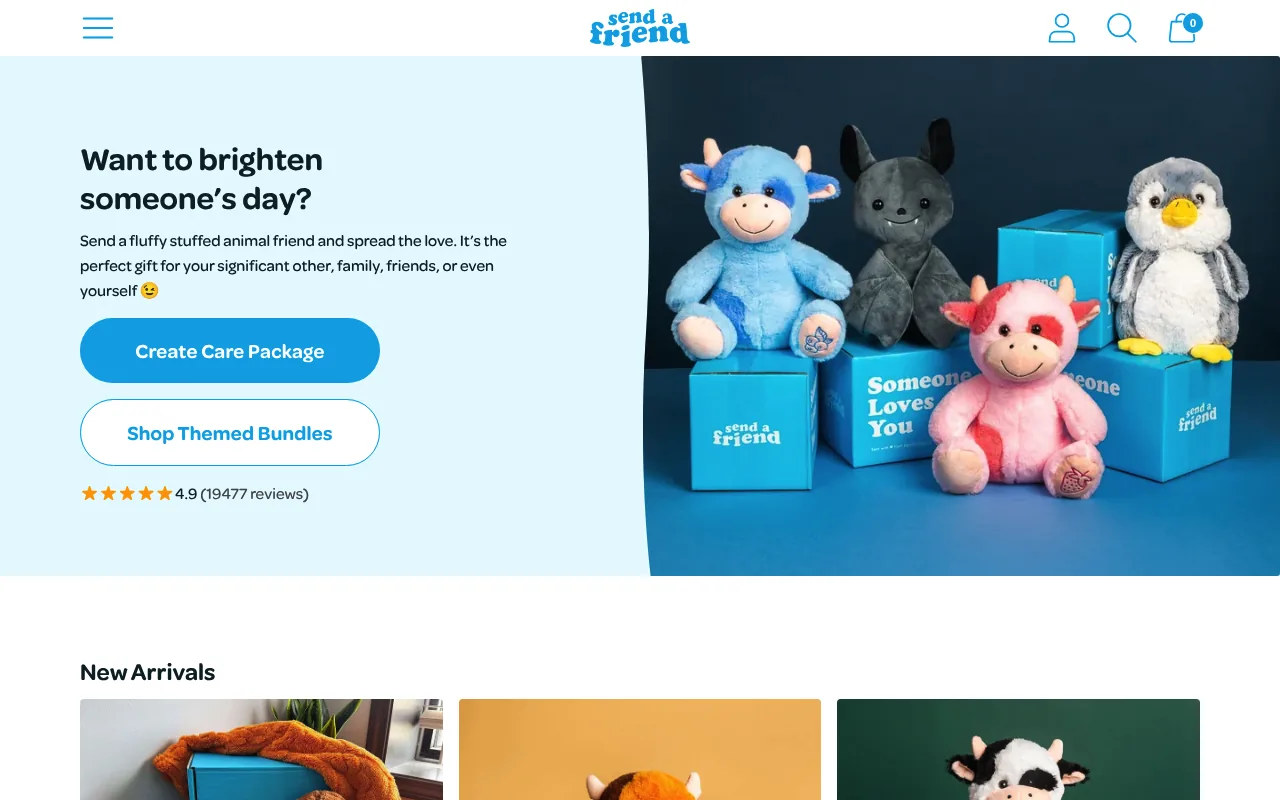
- A specific life event, not a generic occasion. SendAFriend built its business around one very narrow moment: sending a stuffed animal care package to someone going through chemotherapy, a hospital stay, or a hard season, donating 10% of every sale to pediatric hospitals along the way. Not "gifts for sick people." One specific act, repeated well.
- A specific relationship the big players ignore. New-baby baskets for adoptive parents, sympathy baskets that skip flowers entirely (some grieving households already have too many), or "new job" baskets sized for a cubicle instead of a house.
- A specific ingredient or dietary need. Gluten-free, nut-free, or kosher gift baskets solve a real, recurring problem for people who've been burned by a "gourmet" basket they couldn't actually eat.
- A specific channel, not a specific person. Corporate client-appreciation baskets ordered ten or fifty at a time by an office manager are a completely different business than one-off baskets bought by an individual for a birthday, with different order sizes, different lead times, and a different sales process (more on this in Step 8).
If you're still deciding whether gift baskets are the right category at all, our broader guide to starting an online store walks through the customer and category decision before you commit to a specific niche.
The test: if a grocery store's seasonal aisle could put your exact basket on a shelf tomorrow without changing anything about who they are, your idea isn't sharp enough yet. Your advantage as a small gift basket business isn't a bigger warehouse. It's that you can care about one specific occasion or recipient more than a mass retailer ever will, and say so clearly on your homepage.
Step 2: Get People to Say "Yes" Before You Build Out Inventory
You do not need 50 assembled baskets sitting in your garage to find out if your idea is good. You need to find out before you tie the first ribbon, especially once you know (Step 5) that gift basket inventory has a seasonal shelf life most people underestimate.
Three ways to test demand before you commit to a full product line:
- A one-page site with a waitlist or pre-order. Show two or three planned themes with real photos, even of a single hand-assembled sample, and a specific description of who each one is for. Spend $100 to $200 on Instagram or Pinterest ads sending your target buyer there. If fewer than roughly 1 in 50 visitors sign up, the idea isn't landing yet. Go back to Step 1.
- Sell five to ten baskets to people you actually know first. Friends, coworkers, or a local Facebook group. Ask two questions only: "Would you have paid for this without knowing me?" and "What would you change?" A polite "so thoughtful!" doesn't count. You want the person who tells you the basket felt thin for the price.
- Pitch three local businesses directly. If your angle leans corporate (client gifts, employee appreciation), skip consumer ads entirely and email three office managers or small-business owners with a sample photo and a price. A single "yes, send me a quote for 20" is worth more than a hundred social media likes.
This step costs a weekend and maybe $100 to $200 in sample materials. Skipping it can cost you a garage full of themed inventory for an occasion, like a very specific holiday tie-in, that turns out nobody wanted.
Step 3: Decide How Your Baskets Actually Get Made
This is the decision that shapes your margins, your differentiation, and how much of the work is actually yours. There are three real paths, and the right one depends on your budget and how hands-on you want the curation to be.
Hand-assembled from purchased goods (the classic starting point)
You buy individual products, wholesale where you can, retail where you have to, and assemble them yourself into a themed basket. This is how almost every successful small gift basket business starts: full creative control over the theme and contents, no manufacturing minimums to hit, and a genuinely handmade story to tell customers.
The tradeoff is sourcing time. You're managing relationships with several small suppliers instead of one, and margins on any individual item you buy at retail (rather than wholesale) will be thinner. Wholesale gift-basket supply houses sell the containers, cellophane, shred, and ribbon in bulk, and specialty food and gourmet suppliers will sell jars, snacks, and small-batch goods at wholesale pricing once you're ordering in the dozens rather than ones.
Private-label components (faster to scale, less distinctive)
Some suppliers will pre-fill baskets to your spec or private-label individual items (a candle, a soap bar, a mug) with your branding, cutting your assembly time dramatically once you're filling more than a handful of orders a week. The catch is MOQs: bulk gift-set suppliers commonly require several hundred units per SKU, which only makes sense once you have proven, repeatable demand for a specific theme.
Hybrid: a signature item plus sourced fill
A popular middle ground: make or private-label one or two "anchor" items (a candle, a soap, a small-batch jam) that carry your actual brand, and fill the rest of the basket with sourced, wholesale goods. This is genuinely the best of both worlds for a first-year business: it gives the basket a distinctive centerpiece worth remembering, without requiring you to manufacture ten different products from scratch. It's also why a candle or soap side business and a gift basket business pair naturally: our candle business guide and soap business guide both cover the low-MOQ path into making that anchor item yourself, if you'd rather build the centerpiece than just source it.
| Path | Upfront cost | Time per order | Formula/theme control | Best for |
|---|---|---|---|---|
| Hand-assembled from purchased goods | Low ($500–$2,000 in starting stock) | High (you assemble each one) | Full | Most first-time founders |
| Private-label components | Medium to high (MOQ-driven) | Low once set up | Medium (spec, not craft) | Repeatable, proven themes at volume |
| Hybrid (signature item + sourced fill) | Low to medium | Medium | High on the anchor item | A distinctive brand without full manufacturing |
Don't confuse "wholesale price" with "in stock." A supplier quoting a good per-unit price on a specialty jam or a scented candle is no help if their lead time is six weeks and your busiest season is eight weeks away. Confirm lead times, not just unit cost, before you commit a theme to your holiday lineup.
Step 4: Do the Regulatory Work
This is the step almost every "how to start a gift basket business" guide glosses over, and it matters more than people assume, because the legal bucket your basket falls into depends entirely on what you put inside it, not on the basket itself.
The easy case: sealed, store-bought, or wholesale-sourced goods
If every item in your basket is a sealed, commercially manufactured product (a bag of coffee, a bar of soap from a licensed manufacturer, a bottle of hot sauce with its own label), you're mostly acting as a retailer reselling finished goods. That's the lightest regulatory lane: a standard business license, a sales tax permit, and product liability insurance, similar to any small retail business.
The fork: adding your own homemade food
The moment you add a food item you made yourself, jam, baked goods, dry mixes, candy, you're generally operating under your state's cottage food law, which allows home production of low-risk foods with lighter oversight than a commercial kitchen requires. Rules vary significantly by state, but common requirements include labeling with your name, address, ingredients, and a "home produced" disclosure, and most cottage food laws exclude potentially hazardous, non-shelf-stable foods that require refrigeration.
The detail that trips up gift basket founders specifically isn't about making your own cottage food, it's about sourcing someone else's. Most cottage food laws only cover direct sale to the end consumer by the person who made it. It's generally not legal for a cottage food producer to sell to a wholesaler, retailer, or another business that resells the product, which means buying jars of a local baker's cottage food jam to fill your baskets can put both of you outside the exemption in most states, even though the same jam sold directly by the baker at a farmers market is perfectly legal. A handful of states carve out exceptions (California's Class B permit and Texas's 2025 wholesale allowance for shelf-stable goods among them), but the safe default is: make it yourself under your own cottage food registration, or buy from a commercially licensed food producer, not another home-based cottage food maker.
The other fork: adding alcohol
Wine, beer, or spirits turn a simple gift basket into a licensed sale. Only a licensed retailer can legally ship alcohol, and interstate alcohol shipping is governed by the destination state's law, not yours, with roughly a third of states restricting or barring direct alcohol shipments entirely. Every alcohol shipment also requires an adult signature and age verification on delivery. Most first-time gift basket founders skip alcohol entirely for exactly this reason: it's less a product decision than a licensing one, and it multiplies your compliance work across every state you ship to. If a "wine and cheese" basket is core to your concept, budget real time for a liquor license and carrier-compliant shipping before you list it, or partner with a licensed local retailer who fulfills that specific item.
Insurance
Product liability insurance for a gift basket business is inexpensive relative to most retail categories, since you're generally reselling items other manufacturers already tested and labeled. Typical premiums run $400 to $1,500 a year for a small, low-risk operation, with some gift basket business owners reporting policies closer to $350 a year through insurers that specialize in small retail and home-based businesses. It's cheap enough that skipping it to save $30 a month isn't a real savings if a single allergic-reaction claim ever lands on your desk.
Step 5: Get Curation, Packaging, and Timing Right
This is the step that separates a gift basket business that survives its first holiday season from one that runs out of stock, or worse, ships stale inventory, in the middle of it.
How many items actually belong in a basket
More isn't better. Gift basket professionals generally aim for 5 to 15 items depending on basket size, with high-end baskets deliberately using fewer, better items rather than a basket stuffed to look full. A basket with six items that all clearly belong to one theme reads as more thoughtful, and costs you less, than a basket with sixteen items that feel randomly grabbed off a shelf.
Packaging costs more than beginners budget for
Rough per-unit costs before labor, based on wholesale gift-basket supply pricing:
| Component | Typical cost |
|---|---|
| Basket, box, or crate container | $2 to $10, depending on material and size |
| Cellophane or shrink wrap | $0.30 to $1.00 per basket |
| Shred, tissue, or excelsior filler | $0.20 to $0.75 per basket |
| Ribbon and bow | $0.50 to $2.00 per basket |
| Custom card or tag | $0.25 to $1.00 per basket |
That's roughly $3 to $15 in packaging alone before a single item goes inside, and it's the line first-time founders most often forget to price in when they're only mentally tallying up the contents.
Timing is a cash-flow problem, not just a scheduling one
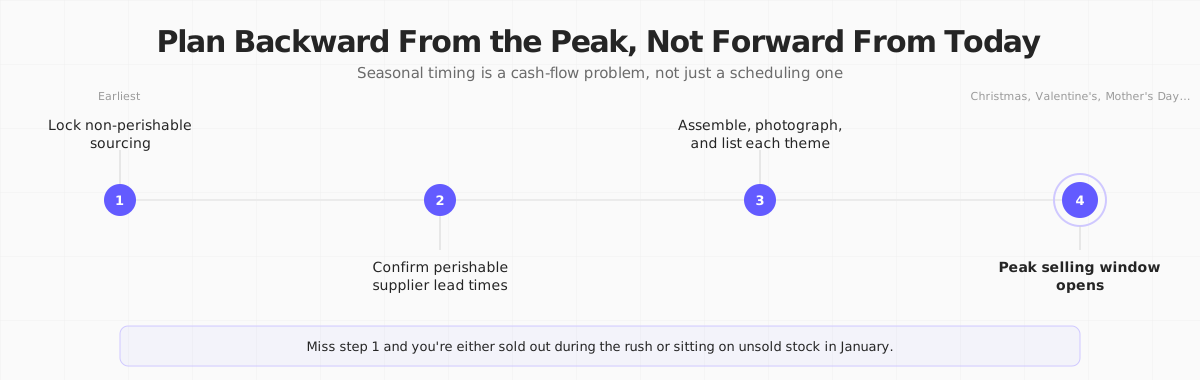
Most gift basket revenue is seasonal: Christmas, Valentine's Day, Mother's Day, and graduation season each create a short, sharp demand spike. That means you need themed inventory, sourced, assembled, and photographed, weeks before the actual buying window opens, and any perishable component (baked goods, fresh fruit, dairy-based items) has to be timed even tighter so it doesn't expire on the shelf before it sells. Plan backward from your target ship dates: if you want a Christmas lineup ready by the last week of November, your non-perishable sourcing needs to be locked by October, and any perishable component needs a supplier who can turn it around on short notice, not months ahead.
Perishable shipping adds real cost
If your basket includes anything temperature-sensitive, chocolate, cheese, fresh baked goods, budget for insulated packaging (our guide to starting a chocolate business shows what that does to margins): a basic insulated shipper with a foil liner runs roughly $3 to $7 per shipment in bulk, plus $1 to $3 per reusable gel ice pack. That's on top of standard shipping, and it's a cost line non-perishable gift baskets simply don't have. Factor it into your Step 6 pricing before you commit to a chocolate-forward theme.
Step 6: Set the Price So the Math Works
The classic beginner mistake: "the individual items in this basket retail for $40, so I'll charge $45 and call it a deal." That math ignores that you paid retail (not wholesale) for at least some of those items, and it leaves nothing for your own labor, packaging, or marketing.
The rule most experienced gift basket sellers use is closer to a 100% markup on your all-in cost, targeting a 30 to 50% gross margin, though some formulas (wholesale cost divided by 0.45) build in room for shipping and handling on top of that. Most gift basket operators report netting 15 to 30% of revenue after all real costs, not the 50%+ headline margin that "double your cost" math implies before you subtract shipping, packaging, and marketing.
Here's a realistic landed cost breakdown for a mid-tier "cozy night in" themed basket with eight non-perishable items:
| Cost component | $ |
|---|---|
| 8 sourced/wholesale items (avg. $4.50 each) | $36.00 |
| Basket container | $6.00 |
| Wrap, shred, ribbon, and card | $4.00 |
| Assembly labor (15 minutes) | $6.25 |
| Total landed cost | $52.25 |
Now price it. Sell that basket for $105 (about 2x, near the low end of viable for direct-to-consumer). Here's roughly where the money goes on an online sale:
| Where the money goes | $ |
|---|---|
| Landed cost per basket | $52.25 |
| Card fee (Stripe, ~2.9% + $0.30) | $3.35 |
| Shipping to customer (baskets are bulky for their weight) | $12.00 |
| Returns/damage reserve (~5%, fragile contents) | $5.25 |
| Marketing (~20% of revenue) | $21.00 |
| What you actually keep | ~$11.15 |
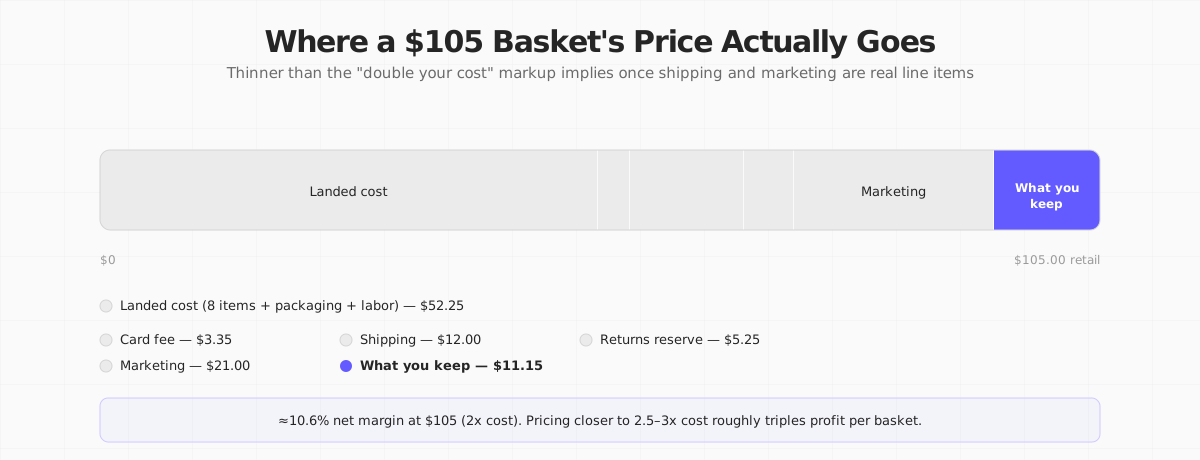
That's about 10.6% net margin, thinner than the "100% markup" headline suggests once shipping and marketing are real line items, not an afterthought. Push the price to $130 (about 2.5x) and profit per basket rises to roughly $30, which is why most seasoned sellers price closer to 2.5x to 3x their all-in cost rather than a flat 2x, especially once shipping is factored in.
Corporate and bulk orders change this math in your favor. A client ordering ten or more units at once will typically expect a discount (10 to 15% off), but you give it up in exchange for one easy transaction, no individual shipping addresses to manage per sale, and no per-order ad spend, since the order came through outreach rather than paid marketing. A single corporate client ordering 25 baskets can be more profitable, per hour of your time, than 25 individual online sales.
If the math doesn't work at your planned price, don't launch at that price. Simplify the theme, raise the price, or drop an expensive component before you commit to a full seasonal lineup.
Step 7: Set Up a Simple Website
By now you have a validated theme or two, real pricing math, and hopefully a few pre-sales or a corporate lead. Time to give people a place to buy beyond a folding table or a group chat.
You don't need anything elaborate. You need honest photos of the actual assembled basket (not a stock photo of similar-looking items), a clear, itemized list of exactly what's inside, and a checkout that doesn't scare people off. That itemized list matters more here than in most product categories: a gift basket is really ten small products bundled as one, and a shopper deciding between a $60 and $105 basket wants to see precisely what's different, not just take your word for it.
The main options in 2026, honestly ranked for a first-time gift basket founder:
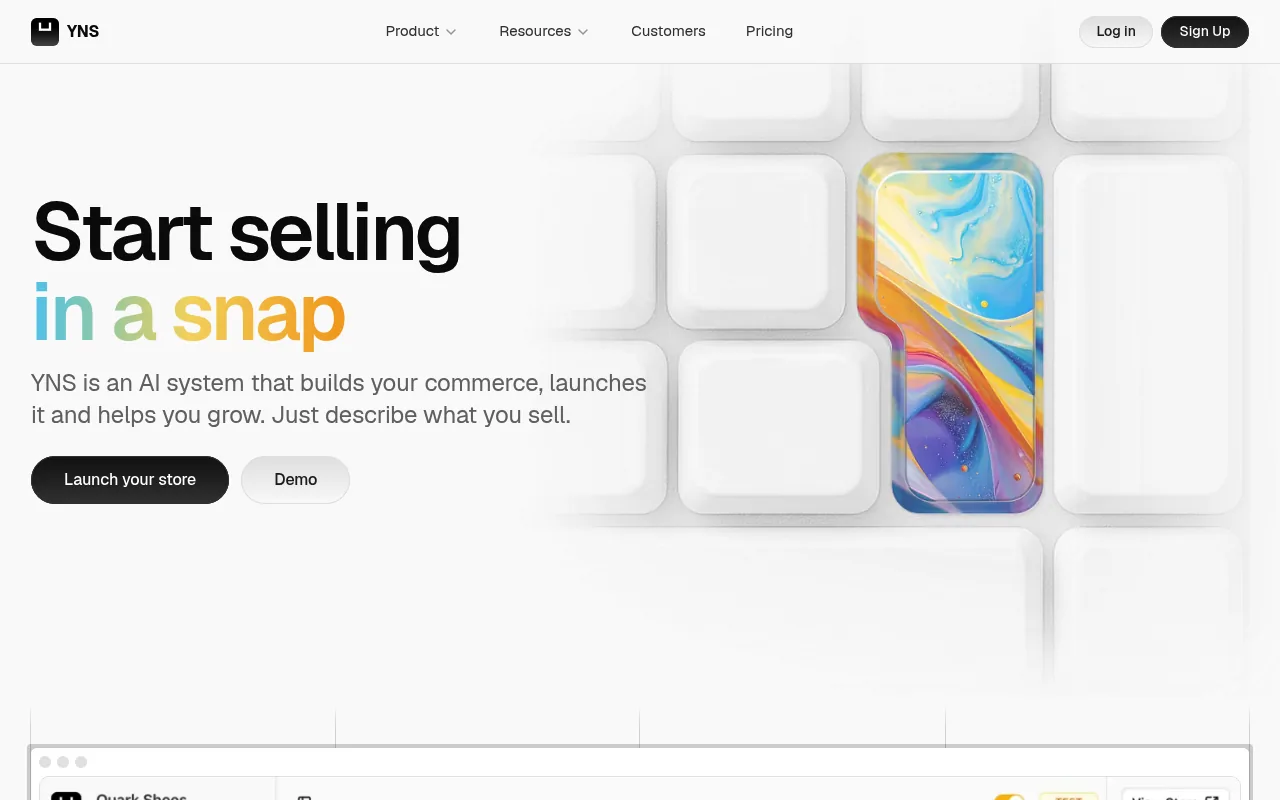
- Your Next Store (us, to be upfront) starts at $30/month, or $25/month billed yearly, with 0% platform transaction fees on every plan (Stripe's standard processing fees still apply). An AI-powered builder sets the store up with you, and product search, reviews, and email are already built in, which matters specifically for gift baskets since a detailed "what's inside" list on every product page, plus a review from a past buyer, does a lot of the convincing that a physical store's shelf display would otherwise do.
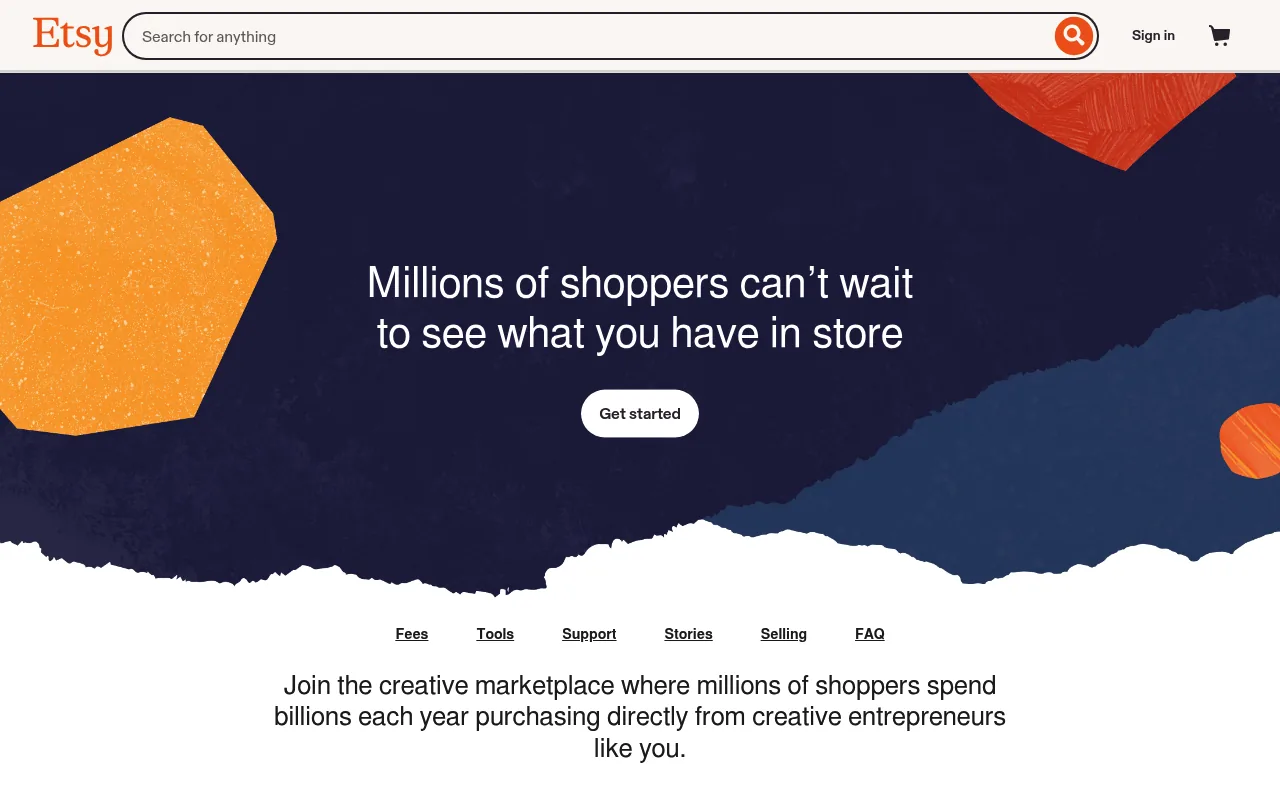
- Etsy is a genuinely strong fit for handmade or themed gift baskets and puts you in front of shoppers already searching for exactly this kind of gift. The trade-off is a 6.5% transaction fee plus listing and ad fees, and your customer thinks of themselves as an Etsy shopper first, your brand second.
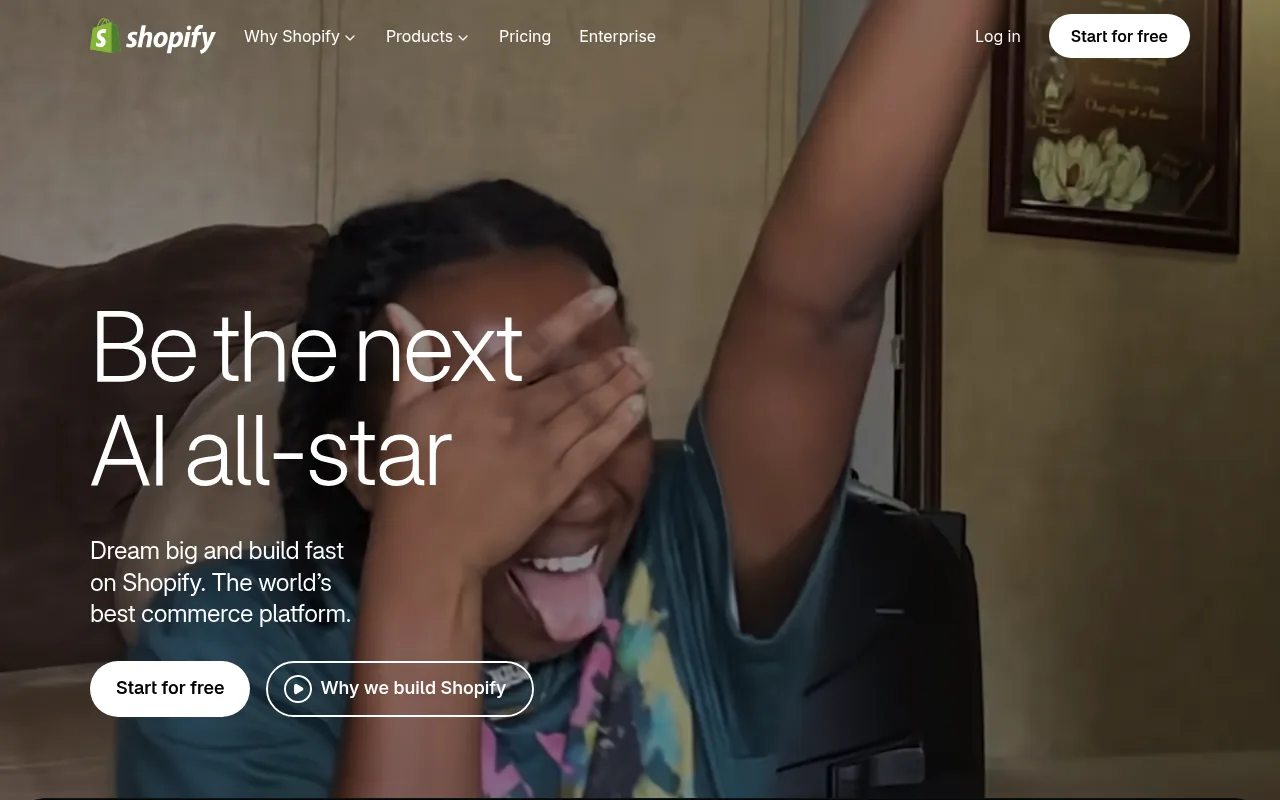
- Shopify is the safe, familiar middle ground at $39/month, with an app for nearly anything you'd want (subscription boxes, gift-note customization, corporate order forms). Those apps add up fast, often another $200 to $500/month at real volume, and Shopify takes a small extra fee on every sale unless the customer pays with Shop Pay.
- Faire, a wholesale marketplace connecting independent makers to retail buyers, is worth adding once you want boutiques and gift shops to carry your baskets, though it's a wholesale channel to layer on top of your own site, not a replacement for it.
- Instagram or TikTok plus a payment link. If you're launching two or three themes to an audience you already have, you can DM-sell and check out with a Stripe payment link. Costs close to $0 and works until volume makes it unmanageable by hand.
Honest recommendation for most first-time gift basket founders: start with a simple site on YNS, Shopify, or Etsy, and treat corporate outreach (Step 8) as a parallel track that doesn't need a storefront at all, just a price sheet and an email. The two channels have different buyers and different sales processes, and trying to force a corporate client through the same checkout flow as a browsing individual shopper usually just adds friction for both.
0% platform transaction fees on every plan. A modern storefront for your gift basket business, ready in minutes.
Step 8: Pick One Place to Get Noticed
New gift basket businesses that try to run consumer ads, corporate outreach, a full content calendar, and three marketplaces all in month one usually do all of them badly. Pick one, run it seriously, and expand from there. And for gift baskets specifically, the channel most beginners overlook is often the strongest one.
- Direct outreach to local businesses (underrated, and often the strongest channel). Office managers, real estate agents (closing gifts), and wedding or event planners all buy gift baskets repeatedly, in bulk, on a predictable schedule. A short email with three sample photos and a price sheet to 20 local businesses will usually land a few real conversations, and a single repeat corporate client can outweigh months of one-off retail sales.
- Etsy and gift marketplaces. Shoppers actively searching "gift basket for [occasion]" land here with buying intent already formed. Weaker for building a distinct brand, strong for early sales volume.
- Instagram and Pinterest. Gift baskets are inherently visual and unboxing-friendly, and Pinterest in particular drives long-tail, seasonal search traffic ("Christmas gift basket ideas") months ahead of the actual gifting occasion. Post the finished product, not just ingredients.
- Seasonal SEO. Slow (6 to 12 months) but compounding: specific searches like "gluten-free gift basket" or "closing gift for real estate client" have real, recurring volume every year once you rank. Plant seeds well before your next peak season, not during it.
- Wholesale to boutiques via Faire or direct outreach. Once you can fulfill reliably, a handful of local gift shops or spas carrying your baskets extends your reach without any ad spend. Standard wholesale runs at roughly half your retail price, so revisit your Step 6 math at that price point before committing.
- Email, from day one. Past buyers, especially corporate ones, reorder for the same occasion next year. A single reminder email before each major gifting season is often the highest-return message you'll send all year.
- Paid ads, last. Cold-start paid acquisition for a seasonal, gift-driven category is expensive outside your actual peak windows. Get corporate relationships or organic content working first, then use ads to amplify demand you already know exists.
What It Actually Costs to Start a Gift Basket Business in 2026
Realistic ranges, pulled from startup-cost breakdowns across Starter Story, Entrepreneur, and wholesale gift-basket supply pricing:
| Your approach | Upfront cost | Monthly spend | What you get |
|---|---|---|---|
| Part-time, made to order | $300–$800 | ~$75 | 2–3 themes, buy-as-you-sell, Instagram + a payment link |
| Home-based, small inventory | $1,500–$3,500 | ~$250 | 4–6 themes, wholesale-sourced components, a simple site |
| Serious small brand | $5,000–$12,000 | $700+ | Multiple seasonal lineups, real packaging, insurance, corporate outreach |
| Full launch, private-label components | $15,000–$40,000+ | $2,000+ | High-volume SKUs, wholesale/Faire distribution, PR |
Two honest warnings hidden in that table:
- Seasonality, not the upfront cost, is what actually sinks first-year gift basket businesses. A founder who budgets $3,000 for inventory but doesn't plan backward from their peak selling window ends up either sold out during the rush or sitting on unsold themed stock in January.
- The home-based row is where most successful gift basket businesses actually start, not the "serious small brand" row. Prove a theme sells at small volume before you commit to private-label components with real MOQs behind them.
The gift basket businesses that make it past year one aren't the ones with the most elaborate first lineup. They're the ones that picked a specific occasion or recipient, checked which legal bucket their contents actually fall into before listing anything, and priced with real shipping and packaging costs baked in from the first basket, not discovered after the first refund request. Get the curation and the timing right, and a gift basket sells itself: it's one of the only products in retail where the customer is buying the thoughtfulness, not just the contents.
FAQ
How much does it cost to start a gift basket business?
Anywhere from $300 to $40,000+, depending on how much inventory you carry and how you source it. A part-time, made-to-order start buying components as you sell can run $300 to $800. A home-based business with a small standing inventory of wholesale-sourced items typically runs $1,500 to $3,500. A serious small brand with real packaging, insurance, and multiple seasonal lineups lands in the $5,000 to $12,000 range. Private-label components at real volume, with their own minimum order quantities, are where costs climb past $15,000.
Do I need a business license to sell gift baskets?
Yes, before you take your first payment. You need a standard business license from your city or county and a sales tax permit in states where you're required to collect it. Beyond that, what else you need depends entirely on the contents: baskets built entirely from sealed, store-bought goods need little beyond that. Add your own homemade food, and you're generally operating under your state's cottage food law. Add alcohol, and you need a liquor license and a licensed shipping process, since only licensed retailers can legally ship alcohol across state lines.
Is a gift basket business profitable?
It can be, but the margin is thinner than a simple "double your cost" markup suggests once shipping and marketing are real costs, not an afterthought. A basket with a $52.25 all-in cost, sold at $105, nets around $11.15 after card fees, shipping, a damage reserve, and realistic marketing spend, about 10.6% net margin. Pricing closer to 2.5x to 3x your all-in cost, rather than a flat 2x, and building a repeat corporate client base, both push that margin meaningfully higher. Most gift basket sellers report netting 15 to 30% of revenue once a business is established.
Can I include alcohol or homemade food in my gift baskets?
You can, but each one adds a separate layer of regulation. Homemade food (jams, baked goods, candy) that you make falls under your state's cottage food law, with labeling requirements and generally a direct-sale-only rule: most states don't let a cottage food producer sell to another business for resale, so buying someone else's homemade goods wholesale to fill your baskets is riskier than it looks. Alcohol requires a liquor license, and interstate shipping is governed by the destination state's law, with roughly a third of states restricting direct shipments. Most first-time founders start with sealed, store-bought or commercially manufactured components and add homemade or alcoholic items later, once the regulatory work is worth the added sales.
How many items should go in a gift basket?
Somewhere between 5 and 15, depending on the size and price point, and fewer, better items consistently outperform a basket stuffed to look full. High-end baskets in particular work best with a handful of intentional items that clearly fit one theme, rather than a wide assortment that reads as randomly assembled. If you're unsure whether a basket needs another item, the better question is usually whether it needs a higher-quality version of what's already in it.
Are corporate gift baskets a good market to target?
Often the best one for a new gift basket business specifically. Office managers ordering client or employee gifts, real estate agents sending closing gifts, and event planners all order repeatedly, in bulk, on a predictable annual schedule, and a single one of those relationships can be worth more than months of one-off retail sales. The trade-off is that landing corporate clients takes direct outreach (email, local networking) rather than the consumer marketing channels most beginners default to first.