Composable Commerce: What It Is and the Best Platforms
 Michał Miszczyszyn
Sep 23, 202618 min read
Composable commerce means building your commerce stack from independent, best-of-breed services (catalog, cart, checkout, search, CMS) instead of one platform that does everything. The MACH Alliance has pushed the idea since 2020, and by 2026 commercetools, Elastic Path, Commerce Layer and VTEX have real enterprise case studies to show for it, along with real integration bills most vendor pitches leave out. This guide explains what composable commerce actually is, what MACH architecture means underneath it, what it really costs, and which platforms are worth shortlisting, including where a simpler hybrid stack beats full composability for most teams.
What Is Composable Commerce?
Composable commerce is an approach to ecommerce architecture where you assemble your stack from separate, independently deployable services instead of buying one platform that bundles catalog, cart, checkout, search, content and payments together. Each service, called a packaged business capability (PBC), does one job, exposes it through an API, and can be swapped out without touching the rest of the stack.
The name comes from "composing" a stack the way you compose software from libraries: pick the best catalog engine, the best search provider, the best CMS, the best checkout, and wire them together yourself (or through an integration platform) rather than accepting whatever one vendor ships for all of them.
This is a step beyond headless commerce, not a synonym for it. Headless only decouples the storefront from the backend; the backend can still be one monolithic system underneath. Composable decouples the backend itself, one capability at a time. Every composable stack is headless. Most headless stacks are not composable, because most teams keep catalog, cart and checkout in a single backend and only swap the frontend.
Composable vs. Headless vs. Monolithic Commerce
| Monolithic | Headless (single backend) | Composable | |
|---|---|---|---|
| Frontend | Bundled with the backend | Decoupled, any framework | Decoupled, any framework |
| Backend | One system for everything | One system, reached via API | Many independent PBCs, each its own API |
| Swapping a capability | Rewrite or replatform | Rewrite the whole backend | Replace one PBC, others untouched |
| Vendor relationships | One | One (or one storefront template + one backend) | One per capability: catalog, search, cart, CMS, payments |
| Who owns integration | The vendor | The vendor, mostly | Your team, or a systems integrator |
| Build cost | Low | $50k-$250k+, per BigCommerce | Higher again: each PBC contract plus the integration layer |
| Examples | Classic Shopify, WooCommerce themes | Your Next Store, Shopify Hydrogen, Medusa | commercetools or Elastic Path, paired with Alokai, a headless CMS and a search PBC |
Our best headless commerce platforms comparison covers the middle column in depth, including where Your Next Store and the open-source engines land. This guide is about the right-hand column: what it means to split the backend itself, and whether you actually need to.
MACH Architecture: The Four Principles Behind Composable
"Composable commerce" is the business strategy. MACH is the technical architecture it runs on. Championed by the MACH Alliance, a vendor-neutral industry body that has passed 100 member companies including commercetools, Contentstack, Algolia and Stripe, MACH is an acronym for four things every PBC in a composable stack is supposed to be:
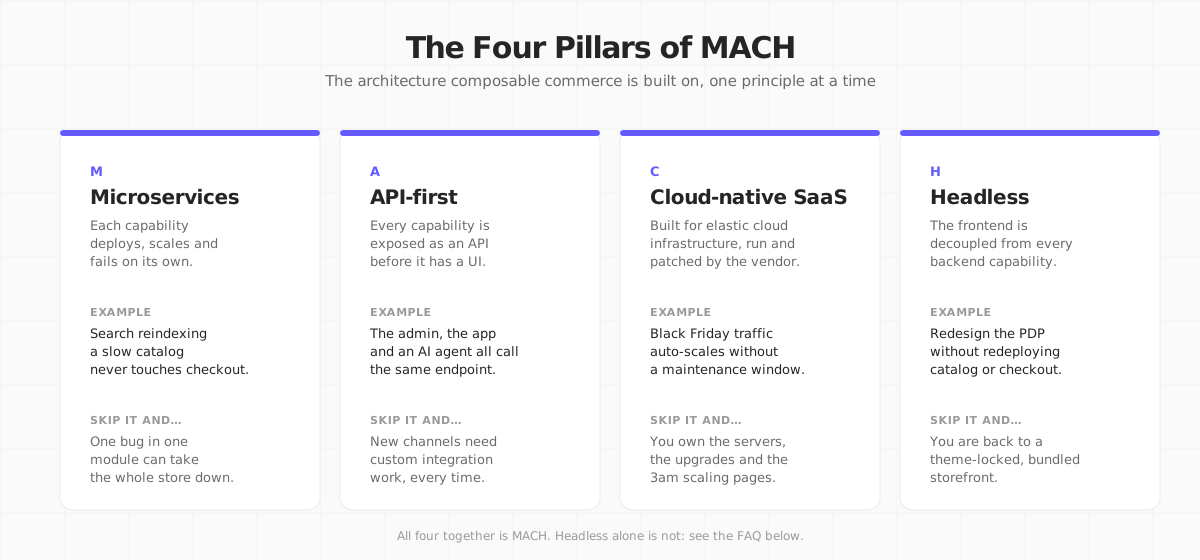
- Microservices. Each capability is its own deployable unit with its own data and its own failure domain. A slow search reindex should never take down checkout.
- API-first. The API is designed before any UI is built on top of it. The admin, the storefront, a partner integration and an AI agent all call the same endpoint, nothing is UI-only.
- Cloud-native SaaS. Vendors run and scale the infrastructure. You do not patch servers or plan your own capacity for Black Friday; the vendor's cloud does that.
- Headless. The presentation layer is separate from every backend capability, not just from "the backend" as one lump.
All four together is MACH. Headless by itself is not: plenty of headless stacks (including most hybrid platforms) are not built as independent microservices, and plenty of on-prem "headless" software is not cloud-native SaaS. The distinction matters because vendors use "MACH" loosely; ask which of the four principles a platform actually satisfies before taking the label at face value.
Packaged Business Capabilities: The Building Blocks
A composable stack is a set of PBCs wired together, usually through an orchestration layer you write yourself. Elastic Path describes a PBC as a bundle of microservices that together deliver one complete business function, with its own data schema, API and event stream. The capabilities that show up in almost every commerce stack:
- Catalog / PIM. Product data, variants, pricing rules, categories. commercetools, Elastic Path, Akeneo.
- Cart and checkout. Line items, promotions, tax, payment orchestration. Commerce Layer, commercetools, Elastic Path.
- Search and discovery. Faceted search, ranking, merchandising. Algolia, Elasticsearch/OpenSearch, Constructor.
- Content (headless CMS). Landing pages, PDP copy, editorial. Contentful, Contentstack, Sanity, Storyblok; see our best headless CMS for ecommerce roundup.
- Order management (OMS). Fulfillment, returns, inventory allocation across channels.
- Payments. Stripe, Adyen, Braintree, usually behind the cart/checkout PBC rather than called directly.
- Personalization and promotions. Talon.one, dynamic yield-style engines, increasingly folded into the catalog or cart PBC.
None of that is new technology. What is new is treating each one as a product you buy and replace independently, instead of a module bundled into one platform release cycle.
A useful gut check: if replacing your search provider means opening a ticket with your commerce platform vendor instead of just swapping an API key, you are not running a composable stack, whatever the marketing page calls it.
The Orchestration Layer: What Actually Glues It Together
Every composable stack needs something that calls the catalog PBC, the search PBC and the cart PBC, then hands one coherent response to the storefront. Nobody sells you this part; your team writes it, typically inside the Next.js (or similar) app itself as a server-side data layer:
Two SDKs, two authentication schemes, two data shapes to reconcile into one page, before search or personalization even enter the picture. This is not a knock on either vendor: both SDKs are well documented. It is the actual shape of composable engineering, and it is the line item every "just assemble best-of-breed services" pitch leaves out of the demo.
The Real Benefits of Composable Commerce
Composable is not just architecture astronautics. Real companies get real results from it:
- Best-of-breed at every layer. Adelco, a Chilean B2B distributor, connected its ecommerce site, in-person sales app and a carrier app on commercetools and grew ecommerce sales 400%, lifted conversion 20% and increased SKUs per self-service order by 25%.
- Independent release cycles. River Island piloted an RFID self-checkout service with commercetools as the backend and Mercaux and Stripe for the in-store pieces; adoption landed near 70% against a 50% target, without touching the rest of the commerce stack.
- No single point of failure. If the search PBC has an outage, checkout can keep working with degraded (or cached) search results, instead of the whole storefront going down.
- Negotiating leverage. Each vendor knows you can replace them without replatforming everything else, which is real pressure in a renewal conversation that a single-vendor contract does not give you.
The Real Cost of Composable Commerce
Here is what most composable commerce pitches leave out of the pitch deck.
Every PBC is a separate contract, at enterprise pricing. commercetools does not publish prices; deals are annual and negotiated, typically scoped to GMV (gross merchandise value, the total dollar value of orders processed). Elastic Path's own total-cost-of-ownership guide puts typical Commerce Cloud pricing north of $50,000 a year before implementation, tiered further by GMV band. Add a search PBC, a CMS, an OMS and a personalization engine, each with its own contract and renewal date, and the licensing line alone can run into six figures before a single line of storefront code ships.
Your team is the integration layer, permanently. The code sample above is not a one-time setup cost; it is ongoing engineering. Every PBC upgrades on its own schedule, and someone has to keep the contracts between them consistent: what happens when the cart PBC and the catalog PBC disagree about a price during a promotion? That reconciliation logic lives in your codebase, not any vendor's.
Data consistency becomes your problem. In a monolith, "the price" lives in one table. In a composable stack, price can be set in the catalog PBC, overridden by a promotions PBC, and re-validated by the cart PBC at checkout. Keeping those in sync, and debugging it when they drift, is a category of bug a single-backend architecture does not have.
Headcount, not just tooling. BigCommerce's estimate of $50,000-$150,000 for a mid-market headless build and $250,000+ for enterprise is the frontend cost. A composable backend adds integration engineering on top of that, ongoing, not a one-time project fee.
None of this means composable is a bad idea. It means the sales pitch of "just plug together the best tool for each job" understates the permanent staffing commitment by a wide margin.
Who Actually Needs Composable Commerce
Composable commerce earns its cost when:
- You run multiple brands, regions or channels off shared capabilities, and swapping one piece (a regional payment provider, a market-specific tax engine) for another is a recurring need, not a one-off.
- A specific capability is your competitive edge and you genuinely need the best-in-class version of it (search relevance for a huge catalog, a custom pricing engine for complex B2B contracts) rather than what a bundled platform ships.
- You already have a platform engineering team that can own an orchestration layer, on-call rotation and multiple vendor relationships as a permanent function, not a project.
Composable commerce is very likely the wrong call when:
- You are still finding product-market fit. A bundled backend chosen too early has never sunk a startup; six months spent building an integration layer instead of shipping has sunk plenty.
- You have one storefront, one region, one currency. The independent-swap benefit of composable does not show up until you have more than one of something to swap independently.
- You do not have a platform team today and are not planning to hire one. A composable stack without dedicated owners degrades into an unmaintained pile of half-integrated services, which is worse than the monolith it replaced.
A rough rule that holds up in practice: below roughly $10M a year in revenue, a single well-chosen backend (composable or not) almost always beats a fully assembled composable stack. Above that, it depends entirely on how many things you actually need to swap independently, not on how the vendor's homepage describes itself.
The Best Composable Commerce Platforms in 2026
| Platform | Category | Composability | Pricing (Sep 2026) | Best for |
|---|---|---|---|---|
| commercetools | Catalog + cart/checkout PBC suite | MACH Alliance founding member | Custom annual contracts, GMV-based | Enterprise programs with a platform team |
| Elastic Path | Catalog + pricing/promotions PBC suite | MACH-aligned | Custom, GMV-tiered, ~$50k/yr+ before implementation | Complex pricing, subscriptions, bundles |
| Commerce Layer | Cart/checkout + multi-market pricing PBC | MACH Alliance member | Free Developer plan (1,000 SKUs, 100 orders/mo); Enterprise custom | Multi-market inventory and pricing behind any frontend |
| VTEX | Unified commerce suite | Stepped away from the MACH Alliance in 2025, still positions as pragmatic composable | Fixed fee plus a percentage of GMV | Large retail and marketplaces, strong in Latin America |
| Alokai (formerly Vue Storefront) | Composable frontend / integration layer, not a backend PBC | Purpose-built to sit in front of a composable stack | Custom, sales-quoted | Teams with a composable backend already chosen who need the orchestration layer solved |
A few things that table does not say on its own:
Medusa and Saleor are modular, not fully composable in the MACH sense. Both are open-source, self-hostable engines you extend with your own modules or plugins, but each is one deployable system, not a set of independently swappable PBCs from different vendors. Our best headless commerce platforms guide covers where they fit; they are a strong middle ground between a bundled hybrid platform and a fully composable stack, at a fraction of the integration cost.
Alokai is not a backend at all. It solves the orchestration problem this guide keeps coming back to: the React/Vue frontend layer that calls your chosen PBCs, normalizes their responses and ships one storefront. Pair it with commercetools, Elastic Path or Commerce Layer as the backend; it is the piece most composable-commerce pitches skip over.
VTEX's exit from the MACH Alliance is worth knowing about. VTEX left the Alliance in 2025 while continuing to market itself as composable, illustrating exactly the labeling problem the MACH pillars exist to catch: check which of the four principles a platform actually satisfies, not which buzzwords are on its homepage.
commercetools: the reference composable platform
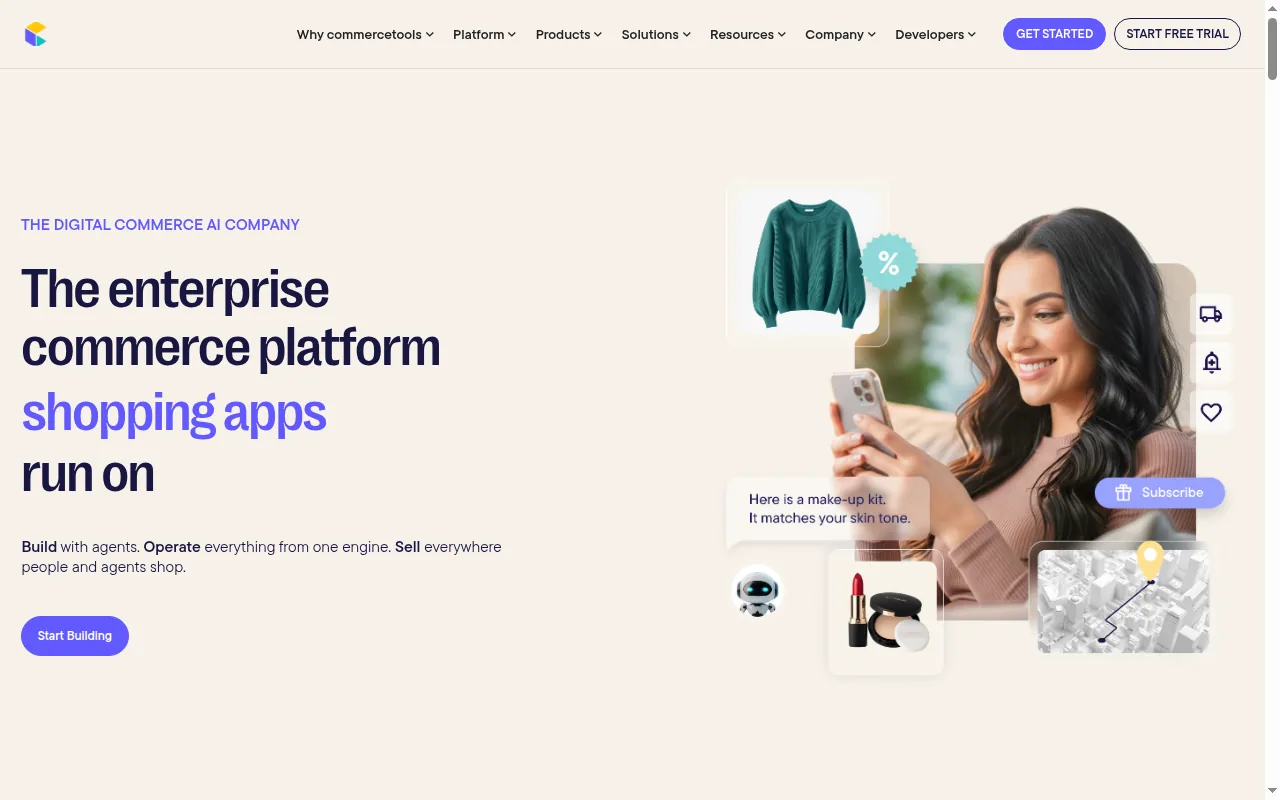
commercetools is the platform most "composable commerce" case studies are actually about. It ships a deep library of commerce APIs (catalog, cart, orders, subscriptions, quotes) as independently callable PBCs on a cloud-native, multi-tenant architecture, and was a founding member of the MACH Alliance. The catch is the same as any enterprise composable platform: pricing is not published, contracts are annual and GMV-scoped, and you are expected to bring (or hire) a platform team. If a public price list matters more than maximum flexibility, our commercetools alternatives guide covers lighter-weight options.
Elastic Path: best for complex pricing and subscriptions
Elastic Path leans into catalogs with heavy pricing logic: tiered B2B price books, bundles, subscriptions and promotions that would strain a simpler backend. It is MACH-aligned architecturally, with the same enterprise sales motion as commercetools: no public plan list, and its own TCO guide puts typical Commerce Cloud costs north of $50,000 a year before implementation, scaling with GMV.
Commerce Layer: API-first, strong for multi-market
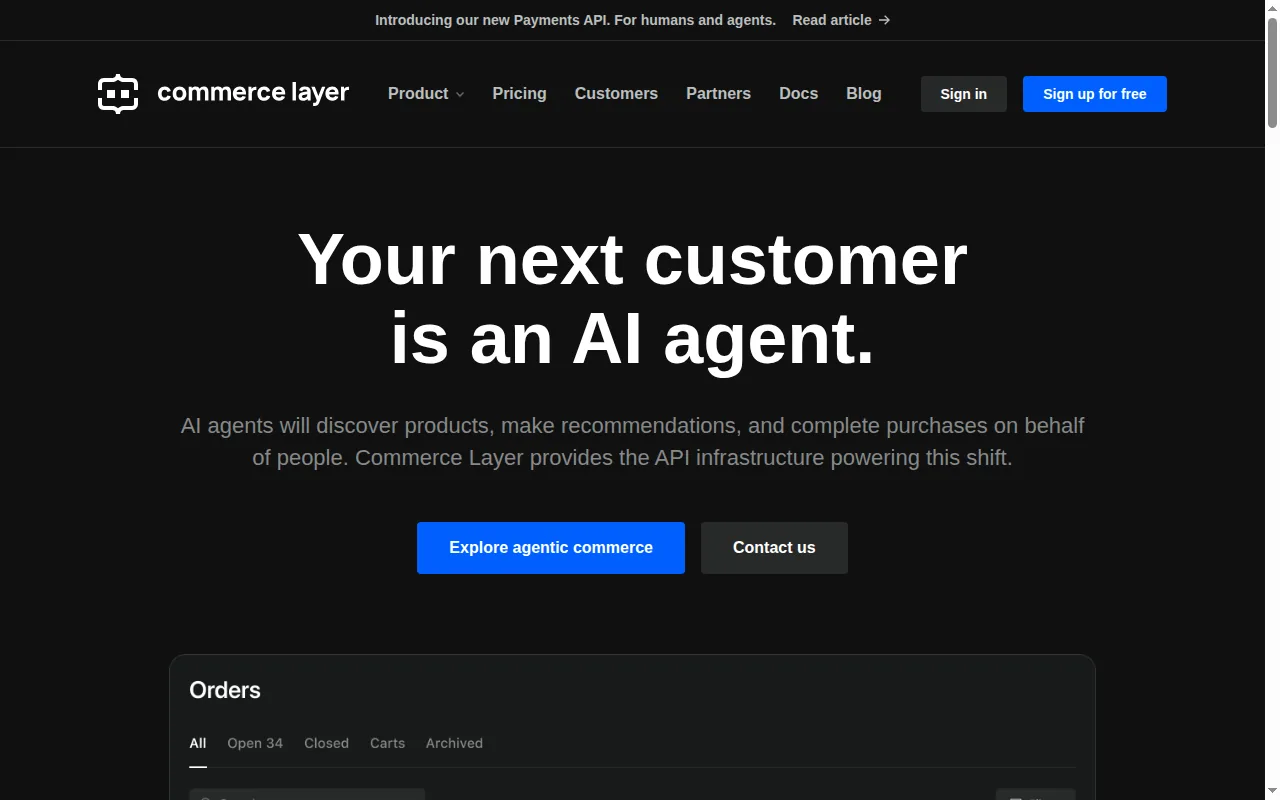
Commerce Layer focuses specifically on cart, checkout, pricing and inventory across multiple markets and currencies, with a clean REST/JS SDK and, unusually for this category, a free Developer plan: 1,000 SKUs and 100 live orders a month, no time limit. That makes it one of the few composable PBCs you can actually try before signing a contract. Enterprise pricing is custom above that.
VTEX: unified commerce at retail scale
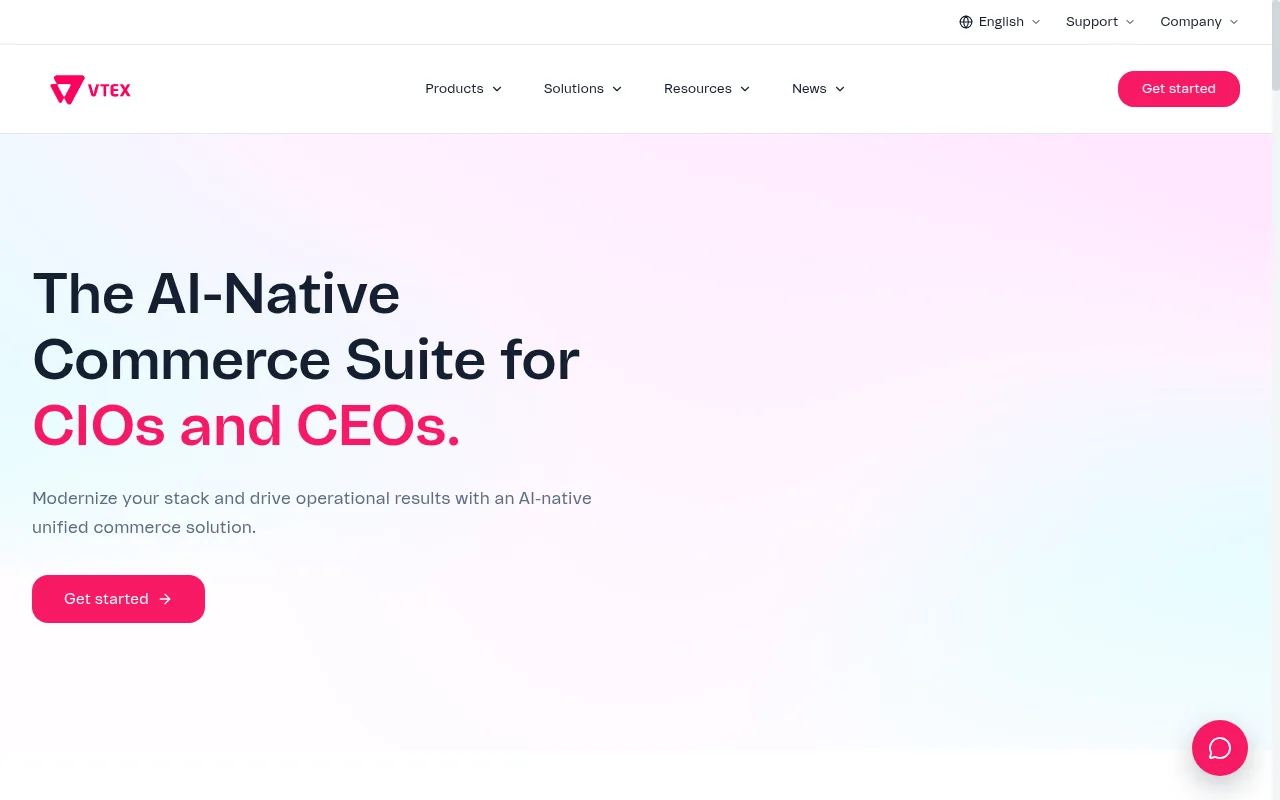
VTEX runs commerce for large retailers and marketplaces, especially across Latin America, combining catalog, OMS, marketplace and checkout in one connected suite. Pricing combines a fixed subscription with a percentage of GMV. It markets itself as composable, though it left the MACH Alliance in 2025; treat "composable" here as "modular within one vendor's suite" rather than "swap any piece for a competitor's."
Alokai: the composable frontend layer
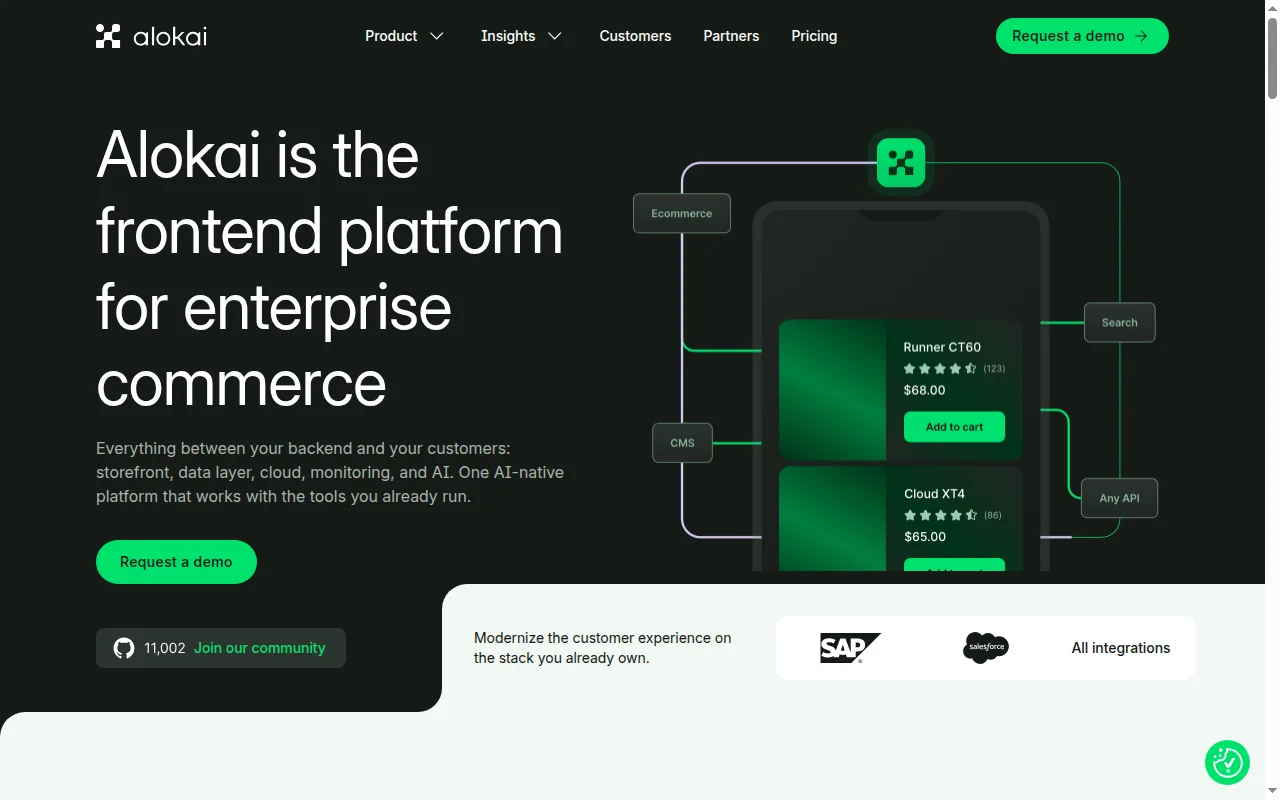
Alokai (rebranded from Vue Storefront) is not a commerce backend; it is the frontend and integration layer designed to sit in front of one. It normalizes calls to whichever PBCs you have chosen (commerce, search, CMS, payments) behind a single data layer, in React or Vue, and ships a component library (Storefront UI) to build the actual pages on top of it. If you have already committed to commercetools or Elastic Path and are dreading writing the orchestration code by hand, this is the category of tool built to absorb that work; pricing is custom and sales-quoted.
Where Your Next Store Fits
We build Your Next Store, and we will be direct about where it stands here: YNS is not composable commerce in the MACH sense, and we are not going to pretend it is. It is a hybrid platform: an open-source Next.js storefront template paired with one managed commerce backend (products, carts, orders, inventory, customers, search, blog, translations) behind a single typed REST SDK, not a set of independently swappable PBCs from different vendors. If your requirement is genuinely "swap the search provider without touching checkout," YNS is not that tool, and no amount of positioning changes that.
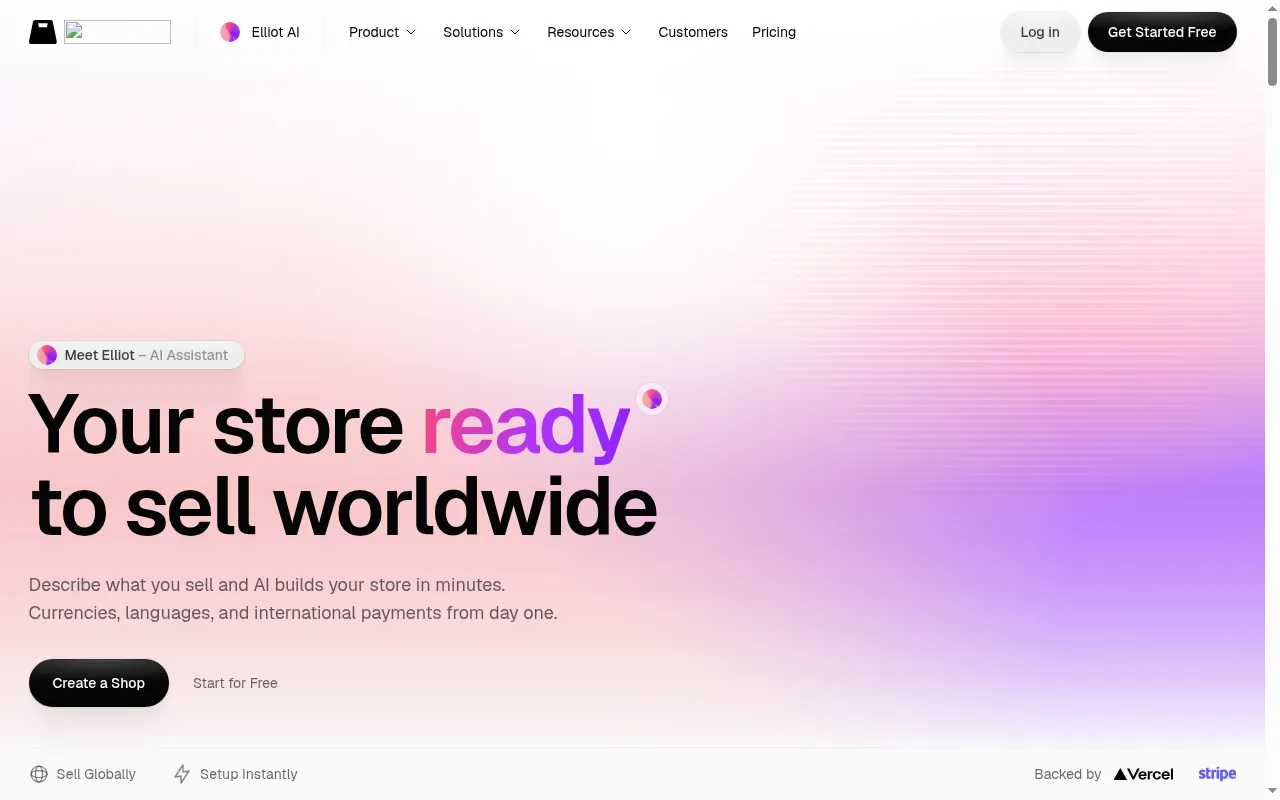
What YNS is built for is the far more common case: teams who want the frontend flexibility and API-first backend that headless and composable both promise, without taking on a second, third and fourth vendor contract and the integration engineering that comes with each one.
- One typed SDK, one backend.
commerce.productBrowse()returns products, carts, orders and inventory from a single PostgreSQL-backed API, the same data model whether you view it from the admin or the storefront. - Open-source storefront. The template is MIT-licensed. Fork it, redesign it, deploy it anywhere; it still talks to the managed backend.
- AI store builder. The
/designworkspace lets an AI agent edit the storefront code, show a live preview and deploy it, something no PBC-based stack ships as part of the box because no single vendor owns your storefront code. - Flat, published pricing. Plans start at $30/mo with 0% platform transaction fees. Compare that to "contact sales" on every platform in the table above.
Most teams do not need four vendor contracts to go headless. YNS ships the backend, the Next.js storefront and the typed SDK as one package, so your team writes storefront code instead of an orchestration layer.
Your Next Store is open source. Star the repo on GitHub: github.com/yournextstore/yournextstore
FAQ
Is composable commerce the same as headless commerce?
No. Headless decouples the storefront from the backend; the backend can still be one system. Composable goes further and decouples the backend itself into independently swappable services (catalog, cart, checkout, search, CMS), each its own vendor and contract. Every composable stack is headless; most headless stacks are not composable. See our headless commerce guide for the frontend-decoupling half of this.
What are packaged business capabilities (PBCs)?
A packaged business capability is a self-contained software product that delivers one complete commerce function, such as catalog, cart, search or content, and exposes it entirely through an API, with its own data and event stream. PBCs are the building blocks a composable stack assembles; MACH is the architectural standard they are built to.
How much does composable commerce cost?
There is no published number because none of the major composable vendors publish list prices; contracts are annual, negotiated, and usually scoped to GMV. As a rough floor, expect Elastic Path- or commercetools-class contracts to start in the tens of thousands of dollars a year per PBC, before the storefront build (the $50,000-$250,000+ BigCommerce estimates for headless frontends generally) and before the ongoing integration engineering a composable stack requires permanently.
Is MACH the same thing as composable commerce?
Not quite. Composable commerce is the strategy: assemble your stack from best-of-breed services. MACH (Microservices, API-first, Cloud-native, Headless) is the technical architecture that makes a service composable in the first place. A platform can call itself composable without satisfying all four MACH principles, which is why it is worth checking which ones actually apply rather than taking the label at face value.
The Bottom Line
Composable commerce is a real architecture with real results, not just enterprise sales theater: Adelco's 400% ecommerce growth and River Island's self-checkout numbers are genuine outcomes of splitting a backend into independently swappable services. It is also a permanent staffing commitment that most teams take on before they need to, chasing the flexibility of a Fortune 500 catalog while running a single-region, single-currency store. Count how many capabilities you actually need to swap independently this year, not how many a vendor's architecture diagram lets you swap in theory, and let that number decide whether you need four PBC contracts or one well-chosen backend.