How to Market to Gen Z: An Ecommerce Guide for 2026
 Jakub Neander
Sep 4, 202612 min read
Gen Z doesn't discover products on your homepage. They discover them in a comment section, decide whether to trust you from your bio, and check out without ever leaving the app. If you're marketing to Gen Z with a strategy built for a generation that clicked ads and read landing pages, you're optimizing for a path almost nobody in this cohort actually takes anymore. This guide covers what's replaced it: the channels that matter, the content style that converts, and the values-driven positioning that works only when it's real.
Who Is Gen Z as a Shopper, Actually
Gen Z (born roughly 1997-2012) is now old enough to be a serious commerce cohort: the oldest are pushing 30, buying homes, and managing household budgets, while the youngest are just getting their first debit card. Treating them as one monolithic "TikTok generation" is the first mistake most marketing plans make.
What's consistent across the age range is how they evaluate a brand before buying:
- Social platforms are the default research tool, not a supplement to it. Half of Gen Z uses TikTok specifically to search for products, and Instagram is where they say they'll spend the most time overall, according to Sprout Social's 2026 generational marketing research.
- Peer content outweighs brand content. Sprout Social found that 90% of Gen Z say social media ads, influencer posts, or organic brand content have inspired at least some of their purchases in the past six months, and 75% are more likely to buy from a brand specifically because it partners with an influencer they already follow.
- Values are a real filter, not a slogan. The same research found 30% of Gen Z will stop buying from a brand outright if its values conflict with their own.
- They notice AI content, and they don't love it unlabeled. Gen Z is the generation most likely to say brands should stop posting AI-generated content without clearly disclosing it, at 31% according to Sprout Social's playbook, well above older cohorts.
None of this means Gen Z is harder to sell to. It means the sale increasingly happens somewhere other than your website, using signals your brand doesn't fully control.
Why Most Brands Get Gen Z Marketing Wrong
The most common mistake isn't a channel choice. It's importing a millennial-era playbook (polished hero shots, a single brand voice, quarterly campaign drops) onto platforms built for something else entirely. A few specific failure patterns show up over and over:
- Treating TikTok like a billboard. Posting the same 30-second commercial you ran on YouTube, with a logo bump at the end, reads as an ad the second it starts, and Gen Z scrolls past ads in under a second.
- One brand voice for every platform. A caption written for LinkedIn and cross-posted to TikTok looks like exactly what it is: content nobody bothered to adapt.
- Confusing "values" with a values statement. A sustainability line in your About page footer isn't positioning. It's decoration, and Gen Z can tell the difference because they check.
- Chasing macro-influencers for reach instead of micro-creators for trust. Reach without a believable messenger just means more people see an ad they don't believe.
- No plan for the comment section. For a lot of Gen Z shoppers, the comments under your product video are the reviews page. Leaving it unmoderated or unanswered is the same as leaving your reviews page broken.
The fix for all five is the same underlying shift: stop treating the feed as a distribution channel for a campaign you already finished, and start treating it as the place the actual sale happens.
The Gen Z Discovery-to-Purchase Path
The diagram below shows why this matters structurally, not just stylistically. A traditional funnel assumes an ad sends someone to your site, where they research and eventually check out days later. Gen Z's actual path is shorter, louder, and loops back on itself: a creator clip earns trust, the comment section validates it, a quick profile check confirms the brand is real, and checkout happens without the shopper ever leaving the app.
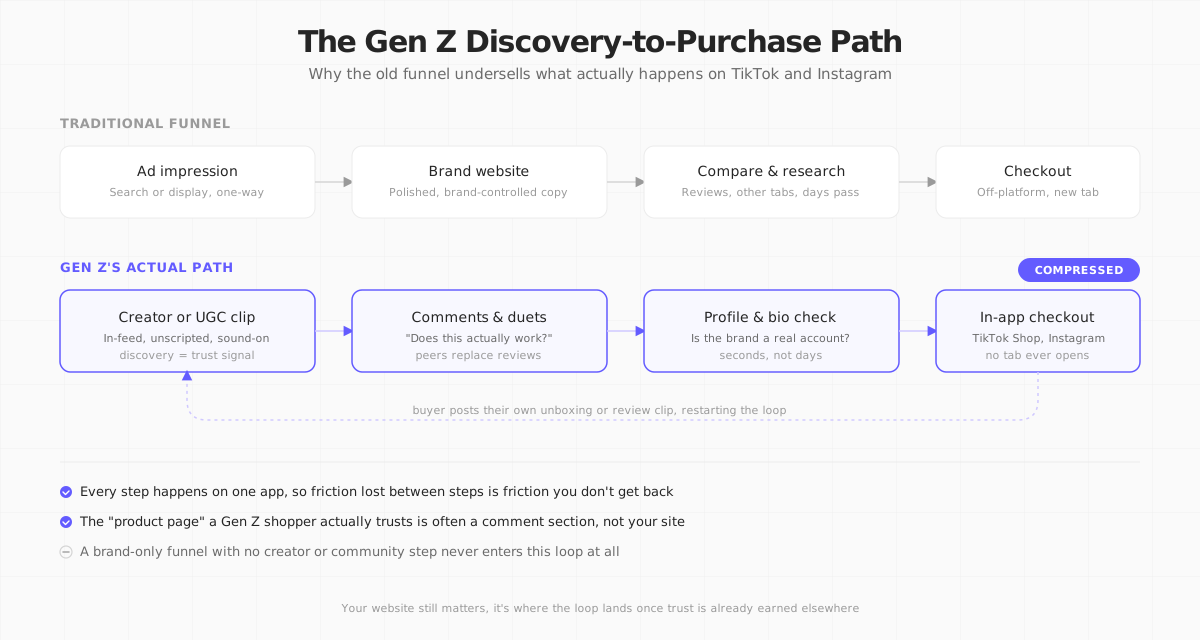
The practical implication: your website hasn't stopped mattering, but it's no longer where the trust decision gets made. It's where the loop lands once trust is already earned somewhere else. If your product page is excellent but nothing upstream of it earns that trust, you're optimizing the wrong step.
Where to Market to Gen Z: Channel by Channel
Not every platform plays the same role, and running an identical strategy across all of them is exactly the mistake covered above. Here's what each one is actually good for.
TikTok and TikTok Shop
TikTok is the clearest case of a platform where discovery and checkout have fully merged. eMarketer projects US TikTok Shop sales will reach roughly $23.41 billion in 2026, up 48% year over year, a growth rate eMarketer expects to make it the fastest-growing online retailer it tracks for a second consecutive year. NielsenIQ data cited in the same reporting puts household penetration at 9% of US households making at least one TikTok Shop purchase, with average annual spend around $118 across three to four orders.
The practical takeaway isn't "get on TikTok Shop" as a checkbox. It's that the entire discovery-to-checkout loop can now happen without the shopper ever leaving the app, so your content strategy and your commerce strategy on TikTok can't be run by two disconnected teams.
Instagram remains where Gen Z says it spends the most overall time, per Sprout Social's research above, and it functions less as a discovery engine and more as a verification layer: after seeing a product on TikTok, a Gen Z shopper checks the brand's Instagram to see if it's an active, real account with a consistent posting history and genuine engagement, not a storefront that only exists to run ads. A dormant or purely promotional Instagram undercuts trust built somewhere else.
YouTube Shorts and long-form
Gen Z is the one generation that still meaningfully engages with long-form video, and it's concentrated on YouTube. Short-form content still gets the volume, but longer-format reviews, hauls, and "day in the life with this product" content on YouTube carries more weight for considered purchases, where a 15-second clip can't cover enough ground.
Discord and community spaces
For brands with a genuine hobbyist or enthusiast base (streetwear, gaming peripherals, skincare, fitness gear), a Discord server or equivalent community space does something feeds can't: it turns customers into a standing group who talk to each other, not just to the brand. It's a heavier lift than a content calendar, and it only works if someone on your team actually shows up in it. This is close to a survival requirement rather than a nice-to-have for a category like streetwear, where drop announcements and community hype are the actual marketing engine, not a supplement to it.
Content That Actually Works: Authenticity Over Polish
If there's one theme that shows up across every platform above, it's that unpolished, obviously human content consistently outperforms brand-produced polish with this audience. That's not a stylistic preference, it's a trust signal: Gen Z has grown up fluent in advertising and can tell within a few seconds whether something was made to sell them or made to show them something real.
A few things that consistently work:
- User-generated content and creator clips over produced ads. Someone actually using the product, filmed on a phone, reads as evidence. A studio shoot reads as a claim.
- Employee-generated content. Letting real staff show up on camera, not just an official brand account, performs disproportionately well with Gen Z specifically, per Sprout Social's research above showing employee-led content is a top discovery source for this generation.
- Disclosing AI use rather than hiding it. Given that 31% of Gen Z specifically wants brands to stop posting unlabeled AI content, the safer move if you use AI-generated visuals or copy is to say so plainly, not blend it in and hope nobody notices.
- Micro-creators over macro-influencers, for trust rather than reach. A creator with a smaller, engaged following who genuinely uses the category reads as a recommendation. A celebrity with a paid caption reads as an ad, even when both are technically endorsements.
Two brands that consistently get cited as doing this well, for different reasons:
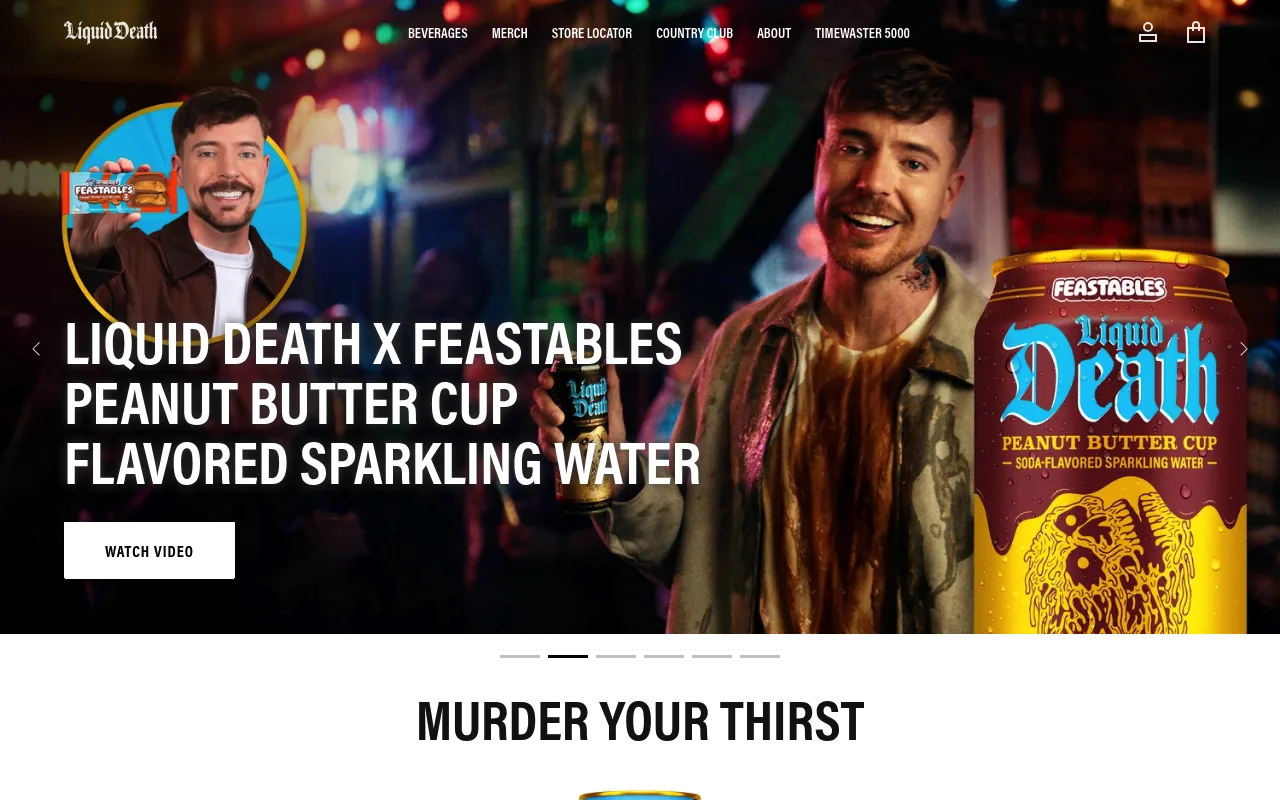
Liquid Death built an entire beverage brand on content that's funny and self-aware first, product-forward second, a tone that only works because it's consistent everywhere the brand shows up, not just in one viral moment.
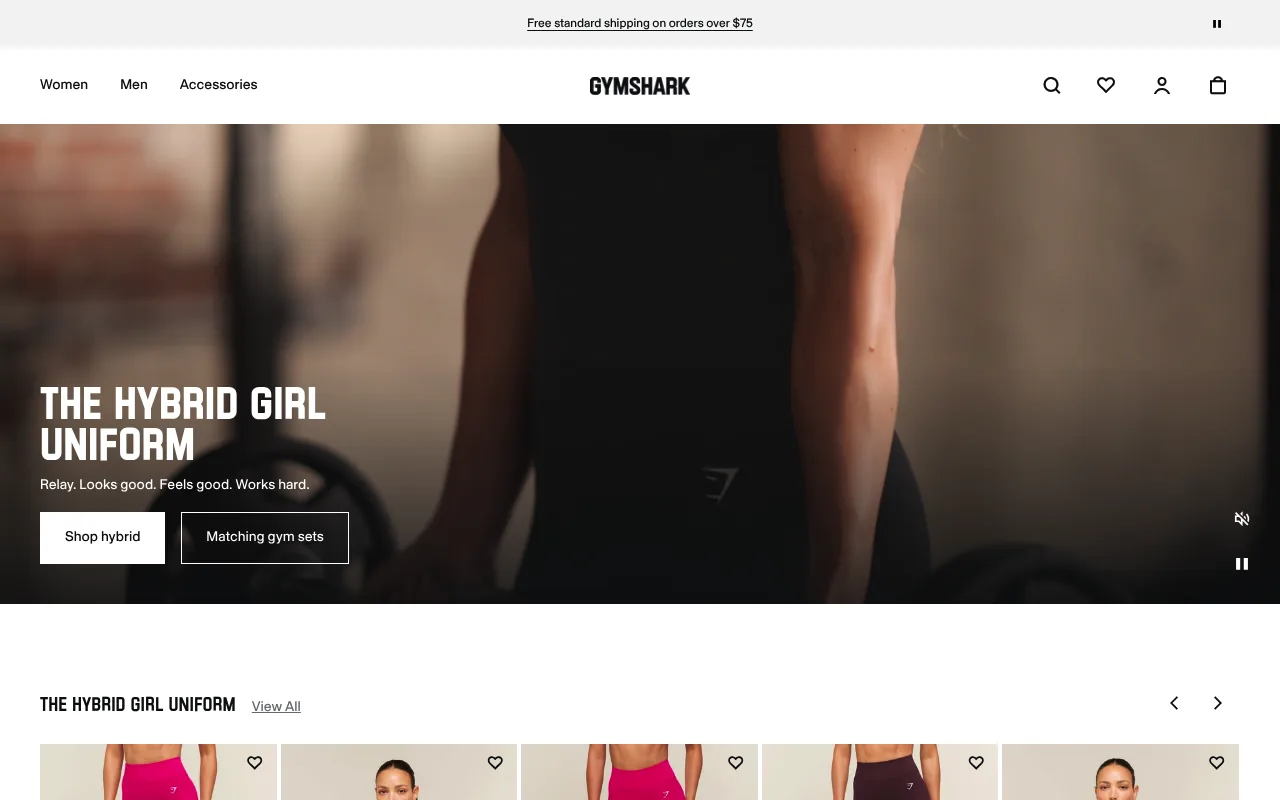
Gymshark grew from a bedroom operation into a billion-dollar apparel brand largely by investing in creator partnerships and community events (its Gymshark66 challenge and in-person meetups) years before "community-led growth" was a marketing category with a name. If a similar fitness apparel brand is what you're building, our guide to starting one covers the fabric, sizing, and MOQ decisions behind the marketing.
Neither brand's approach is copy-pasteable wholesale, but the underlying discipline is: know who your actual customer is on video, and let them do more of the talking than your brand account does.
Values-Driven Positioning Without Greenwashing
Gen Z genuinely does weigh brand values more than older generations, but the data is more nuanced than "sustainability sells." McKinsey's research on sustainable packaging found that in Germany, 25% of high-income Gen Z consumers said they'd pay "a lot more" for sustainable packaging, compared with just 1% of high-income Gen X consumers, a real gap, but one concentrated in a specific income segment, not a universal willingness to pay a premium.
What that means practically: values-driven positioning works as a tiebreaker and a trust signal, not as a substitute for a good product at a fair price. And the bar for what counts as credible is rising, along with the legal risk of getting it wrong, which now genuinely differs by jurisdiction.
In the EU, generic claims are being legislated out
The Directive on Empowering Consumers for the Green Transition becomes enforceable across the EU on September 27, 2026. From that date, generic sustainability labels and claims like "eco-friendly" or "green" can no longer be used unless they're backed by a public-authority scheme or an independently certified standard. If you sell into the EU and your product pages, ads, or packaging lean on unqualified sustainability language today, this is a hard deadline to have it either substantiated or rewritten.
In the US, enforcement is looser but state law is picking up the slack
There's no equivalent federal deadline. The FTC's existing environmental marketing guidance (the "Green Guides") hasn't been finalized in an updated form as of 2026, and federal enforcement activity has slowed. That gap is being filled at the state level, with California, New York, and a handful of other states pursuing their own consumer-protection actions against misleading environmental claims, so "there's no federal rule yet" isn't the same as "there's no risk."
Influencer disclosure rules also differ by jurisdiction
If your values-driven or UGC-heavy strategy includes paid creators, disclosure isn't optional in either major market, and the specifics vary. In the US, the FTC's Endorsement Guides require any "material connection" between a brand and a creator, payment, free product, or otherwise, to be disclosed clearly and conspicuously, not buried in a bio or hashtag pile. In the UK, the ASA's CAP Code requires paid or brand-controlled content to be "obviously identifiable" as advertising, with #ad or an equivalent label at the very start of a caption or the first frame of a video, not appended at the end where it's easy to miss.
The safest default for any UGC or creator content you pay for or receive free product for: disclose it plainly, at the start, in every market you sell into. It's cheaper than a compliance problem, and Gen Z generally respects the disclosure more than they penalize the partnership.
Building Community, Not Just an Audience
An audience watches. A community talks back, to you and to each other. The distinction matters more with Gen Z than with any prior generation, because so much of their trust-building happens in exactly that back-and-forth: comment replies, duets, stitched reaction videos, and Discord threads where customers troubleshoot or hype products for each other without a brand account in the room.
Concretely, that means:
- Actually reply to comments, especially skeptical ones. A brand account answering "does this really work for X" with a real, specific answer does more for conversion than another polished post.
- Repost and credit UGC instead of just liking it. Being featured is a stronger incentive for a customer to keep posting than any discount code.
- Show up where the conversation already is, rather than trying to pull it onto owned channels. A Discord server nobody in your community was asking for will sit empty.
- Let community feedback actually change something. Gen Z can tell the difference between a poll used as content and a poll whose answer changed a product decision.
Where Your Store Fits in the Gen Z Path
Everything above happens off your website, which raises the obvious question: once a Gen Z shopper does land on your site, whether from a bio link, a DM, or a Google search after seeing your product on TikTok, what actually needs to be true?
Mostly, that it's fast and doesn't waste the trust the content already built. A shopper who just watched a 12-second clip and tapped through has near-zero patience for a slow-loading page or a confusing checkout undoing the momentum a creator spent 30 seconds building.
This is one of the places our own product, Your Next Store, is relevant: it's built on Next.js with server components and Partial Prerendering, so a product page reached from a social bio link loads fast by default rather than depending on how well a theme happens to be optimized. It won't run your TikTok Shop feed or your Discord for you, and it isn't a replacement for the content and community work covered above, those are still entirely your job. What it's built to get out of the way is the part after the click: a store that doesn't lose the sale to a slow page once the creator, the comment section, and the bio check have already done the hard work of earning trust.
Build a storefront fast enough to keep the trust your content already earned. Launch on Next.js with a store that doesn't stall on mobile.
Common Mistakes Brands Make Marketing to Gen Z
- Running the same ad creative across every platform. What works as an in-feed TikTok clip dies as an Instagram Reel with the same edit and no adaptation.
- Treating one viral moment as a strategy. A single successful clip is a data point, not a repeatable system, unless you understand specifically why it worked.
- Going quiet after a purchase. Post-purchase is exactly when a customer is most likely to make the UGC that restarts the loop, and most brands stop engaging right when the ask (share your unboxing) would land best.
- Over-claiming on values. A vague sustainability claim that can't survive a follow-up question is worse than no claim at all, and increasingly a legal liability in the EU specifically.
- Ignoring the comment section as a support channel. Unanswered "is this legit" comments under a product video cost more conversions than most brands realize, because that's exactly the moment a shopper is deciding whether to trust you.
FAQ
What is the best social media platform to market to Gen Z in 2026?
There isn't a single best platform, they play different roles. TikTok is where discovery and in-app checkout increasingly merge, with US TikTok Shop sales projected around $23.41 billion in 2026. Instagram functions more as a trust-verification layer once a shopper has already discovered a product elsewhere. YouTube carries more weight for considered purchases that need longer-form explanation. Most brands need a presence on more than one, tailored to that platform's actual role in the path.
Do you need influencers to market to Gen Z, or does organic content work?
Both work, but they do different jobs. Organic UGC and employee-generated content build baseline trust cheaply and continuously. Paid creator partnerships, especially with smaller, engaged micro-creators rather than macro-influencers, add reach and a specific kind of social proof. Whichever you use, disclosure rules apply: the FTC's Endorsement Guides in the US and the ASA's CAP Code in the UK both require clear, upfront disclosure of paid or gifted content, not a buried hashtag.
How do you market sustainability to Gen Z without it looking like greenwashing?
Make claims specific and substantiated rather than generic. "Eco-friendly" or "sustainable" with nothing backing it is both unpersuasive to a skeptical audience and, in the EU, will become legally restricted once the Empowering Consumers for the Green Transition Directive takes effect on September 27, 2026, requiring generic sustainability labels to be backed by a certified standard or public authority. A specific, verifiable claim (the actual material, the actual certification, the actual sourcing decision) reads as more credible than a broad label, and it's the version that survives regulatory scrutiny too.