Best Next.js Ecommerce Templates: 9 Free Starters for 2026
 Jakub Neander
Updated Sep 18, 202614 min read
A Next.js ecommerce template is only as good as the backend behind it and the last commit on its main branch. Since we first published this list, Medusa archived its original Next.js starter, Vercel's Next.js Commerce is still on a Next.js 15 canary, and Spree, Vendure and Saleor shipped brand-new Next.js 16 storefronts. We rechecked every repo on 18 September 2026. Here are the nine Next.js ecommerce templates and starters worth cloning today, all with free source code, and what each one really costs to run.
Bias disclosure: we build Your Next Store, one of the templates below. Every other entry was checked against its own GitHub repo: Next.js version from package.json, license from the LICENSE file, and the date of the last commit on the default branch.
Quick picks:
- Fastest path to a live store: Your Next Store. MIT-licensed Next.js 16 storefront on a managed commerce backend, plus an AI builder if you'd rather not write code
- Best headless Shopify starter: Vercel's Next.js Commerce. The most-starred Next.js ecommerce template on GitHub
- Best free, fully self-hosted stack: Medusa DTC Starter. Backend, admin and storefront in one MIT monorepo
- Best CMS + commerce in one app: Payload Ecommerce Template. Admin, content and shop in a single Next.js deploy
- Newest Next.js 16 storefronts: Spree Storefront and the Vendure Next.js Starter
How We Picked These Next.js Ecommerce Templates
We only kept a template if it passed all of these:
| Criteria | Why It Matters |
|---|---|
| App Router | Pages Router templates are technical debt from day one |
| Active maintenance | A commit on the default branch in the last six months, and not archived |
| Real commerce backend | Cart, checkout and orders that work, not just a product grid UI kit |
| TypeScript | Non-negotiable for production ecommerce |
| Clear license | You need to know whether you can fork it, sell it or ship it for a client |
We dropped two entries from the previous version of this list. Evershop is an actively maintained GPL-3.0 platform, but it runs on its own React framework rather than Next.js, so it doesn't belong on a Next.js list. Crystallize's Next.js boilerplate (nextjs-furnitut) hasn't had a commit since March 2026 and is pinned to a Next.js 15 canary. We also swapped Medusa's archived nextjs-starter-medusa for its replacement, the DTC Starter.
Once you've picked a template, our step-by-step guide to building a Next.js ecommerce store covers architecture choices, caching and working code for the Next.js 16 App Router.
Next.js Ecommerce Templates Compared
| Template | Next.js | Backend | Payments | License | Free? |
|---|---|---|---|---|---|
| Your Next Store | 16.3 | YNS managed backend | Stripe (via the backend) | MIT | Code free, backend from $30/mo |
| Next.js Commerce | 15.6 canary | Shopify | Shopify checkout | MIT | Code free, needs a Shopify plan |
| Medusa DTC Starter | 15.5 | Medusa 2 (self-host or Cloud) | Stripe via Medusa providers | MIT | Yes, self-hosted |
| Payload Ecommerce | 16.3 | Payload (same app) | Stripe | MIT | Yes, self-hosted (beta) |
| Saleor Paper | 16.3 | Saleor (self-host or Cloud) | Stripe, extensible | FSL-1.1-ALv2 | Free to use, source-available |
| Spree Storefront | 16 | Spree 5 (Rails) | Stripe, PayPal, Adyen | MIT (Spree core BSD-3) | Yes, self-hosted |
| Vendure Next.js Starter | 16.3 | Vendure (Node.js) | Vendure payment plugins | MIT (Vendure core GPLv3) | Yes, self-hosted |
| BigCommerce Catalyst | 16.3 | BigCommerce | BigCommerce checkout | MIT | Code free, needs a BigCommerce plan |
| NextMerce | 16.1 (free lite) | Sanity CMS | Stripe (Pro) | No license file (lite) | Lite free, Pro paid |
And the maintenance snapshot behind it, taken on 18 September 2026:
| Repo | GitHub stars | Last commit on default branch |
|---|---|---|
| yournextstore/yournextstore | 5.5k | Sep 17, 2026 |
| vercel/commerce | 14.3k | Jun 10, 2026 |
| medusajs/dtc-starter | 121 (Medusa core: 36k) | Sep 17, 2026 |
| payloadcms/payload (template folder) | 45k (monorepo) | Sep 15, 2026 |
| saleor/storefront | 1.6k | Sep 15, 2026 |
| spree/storefront | 62 (Spree core: 15.7k) | Sep 6, 2026 |
| vendurehq/nextjs-starter-vendure | 43 (Vendure core: 8.4k) | Aug 19, 2026 |
| bigcommerce/catalyst | 245 | Sep 16, 2026 |
| NextMerce/nextjs-ecommerce-template | 301 | Mar 16, 2026 |
Low star counts on the new starters mostly reflect their age: Spree's storefront was created in February 2026, and the backends behind them are mature projects with thousands of stars.
Free Next.js Ecommerce Templates: What "Free" Really Means
Every template on this list gives you the source code for free. None of them gives you a free store. The code is the cheap part: what you pay for is the backend that holds products, carts and orders, plus hosting and payment processing. There are three cost models:
1. Free code, free backend (you pay for hosting). Medusa DTC Starter, Payload Ecommerce, Spree Storefront and the Vendure starter are fully self-hostable. Your costs are a server, a database and your time running them. This is the only truly $0-license route.
2. Free code, paid commerce platform. Next.js Commerce needs a Shopify plan, Catalyst needs a BigCommerce plan, and Your Next Store needs a YNS plan (Starter is $30/month, with 0% platform transaction fees). You skip running infrastructure in exchange for a subscription.
3. Free "lite", paid "pro". NextMerce ships a free lite repo on GitHub and sells a Pro version with more pages and integrations such as Stripe and Algolia.
Check the license, not just the price. MIT means you can do almost anything, including client work. Saleor's new storefront uses the Functional Source License (FSL-1.1-ALv2): free to use and modify, but you can't offer it as a competing commercial product, and each release converts to Apache 2.0 after two years. Vendure's core is GPLv3 unless you buy its commercial license, while its Next.js starter is MIT. NextMerce's lite repo has no license file, which by default means you don't get reuse rights. Ask the author before shipping it.
If your budget is literally zero, pick from group 1 and deploy on a free hosting tier while you validate. If your budget is small but your time is smaller, group 2 is usually cheaper once you count the hours spent on database backups, upgrades and security patches.
The 9 Best Next.js Ecommerce Templates and Starters
1. Your Next Store
Best for: Developers who want a production Next.js 16 storefront without running a commerce backend, and non-technical founders who want an AI-built store.
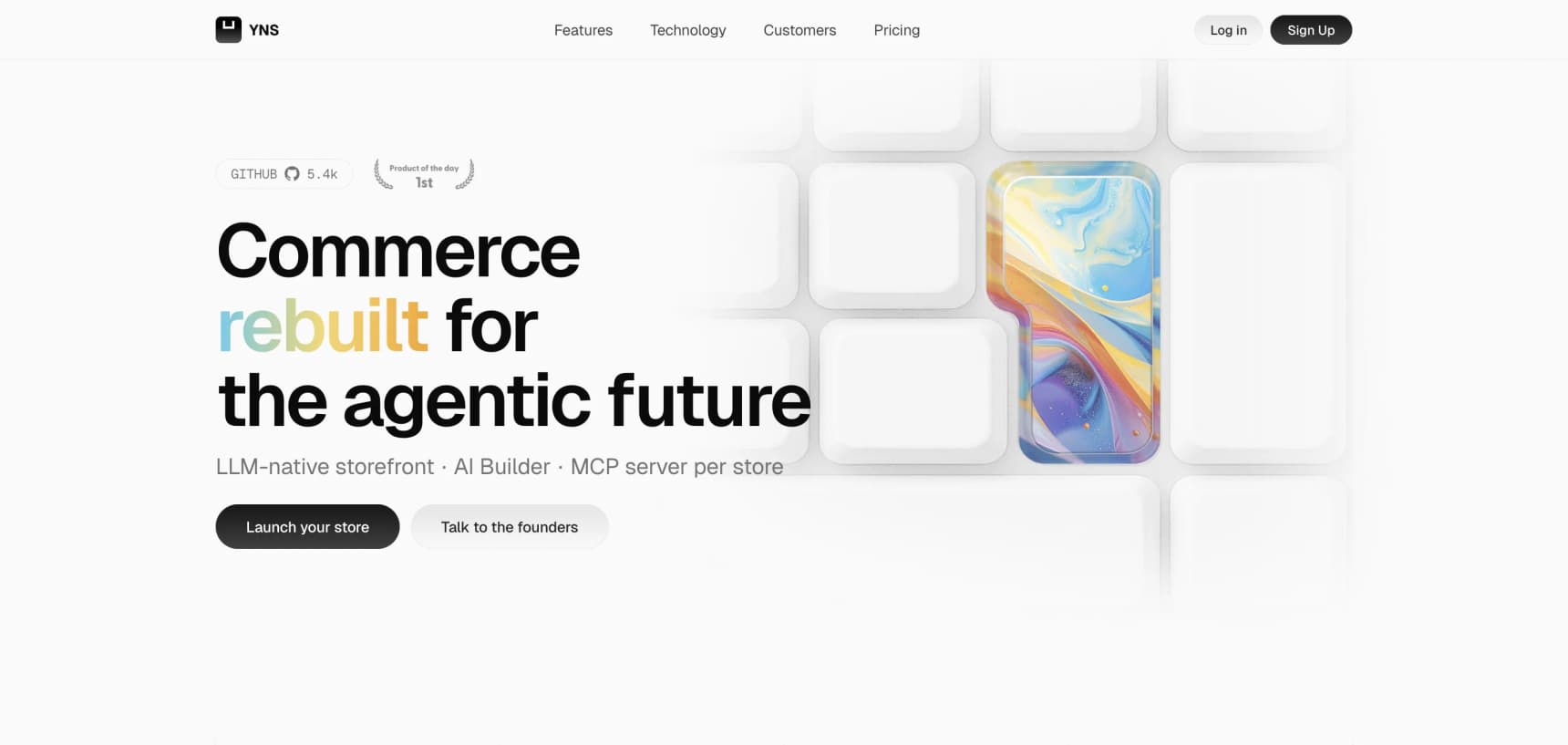
Your Next Store has two parts: an open-source Next.js storefront (MIT) and a managed commerce backend that stores products, variants, carts, orders, inventory and customers in PostgreSQL. The storefront talks to the backend through the typed commerce-kit SDK using a YNS_API_KEY. Stripe handles payment processing on the backend side; the storefront has no Stripe code of its own.
What makes it stand out:
- Current Next.js: Next.js 16.3 with
cacheComponentson, so pages serve a prerendered static shell and stream the dynamic parts (Partial Prerendering) - Real commerce, day one: products, variants, collections, categories, cart, checkout, search and a blog are already wired up
- SEO defaults: JSON-LD for products and breadcrumbs, sitemaps, Open Graph metadata and an
llms.txt - AI builder: describe your store in a chat and the AI edits the real Next.js code, with a live preview
- Admin dashboard and REST API on the managed side, for products, orders, inventory and team access
Tradeoffs: The template is storefront-only. It needs the YNS backend, and there is no free plan: Starter is $30/month (Growth $60, Pro $360), all with 0% platform transaction fees, so you only pay Stripe's standard processing fees. If you want to own the database too, Medusa, Spree or Vendure fit better.
Stack: Next.js 16, React 19, TypeScript, Tailwind CSS, shadcn/ui, commerce-kit
Pick a template that ships itself. Try the AI builder on YNS: describe your store and watch it get built.
2. Vercel Next.js Commerce
Best for: Shopify merchants who want a headless Next.js storefront and are comfortable on a Next.js 15 codebase.
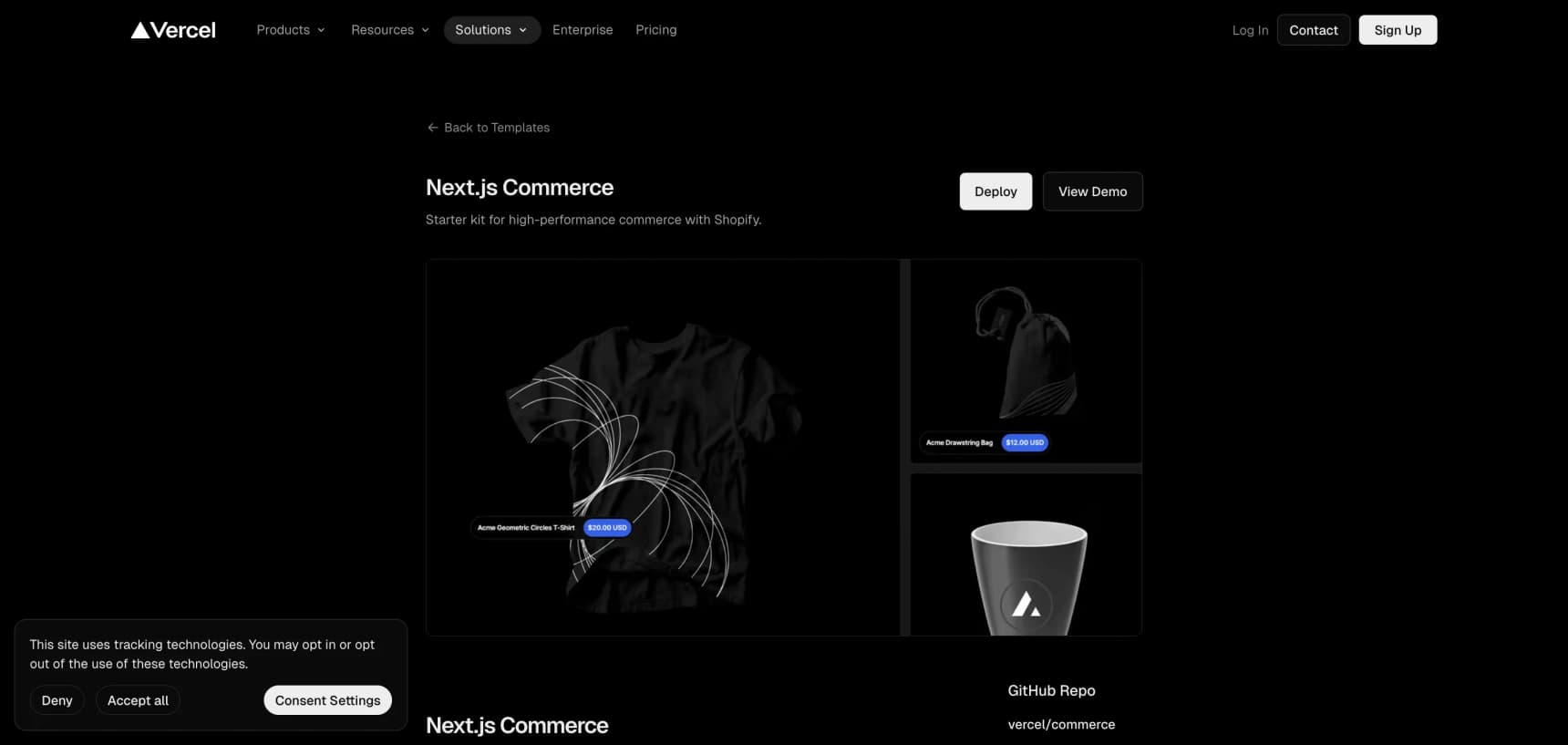
Next.js Commerce is Vercel's official ecommerce template and, at 14.3k stars, the most popular Next.js ecommerce template on GitHub. When people search for "Next.js Commerce" this is the repo they mean. It is a full App Router storefront built on Shopify's Storefront API, using Server Components, Server Actions, Suspense and useOptimistic.
What makes it stand out:
- Shopify-native: catalog, collections, cart and pages come from Shopify; checkout redirects to Shopify's hosted checkout
- Early adopter of the new caching model: data functions use
"use cache"withcacheTagandcacheLife("days"), and the cart action usesupdateTag - Dynamic OG images for the home page, pages and collections
- Provider forks: the README lists community ports for BigCommerce, Medusa, Saleor, Shopware, Swell, Wix and others, which swap out
lib/shopify
Tradeoffs: Vercel only actively maintains the Shopify version, so you need a Shopify plan. As of September 2026 the repo is pinned to next@15.6.0-canary.60 and still enables experimental.ppr and experimental.useCache, flags that Next.js 16 replaced with the single cacheComponents option. Expect an upgrade pass before you build on it. Commits are infrequent: the last one on main was in June 2026, mostly dependency and security bumps in between. Also note that older write-ups describe Edge Runtime API routes: the current code doesn't use them.
Stack: Next.js 15 (canary), React 19, Shopify Storefront API, TypeScript, Tailwind CSS v4
Weighing Next.js Commerce against a Stripe-based stack? The main difference is the backend: Next.js Commerce is a Shopify frontend, while YNS pairs its storefront with its own commerce backend. Shopify's plan and fee structure is covered in Shopify transaction fees explained.
3. Medusa DTC Starter
Best for: Developers who want to own every layer (database, API, admin and storefront) with no license fees.
Medusa has archived its long-running nextjs-starter-medusa (last updated April 2026) and points to the DTC Starter instead. It's a Turborepo monorepo with the Medusa 2 backend (including its admin dashboard) in apps/backend and a Next.js storefront in apps/storefront.
What makes it stand out:
- Full backend ownership: your own PostgreSQL database, API and admin
- Multi-region: automatic country detection, currencies and region-based pricing
- Complete storefront flows: variants, promotion codes, multi-step checkout, customer accounts and order history
- Medusa Cloud: a managed option if you want Medusa's backend without running it yourself
Tradeoffs: The storefront is on Next.js 15.5 and Tailwind v3, not 16. Local setup is quick with Medusa's CLI, but in production you run two apps plus PostgreSQL (and whatever infrastructure modules you add), unless you use Medusa Cloud.
Stack: Next.js 15.5, Medusa 2.21, PostgreSQL, TypeScript, Tailwind CSS
4. Payload Ecommerce Template
Best for: Content-heavy stores where products live next to editorial pages, landing pages and a blog.
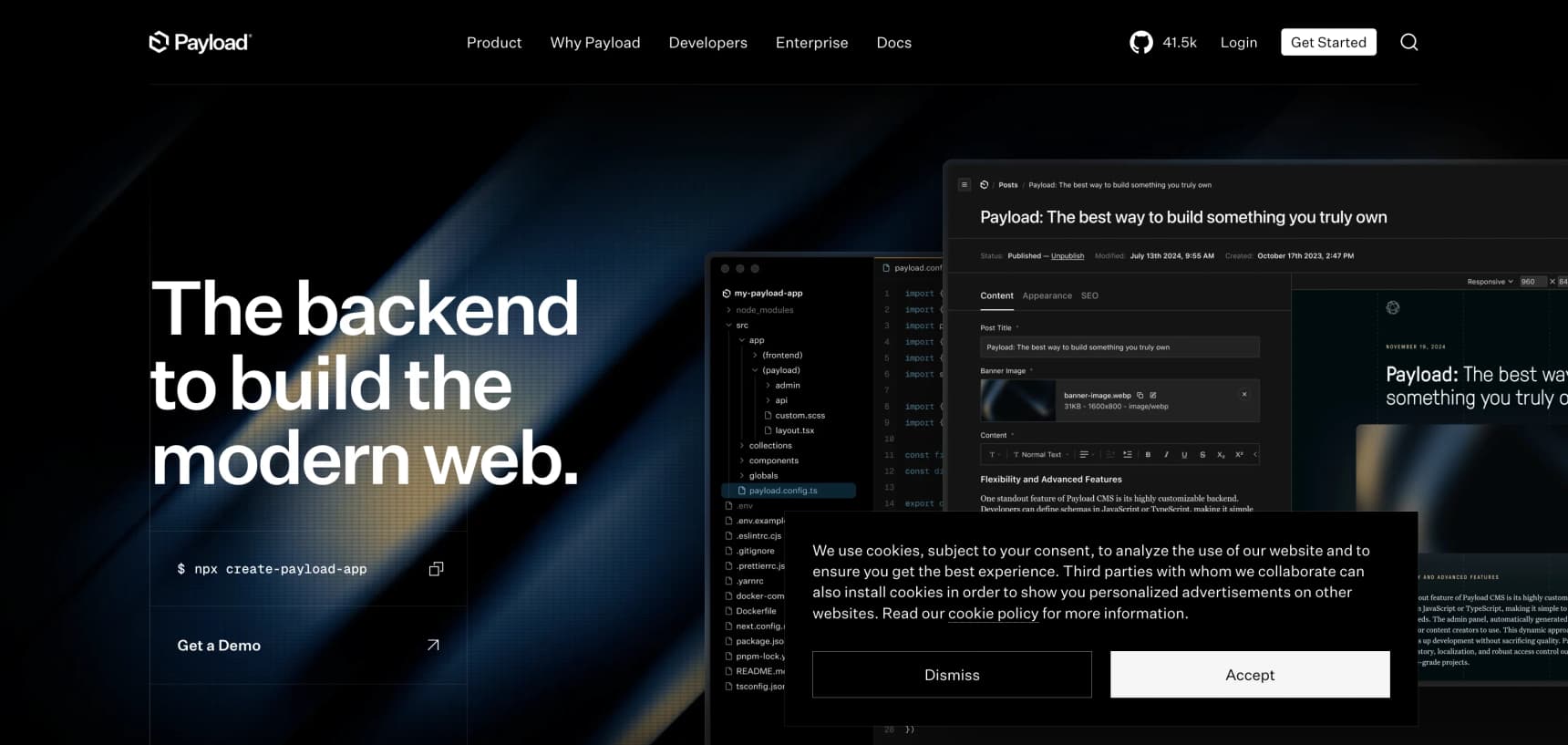
Payload runs inside Next.js, so the admin panel, API and storefront deploy as one app. Its official ecommerce template uses @payloadcms/plugin-ecommerce for products, variants, carts, orders and transactions, with Stripe for payments.
What makes it stand out:
- Single deployment: no separate commerce server
- Layout builder, live preview and draft preview for marketing pages
- Guest checkout, user accounts and multiple currencies out of the box
- Next.js 16.3 and automated tests included
Tradeoffs: Payload labels the ecommerce template beta. It defaults to MongoDB (Postgres and SQLite adapters exist), and you'll spend time learning Payload's config-driven data model. It's a CMS with commerce, not a full commerce platform: things like tax engines and shipping carriers are yours to add.
Stack: Next.js 16, Payload 3, Stripe, MongoDB (or Postgres), TypeScript, Tailwind CSS
5. Saleor Paper Storefront
Best for: Teams that want an enterprise-grade GraphQL backend and a modern, server-first Next.js 16 checkout.
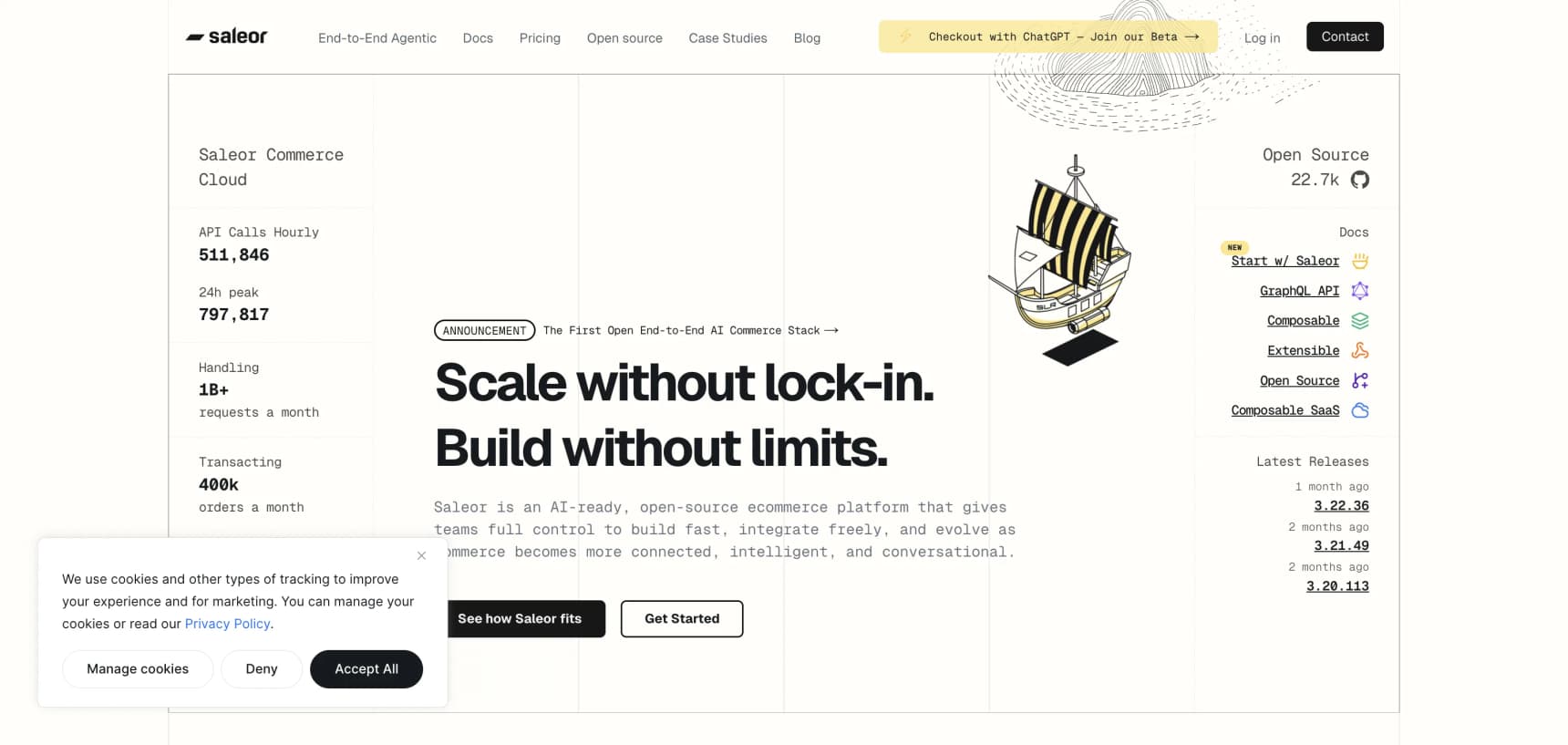
Saleor replaced its old React Storefront with Paper, a new Next.js 16 storefront. The headline feature is checkout v2: Server Components and Server Actions, URL-driven steps and a server-side session, with no Saleor tokens in the browser.
What makes it stand out:
- Server-first checkout: the cart and checkout load in Server Components; the client is a cache of server state
- Payment gateway registry: Stripe ships integrated, and you add others through a documented extension point
- Multi-channel and multi-locale through Saleor channels
- Saleor Cloud as the managed backend, or self-host Saleor's BSD-licensed core
Tradeoffs: Saleor calls Paper "a new release, expect some rough edges". The storefront license is FSL-1.1-ALv2, not MIT (see the license callout above). Self-hosting Saleor means running a Python/Django service with PostgreSQL. Saleor Cloud removes that work.
Stack: Next.js 16, Saleor GraphQL API, TypeScript, Tailwind CSS
6. Spree Storefront
Best for: DTC or B2B stores that need multi-region pricing and a choice of payment providers.
Spree Storefront is an MIT-licensed Next.js 16 frontend for Spree Commerce 5, released in February 2026. It uses the typed @spree/sdk client against Spree's REST API.
What makes it stand out:
- Payments: Stripe, PayPal and Adyen through payment sessions; card data never touches your server
- Multi-region URLs: country, currency and language in the path (
/us/en/,/de/de/) - DTC and B2B from one instance, including customer-group pricing
- Transactional emails with react-email and Resend
- Published Lighthouse scores: Spree reports 98 desktop and 88 mobile on its demo
Tradeoffs: The backend is Ruby on Rails, so your team runs two stacks. The storefront is new, with a small community around it so far, though Spree itself has been around since 2007.
Stack: Next.js 16, React 19, Spree 5, TypeScript, Tailwind CSS v4
7. Vendure Next.js Starter
Best for: TypeScript teams who want a Node.js commerce backend they can extend with plugins.
The Vendure Next.js Starter is the official Next.js 16 storefront for Vendure. It already runs with cacheComponents on, so it follows the current Next.js caching model.
What makes it stand out:
- TypeScript end to end: Vendure's backend is NestJS and GraphQL
- Full customer accounts: registration with email verification, password reset, order history and address book
- Built for upgrades: described as "source-owned" with a managed path for pulling in upstream releases
Tradeoffs: Vendure's core is GPLv3 (a commercial license is available), even though this starter is MIT. The starter's payment step lists whatever methods your Vendure server has, so a real gateway (Stripe, Mollie and others have plugins) is a backend setup task.
Stack: Next.js 16, Vendure, GraphQL, TypeScript, Tailwind CSS v4
8. BigCommerce Catalyst
Best for: BigCommerce merchants, or teams that want a hosted backend with a Next.js 16 frontend they fully control.
Catalyst is BigCommerce's official headless storefront framework on Next.js, backed by the GraphQL Storefront API. BigCommerce offers a one-click app to deploy it.
What makes it stand out:
- Next.js 16.3 with prebuilt, accessible storefront components
- Hosted backend: catalog, pricing and promotions live in BigCommerce
- Very active: more than 40 commits in the month before we checked
Tradeoffs: You need a BigCommerce plan, and checkout hands off to BigCommerce's checkout rather than being fully custom React. Like Next.js Commerce, it's a frontend for one vendor's platform.
Stack: Next.js 16, BigCommerce GraphQL Storefront API, TypeScript, Tailwind CSS v3
9. NextMerce
Best for: Solo developers who want a polished-looking starting point and are happy to use Sanity for content.
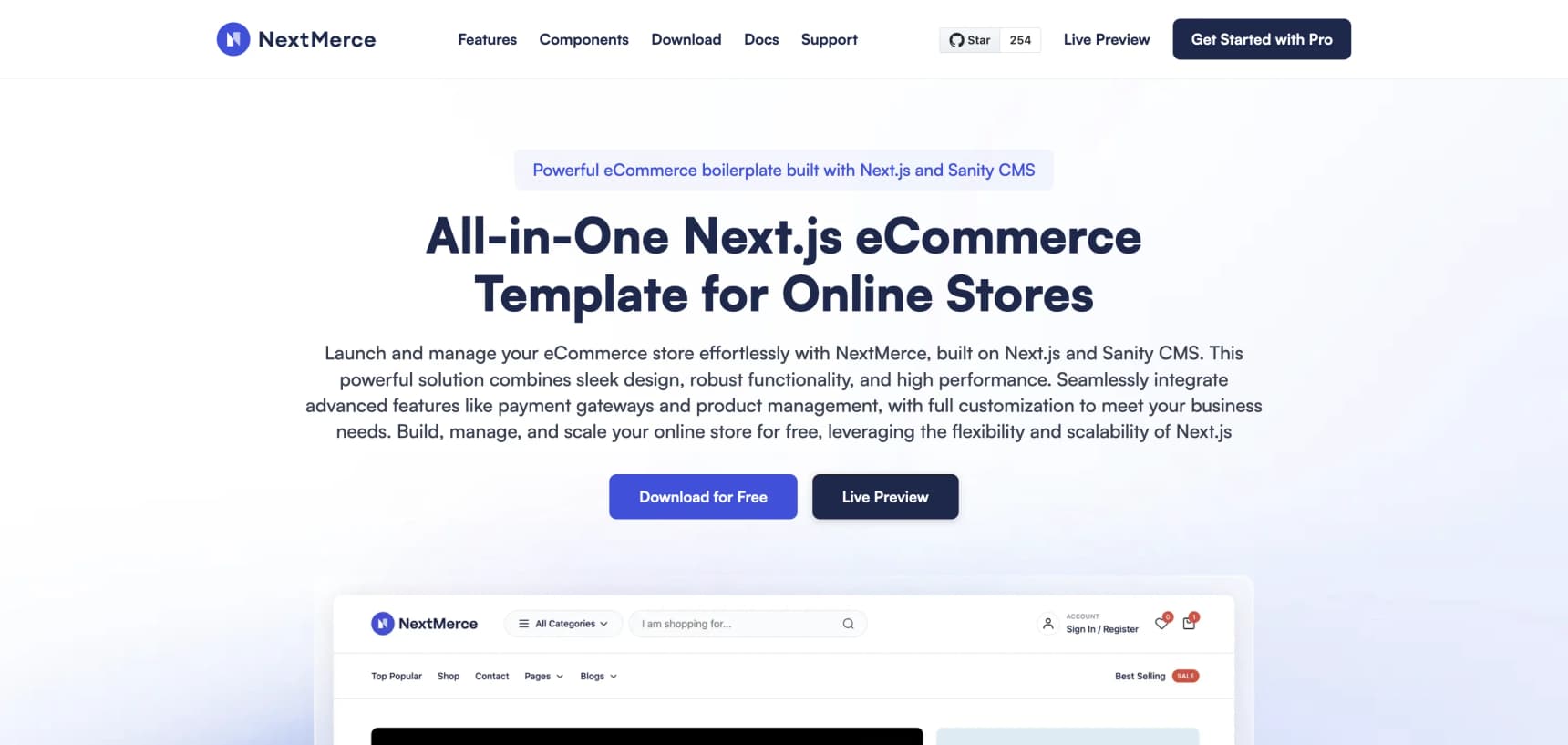
NextMerce is a Next.js + Sanity ecommerce boilerplate. The free lite version on GitHub is on Next.js 16.1 with Sanity 5. The paid Pro version adds more pages and integrations, including Stripe checkout and Algolia search.
What makes it stand out:
- Design-first: lots of prebuilt pages and sections
- Sanity Studio for managing products and content
Tradeoffs: The lite repo's last commit was in March 2026, and it has no license file, so check reuse rights before shipping it for a client. Sanity has usage-based pricing above its free tier. The design is opinionated, so heavy rebranding can take longer than starting from a plainer template.
Stack: Next.js 16, Sanity, TypeScript, Tailwind CSS (Stripe and Algolia in Pro)
Next.js Commerce vs Other Starters: A Quick Take
"Next.js Commerce" gets searched almost as much as "Next.js ecommerce template", so here's the short version:
- Pick Next.js Commerce if you're already on Shopify, want Shopify's checkout and apps, and are fine upgrading the repo from its Next.js 15 canary yourself.
- Pick Catalyst if you're on BigCommerce. It's the more actively maintained vendor starter today.
- Pick YNS if you want a managed backend without a Shopify-style platform around it, on current Next.js 16, with Stripe payments and 0% platform transaction fees.
- Pick Medusa, Spree, Vendure or Payload if you want to self-host and own the database.
For the full head-to-head, see Next.js Commerce vs Your Next Store. For the wider backend landscape, see the best headless commerce platforms.
How to Choose the Right Next.js Ecommerce Template
Pick by constraint, not by feature list:
"I'm on Shopify and want a faster storefront." → Next.js Commerce. It keeps Shopify as the backend. Moving off Shopify entirely is a separate decision, covered in migrating from Shopify to headless commerce.
"I want to launch this month and not run servers." → Your Next Store. Clone the template or let the AI builder generate the store, and the backend is managed for you.
"I need to own every part of the stack, for free." → Medusa DTC Starter, Spree or Vendure. Pick by backend language: Node.js (Medusa, Vendure) or Ruby (Spree).
"My store is content-first." → Payload. CMS and commerce share one admin.
"I'm building for enterprise, multi-channel scale." → Saleor Paper on Saleor Cloud, or Catalyst on BigCommerce.
FAQ
What is the best Next.js ecommerce template?
It depends on the backend you want. For a Shopify store, Vercel's Next.js Commerce is the most popular choice. For a fully self-hosted, free stack, the Medusa DTC Starter is the most complete. For the fastest launch on current Next.js 16 without running a backend, Your Next Store pairs an MIT storefront with a managed backend.
Are there free Next.js ecommerce templates?
Yes. All nine templates here have free source code. Medusa DTC Starter, Payload Ecommerce, Spree Storefront and the Vendure starter are free to self-host end to end. Next.js Commerce, Catalyst and Your Next Store are free code that needs a paid backend (Shopify, BigCommerce or YNS). NextMerce has a free lite version and a paid Pro.
What is Next.js Commerce?
Next.js Commerce is Vercel's official open-source (MIT) ecommerce template. It's an App Router storefront for Shopify's Storefront API. Vercel maintains only the Shopify version, and community forks exist for other backends. As of September 2026 it runs on a Next.js 15.6 canary.
What is the best Next.js ecommerce starter for Next.js 16?
YNS, Payload, Saleor Paper, Spree, Vendure, Catalyst and NextMerce's lite repo all run on Next.js 16. The YNS and Vendure starters already use cacheComponents, the Next.js 16 caching model. Next.js Commerce and the Medusa DTC Starter are still on Next.js 15.
Is there a Next.js Shopify template?
Yes: Next.js Commerce is the official one. Shopify's own headless framework, Hydrogen, is built on React Router rather than Next.js. If you're comparing the two paths more broadly, read Next.js vs Shopify.
Which Next.js ecommerce template is the fastest?
Templates that use React Server Components and prerender a static shell (Partial Prerendering) will beat client-rendered ones. Your Next Store builds on this with "use cache" and streamed dynamic data. See How is Your Next Store so fast? and Partial Prerendering in Next.js for the techniques.